

There is a meal that most people in the Western world have decided, with remarkable consensus, looks a specific way.
Eggs in some form. Toast or some kind of bread. Perhaps fruit. Perhaps cereal. Perhaps the specific combination of bacon and eggs that has become so associated with the morning meal that it functions almost as a logo for breakfast itself — instantly recognizable, universally understood, rarely questioned.
This consensus is recent. It is culturally specific. And it represents perhaps the narrowest interpretation of what the morning meal can be, compared to the extraordinary variety of ways that the rest of the world has decided to begin the day.
The morning meal — the first food of the day, the thing eaten after the overnight fast, the preparation that sets the metabolic and experiential tone for everything that follows — is one of the most culturally revealing meals in any food tradition. It reflects what a culture values, what is available, what the rhythm of the day requires, and what constitutes nourishment in a specific climate and context.
And the world’s breakfasts are among the most interesting, most varied, and most misunderstood meals in global food culture.
The Japanese Breakfast and the Philosophy of Balance
The traditional Japanese breakfast — ichiju sansai, meaning one soup and three sides — is built on a philosophy of nutritional and aesthetic balance that has no equivalent in the Western morning meal.
The components are specific and purposeful. Steamed rice provides the carbohydrate foundation — not toast, not cereal, but cooked short-grain rice of the quality and texture that Japanese rice culture has refined over centuries. A bowl of miso soup — made from dashi stock with miso paste and whatever additional components the season and the pantry offer — provides warmth, umami depth, and the fermented compounds that support gut health. A piece of grilled or broiled fish — often salmon, mackerel, or another fatty fish — provides protein and omega-3 fatty acids. Pickled vegetables — tsukemono — provide acid, probiotic bacteria, and a counterpoint of brightness to the richer elements.
The Japanese breakfast is not elaborate. It is not time-consuming to assemble once the components are understood. But it reflects a relationship with the morning meal that is fundamentally different from the Western approach — one that treats breakfast as a complete, balanced meal deserving of the same consideration as lunch or dinner, rather than as a quick necessity to be dispatched before the day’s real activities begin.
The aesthetic dimension is equally deliberate. The small, distinct components served in separate vessels — each component given its own space and its own consideration — reflects the Japanese aesthetic principle of presenting food in ways that honor the individual character of each ingredient.
The Turkish Breakfast Table and the Culture of Abundance
If the Japanese breakfast represents the philosophy of considered restraint, the traditional Turkish breakfast — kahvaltı — represents the opposite principle: the morning meal as an occasion for abundance, variety, and the particular pleasure of a table that offers more than any single person could eat.
A full Turkish breakfast spread is not a meal so much as a table — a collection of small components, each contributing a different flavor and texture, from which the eater constructs their own experience. The components are numerous and varied: fresh tomatoes and cucumbers, sliced simply and dressed with nothing; a selection of cheeses — white feta-style cheeses, aged kaşar, perhaps a stretchy tel cheese; olives of multiple varieties; honey and kaymak — the thick, clotted cream of Turkish dairy tradition; jams and preserves; simit, the sesame-encrusted bread ring that is the iconic street bread of Istanbul; eggs prepared in various ways, often in a pan with butter and perhaps the spiced Turkish sausage called sucuk; and tea — always tea, the dark, strong Turkish black tea served in small tulip-shaped glasses that is as central to the Turkish morning as the food itself.
The Turkish breakfast table is a social meal — one designed to be eaten slowly, in company, with conversation and refilling glasses of tea and the particular ease of a morning that has not yet become a day. It is not efficient. It is not designed to be consumed in fifteen minutes before leaving for work. It is designed to make the beginning of the day an occasion — a deliberate pause before the demands of the world begin.
The Ethiopian Breakfast and the Morning Injera
In Ethiopia, the morning meal centers on the same ingredient that anchors every other meal of the day — injera, the spongy, slightly sour flatbread made from teff flour that functions simultaneously as plate and utensil in Ethiopian eating.
The morning injera is typically eaten with firfir — torn pieces of injera cooked with spiced butter and berbere, the complex Ethiopian spice blend, often with the addition of leftover stew or scrambled eggs. The result is a warm, deeply spiced, intensely flavored preparation that uses the previous day’s bread as the foundation of the current day’s first meal — a zero-waste, deeply satisfying approach to breakfast that bears no resemblance to anything in the Western morning meal repertoire.
The teff flour that makes injera is one of the more nutritionally significant grains in any breakfast tradition — high in iron, calcium, and dietary fiber, with a complete amino acid profile that most grains lack. The fermentation that gives injera its characteristic sourness also reduces the phytic acid content of the teff, improving the bioavailability of its minerals in ways that unfermented grain preparations cannot match.
The Ethiopian breakfast is not just a different meal. It is a different relationship with the morning — one in which the food is spiced and complex and deeply savory in ways that challenge the Western assumption that breakfast should be mild and sweet.
The Dim Sum Tradition and the Meal That Became an Occasion
The Cantonese tradition of yum cha — literally “drink tea,” though the food is as central as the beverage — produces a morning and midday eating experience that has no direct equivalent in any other culture and that represents one of the most elaborate and most pleasurable breakfast traditions in the world.
Dim sum — the small, varied dishes that are ordered and shared over tea at a yum cha session — began as simple snacks accompanying tea in the teahouses that served travelers along the ancient Silk Road. Over centuries, the tradition developed in Guangdong province into a cuisine of its own — a repertoire of hundreds of small preparations, each requiring specific technique and specific ingredients, eaten in a specific social context that is as much about the gathering as it is about the food.
The classic dim sum dishes — har gow, the translucent shrimp dumpling whose delicacy of wrapper is a test of a kitchen’s skill; siu mai, the open-topped pork and shrimp dumpling; cheung fun, the silky rice noodle roll filled with shrimp or beef or char siu pork; lo bak go, the pan-fried turnip cake with its specific combination of crispy exterior and soft, savory interior — are the products of culinary techniques refined over generations to produce specific textural and flavor results that the broader Chinese culinary tradition values as highly as any other preparation.
The yum cha session is a social institution as much as a meal — a reason to gather on a Sunday morning with family or friends, to occupy a table for hours with tea and food and conversation, to participate in a culinary tradition that connects the people eating to a lineage of cooks and eaters stretching back centuries.
The Full English and the Meal That Built an Empire
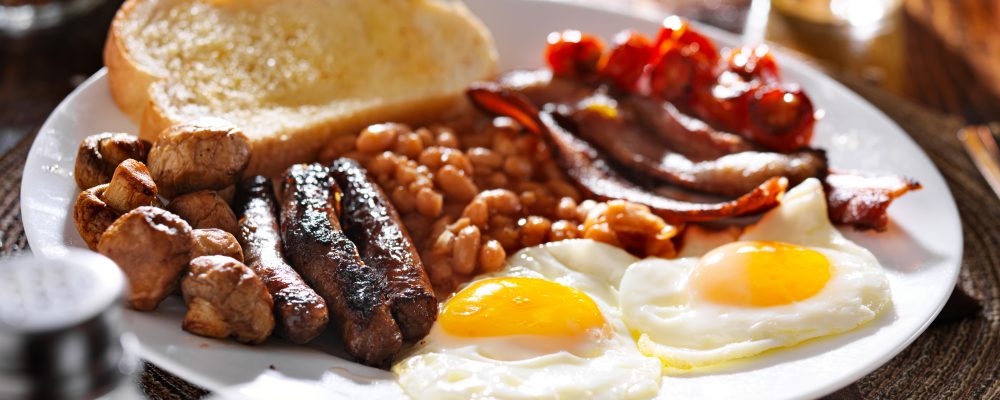
The full English breakfast — the specific combination of bacon, eggs, sausages, baked beans, grilled tomatoes, mushrooms, and toast that has become one of the most recognizable national food symbols in the world — is a meal whose current form is more recent than most people assume and whose cultural significance exceeds its culinary ambition.
The components of the full English emerged gradually through the nineteenth and early twentieth centuries, shaped by industrialization, by the specific agricultural products of the British Isles, and by the nutritional requirements of a working population that needed substantial fuel before a day of physical labor. The baked beans — an American import that became central to the British version — arrived in the late nineteenth century. The specific combination of all components as a single, unified meal became standard only in the twentieth century.
What the full English breakfast represents, beyond its components, is the specific relationship between British culture and the morning meal — the idea that breakfast is substantial, that it should sustain the eater through the morning, that it is an occasion for sitting down rather than something consumed standing at a counter.
The full English is not sophisticated food. It does not aspire to be. It aspires to be satisfying — deeply, completely, unpretentiously satisfying in a way that more refined morning meals rarely attempt.
What the World’s Breakfasts Share
For all their differences — the Japanese balance, the Turkish abundance, the Ethiopian spice, the Cantonese elaboration, the English substance — the world’s great breakfast traditions share something that the contemporary Western quick breakfast has largely abandoned.
They are meals.
Not fuel consumed efficiently before the day begins. Not a nutritional minimum dispatched in seven minutes. Meals — prepared with consideration, eaten with attention, served in a context that treats the beginning of the day as worth beginning properly.
The Japanese breakfast that takes twenty minutes to prepare and eat. The Turkish breakfast table that occupies an hour of a Sunday morning. The yum cha session that takes three hours and produces more conversation than any other meal of the week.
Each of these represents the understanding that the morning meal — the first food of the day, eaten after the overnight fast, when the body is most receptive to nourishment — deserves the same consideration as any other meal. That how the day begins matters. That food at the beginning of the day is not an interruption to the day but the beginning of it.
The Takeaway
The Western breakfast — the egg and toast, the bowl of cereal, the quick coffee and nothing — is not the only way to begin a day. It is one way, recent in its current form, specific in its cultural context, and narrower in its conception of what the morning meal can be than almost any other breakfast tradition in the world.
The world’s great breakfasts suggest an alternative: that the morning meal can be complex, varied, social, spiced, fermented, substantial, and deeply satisfying in ways that the rushed Western breakfast rarely achieves.
Begin the day with more. Not necessarily more food — but more consideration, more variety, more of the attention that any meal deserves and that the first meal of the day deserves most of all.














