
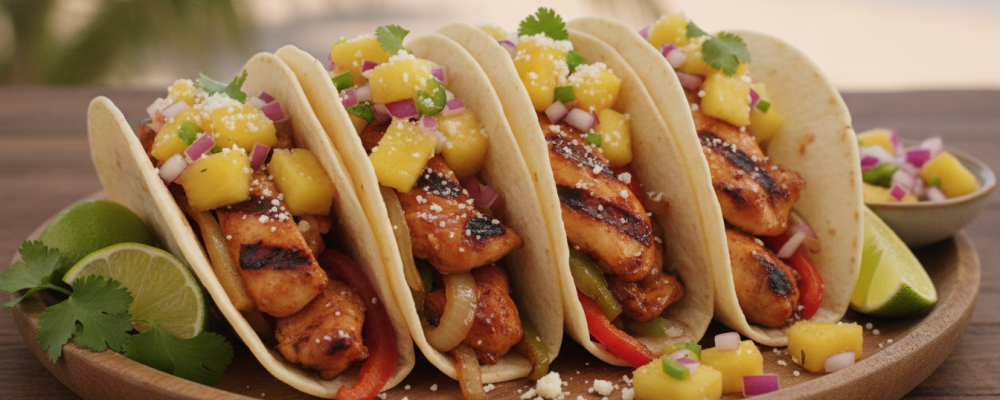

Hawaiian Chicken Tacos sit at a fascinating intersection of culinary traditions, and understanding why this combination works so well requires examining the underlying flavor chemistry. At first glance, Hawaiian and Mexican cuisines seem like unlikely partners. But both traditions share a fundamental commitment to bold, contrasting flavors—sweet against sour, rich against bright, fatty against acidic—and those shared principles are precisely why this fusion succeeds.
The marinade is where the technical foundation is built. Soy sauce contributes sodium and umami depth from its glutamate compounds, which amplify the perception of savory flavor throughout the chicken. Honey provides sweetness plus fructose and glucose, both of which caramelize at different rates during cooking, creating complex browning and a slightly sticky glaze rather than the simple sweetness of refined sugar. Garlic powder contributes allicin compounds that become sweeter and more mellow with heat. Paprika adds subtle earthiness and color that deepens as the chicken cooks. Together, these create a marinade that does three things simultaneously: tenderizes the chicken’s surface proteins through the soy’s salt, builds layers of flavor that penetrate the meat, and sets up the caramelization that happens during cooking.
The 15-minute minimum marination time is worth discussing. Unlike acidic marinades (lime, vinegar) that can over-tenderize if left too long, this soy-honey base is relatively gentle and could actually marinate for up to 24 hours without damage. The longer it sits, the deeper the flavors penetrate. If you have time, marinate overnight in the refrigerator—the difference in flavor depth is significant.
Cooking technique matters here. Medium heat rather than high heat allows the honey’s sugars to caramelize gradually without burning, which happens easily when sugar concentrations are high. Six to seven minutes per side sounds long for chicken breast, but it builds that essential caramelized exterior that makes this dish special. The 5-minute rest after cooking isn’t optional—it’s the step that keeps the chicken juicy. Internal temperature should reach 165°F, but pulling it off the heat at 160°F and resting allows the temperature to rise safely while the juices redistribute rather than pooling on the cutting board.
The pineapple salsa is engineered as a counterpoint to the chicken’s richness. Pineapple contains bromelain, a proteolytic enzyme that not only aids digestion but also creates that slight tingling sensation on the tongue that makes fresh pineapple feel particularly lively. The jalapeño’s capsaicin provides heat that cuts through the chicken’s glaze. Red onion’s sulfur compounds provide sharpness. Lime’s citric acid provides acidity. Cilantro’s aromatic oils provide fresh top notes. Each element addresses a specific aspect of balance—this salsa is designed to make the chicken taste more interesting, not to compete with it.
─────────
The Inspiration Behind This Recipe
This recipe emerges from Hawaii’s remarkable culinary heritage—a place where Polynesian, Japanese, Chinese, Korean, Filipino, and American influences have merged into something entirely unique. Hawaiian cooking has always celebrated the sweet-savory combination, from classic teriyaki (Japanese influence) to plate lunch culture’s macaroni salad alongside rice and protein. The pineapple element draws from Hawaii’s agricultural history as a major pineapple producer through much of the 20th century, where the fruit became synonymous with island cuisine. By applying Hawaiian flavor principles—honey-soy glazing, tropical fruit—to the Mexican taco format, we create fusion that makes cultural and culinary sense. Both Hawaii and Mexico celebrate bold, vibrant flavors served in casual, communal formats. The taco becomes a natural vehicle for these island-influenced flavors, creating something that honors both traditions while belonging entirely to its own delicious category.
─────────
A Brief History of Hawaiian Fusion Cuisine
Hawaii’s culinary identity was shaped by waves of immigration that brought together dramatically different food traditions. Native Hawaiian cuisine centered on taro, fish, and poi. Sugar plantation workers arriving from Japan, China, Korea, Portugal, and the Philippines in the 19th and early 20th centuries each contributed their own culinary traditions. Japanese workers introduced teriyaki, soy sauce marinades, and rice as a staple. Filipino workers brought adobo techniques. Portuguese workers contributed sweet bread and sausage. The result was a genuinely unique culinary melting pot—what locals call “local food”—that celebrates cross-cultural combination without hierarchy. The honey-soy marinade in this recipe draws directly from Japanese-Hawaiian teriyaki traditions, which themselves represent Japanese technique adapted to Hawaiian ingredients and palates. Combining this with Mexican taco format continues that tradition of creative cultural combination that has always defined Hawaiian cooking at its best.
─────────
Why This Cooking Method Works
Honey-soy creates superior browning — The combination of soy’s amino acids and honey’s sugars triggers the Maillard reaction and caramelization simultaneously, creating more complex browning and flavor development than either ingredient would achieve alone.
Medium heat prevents burning — High sugar content in the marinade burns easily. Medium heat allows gradual caramelization without scorching, building the sticky glaze progressively.
Resting preserves moisture — After cooking, chicken’s muscle fibers are contracted and moisture is concentrated in the center. Resting allows fibers to relax and moisture to redistribute, ensuring juicy slices.
Thin slicing maximizes surface area — Slicing the rested chicken thin creates more surface area for the pineapple salsa to contact, ensuring every bite contains both the glazed chicken and the bright salsa.
Fresh pineapple salsa provides enzymatic contrast — Bromelain in fresh pineapple creates a lively, tingling sensation that makes the salsa feel particularly vibrant against the rich, glazed chicken.
Warm tortillas carry the glaze — Properly warmed corn tortillas become slightly pliable and absorbent, soaking up the honey-soy glaze drips from the chicken for extra flavor in every bite.
─────────
Flavor Profile: What to Expect
Sweet, savory, and tropically complex — these tacos open with tender, juicy chicken carrying deep umami from soy, honey’s caramelized sweetness, and subtle earthiness from paprika and garlic. The caramelized glaze creates slightly sticky richness with complex browning notes. The pineapple salsa arrives as a bright counterpoint—juicy tropical sweetness with enzymatic liveliness, jalapeño’s clean heat, red onion’s sharp crunch, cilantro’s herbal freshness, and lime’s bright acidity. The warm corn tortilla provides sweet, toasty foundation that soaks up the glaze beautifully. Every component plays a clear role: the chicken delivers richness and depth, the salsa delivers brightness and contrast, and the tortilla holds it all together. It’s a taco that’s simultaneously familiar and surprising—comfort food with a passport.
─────────
Tips for Making the Best Hawaiian Chicken Tacos
Marinate longer when possible — While 15 minutes works, overnight marination in the refrigerator creates significantly deeper flavor penetration. Plan ahead when you can.
Pound chicken to even thickness — Uneven chicken breasts cook unevenly. Place between plastic wrap and pound to uniform ½-inch thickness for consistent cooking throughout.
Use a meat thermometer — Pull chicken at 160°F and rest; it will reach the safe 165°F during resting while staying perfectly juicy.
Don’t discard the marinade immediately — Reserve a few tablespoons before adding raw chicken. Brush it on during the last minute of cooking for extra glaze without food safety concerns.
Choose ripe fresh pineapple — Fresh pineapple provides bromelain and superior flavor. Canned pineapple (in juice, not syrup) works but produces a softer, less vibrant salsa.
Cut pineapple in small dice — Quarter-inch pieces integrate better into tacos and ensure every bite gets both pineapple and the other salsa components.
Let salsa rest briefly — Five to ten minutes after mixing allows lime juice to mellow the raw onion’s sharpness while the flavors begin to meld.
Slice chicken against the grain — Identify the muscle fiber direction and slice perpendicular for maximum tenderness in every piece.
─────────
Serving Suggestions and Side Pairings
These tropical fusion tacos pair beautifully with:
- Cilantro Lime Rice or coconut rice for island-inspired accompaniment
- Black beans with cumin and lime for heartiness
- Corn Salsa for additional fresh, colorful contrast
- Simple cabbage slaw with lime vinaigrette for crunch
- Black Bean Dip with tortilla chips as a starter
- Grilled pineapple slices as a side for deeper caramelized fruit flavor
- Avocado slices for cooling creaminess
- Pickled jalapeños for heat lovers who want more kick
Additional topping ideas:
- Crumbled cotija cheese for salty contrast
- Toasted shredded coconut for texture and tropical depth
- Sriracha or hot sauce for extra heat
- Lime crema for cool creaminess against the sweet chicken
- Thinly sliced green onions for additional onion notes and visual appeal
─────────
Storage, Reheating, and Make-Ahead Tips
Storage:
- Store cooked chicken and pineapple salsa separately in airtight containers for up to 3 days
- Pineapple salsa is best within 24 hours as it releases liquid; drain excess before serving if needed
- Store tortillas and toppings separately
Reheating:
- Reheat chicken gently in a skillet over medium-low heat with a splash of water or soy sauce to prevent drying
- Microwave individual portions covered with a damp paper towel on 70% power
- Serve pineapple salsa cold or at room temperature—never reheat it
Make-Ahead Tips:
- Marinate chicken up to 24 hours ahead for best results; keep refrigerated
- Dice pineapple, onion, and jalapeño up to 4 hours ahead; combine with lime and cilantro just before serving
- Cook chicken up to 2 days ahead; slice just before serving for best presentation
- Prepare all other toppings the day before for quick assembly
Freezing:
- Freeze raw marinated chicken for up to 3 months; it marinates further as it thaws overnight in the refrigerator
- Freeze cooked chicken for up to 2 months, though freshly cooked is always superior
- Do not freeze pineapple salsa—it becomes watery and loses all texture
- Always make salsa fresh; preparation takes only minutes
Leftover uses:
- Slice cold chicken over mixed greens for a Hawaiian-inspired salad
- Use in grain bowls with rice, edamame, and sesame dressing
- Make quesadillas with leftover chicken and cheese
- Chop and add to fried rice for a Hawaiian fusion side dish
- Use pineapple salsa as a chip dip or spoon over grilled fish
─────────
Why This Recipe Deserves a Spot in Your Taco Tuesday Rotation
Because Taco Tuesday benefits enormously from a recipe that’s simultaneously easy, crowd-pleasing, and genuinely different from everything else in the rotation. Hawaiian Chicken Tacos deliver on all three counts. The honey-soy marinade takes minutes to assemble and creates flavor depth that suggests far more effort than it requires. The pineapple salsa is the kind of preparation that surprises people—they’re not expecting it, and then they can’t stop eating it. The whole meal comes together in under 45 minutes including marination time, uses ingredients available at any grocery store, and produces results impressive enough for dinner parties or casual enough for weeknights. From a rotation perspective, this recipe fills a specific and valuable role: it’s the fusion option that broadens your Taco Tuesday repertoire beyond traditional Mexican preparations while honoring the same principles of fresh ingredients, bold flavors, and satisfying handheld format. When your rotation needs something that feels like a mini-vacation without leaving the kitchen, this is precisely the recipe to reach for.
─────────
Recommended Drink Pairing
Classic Lime Margarita — The citrus brightness cuts through the honey-soy glaze while tequila’s agave character complements the tropical pineapple salsa beautifully.
Blue Hawaiian cocktail — Rum, blue curaçao, and pineapple juice lean fully into the Hawaiian theme while the tropical fruit notes mirror the salsa perfectly.
Pineapple agua fresca — Blend fresh pineapple with water, lime, and a touch of sugar for a non-alcoholic option that doubles down on the salsa’s tropical character.
Wheat beer or hefeweizen — These slightly sweet, fruity beers complement the honey glaze and pineapple without competing, providing refreshing effervescence between bites.
Sparkling water with pineapple and lime — For a zero-alcohol option that stays on theme, the tropical and citrus notes echo the dish’s key flavors while refreshing the palate between bites.
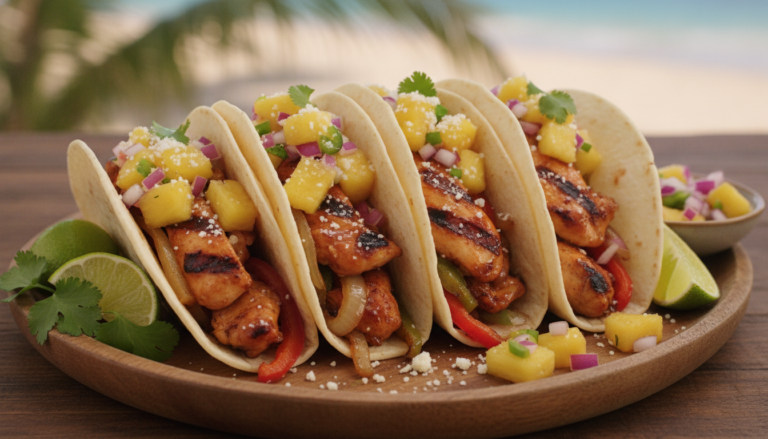
Hawaiian Chicken Tacos with Pineapple Salsa
Hawaiian Chicken Tacos with Pineapple Salsa feature honey-soy glazed chicken sliced thin and topped with a vibrant fresh pineapple salsa of jalapeño, red onion, cilantro, and lime for a sweet-savory tropical fusion that brings island flavor to your Tuesday table.
4
servings20
minutes15
minutes550
kcal35
minutesIngredients
1 pound chicken breast
1 tablespoon soy sauce
1 tablespoon honey
1 teaspoon garlic powder
1/2 teaspoon paprika
1/2 teaspoon salt
1/4 teaspoon black pepper
8 small corn tortillas
1 cup pineapple, diced
1/4 cup red onion, chopped
1 tablespoon lime juice
2 tablespoons cilantro, chopped
1 small jalapeño, chopped
1 tablespoon olive oil
Directions
- In a bowl, mix soy sauce, honey, garlic powder, paprika, salt, and pepper.
- Marinate chicken in the mixture for at least 15 minutes.
- Heat olive oil in a skillet over medium heat.
- Cook chicken for 6-7 minutes on each side until fully cooked.
- Rest the chicken for 5 minutes, then slice thinly.
- In another bowl, combine pineapple, red onion, lime juice, cilantro, and jalapeño.
- Warm the tortillas in a dry skillet for about 30 seconds per side.
- Assemble the tacos by placing sliced chicken on each tortilla and topping with pineapple salsa.
Nutrition Facts
- Total number of serves: 4
- Calories: 550kcal
- Cholesterol: 0mg
- Potassium: 400mg
- Sugar: 8g
- Protein: 6g
- Calcium: 60mg
- Iron: 2mg
About This Author

Benjamin Brown
Recipe Developer
Benjamin is our flavor engineer. A classically trained chef turned recipe developer, he’s obsessed with balancing taste, texture, and creativity. He ensures that every recipe we publish is not only delicious but also reliable, approachable, and repeatable — even for beginners.
Favorite dish: Slow-braised short ribs with red wine reduction.
Kitchen motto: “Cooking is part science, part soul.”















