
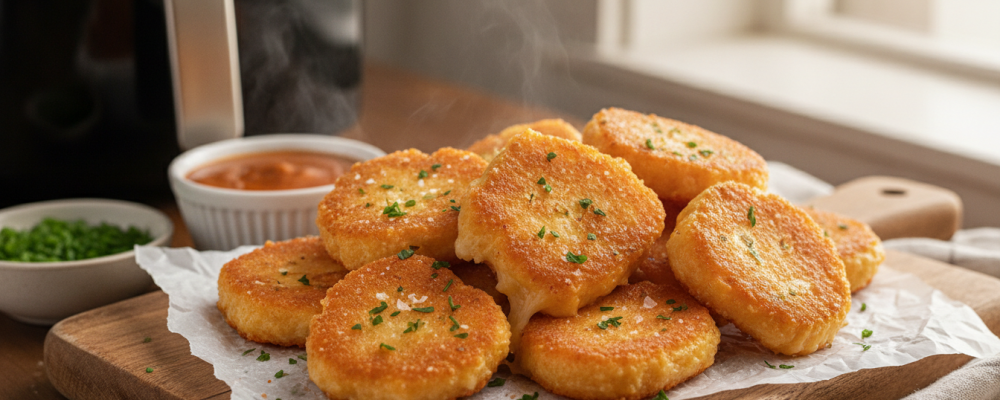

There are grilled chicken marinades that season the surface, and there are the ones that penetrate deeply enough that every slice of thWhat makes Air Fryer Cheese Bites technically interesting isn’t just their simplicity—it’s the elegant cheese science happening in that air fryer basket. This recipe leverages the distinct behavioral properties of two strategically chosen cheeses, using their complementary characteristics to create a self-contained bite that achieves crispy exterior and molten interior simultaneously, without a single drop of frying oil beyond what’s naturally present in the cheese itself.
Mozzarella and Parmesan are rarely combined as primary structural ingredients in a recipe like this, and understanding why they work together here requires thinking about their fundamental differences. Mozzarella is a fresh, high-moisture cheese with exceptional melting properties—it stretches, pulls, and creates that characteristic gooey interior we associate with great pizza and fried cheese. Its relatively mild flavor, however, means it needs support. Parmesan is the counterpart: aged, low-moisture, intensely flavored, and high in glutamates that create profound umami depth. When grated finely, Parmesan also contributes structural integrity to the mixture, its dry, granular texture helping bind the cheese balls during forming.
The flour and egg serve critical structural roles that deserve attention. The flour absorbs some of the mozzarella’s surface moisture, creating a more workable, cohesive mixture that holds its shape during the air fryer’s initial heating phase—before the cheese fully melts and the exterior has had time to set. The egg provides protein networks that coagulate rapidly under heat, forming the structural scaffold that holds everything together while the interior transitions from solid to molten. Without the egg, the mixture would collapse; without the flour, it would be too wet to form properly.
The seasoning profile is intentionally Italian-forward. Garlic powder distributes more evenly than fresh garlic in this application—a small but important distinction, since minced garlic creates moisture pockets that can compromise the mixture’s cohesion. Italian seasoning brings the aromatic herb character that frames these as savory, sophisticated bites rather than simple fried cheese.
─────────
The Inspiration Behind This Recipe
Air Fryer Cheese Bites emerged from a specific culinary challenge: how do we replicate the appeal of deep-fried mozzarella sticks—that combination of crispy exterior and gooey interior—without the mess, equipment, and oil volume that deep frying requires? The air fryer provides an elegant solution, but the technique requires rethinking the preparation entirely.
Traditional fried cheese applications use a thick batter or breading to create the exterior crust, keeping the cheese separate from the coating. This recipe takes a fundamentally different approach: the cheese itself becomes the primary structural material, bound with flour and egg to create a self-crusting bite. As the air fryer’s circulating heat reaches the mixture, the exterior sets and browns while the interior remains soft and melty—achieving the same textural contrast through a completely different method.
The inspiration also reflects the broader trend toward simplified, accessible versions of restaurant appetizers. Fried cheese bites appear on menus everywhere, typically requiring elaborate preparation. This version delivers comparable results in a fraction of the time with a fraction of the effort, making restaurant-quality cheese appetizers achievable on any Monday evening.
─────────
A Brief History of Fried Cheese and Italian-American Cuisine
Fried cheese has appeared in culinary traditions across centuries and cultures, from ancient Roman preparations to medieval European dishes to contemporary restaurant menus worldwide. The specific Italian-American version that most Americans recognize—breaded mozzarella sticks served with marinara—gained mainstream popularity in the 1970s and 80s as Italian-American restaurant cuisine became America’s dominant casual dining category.
Mozzarella itself originated in the Campania region of southern Italy, traditionally made from water buffalo milk. The stretchy, melty fresh cheese became a cornerstone of Italian-American cooking as Italian immigrants adapted their culinary traditions to American ingredients and appetites. Parmesan—properly Parmigiano-Reggiano—has an even longer documented history, produced in the Emilia-Romagna region of northern Italy since at least the 13th century.
The air fryer, introduced commercially in 2010 by Philips, represented a significant shift in home cooking technology. By circulating superheated air rapidly around food, it replicates many characteristics of deep frying while using dramatically less oil. Its adoption into mainstream home kitchens opened new possibilities for traditionally fried foods, including cheese-based appetizers that previously required oil-filled pots and careful temperature management.
─────────
Why This Cooking Method Works
Dual cheese selection is the recipe’s foundational decision. Mozzarella provides the melt and stretch that creates that satisfying gooey interior; Parmesan provides structural integrity, flavor intensity, and the granular texture that aids binding.
Flour incorporation absorbs excess moisture from the mozzarella, creating a drier, more workable mixture. This moisture management is critical—too much surface moisture prevents proper browning and causes the balls to steam rather than crisp.
Egg as binder contributes proteins that coagulate rapidly under heat, forming the structural matrix that holds the cheese balls together during the critical early phase of cooking before the exterior fully sets.
Formed ball shape maximizes the ratio of interior volume to exterior surface area, allowing the center to remain molten longer while the exterior achieves proper browning. A flatter shape would cook through too quickly, eliminating the textural contrast.
375°F air fryer temperature creates rapid exterior crisping without excessive heat penetration. The surface sets and browns in the time it takes the interior to reach optimal molten consistency.
Single layer placement ensures unobstructed hot air circulation around every ball. Overlapping creates steam pockets that prevent browning and cause uneven cooking.
Eight-minute cooking time is calibrated for both browning and interior melt. Less time yields pale, under-melted bites; more time risks full melt-through and structural collapse.
Immediate serving captures the ideal textural window—maximum exterior crispness and maximum interior melt simultaneously.
─────────
Flavor Profile: What to Expect
Air Fryer Cheese Bites deliver Italian-inspired savory satisfaction with satisfying textural contrast. The exterior is golden and slightly crispy with a thin, set crust that provides an initial resistance before giving way. The Parmesan concentrated on the surface contributes sharp, nutty, intensely savory notes—that characteristic aged cheese flavor that registers immediately.
The interior is the payoff. Mozzarella at its molten point is stretchy, creamy, and mild with a clean dairy sweetness that contrasts beautifully with the more aggressive Parmesan character of the exterior. The pull of melted mozzarella creates that visual and tactile satisfaction central to the appeal of any great cheese bite.
Garlic powder provides warm, savory depth throughout. Distributed evenly through the mixture, it appears in every bite rather than concentrated in pockets—consistent, aromatic, and comforting.
Italian seasoning contributes herbaceous complexity—oregano’s slight bitterness, basil’s sweetness, thyme’s earthiness—that frames the entire flavor experience as distinctly Italian-American.
Salt and black pepper enhance and sharpen all other flavors while adding their own subtle seasoning dimension.
The overall experience is savory, rich, and deeply satisfying—familiar Italian-American flavors executed in a format that delivers maximum impact per bite.
─────────
Tips for Making the Best Air Fryer Cheese Bites
- Use low-moisture mozzarella: Fresh mozzarella contains too much water and will make the mixture too wet to form properly. Shredded low-moisture mozzarella is essential.
- Shred Parmesan fresh: Pre-grated Parmesan contains anti-caking agents that affect texture and melting. Freshly grated from a block performs significantly better.
- Refrigerate before cooking: After forming, refrigerate cheese balls for 15-20 minutes. This firms them up and helps them maintain shape during the critical initial cooking phase.
- Uniform size: Form balls to consistent size—approximately 1-inch diameter—so all pieces reach optimal doneness simultaneously.
- Don’t skip preheating: A preheated air fryer basket creates immediate surface contact heat that begins setting the exterior before the interior fully melts.
- Light oil spray: A brief spray of cooking oil on the basket and optionally on the balls promotes browning and prevents sticking.
- Work with cold hands: Slightly chilled hands prevent the cheese from sticking and melting during forming. Run hands under cold water if needed.
- Don’t open during cooking: Resist the urge to check early. Interrupting the air circulation mid-cook compromises even browning.
- Serve with quality marinara: The dipping sauce matters. A good marinara with visible herb flecks and bright tomato flavor elevates the entire experience.
- Batch carefully: Make a test batch of two or three first to calibrate your specific air fryer’s timing before committing the full batch.
─────────
Serving Suggestions and Side Pairings
Air Fryer Cheese Bites work beautifully for multiple occasions and contexts:
As an appetizer: Arrange on a serving board alongside warm marinara, arrabbiata, or garlic butter dipping sauces. Fresh basil leaves and a drizzle of olive oil add visual sophistication.
Italian-themed spread: Include alongside bruschetta, antipasto components, and Spinach Artichoke Crostini for a complete Italian-inspired appetizer table.
Game day snacking: These hold their own among wings and loaded dips—they’re substantial, hand-held, and universally appealing.
Pasta night starter: Serve before a pasta main course to establish Italian flavor themes while guests settle in.
Pairing suggestions:
- Classic marinara sauce (the essential companion)
- Garlic butter for richness
- Arrabbiata sauce for spicy contrast
- Fresh basil pesto for herbal brightness
- Caesar salad for a complete Italian-American meal
- Garlic bread for additional Italian character
- Antipasto platter with olives, cured meats, and roasted peppers
─────────
Storage, Reheating, and Make-Ahead Tips
Storage: Store cooled cheese bites in an airtight container in the refrigerator for up to 2 days. Note that the interior will re-solidify during refrigeration.
Reheating: The air fryer is the only recommended reheating method. Return to the air fryer at 350°F for 3-4 minutes—this restores exterior crispness while re-melting the interior. Avoid microwaving, which creates rubbery, uneven texture.
Make-ahead forming: Form cheese balls up to 4 hours ahead, place on a parchment-lined plate, cover tightly, and refrigerate. The chilling actually improves structural integrity during cooking. Cook just before serving.
Freezing uncooked: Freeze formed, uncooked cheese balls on a baking sheet until solid, then transfer to freezer bags for up to 1 month. Cook from frozen at 375°F for 10-12 minutes, adding 2-3 minutes to account for the frozen starting temperature.
Freezing cooked: Not recommended. The cheese texture degrades significantly through the freeze-thaw cycle.
Batch planning: For larger gatherings, form all balls in advance and cook in sequential batches, keeping finished batches warm in a 200°F oven for no more than 10 minutes before serving.
─────────
Why This Recipe Deserves a Spot in Your Rotation
Air Fryer Cheese Bites earn their rotation status through a combination of factors that individually are valuable but together are exceptional: minimal ingredient cost, sub-15-minute total preparation time, zero specialized technique requirements, and a result that genuinely impresses. These aren’t “pretty good for how easy they are”—they’re simply good, full stop.
From a technical perspective, this recipe demonstrates how understanding ingredient properties—specifically how different cheeses behave under heat—allows you to design preparations that work elegantly without elaborate scaffolding. The flour, the egg, the dual-cheese approach: each decision follows logically from the goal, creating a preparation that succeeds reliably because it’s structurally sound.
The air fryer makes this particularly accessible. Where traditional fried cheese requires thermometers, large oil volumes, and careful attention to prevent burning, the air fryer handles temperature management automatically and eliminates the oil entirely. The barrier to entry is essentially zero, which means these bites are genuinely achievable on a Monday evening after a long day.
Most importantly, these bites create the kind of immediate, sensory satisfaction that makes snack food worth making from scratch in the first place. The sound of the crispy exterior, the visual pull of stretching mozzarella, the savory hit of Italian seasoning and Parmesan—every element is calibrated to deliver maximum impact. They’re proof that the most technically interesting recipes don’t have to be the most complicated ones, and that understanding why something works is ultimately more valuable than following instructions blindly.
─────────
Recommended Drink Pairing
Wine: A medium-bodied Italian red like Chianti or Montepulciano d’Abruzzo complements the Italian seasoning and Parmesan with structural tannins and bright acidity. A crisp Pinot Grigio works beautifully for white wine drinkers.
Beer: An Italian lager like Peroni or Moretti provides clean, crisp refreshment that doesn’t compete with the cheese. A light amber ale also works well with the savory, herbed profile.
Non-alcoholic: San Pellegrino sparkling water with lemon provides authentic Italian refreshment. Sparkling grape juice offers similar effervescence with complementary sweetness.
Cocktail: A classic Negroni with its bittersweet, herbal complexity pairs surprisingly well with rich, savory cheese bites. An Aperol Spritz offers lighter, effervescent refreshment with bitter-orange notes that cut through cheese richness beautifully.
Coffee: A short, strong espresso in the Italian tradition provides roasted bitterness that contrasts with and complements the savory, cheesy flavors—an unconventional but genuinely excellent pairing.
Air Fryer Cheese Bites
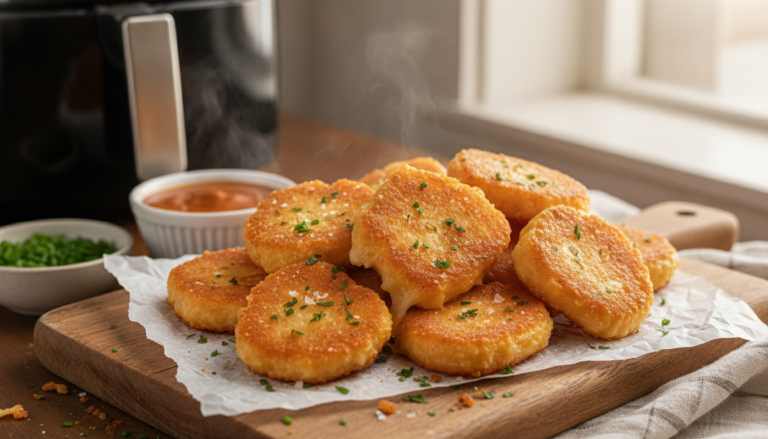
Air Fryer Cheese Bites combine mozzarella and Parmesan with Italian seasonings into golden, crispy spheres with irresistibly gooey centers that come together in under 15 minutes.
4
servings10
minutes8
minutes200
kcal18
minutesIngredients
1 cup shredded mozzarella cheese
1/2 cup grated Parmesan cheese
1/4 cup all-purpose flour
1 large egg
1 teaspoon garlic powder
1/2 teaspoon Italian seasoning
1/4 teaspoon salt
1/4 teaspoon black pepper
Directions
- Preheat the air fryer to 375°F (190°C).
- In a bowl, mix mozzarella, Parmesan, flour, egg, garlic powder, Italian seasoning, salt, and pepper.
- Form the mixture into small balls using your hands.
- Place the cheese balls in the air fryer basket without overlapping.
- Cook for 8 minutes or until golden and crispy.
- Serve warm and enjoy!
Nutrition Facts
- Total number of serves: 4
- Calories: 200kcal
- Cholesterol: 0mg
- Potassium: 400mg
- Sugar: 8g
- Protein: 6g
- Calcium: 60mg
- Iron: 2mg
About This Author

Benjamin Brown
Recipe Developer
Benjamin is our flavor engineer. A classically trained chef turned recipe developer, he’s obsessed with balancing taste, texture, and creativity. He ensures that every recipe we publish is not only delicious but also reliable, approachable, and repeatable — even for beginners.
Favorite dish: Slow-braised short ribs with red wine reduction.
Kitchen motto: “Cooking is part science, part soul.”















