
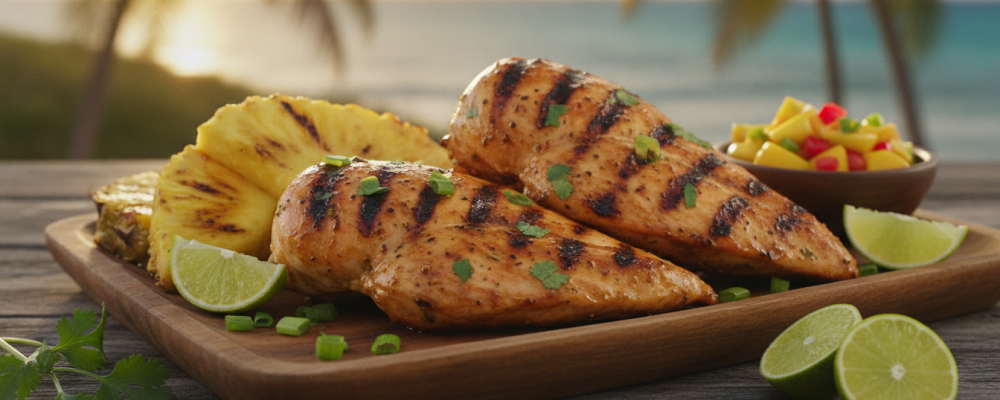

There are grilled chicken marinades that season the surface, and there are the ones that penetrate deeply enough that every slice of the finished chicken carries the same bold, layered flavor from edge to center. This Key West Grilled Chicken marinade is the second kind—and the combination of lime juice, lime zest, soy sauce, honey, and garlic is responsible for why. Each ingredient brings something distinct: the lime juice’s acidity tenderizes and brightens, the zest adds aromatic citrus oils that the juice alone can’t provide, the soy sauce delivers umami depth and salt, the honey caramelizes on the grill into a slightly sticky, lacquered exterior, and the garlic adds the savory foundation that ties everything together. An hour of contact time and a hot grill produce something that tastes unmistakably of Florida’s coastal cooking—bright, tropical, and deeply satisfying.
The honey is the ingredient I’m most deliberate about in this recipe. Beyond sweetness, it performs a specific technical function: its natural sugars caramelize rapidly under the direct heat of a medium-high grill, creating the golden, slightly sticky crust that makes this chicken look as good as it tastes. That crust also acts as a moisture barrier during the final minutes of cooking, helping the lean chicken breast retain its juiciness as the exterior develops its characteristic glaze. It’s a small addition with significant payoff—the difference between a grilled chicken that looks beautiful and one that looks merely cooked.
The lime zest is equally important and frequently overlooked. Lime juice contributes acidity; lime zest contributes fragrance. The essential oils in the zest are fat-soluble and distribute through the vegetable oil in the marinade, perfuming every surface of the chicken with a citrus character that the juice alone simply cannot deliver. The grill blooms those aromatic compounds under heat, and the result is a chicken that smells as extraordinary as it tastes.
The Inspiration Behind This Recipe
Key West’s culinary identity is built on the intersection of tropical Florida produce, Caribbean flavors, and the bright citrus-and-seafood tradition of the Florida Keys. The Keys’ Cuban and Bahamian culinary heritage introduced lime as the dominant citrus flavor of the region—in everything from Key lime pie to citrus-marinated fish and poultry. The soy sauce addition reflects the broader American fusion instinct of combining citrus marinades with the umami depth that only fermented soy can provide—a pairing that has become a staple of modern American grilling culture.
Why One Hour Is the Minimum—and the Maximum You Need
The one-hour marinade is calibrated specifically for chicken breast. Lime juice is a moderately acidic marinade agent—potent enough to tenderize the surface proteins meaningfully in an hour, but not so aggressive that it begins to denature the proteins beyond the surface in that time frame. Beyond four hours, the continued acid exposure begins producing a slightly chalky, mushy surface texture that undermines the clean bite a great grilled chicken should deliver. One to two hours is genuinely the sweet spot: enough time for the flavors to penetrate, not enough time for the texture to suffer.
Flavor Profile: What to Expect
- Bright, aromatic lime carrying through both the interior seasoning and the fragrant zest on the surface
- Honey-caramelized exterior with a slightly sticky, golden glaze that adds sweetness and visual appeal
- Savory soy sauce depth that gives the marinade its umami backbone and prevents the citrus from tasting one-dimensional
- Aromatic garlic that carries through the marinade and adds quiet savory warmth
- Juicy, well-seasoned chicken interior that has absorbed the full marinade character during the hour of contact
Tips for Making the Best Key West Grilled Chicken
- Use both juice and zest: The zest’s fat-soluble aromatic oils are a distinct and essential contribution that the juice cannot replicate. Don’t skip it.
- Pat dry before grilling: Remove excess marinade from the surface before the chicken hits the grill. Too much honey on the surface burns before the chicken cooks through.
- Oil the grates well: Honey-based marinades are particularly prone to sticking. Well-oiled grates prevent tearing and ensure a clean release.
- Don’t move the chicken during the first sear: Six to seven minutes of undisturbed contact develops the caramelized crust that defines this recipe.
- Rest before slicing: Three to five minutes allows the juices to redistribute. Sliced immediately, they run out onto the cutting board.
- Use a thermometer: Pull at 165°F internal temperature—the honey glaze can make the exterior look done before the interior is ready.
Serving Suggestions and Side Pairings
- Over cilantro lime rice for a tropical, complete dinner plate
- Alongside grilled corn and a simple black bean salad for a Florida Keys-inspired spread
- Sliced over a fresh salad with avocado and a lime vinaigrette for a lighter presentation
- In a wrap or sandwich with avocado, lettuce, and extra lime for a casual handheld format
Storage and Make-Ahead Tips
- Marinate up to 4 hours in advance—beyond that, the lime juice begins to affect surface texture.
- Refrigerate cooked chicken for up to 4 days. Reheat gently in a covered skillet with a splash of broth.
- Freeze cooked chicken for up to 2 months. A fresh squeeze of lime before serving revives the brightness beautifully.
Why This Recipe Deserves a Spot in Your Rotation
Key West Grilled Chicken earns its place as the grilled chicken that makes people ask what’s in the marinade—and produces a satisfied nod when they find out how simple it is. It’s versatile enough for tacos, bowls, salads, and sandwiches, impressive enough for guests, and practical enough for weeknight meal prep. Once this marinade is in your repertoire, it doesn’t leave.
Recommended Drink Pairing
The bright lime and honey-glazed chicken call for something equally tropical and refreshing. A Key Lime Colada is a perfect thematic match—its citrus and coconut sweetness echoes the lime and honey character of the marinade while providing a cool, tropical companion to anything off the grill. A cold, crisp lager with lime is the effortless crowd-pleaser that never fails alongside citrus-marinated grilled chicken.
For non-alcoholic options, a sparkling limeade or a cold passion fruit iced tea provides the tropical, citrusy refreshment that makes this Key West-inspired chicken even more enjoyable.
Key West Grilled Chicken
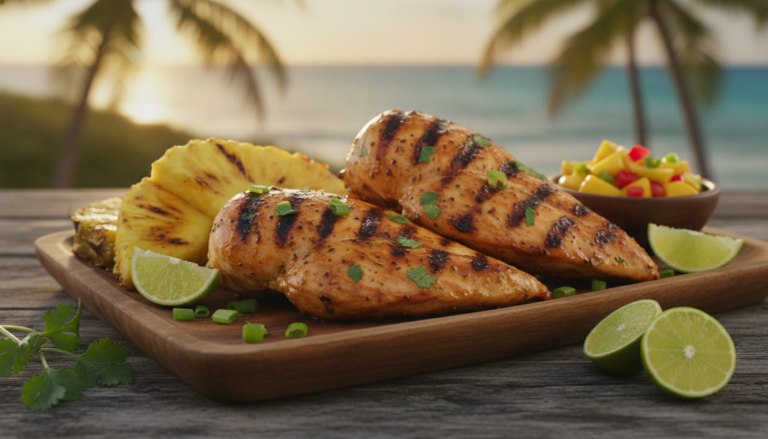
Key West Grilled Chicken marinates chicken breasts in a bright blend of lime juice, lime zest, honey, soy sauce, and garlic, then grills them until caramelized and golden for a tropical, deeply flavorful grilled chicken that works for everything from tacos to meal prep.
4
servings15
minutes20
minutes300
kcal35
minutesIngredients
4 pcs chicken breasts
3 tbsp lime juice
2 tbsp soy sauce
2 tbsp honey
1 tbsp vegetable oil
1 clove garlic, minced
1 tsp lime zest
0.5 tsp salt
0.5 tsp black pepper
Directions
- In a bowl, mix lime juice, soy sauce, honey, vegetable oil, garlic, lime zest, salt, and black pepper.
- Place chicken breasts in a shallow dish or resealable bag.
- Pour the marinade over the chicken, making sure each piece is well coated.
- Cover the dish or seal the bag and refrigerate for at least one hour.
- Preheat grill to medium-high heat.
- Remove chicken from marinade and discard any remaining marinade.
- Grill chicken breasts for 6-7 minutes on each side until cooked through and juices run clear.
- Let the chicken rest for a few minutes before slicing.
- Serve the grilled chicken with your favorite sides.
Nutrition Facts
- Total number of serves: 4
- Calories: 300kcal
- Cholesterol: 0mg
- Potassium: 400mg
- Sugar: 8g
- Protein: 6g
- Calcium: 60mg
- Iron: 2mg
About This Author

Benjamin Brown
Recipe Developer
Benjamin is our flavor engineer. A classically trained chef turned recipe developer, he’s obsessed with balancing taste, texture, and creativity. He ensures that every recipe we publish is not only delicious but also reliable, approachable, and repeatable — even for beginners.
Favorite dish: Slow-braised short ribs with red wine reduction.
Kitchen motto: “Cooking is part science, part soul.”















