
There is a particular smell that fills a kitchen when a head of garlic is roasting in foil—warm, sweet, deeply savory, and nothing like the sharp bite of raw garlic that most people know. It is one of the most comforting fragrances a kitchen can produce, and it costs almost nothing: one head of garlic, a drizzle of olive oil, a square of foil, and thirty minutes in a hot oven. When the package comes open and the garlic is squeezed out—collapsed into sweet, golden, spreadable cloves that are nothing like what went in—the kitchen smells like something deeply good and deliberately made.
That transformation is the heart of this recipe. Roasting garlic doesn’t just cook it; it fundamentally changes what it is. The sharp, pungent compounds that make raw garlic so intense undergo a series of chemical reactions under sustained heat—the allicin converts, the sugars caramelize, the moisture evaporates—and what emerges is sweet and mellow and richly savory in a way that has a depth no other preparation of garlic can match. Squeeze those roasted cloves into a bowl of mashed white beans with lemon juice and fresh rosemary and parsley, and what you produce is not a snack bite with garlic in it. It is a snack bite that is defined by garlic—by the specific, unmistakable warmth that only a whole roasted head can bring.
I make these bites when I want my weekly prep to include something that feels genuinely considered—something that required real intention rather than assembly. The thirty minutes the garlic spends in the oven while you do other things is the investment that makes these bites taste as though you spent significantly more time on them than you did. That particular quality—a result that generously exceeds the effort that produced it—is, to me, the most reliable marker of a recipe worth returning to.
─────────────────────────────────────────
The Inspiration Behind This Recipe
This recipe was born from a conviction I hold about savory snacks that I think is worth stating plainly: the most satisfying plant-based bites are the ones where a single ingredient carries so much flavor that the recipe barely needs anything else. When that ingredient is roasted garlic—entire cloves softened to a paste, sweet and deeply savory and fragrant—the white beans, the herbs, the lemon, the breadcrumb crust are all present in service of letting that ingredient come forward as fully as possible.
The herb combination—fresh rosemary and fresh parsley—was chosen specifically for how they behave alongside roasted garlic. Rosemary’s resinous, slightly piney intensity complements roasted garlic’s sweetness by providing the aromatic contrast that keeps the bites from being one-dimensionally rich; its woody character also holds up through the twenty-five minutes of oven baking in a way that more delicate herbs like basil or tarragon don’t. Parsley provides the bright, slightly grassy freshness that lifts the whole mixture—a green counterpoint to the golden, caramelized warmth of the garlic. Together with the lemon juice, these three elements produce a flavor profile that is deeply savory and warmly aromatic without being heavy or one-note.
The breadcrumb crust was the finishing decision that gave the recipe its textural completeness. White bean patties without a crust can be soft throughout—pleasant, but lacking the contrast that makes each bite genuinely interesting from beginning to end. A breadcrumb coating, baked at 350°F until golden, creates a crisp exterior that yields to the warm, herb-fragrant interior—a contrast that is simple in concept and deeply satisfying in practice, and one that holds up respectably through refrigerator storage and a brief reheating.
─────────────────────────────────────────
A Brief History of Roasted Garlic in Cooking
Garlic has been cultivated and consumed for at least five thousand years—one of the oldest documented crop plants in human history, with evidence of its use in ancient Egypt, Mesopotamia, and China stretching back to the earliest agricultural civilizations. Its medicinal properties were documented in ancient texts from multiple cultures, and its culinary role was established almost simultaneously—valued both for its intense flavor and for its preservative properties in an era before refrigeration.
The roasting of whole garlic heads—a preparation that allows the cloves’ heat-sensitive flavor compounds to transform slowly into sweeter, more complex forms—appears throughout Mediterranean cooking traditions, where wood-fired ovens made the slow-heat method a natural approach to any vegetable preparation. In Provençal cooking, roasted garlic spread onto bread is called ail rôti and has been a staple of the region’s rustic culinary tradition for centuries. In Spanish cooking, roasted garlic appears in alioli preparations and as a component of sofrito bases. Across North Africa, slow-roasted garlic appears in tagine preparations and dipping sauces with similar frequency.
The white bean’s specific pairing with garlic in the Mediterranean context is equally ancient—cannellini beans and garlic together appear in Tuscan cooking as fagioli all’uccelletto, a preparation that has been documented in Italian cookbooks since at least the Renaissance and that reflects the natural flavor affinity between these two ingredients that cooks across the region recognized independently and consistently. Bringing those two foundational Mediterranean ingredients together in a modern baked bite format honors a culinary logic that has been proven correct for centuries.
─────────────────────────────────────────
Why This Cooking Method Works for Meal Prep
The whole-head garlic roasting technique—wrapped in foil, roasted at 400°F for thirty minutes—is the preparation method that produces the specific flavor transformation this recipe requires, and no shortcut produces the same result. Roasting whole cloves in their papery skin subjects the garlic to the sustained, even heat that drives the caramelization and Maillard reactions responsible for the sweetness and depth that raw garlic cannot provide. Roasting peeled garlic cloves in olive oil on a pan produces a similar but distinct result—more cooked-garlic than roasted-garlic in flavor—and minced garlic sautéed in oil produces the sharp, savory character of cooked garlic that is entirely different from the mellow, sweet complexity of the whole-head roast. The foil wrap is not an aesthetic choice; it creates a contained steam environment around the garlic head that keeps the cloves from drying out while they caramelize, producing the spreadable, paste-like consistency that makes them so easy to incorporate into the bean mixture.
Mashing the white beans rather than processing them in a food processor is the texture decision that produces the best patty consistency. Food-processor-smooth beans have less structural integrity as a patty base—their cell walls are uniformly broken down, and the resulting paste is too cohesive and too wet to hold its shape during the breadcrumb coating and baking process without spreading. Fork-mashed beans retain small intact pieces that give the mixture structural texture—these intact pieces act as internal scaffolding that holds the patty together and prevents it from spreading during baking.
The two-temperature approach—roasting the garlic at 400°F and baking the patties at 350°F—is not an oversight. The lower temperature for the patties is the calibration that produces a golden, set breadcrumb crust without driving the bean interior to dryness. At 400°F, the breadcrumb exterior browns before the interior has fully set, producing a crust that is done but a center that is still slightly raw in texture. At 350°F, the interior sets gradually and completely while the breadcrumb browns evenly across the full surface.
─────────────────────────────────────────
Flavor Profile: What to Expect
These bites are warm, herbal, and deeply savory—the flavor of something that was cooked with patience and with intention:
- Sweet, mellow roasted garlic – The bowl’s defining and most transformative flavor: deeply savory, faintly caramelized, and genuinely sweet in a way that raw or sautéed garlic never achieves—present throughout every bite as a warmth that builds rather than hits
- Earthy, creamy white beans – The structural base and the quiet flavor foundation: mild, slightly nutty, and just savory enough to let the garlic and herbs come forward without competition
- Resinous, herbal rosemary – The aromatic backbone alongside the garlic: slightly piney, warmly pungent, and assertive enough to be present even after twenty-five minutes in the oven—the herb that makes these bites specifically, memorably aromatic
- Bright, grassy parsley – The green freshness that lifts the warmer, more dense flavors of the garlic and rosemary and keeps each bite tasting lively rather than heavy
- Clean citrus from lemon juice – The acidity that keeps the bean base’s earthiness from becoming dull, brightening every other flavor in the mixture and making the whole bite taste more vivid
- Crisp, neutral breadcrumb crust – The textural contrast that gives the bites their satisfying structure: golden on the outside, yielding within, a contrast that makes each bite feel complete rather than uniformly soft
The roasted garlic’s sweetness deepens over the first day as its caramelized compounds continue to distribute through the bean mixture. Day-two bites are measurably more cohesive and more deeply garlic-flavored than freshly baked ones—the garlic’s warmth having had time to fully permeate the surrounding herb and bean base.
─────────────────────────────────────────
Tips for Making the Best Roasted Garlic White Bean & Herb Bites
Several careful choices will significantly elevate the finished batch:
- Roast the garlic fully – Thirty minutes at 400°F is the minimum for the sweetness and paste-like consistency this recipe requires. Under-roasted garlic is still sharp and pungent rather than sweet and mellow, and it will dominate the bites in the wrong register. The cloves should be completely soft, golden, and easy to squeeze out when the foil is opened.
- Drain and pat-dry the beans – Excess moisture from the canning liquid makes the bean mixture too wet to hold its patty shape during coating and baking. Drain, rinse, and pat dry with a paper towel before mashing.
- Mash to a slightly textured consistency – The mixture should hold together when pressed but have visible texture—not a smooth hummus-like paste. This texture is what allows the patties to keep their shape through the breadcrumb coating and the baking window.
- Chill the mixture before shaping – If the mixture seems too wet or soft to shape cleanly into patties, refrigerate for fifteen minutes before forming. Cold fat firms slightly and makes the mixture more cooperative under the hands.
- Coat in breadcrumbs firmly – Press the breadcrumbs onto each patty rather than simply rolling it through the crumbs. A firmly adhered coating produces a more even, more golden crust than a loose one that falls away during handling.
- Use a flat spatula to transfer – These patties are fragile before baking—handle them gently when moving from coating surface to baking sheet. A wide, flat spatula provides the most support during transfer and prevents the patty from cracking at the edges.
Optional: A small bowl of lemon-herb yogurt dipping sauce—Greek yogurt, a squeeze of lemon, a pinch of fresh parsley, salt—served alongside the bites transforms a snack into something that could sit on any appetizer spread with complete confidence. The cool, tangy sauce is the ideal counterpoint to the bites’ warm, herb-rich interior.
─────────────────────────────────────────
Portioning and Container Suggestions
A standard batch yields approximately twelve to fourteen individual bites from one head of garlic and one can of white beans—three to four bites per serving as a satisfying snack, or five to six as a light appetizer portion. The patty format makes these bites among the most stackable in the collection: they hold their shape through refrigerator storage and transport without compressing or losing structural integrity, provided they are fully cooled before being layered in a container.
Store in a wide, flat airtight container with a piece of parchment paper between layers to prevent the breadcrumb crust from adhering to neighboring bites. The parchment also absorbs any condensation that accumulates during refrigerator storage, which helps maintain the breadcrumb’s textural integrity through the storage window better than stacking without separation.
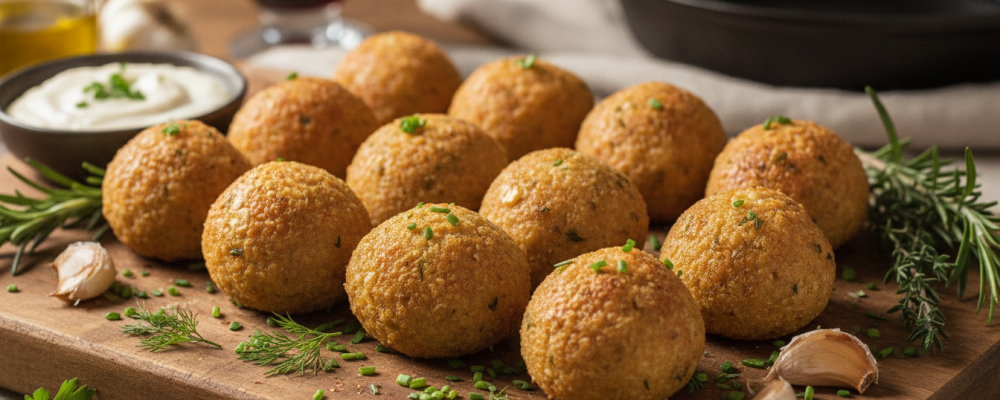
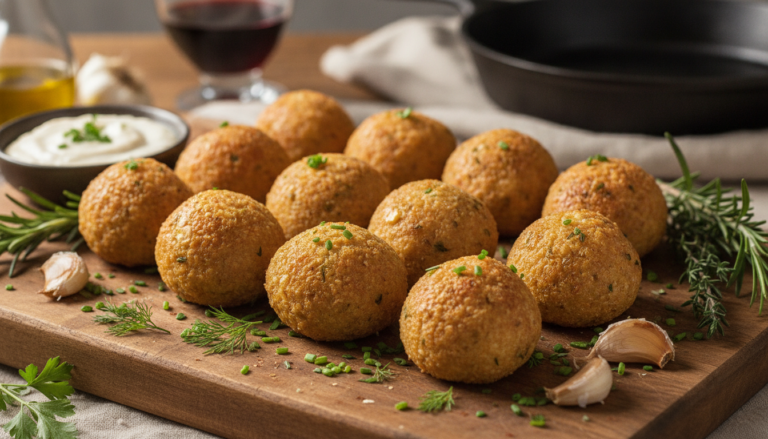
For entertaining—and these bites are genuinely appropriate for a party spread as well as a snack rotation—arrange them on a board alongside the optional yogurt dipping sauce, a small wedge of lemon for squeezing, and a scatter of fresh parsley over the surface. The golden breadcrumb color alongside the green of the fresh parsley and the white of the dipping sauce is a naturally beautiful presentation that requires no additional garnishing skill.
─────────────────────────────────────────
Storage, Reheating, and Shelf Life Tips
- Refrigerator storage: Baked bites keep in an airtight container for up to 4 days. The roasted garlic flavor deepens and integrates through day two and three; the breadcrumb crust softens slightly in refrigerator storage—restored most effectively by oven reheating.
- Oven reheating (strongly recommended): Place bites on a baking sheet at 350°F for 8–10 minutes from refrigerated. This method restores the golden crispness of the breadcrumb crust and warms the bean interior evenly—significantly better than microwave reheating for this specific recipe. The crust’s texture is one of the bite’s defining qualities and worth the extra few minutes to restore.
- Microwave reheating: Microwave at 50% power for 45–60 seconds. The crust will not re-crisp in the microwave, but the interior will warm cleanly. A valid option when oven reheating isn’t practical; the flavor remains fully intact even if the texture is slightly compromised.
- Freezer storage: These bites freeze well for up to 2 months. Freeze fully baked and cooled bites in a single layer before transferring to a bag. Reheat directly from frozen in a 350°F oven for 15–18 minutes—the oven reheat from frozen is the best possible method for restoring the full breadcrumb texture.
- Room temperature serving: These bites are pleasant at room temperature and hold their shape well. For entertaining, they can be baked in advance, allowed to cool, and served at room temperature—the roasted garlic flavor is actually more pronounced at room temperature than when hot from the oven.
- Garlic note: A full head of roasted garlic is a generous amount—the sweetness builds and deepens in the refrigerated bites over time. If a milder garlic presence is preferred, use half a head and supplement with a small amount of garlic powder to maintain the savory depth.
─────────────────────────────────────────
Why This Recipe Deserves a Spot in Your Meal Prep Rotation
Some recipes earn their place in a weekly rotation through simplicity, and some through efficiency, and this recipe earns its place through neither of those things alone. It earns its place through the specific quality of what it asks of a Sunday afternoon: the patience to roast a head of garlic until it is something genuinely different from what it was going in, the attention to fold that transformation into a mixture that honors it, the care to shape and coat and bake something that looks and tastes as though it was made for a reason.
That intention—the decision to make something properly rather than quickly—is what comes through in every bite. The sweetness of a fully roasted garlic clove is not achievable any other way, and these bites deliver it in a form that carries it through four days of refrigerator storage without losing it. A snack that asks something of you on Sunday and gives it back all week, in a form that tastes like it was made with care every single time you reach for one—that is the most honest kind of value a meal prep recipe can offer. These bites offer it warmly and completely, and they are worth every minute of the afternoon they require.
─────────────────────────────────────────
Meal Prep Pairing Suggestions
Roasted Garlic White Bean & Herb Bites pair most naturally with savory snack preparations that share their plant-based, Mediterranean-inspired character while offering genuine contrast in flavor profile and texture. Our Lemon Tahini White Bean Bites make the ideal companion within the baked white bean bite category—the two recipes share the same legume base and the same oven-baked format, but where this recipe’s defining character is roasted garlic’s mellow sweetness and fresh rosemary’s herbal depth, the tahini bites are driven by sesame’s nuttiness and lemon’s citrus brightness. The two cover entirely different aromatic registers from the same foundational ingredient, making them complementary rather than redundant in any snack rotation that includes both.
For a broader weekly spread, our Zucchini Hummus Roll-Ups provide the cool, fresh-vegetable counterpoint that rounds out the savory snack week with something light and no-cook alongside these bites’ warm, deeply flavored presence. A snack rotation that includes something baked and herb-fragrant, something baked and tahini-bright, and something fresh and cool-vegetable covers every snacking texture and temperature and mood the week can produce—with all three sharing a Mediterranean flavor heritage that makes the collection feel cohesive rather than assembled. That kind of intentional coherence across a week’s snacking is exactly what a well-designed meal prep rotation should deliver.
Roasted Garlic White Bean & Herb Bites
These Roasted Garlic White Bean & Herb Bites are a warmly fragrant, oven-baked plant-based snack built around whole-head roasted garlic—mellow, sweet, and deeply savory—folded into a white bean and fresh herb mixture and baked until golden in a breadcrumb crust.
4
servings20
minutes30
minutes220
kcal50
minutesIngredients
1 head garlic
15 oz canned white beans
2 tbsp olive oil
1 tbsp lemon juice
2 tbsp fresh parsley
1 tbsp fresh rosemary
1 tsp salt
0.5 tsp black pepper
0.5 cup breadcrumbs
Directions
- Preheat oven to 400°F (200°C).
- Slice the top off the garlic head, drizzle with olive oil, wrap in foil and roast for 30 minutes.
- In a bowl, mash the beans and squeeze out the roasted garlic.
- Add remaining olive oil, lemon juice, parsley, rosemary, salt, and pepper; mix well.
- Form mixture into bite-sized patties and coat with breadcrumbs.
- Bake patties at 350°F (175°C) for 20-25 minutes until golden.
Nutrition Facts
- Total number of serves: 4
- Calories: 220kcal
- Cholesterol: 0mg
- Sodium: 620mg
- Potassium: 400mg
- Sugar: 8g
- Protein: 6g
- Calcium: 60mg
- Iron: 2mg
About This Author

Amelia Grace
Editor-in-Chief & Culinary Director
The heart and guiding voice of Daily Dish, Amelia leads our editorial vision and recipe development. With a background in food journalism and over a decade spent in professional kitchens, she has a knack for blending gourmet technique with real-world accessibility. Her goal? To make every reader feel like a confident cook, one dish at a time.
Favorite dish: Creamy lemon risotto with a sprinkle of fresh thyme.
Kitchen motto: “Good food doesn’t have to be complicated — it just has to be made with heart.”