
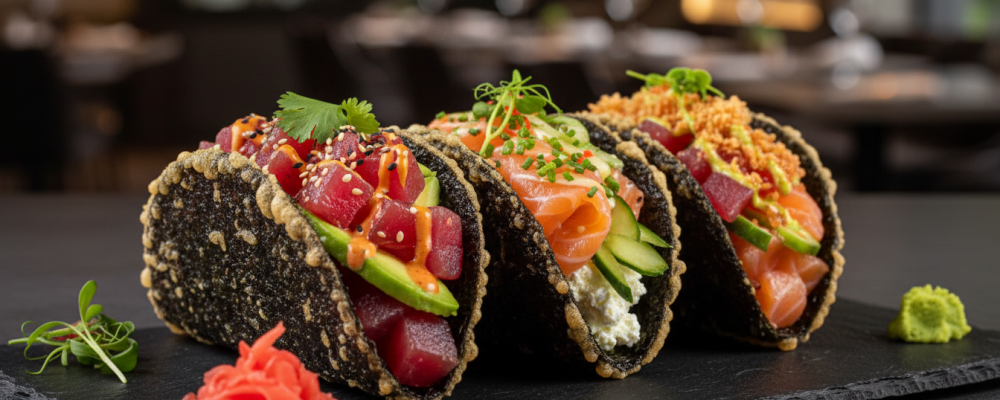

From a culinary perspective, sushi tacos represent one of the most successful fusion concepts I’ve encountered. Both sushi and tacos share fundamental DNA: they’re handheld foods built around high-quality central ingredients, wrapped in a vessel that provides texture and structure, and customized with complementary toppings. The genius lies in recognizing these parallels and executing them with respect for both traditions.
The technical execution here requires precision. You’re working with raw fish, which means absolute freshness and proper handling are non-negotiable. Sushi-grade salmon and tuna—fish that’s been frozen to kill parasites and stored at proper temperatures—must be sourced from reputable suppliers. The slicing technique matters: you want clean cuts across the grain that showcase the fish’s texture and color. Ragged cuts indicate dull knives or improper technique, and they compromise both presentation and mouthfeel.
The sushi rice is equally critical. Japanese short-grain rice has specific starch content that creates the right sticky-yet-distinct texture. Seasoning it with rice vinegar, sugar, and salt creates that characteristic sweet-tangy flavor that balances raw fish beautifully. The rice must be at room temperature—not hot, not cold—when assembled. Too hot and it cooks the fish slightly; too cold and it becomes hard and unpleasant.
Using nori as the taco shell is where the fusion truly happens. Nori provides umami depth, slight salinity, and that satisfying crisp-chewy texture contrast. When you fold it around the fillings, it functions exactly like a tortilla would, but with completely different flavor implications. The key is keeping the nori crisp until service—moisture is the enemy here, so assemble just before eating.
This recipe demands ingredient quality and technical precision, but the reward is a dish that genuinely transcends its component parts. It’s not Japanese food trying to be Mexican or vice versa—it’s something new that honors both traditions equally.
─────────
The Inspiration Behind This Recipe
Sushi tacos emerged from the California fusion food movement in the early 2000s, when chefs began experimenting with combining Japanese ingredients and techniques with Mexican presentation formats. The concept likely originated in Los Angeles, where large Japanese and Mexican populations created a natural environment for culinary cross-pollination. Early versions appeared at high-end restaurants as creative small plates, but the format proved so successful that it quickly spread to casual dining and home kitchens. The appeal is obvious: both sushi and tacos are beloved for their freshness, customizability, and hands-on eating experience. By combining pristine raw fish with the fun, approachable format of tacos, you create something that feels simultaneously elegant and playful—special occasion food that doesn’t take itself too seriously.
─────────
A Brief History of Fusion Sushi in America
Fusion sushi began in earnest in 1970s California when Japanese chefs adapted traditional techniques for American palates. The California roll—featuring avocado and imitation crab—was revolutionary because it put rice on the outside and used cooked ingredients, making sushi more accessible to Americans unfamiliar with raw fish. This opened the floodgates for innovation. By the 1980s and 1990s, chefs were creating increasingly adventurous rolls incorporating cream cheese, spicy mayo, tempura, and non-traditional ingredients. The sushi burrito emerged in the 2010s, followed closely by sushi tacos, sushi donuts, and other format experiments. While purists sometimes criticize these innovations, they’ve made Japanese culinary techniques and ingredients accessible to wider audiences while creating genuinely delicious new dishes. Sushi tacos specifically honor the spirit of both traditions—fresh, high-quality ingredients presented simply—while reimagining the format entirely.
─────────
Why This Preparation Method Works
Sushi rice provides the structural base — The sticky texture of properly prepared sushi rice holds together when wrapped in nori, creating a cohesive bite that doesn’t fall apart.
Nori adds umami and structure — The seaweed wrapper provides savory depth while creating a vessel that’s both sturdy enough to hold fillings and delicate enough to bite through easily.
Room-temperature rice is crucial — Warm rice would slightly cook the raw fish and make the nori soggy; cold rice becomes hard and unpleasant. Room temperature is the perfect compromise.
Thin slicing maximizes tenderness — Cutting sashimi-grade fish into thin strips across the grain ensures tenderness and allows the fish’s natural flavor and texture to shine.
Layering creates balanced bites — Arranging fish, avocado, and cucumber in layers ensures every bite contains all components, preventing any single ingredient from dominating.
Immediate service preserves texture — Nori absorbs moisture from rice and vegetables quickly. These must be assembled and eaten promptly to maintain the crispy-chewy contrast.
─────────
Flavor Profile: What to Expect
Clean, elegant, and remarkably fresh — these tacos showcase buttery, rich salmon with mild, sweet flavor, complemented by lean, meaty tuna with subtle iron notes. The seasoned sushi rice provides subtle sweetness and vinegar tang, while creamy avocado adds luxurious richness. Crisp cucumber brings refreshing crunch and mild, watery coolness. The nori wrapper contributes oceanic umami and slight salinity. Soy sauce offers salty depth, wasabi provides sharp, nasal heat, and pickled ginger cleanses the palate with sweet-tart spice. Lime adds optional citrus brightness. It’s a sophisticated flavor experience—delicate yet satisfying, elegant yet playful, with every element contributing to a balanced whole.
─────────
Tips for Making the Best Sushi Tacos
Source proper sushi-grade fish — Buy from reputable fishmongers who understand “sushi-grade” or “sashimi-grade” standards. Ask when it arrived and how it’s been stored.
Keep fish cold until service — Store at 32-38°F until ready to slice. Warm fish becomes mushy and develops off-flavors.
Use extremely sharp knives — Dull knives tear fish rather than slicing cleanly. Sharpen your knife or use a dedicated sashimi knife.
Slice against the grain — Look at the muscle fiber direction and cut perpendicular to it for maximum tenderness.
Don’t over-season the rice — The vinegar mixture should be subtle, not overpowering. Start with less; you can always add more.
Keep nori dry — Store in an airtight container and only open just before assembling. Moisture makes it chewy and limp.
Wet your hands when handling rice — This prevents sticking. Keep a bowl of water with a splash of rice vinegar nearby.
Don’t overfill — Less is more. Overfilled sushi tacos are impossible to eat gracefully and fall apart.
Assemble just before serving — These cannot sit. Make them and eat them immediately.
Provide proper accompaniments — Quality soy sauce (not the packets), real wasabi if possible, and good pickled ginger enhance the experience significantly.
─────────
Serving Suggestions and Accompaniments
Essential accompaniments:
- Soy sauce in small dishes for dipping
- Wasabi (real wasabi paste or powder mixed fresh)
- Pickled ginger for palate cleansing between tacos
- Lime wedges for optional citrus brightness
Optional additions:
- Spicy mayo (mayo mixed with sriracha)
- Eel sauce for sweet-savory drizzle
- Tobiko or masago (fish roe) for texture and pop
- Sesame seeds (black or white) for garnish
- Microgreens for delicate visual appeal
- Thinly sliced jalapeño for heat
Side dishes:
- Edamame with sea salt
- Miso soup as a starter
- Seaweed salad for complementary flavors
- Asian cucumber salad with rice vinegar
- Wakame (seaweed) salad
Beverage pairings:
- Sake (chilled or slightly warmed)
- Japanese beer (Sapporo, Asahi, Kirin)
- Green tea for non-alcoholic option
- Plum wine for something sweet and unique
─────────
Storage and Food Safety
Critical food safety:
- Raw fish must be kept at 32-38°F at all times
- Use within 24 hours of purchase
- Never leave raw fish at room temperature for more than 30 minutes total
- Discard any fish that smells “fishy” or shows discoloration
Cannot store assembled:
- Sushi tacos must be made and eaten immediately
- The nori becomes soggy within minutes of contact with rice and vegetables
- There is no way to successfully store assembled sushi tacos
Component storage:
- Sushi rice: Room temperature for up to 4 hours, covered with damp towel
- Sliced fish: Refrigerate immediately, use within 2 hours of slicing
- Vegetables: Store cut vegetables in airtight containers for up to 24 hours
- Nori: Keep sealed in airtight container with desiccant packet
Make-ahead strategy:
- Prepare sushi rice up to 4 hours ahead; keep at room temperature
- Slice vegetables up to 2 hours ahead
- Slice fish only 30 minutes before service
- Assemble at the table with guests for freshest experience
Freezing:
- Do not freeze assembled sushi tacos
- Do not freeze prepared sushi rice (texture becomes terrible)
- Properly frozen sushi-grade fish can be stored for future use, following safe thawing protocols
─────────
Why This Recipe Deserves a Spot in Your Taco Tuesday Rotation
Because Taco Tuesday should occasionally be extraordinary. While quick weeknight tacos have their place, these Sushi Tacos with Salmon and Tuna represent the special occasion version—the one you make when you want to genuinely impress guests or treat yourself to something exceptional. They prove that fusion cuisine, when executed thoughtfully with quality ingredients and proper technique, creates something that transcends novelty and becomes genuinely delicious. These aren’t gimmicky or cute—they’re sophisticated, elegant, and showcase pristine ingredients in their best light. When you want your Taco Tuesday to feel like an event rather than routine dinner, when you’re hosting food-loving friends who appreciate innovation, or when you simply want to challenge yourself with something new, these sushi tacos deliver. They’re conversation starters, Instagram-worthy without trying, and most importantly, absolutely delicious. Sometimes Taco Tuesday deserves to be elevated, and this is exactly how to do it.
─────────
Recommended Drink Pairing
Chilled sake (Junmai Ginjo or Daiginjo) — Clean, slightly fruity sake complements the delicate fish without overwhelming it, while its subtle sweetness balances the soy and wasabi.
Japanese lager (Sapporo, Asahi Super Dry) — Crisp, clean beer that refreshes the palate between bites without competing with the subtle fish flavors.
Sparkling sake or prosecco — The bubbles cleanse the palate while adding a celebratory element that matches the dish’s special-occasion nature.
Cucumber-infused water or green tea — For non-alcoholic options, these provide refreshing palate cleansing that aligns with Japanese culinary traditions.
Classic Lime Margarita — For maximum fusion fun, pair Japanese ingredients with a Mexican cocktail. The lime’s acidity actually works beautifully with raw fish, similar to how citrus is used in ceviche.
Sushi Tacos with Salmon and Tuna
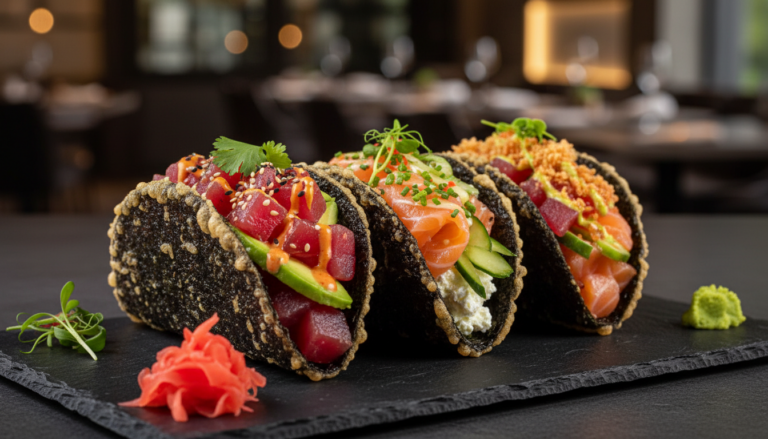
Sushi Tacos with Salmon and Tuna combine crispy nori shells, seasoned sushi rice, and pristine sashimi-grade fish with creamy avocado and crunchy cucumber for an innovative fusion that honors both Japanese and Mexican culinary traditions.
4
servings25
minutes5
minutes320
kcal30
minutesIngredients
8 pieces small nori sheets
200 grams sushi-grade salmon
200 grams sushi-grade tuna
1 cup sushi rice
1 tablespoon rice vinegar
1 tablespoon soy sauce
1 avocado, sliced
1 cup cucumber, julienned
1 lime, wedged
2 tablespoons pickled ginger
1 teaspoon wasabi
Directions
- Cook the sushi rice according to package instructions and mix in rice vinegar.
- Slice the salmon and tuna into thin strips.
- Lay nori sheets flat and evenly spread sushi rice over them.
- Layer salmon, tuna, avocado, and cucumber on each nori sheet.
- Roll nori sheets around filling to form cylindrical shapes.
- Cut each roll into taco-sized bites.
- Serve with soy sauce, lime wedges, pickled ginger, and wasabi.
Nutrition Facts
- Total number of serves: 4
- Calories: 320kcal
- Cholesterol: 0mg
- Sodium: 620mg
- Potassium: 400mg
- Sugar: 8g
- Protein: 6g
- Calcium: 60mg
- Iron: 2mg
About This Author

Benjamin Brown
Recipe Developer
Benjamin is our flavor engineer. A classically trained chef turned recipe developer, he’s obsessed with balancing taste, texture, and creativity. He ensures that every recipe we publish is not only delicious but also reliable, approachable, and repeatable — even for beginners.
Favorite dish: Slow-braised short ribs with red wine reduction.
Kitchen motto: “Cooking is part science, part soul.”















