
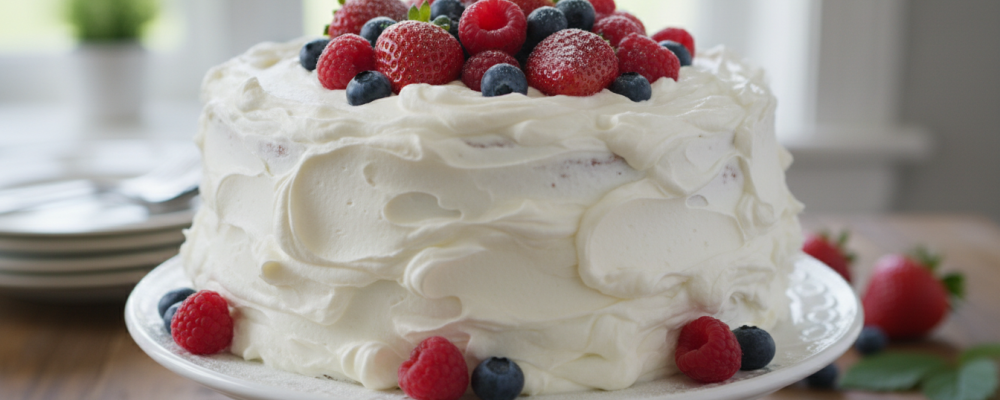

Chantilly Cake holds a special place in my heart because it represents everything I love about French-inspired pastry: elegance through simplicity, quality ingredients treated with respect, and flavors that are refined rather than loud. This isn’t a cake that tries to impress you with elaborate decoration or intense flavors. Instead, it wins you over with its delicate texture, its ethereal lightness, and that perfect balance of sweet cake, lightly sweetened cream, and tart fresh berries.
What makes Chantilly Cake technically interesting is the frosting—or rather, what the frosting isn’t. It’s not buttercream, which can be heavy and overly sweet. It’s not cream cheese frosting, which has tang and density. It’s Chantilly cream: whipped cream sweetened with powdered sugar and flavored with almond extract. That’s it. And that simplicity is brilliant because it allows the cake and berries to shine rather than being masked by heavy frosting. The cream is so light it almost dissolves on your tongue, creating this amazing textural experience where the cake seems to float away as you eat it.
The almond flavoring is subtle but essential—it adds sophistication without making the cake taste like marzipan or almond paste. Just a hint of almond in both the cake and the cream creates a cohesive flavor profile that’s distinctly European. Combined with fresh berries (their tartness providing essential balance), you get a dessert that’s elegant enough for the fanciest occasions but approachable enough for family gatherings. This is the cake I make when I want to demonstrate that “light” doesn’t mean “lacking”—it can be just as satisfying and impressive as the richest chocolate cake.
─────────
The Inspiration Behind This Recipe
Chantilly Cake is inspired by the classic French gâteau Chantilly, which traditionally features génoise (a light sponge cake) layered with Chantilly cream and fresh fruit. The dessert is named after the town of Chantilly in France, famous for its château and for the sweetened whipped cream that bears its name. Legend has it that Chantilly cream was created at the Château de Chantilly in the 17th century, though this is likely apocryphal—the name association came later.
What I wanted to create was a version that honored the French original while being accessible to American home bakers. Traditional génoise requires careful technique—beating whole eggs with sugar over a hot water bath, folding in flour with precision—and can be finicky for novice bakers. I adapted the recipe to use a more straightforward American butter cake method that’s more forgiving while still producing a tender, delicate crumb that can support the light cream frosting.
The almond flavoring is a nod to French baking traditions where almond appears frequently—from frangipane tarts to almond macarons to almond-flavored pastries. Just a touch of almond extract (and sometimes a hint in the frosting) elevates the cake from simple vanilla to something more sophisticated and distinctly European in character.
The berry topping is both traditional and practical. Berries have always been classic companions to Chantilly cream—their tartness balances the sweet cream, their colors create visual beauty, and their fresh, bright flavors keep the dessert from feeling heavy. From a practical standpoint, berries also help stabilize the whipped cream slightly through contact points and make the cake look professionally decorated even if your frosting technique isn’t perfect.
─────────
A Brief History of Chantilly Cream & European Layer Cakes
Chantilly cream (crème Chantilly) is simply sweetened whipped cream, but its association with the Château de Chantilly has given it an air of sophistication and refinement. While the château itself has a rich culinary history (the famous chef Vatel worked there in the 17th century), the connection to whipped cream is likely more marketing than historical fact. What is certain is that by the 19th century, crème Chantilly had become the standard French term for sweetened whipped cream, and it was used extensively in French pastry.
European layer cakes differ significantly from their American counterparts. While American cakes tend toward richness—butter-heavy cakes with thick buttercream frostings—European cakes often feature lighter génoise or biscuit bases with whipped cream, pastry cream, or mousse fillings. The emphasis is on delicate texture and balanced flavors rather than pure indulgence. These cakes are designed to end a meal gracefully rather than overwhelm.
In America, Chantilly-style cakes gained popularity through high-end bakeries and French patisseries, where they were positioned as sophisticated alternatives to traditional birthday and celebration cakes. Whole Foods Market famously sells a Chantilly cake (their “Berry Chantilly Cake”) that has developed something of a cult following for its light, fruity profile and beautiful presentation. This home version captures that same elegance while being achievable in any home kitchen.
The tradition of using fresh fruit with whipped cream frostings is practical as well as beautiful—the fruit’s acidity helps stabilize the cream (acid strengthens whipped cream structure), and the moisture from the berries is absorbed gradually, preventing the cream from becoming watery while adding flavor throughout.
─────────
Why This Recipe Works Beautifully
Cake flour creates the tenderest crumb. Cake flour has lower protein content than all-purpose flour, which means less gluten development and a more delicate, tender texture. This is essential for Chantilly Cake, where the lightness of the cake needs to match the lightness of the frosting. The fine texture also allows the cake to absorb moisture from the cream and berries without becoming soggy.
The cutting-in method creates a fine crumb. By cutting cold butter into the dry ingredients (like making biscuits or scones), you create small pockets of fat throughout the flour mixture. When liquid is added and the batter is beaten, these fat pockets create a tender, fine-grained crumb that’s perfect for layering with delicate whipped cream.
Whipped cream frosting is stabilized through technique. Whipping cream to stiff peaks (not just soft peaks) creates a stable foam that holds its shape well enough for frosting a layer cake. The powdered sugar provides sweetness and its small amount of cornstarch helps stabilize the cream. Cold cream, cold bowl, and cold beaters are essential—warm temperatures prevent proper whipping and can cause the cream to break.
Almond extract provides sophistication without overwhelming. Almond extract is potent—a little goes a long way. Just ½ teaspoon in the cake and ½ teaspoon in the frosting creates a subtle, sophisticated flavor profile that’s distinctly European. Too much would make the cake taste like marzipan or artificial almond; the right amount adds complexity and elegance.
Fresh berries add acidity, moisture, and structure. The tartness of fresh berries balances the sweet cream and cake. The berries also release juice gradually, which flavors the cream and adds moisture to the cake without making everything soggy. The contact between berries and cream also helps stabilize the whipped cream structure through their natural pectin.
Assembly order matters for stability. Placing berries between the layers (rather than just on top) distributes their weight and moisture throughout the cake. This prevents the berries from sliding off the top and ensures every slice includes fruit. The berries act as “anchors” that help hold the layers together.
Refrigeration improves texture and flavor. While this cake can be served immediately, refrigerating it for 2-4 hours allows the flavors to meld, the cream to firm up slightly, and the cake to absorb moisture from the cream and berries. The cold temperature also makes slicing much cleaner and easier.
─────────
Flavor Profile: What to Expect
Delicate almond flavor appears throughout—it’s subtle and sophisticated rather than bold or artificial. The almond enhances rather than dominates, adding a nutty, slightly floral note that feels elegant and European. It’s the kind of flavor that makes people ask, “What is that lovely taste?” without immediately identifying it.
Light, tender cake provides the foundation. This isn’t dense pound cake or rich butter cake—it’s delicate and fine-crumbed, almost sponge-like in its lightness. The cake practically melts in your mouth, providing just enough structure to support the cream and berries without feeling substantial or heavy.
Sweet, airy Chantilly cream is the star. The frosting is clouds—there’s no other word for it. It’s light, sweet (but not overly so), and has that pure dairy richness that only real whipped cream provides. The texture is ethereal, dissolving almost immediately on your tongue and leaving just a whisper of sweetness and almond flavor.
Tart, fresh berries provide essential contrast. The mix of strawberries, blueberries, raspberries, and blackberries means every bite is slightly different. The berries are juicy, tart-sweet, and their fresh flavor cuts through the cream and cake, preventing the dessert from being one-dimensionally sweet.
The overall experience is light and refreshing. This is not a heavy, “I need to lie down after eating it” cake. It’s satisfying but never overwhelming, sweet but balanced, rich but light. It’s the kind of cake you can eat a proper slice of and still feel good, the kind that feels appropriate on warm days, the kind that ends a meal perfectly without being too much.
─────────
Tips for Making the Best Chantilly Cake
Preparing for Success:
- Use cake flour, not all-purpose—the lower protein content is essential for the delicate texture. If you must substitute, use 1 cup all-purpose flour minus 2 tablespoons, then add 2 tablespoons cornstarch.
- Cold butter is crucial for the cutting-in method—it should be straight from the refrigerator, firm enough to cut into small pieces.
- Room temperature eggs and milk ensure even mixing once the butter is cut in.
Making the Cake Layers:
- Cut butter into dry ingredients using a pastry cutter, two knives, or your fingers until the mixture resembles coarse crumbs with pieces no larger than small peas.
- Don’t overmix once liquids are added—beat just until smooth. Overmixing develops gluten and creates tough cake.
- Divide batter evenly between pans using a kitchen scale for precision if possible—even layers are easier to assemble.
- Test for doneness with a toothpick inserted in the center—it should come out clean. The tops should spring back when lightly pressed.
- Cool completely before frosting—warm cake will melt the whipped cream and create a mess.
Whipping Perfect Chantilly Cream:
- Chill everything: bowl, beaters, and cream should all be very cold. Put them in the freezer for 10-15 minutes before starting.
- Use heavy whipping cream (36-40% fat)—light cream or half-and-half won’t whip properly.
- Start on medium speed, then increase to medium-high as the cream thickens. Starting too fast can cause splattering without incorporating air properly.
- Add powdered sugar gradually once the cream starts to thicken—this prevents graininess and helps stabilize.
- Add almond extract at the end—once the cream is nearly at stiff peaks, add the extract and whip briefly to incorporate.
- Whip to stiff peaks for frosting—the peaks should stand straight up without drooping. Under-whipped cream will be too soft to frost; over-whipped cream becomes grainy and can break.
- Don’t overwhip—stop the moment you reach stiff peaks. Over-whipped cream becomes grainy and can separate into butter and buttermilk.
Berry Preparation:
- Wash and dry berries thoroughly—excess moisture can cause the cream to weep and become watery.
- Hull strawberries and slice them—uniform slices distribute more evenly. Leave smaller berries whole for visual interest.
- Pat berries completely dry with paper towels before using.
- Use berries at room temperature rather than cold from the refrigerator—cold berries can cause the whipped cream to weep.
Assembly Techniques:
- Level cake layers if they’ve domed—a flat surface makes stacking easier and more stable.
- Place first layer on a cake board or serving plate—consider using parchment strips around the edges to keep the plate clean while frosting (remove after).
- Spread cream thickly between layers—don’t be stingy. This is a cream-forward cake.
- Arrange berries in a single layer on the cream, leaving a border around the edge to prevent them from squeezing out.
- Frost the exterior generously—the whipped cream should be visible and plentiful, creating that cloud-like appearance.
- Decorate the top artfully with remaining berries—a wreath around the edge or scattered across the top both look beautiful.
─────────
Serving Suggestions and Presentation Ideas
Classic Elegance: Frost the cake smoothly with Chantilly cream and arrange mixed berries in a circular wreath around the top edge, leaving the center open. Place a few perfect berries in the center. The white cake with colorful berries creates a timeless, elegant look perfect for showers, weddings, or formal teas.
Rustic Abundance: Create a “naked” or semi-naked cake where some of the cake layers show through with minimal cream on the exterior. Top with an abundant cascade of fresh berries spilling over the top and down one side. Add edible flowers (pansies, violas, or rose petals) for garden-party charm. This presentation feels romantic and approachable.
French Patisserie Style: Frost smoothly and use a piping bag with a large star tip to create decorative rosettes or swirls around the top edge. Arrange neat rows of berries (all strawberries, all blueberries, etc.) in organized patterns for a professional bakery appearance. Dust with powdered sugar just before serving for that classic French look.
Individual Slices: Plate slices on white or pale pink dessert plates with additional fresh berries and a sprig of mint as garnish. Drizzle the plate with berry coulis or white chocolate sauce for restaurant-quality presentation. This showcases the beautiful layers and makes each serving special.
Spring Garden Theme: Decorate with berries, edible flowers, and fresh mint leaves arranged artfully on top. Use pastel-colored plates or cake stands for serving. This presentation is perfect for spring celebrations, Easter, Mother’s Day, or garden-themed events.
Minimalist Modern: Frost the cake with perfect smoothness, then arrange three perfect strawberries (sliced to show their interior) in a geometric pattern on top. The minimalist approach lets the quality of ingredients and clean lines speak for themselves. This works for contemporary celebrations or when you want understated elegance.
─────────
Storage, Reheating, and Make-Ahead Tips
Storage:
- Refrigerator: Store covered loosely (to prevent condensation) in the refrigerator for up to 2 days. The whipped cream frosting requires refrigeration.
- Not freezer-friendly: Whipped cream doesn’t freeze well—it becomes icy and weeps when thawed. Do not freeze assembled cake.
- Cake layers only: Unfrosted cake layers can be frozen for up to 2 months wrapped tightly. Thaw, then frost fresh with Chantilly cream before serving.
Make-Ahead Strategy: While this cake is best served within 24 hours of assembly, you can strategically prepare components:
- Bake cake layers 1-2 days ahead—wrap well and store at room temperature or refrigerate
- Whip cream and assemble 2-6 hours before serving—the short assembly time means you can make it fresh the day of your event
- Prepare berries (wash and dry) several hours ahead—store refrigerated in a single layer on paper towels
The cake actually benefits from 2-4 hours of refrigeration after assembly—the cream sets slightly, making slicing easier, and the flavors meld beautifully.
Serving Temperature: This cake is best served cold from the refrigerator—the chilled whipped cream is more stable and refreshing. Remove from refrigerator 10-15 minutes before serving if you prefer it slightly less cold, but don’t let it sit at room temperature too long or the cream will soften and potentially weep.
Slicing Tips: For perfect, clean slices:
- Use a long, sharp knife (not serrated) dipped in hot water and wiped dry
- Wipe the knife clean between each cut—the cream and berries can make the knife messy
- Make decisive cuts rather than sawing to preserve the light, airy texture
- Cold cake slices more cleanly than room temperature cake
Whipped Cream Stability: Chantilly cream is relatively stable but will eventually begin to weep:
- Best within 6-8 hours of assembly for optimal texture
- Still delicious up to 24 hours but the cream may soften slightly
- Beyond 24 hours, the cream may begin to weep and the berries can make it watery
─────────
Why This Recipe Deserves a Spot in Your Rotation
Chantilly Cake represents a different category of celebration cake—one that prioritizes lightness and elegance over richness and indulgence. It proves that “special occasion” doesn’t have to mean “heavy and overwhelming.” Sometimes the most impressive desserts are the ones that feel ethereal and delicate, the ones that make you marvel at how something so simple can be so utterly delicious.
What makes this cake genuinely special is its ability to feel both indulgent and light. That’s a rare combination. The whipped cream frosting satisfies the desire for something creamy and luscious without the heaviness of buttercream. The fresh berries provide brightness and tartness that make each bite feel refreshing rather than cloying. The delicate almond flavor adds sophistication without any artificial notes. It’s a cake that works beautifully for spring and summer when you want dessert but nothing heavy.
The universal appeal is remarkable. People who “don’t like cake” often love this one because it’s so light. People who love traditional cake appreciate its elegance and flavor. It works for formal occasions (wedding showers, anniversary parties) and casual gatherings (picnics, family dinners) with equal success. The beautiful presentation makes it feel special no matter the context.
From a practical standpoint, this cake teaches valuable techniques: working with cake flour, whipping cream to proper peaks, working quickly with whipped cream frostings, and creating beautiful presentations with fresh fruit. These skills translate to countless other desserts and make you a more confident baker overall.
The relatively lighter profile is genuinely appreciated in contemporary food culture. While rich chocolate cakes and buttercream-laden creations have their place, there’s increasing appreciation for desserts that don’t leave you feeling overfull. Chantilly Cake delivers satisfaction and celebration without that “I need to unbutton my pants” feeling. That’s not a compromise—it’s a different kind of pleasure that’s equally valid and often more appropriate.
If you’re looking for a cake that impresses through elegance rather than excess, that celebrates fresh fruit and delicate flavors, that’s appropriate for warm weather and sophisticated palates, that makes you feel good rather than uncomfortably full—this is it. Chantilly Cake proves that sometimes less really is more, and that the most refined pleasures are often the simplest ones executed beautifully.
─────────
Recommended Drink Pairing
Champagne or Prosecco: Sparkling wine is the perfect pairing—the bright bubbles and acidity cut through the cream while complementing the fresh berries beautifully. Prosecco’s slight sweetness works particularly well, while drier Champagne creates elegant contrast. This pairing feels celebratory and sophisticated, turning dessert into a special occasion.
Rosé Wine – Dry or Off-Dry: A chilled rosé with berry notes creates a harmonious pairing that feels perfect for spring and summer. The wine’s fruit-forward character echoes the fresh berries while its acidity balances the sweet cream. Look for Provence rosés for dry, crisp options, or California rosés for slightly fruitier profiles.
Earl Grey Tea: Hot or iced Earl Grey tea provides bergamot-citrus notes that complement the almond flavor beautifully while the tannins cut through the cream. The sophisticated, floral character of Earl Grey matches the elegance of the cake. This pairing works beautifully for afternoon tea or brunch service.
Moscato d’Asti: This lightly sparkling, sweet Italian wine with its low alcohol content and peachy-floral notes creates a delightful pairing that feels light and refreshing. The wine’s gentle sweetness matches the cake without overwhelming, and the slight effervescence provides textural interest.
Sparkling Lemonade or Berry Water: For non-alcoholic options, sparkling lemonade provides tartness and bubbles that refresh the palate, while fruit-infused sparkling water (raspberry, strawberry, or mixed berry) creates a flavor echo without added sweetness. Both options feel appropriate and festive for daytime gatherings or family events.
Chantilly Cake
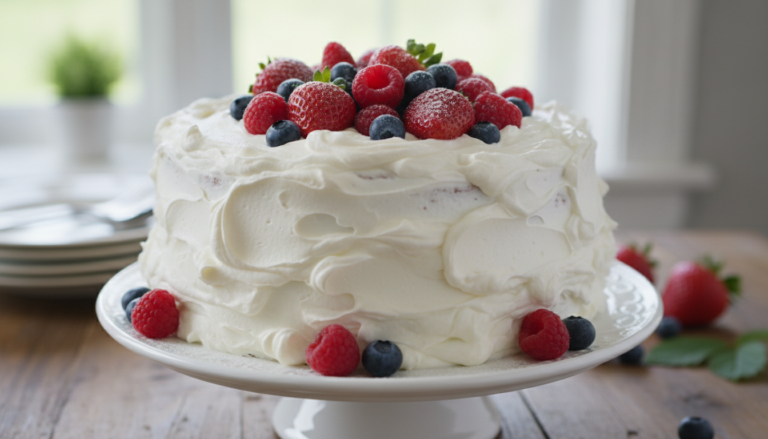
Chantilly Cake is pure sophistication—tender, delicate almond-scented cake layers filled and frosted with clouds of sweetened whipped cream and adorned with fresh mixed berries for a dessert that’s light as air yet deeply satisfying.
12
servings45
minutes30
minutes450
kcal1
hour15
minutesIngredients
2 cups cake flour
1 cup granulated sugar
1 tbsp baking powder
1/2 tsp salt
1/2 cup unsalted butter
3/4 cup whole milk
4 large eggs
1 tsp vanilla extract
1 cup heavy whipping cream
1/2 cup powdered sugar
1 tsp almond extract
8 oz mixed berries
Directions
- Preheat oven to 350°F (175°C) and grease two 8-inch round cake pans.
- In a bowl, whisk together cake flour, sugar, baking powder, and salt.
- Cut in butter until mixture resembles coarse crumbs.
- Add milk, eggs, and vanilla extract; beat until smooth.
- Divide batter between prepared pans and bake for 25-30 minutes.
- Cool cakes in pans for 10 minutes, then turn out onto racks to cool completely.
- For frosting, whip cream until stiff peaks form. Gradually add powdered sugar and almond extract, continuing to whip.
- Place one cake layer on a serving plate, spread a layer of frosting, and top with half the berries.
- Place second layer on top, frost entire cake with remaining frosting, and decorate with remaining berries.
Nutrition Facts
- Total number of serves: 4
- Calories: 450kcal
- Cholesterol: 0mg
- Sodium: 620mg
- Potassium: 400mg
- Sugar: 8g
- Protein: 6g
- Calcium: 60mg
- Iron: 2mg
About This Author

Aurora Wright
Pastry Chef & Dessert Editor
Aurora is the sweet side of Daily Dish. A trained pastry chef and dessert stylist, she’s responsible for our mouth-watering cakes, cookies, and confections. She brings precision, artistry, and a touch of whimsy to every recipe she creates — and taste-tests more chocolate than she’ll admit.
Favorite dish: Flourless dark chocolate torte.
Kitchen motto: “Life’s too short to skip dessert.”















