
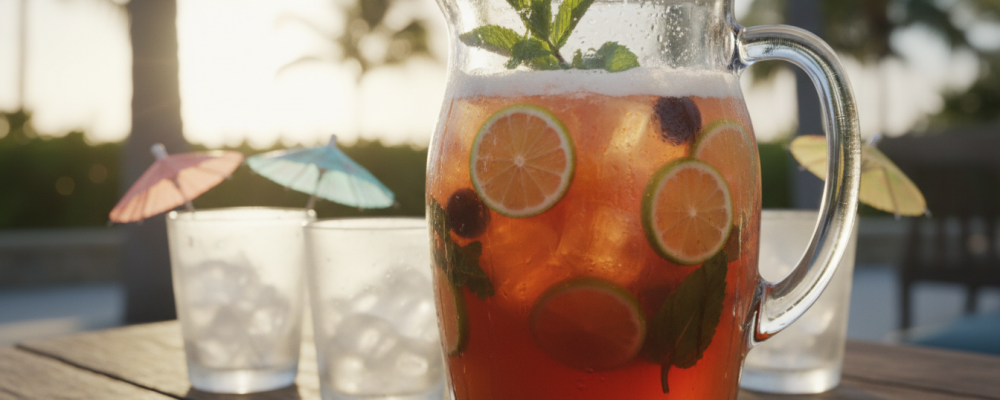

The Mai Tai holds a sacred place in cocktail history — it’s the drink that defined tiki culture and launched a thousand tropical fantasies. But the traditional Mai Tai is built one at a time with precise proportions and careful technique. What happens when you want to serve ten people? Do you stand at your home bar shaking individual cocktails all evening? The Pitcher Mai Tai solves this dilemma beautifully, adapting this iconic cocktail into batch format while preserving the complex, balanced flavor that makes the original so beloved.
What I love about this recipe is how it respects the Mai Tai’s heritage while acknowledging modern entertaining realities. Yes, purists might argue that a true Mai Tai should be made individually, but I’d counter that a cocktail people can actually enjoy at parties is better than one that stays locked in cocktail history. This version maintains the essential elements — two rums for depth, orgeat for that distinctive almond sweetness, lime for brightness, orange curaçao for citrus complexity — while adding pineapple and orange juice to give it pitcher-friendly volume and approachability.
I make these for summer gatherings, pool parties, and any time I want to create instant vacation atmosphere without the stress of individual cocktail service. There’s something magical about a beautiful pitcher of tropical drinks on the table — it says celebration, relaxation, and good times ahead. And when that first person takes a sip and their face lights up with that “I’m somewhere tropical” smile, you know you’ve succeeded.
─────────
The Inspiration Behind This Recipe
The Mai Tai was created in 1944 by Victor “Trader Vic” Bergeron at his Oakland, California restaurant. According to legend, he served it to Tahitian friends who exclaimed “Maita’i roa ae!” — Tahitian for “out of this world!” The original was deceptively simple: aged rum, orange curaçao, orgeat syrup, and fresh lime juice. That’s it. No pineapple juice, no orange juice, no fruit salad garnish. Just perfect balance.
This pitcher version pays homage to that original while adapting it for batch service and modern palates that expect tropical cocktails to be fruit-forward. The pineapple and orange juice additions serve multiple purposes: they extend the volume for pitcher serving, they add tropical character that makes the drink feel more celebratory, and they create a slightly sweeter, more approachable profile that appeals broadly. The traditional elements remain — two rums provide depth and complexity, orgeat delivers that signature almond flavor, lime brings essential tartness, orange curaçao adds citrus sophistication.
The inspiration also came from countless tiki bars and tropical restaurants that serve “Mai Tai variations” by the pitcher. Rather than fight that evolution, this recipe embraces it while maintaining quality. It’s the best of both worlds — tiki tradition meets practical entertaining.
─────────
A Brief History of Tiki Culture and the Mai Tai
Tiki culture emerged in America during the 1930s and exploded in popularity post-World War II when soldiers returned from the Pacific with romanticized visions of tropical islands. Restaurants like Don the Beachcomber and Trader Vic’s created elaborate Polynesian-themed environments complete with thatched roofs, carved tikis, tropical drinks, and exotic cuisine. These establishments offered escapism — a way to experience “island life” without leaving California.
The Mai Tai became the crown jewel of tiki cocktails, though its fame led to countless bastardized versions. By the 1960s and 70s, most “Mai Tais” bore little resemblance to the original, often containing artificial flavors, premixed mixes, and whatever tropical juices happened to be available. The craft cocktail revival of the 2000s brought renewed interest in authentic tiki drinks, with bartenders returning to original recipes and quality ingredients.
The modern Mai Tai exists in several forms: the purist version that stays true to Trader Vic’s original formula, the tropical variations found at beach bars worldwide, and contemporary interpretations like this pitcher version that balance authenticity with practicality. Each has its place, and each serves different purposes. The Pitcher Mai Tai acknowledges that most people’s Mai Tai memories come from vacation experiences where the drinks were sweet, fruity, and served in abundance — and there’s value in honoring those memories while elevating the execution.
─────────
Why This Mixing Method Works
The pitcher-and-chill method employed here is specifically designed to create consistent quality while serving multiple people efficiently. Combining all ingredients in a pitcher and stirring thoroughly allows the flavors to integrate before serving — this pre-integration period lets the orgeat’s almond flavors marry with the citrus, the two rums blend into a cohesive base, and all the tropical elements harmonize into something greater than the sum of its parts.
Refrigerating for an hour before serving serves multiple purposes beyond simple chilling. The cold temperature allows volatile aromatic compounds to settle and meld, creating a more cohesive flavor profile than freshly mixed ingredients would provide. The chilling also ensures that when you pour over ice in individual glasses, the ice melts more slowly because you’re starting with already-cold liquid. This slower dilution means the drink maintains its intended flavor profile longer.
Serving over fresh ice in individual glasses rather than adding ice to the pitcher is crucial for dilution control and presentation. Ice in the pitcher would melt over time, progressively weakening the drinks so later glasses taste watered down. By keeping the pitcher concentrate-style and adding ice only when serving, you ensure every glass tastes exactly as intended whether it’s poured at the beginning or end of your party. This also allows guests to control their own dilution by deciding how much ice they want.
─────────
Flavor Profile: What to Expect
Pitcher Mai Tais deliver a complex, tropical taste experience:
- Layered Rum Richness: White rum provides clean spirit base while dark rum adds caramel, vanilla, and molasses depth
- Almond-Sweet Orgeat: Distinctive almond syrup that’s essential to authentic Mai Tai character
- Bright Lime Tartness: Fresh citrus that balances sweetness and provides essential acidity
- Orange Complexity: Curaçao adds sophisticated orange notes beyond simple orange juice
- Tropical Fruit Sweetness: Pineapple and orange juice create approachable, vacation-in-a-glass appeal
- Balanced Integration: Despite numerous ingredients, proper technique creates harmonious rather than chaotic flavor
- Refreshing Finish: Ends with just enough tartness to invite another sip
The overall experience is tropical, complex, and supremely drinkable — sweet enough to feel like vacation but balanced enough to be sophisticated. It tastes like the best beach bar Mai Tai you’ve ever had, elevated.
─────────
Tips for Making the Best Pitcher Mai Tais
Create tropical perfection for a crowd with these essential techniques:
- Use quality rums: For white rum, choose something clean like Flor de Caña or Plantation 3 Stars. For dark rum, aged options like Appleton Estate or Myers’s add beautiful depth. The rum quality significantly impacts the final drink.
- Orgeat is non-negotiable: This almond syrup is what makes a Mai Tai a Mai Tai. Small Hand Foods or Giffard make excellent versions. If you can’t find orgeat, this isn’t actually a Mai Tai.
- Fresh lime juice only: This cannot be compromised. Bottled lime juice will ruin the drink. Squeeze fresh limes — for a full pitcher, you’ll need 8-12 limes depending on size.
- Quality orange curaçao matters: Pierre Ferrand Dry Curaçao or Cointreau are ideal. Cheap triple sec tastes artificial and throws off the balance.
- Fresh tropical juices when possible: While canned pineapple juice works, fresh pineapple juice and fresh-squeezed orange juice taste noticeably better.
- Chill thoroughly: Don’t rush the refrigeration step. Proper chilling improves flavor integration.
- Scale the recipe precisely: When multiplying for larger crowds, maintain the ratios exactly. Don’t eyeball proportions or the balance will suffer.
For extra tiki authenticity, float a half-ounce of dark rum on top of each individual glass after pouring — it creates visual appeal and intensifies the rum flavor.
─────────
Serving Suggestions and Garnish Ideas
Pitcher Mai Tais look spectacular in traditional tiki mugs, hurricane glasses, or any vessel that suggests tropical escapism. The drink’s amber-orange color is naturally attractive, and fun glassware enhances the vacation vibe. For outdoor entertaining, consider colorful acrylic tiki cups that won’t break around pools or on patios. The visual presentation is part of the experience — this is a drink that should look as fun as it tastes.
The pineapple wedge, maraschino cherry, and mint sprig create that classic tiki garnish that’s immediately recognizable and photogenic. Notch the pineapple wedge so it perches on the rim, skewer the cherry with a cocktail pick alongside a pineapple chunk, or use fancy tiki picks to create multi-level garnish towers. Fresh orchids add exotic flair if you can source them. Paper umbrellas embrace the full tiki aesthetic and make people smile — don’t be too sophisticated to use them.
These cocktails are perfect for luau-themed parties, pool gatherings, summer barbecues, tiki party celebrations, tropical-themed events, or any occasion where you want instant vacation atmosphere. The pitcher format makes them ideal for serving larger groups — just multiply the recipe as needed and keep pitchers chilled and ready. The approachable, tropical flavor profile appeals broadly, making this an excellent choice when entertaining diverse groups who might have different cocktail preferences.
─────────
Storage and Make-Ahead Tips
- Make the base up to 24 hours ahead: Combine all ingredients in the pitcher and refrigerate. The flavors actually improve with overnight integration.
- Fresh lime juice window: Lime juice stays fresh for about 24 hours refrigerated. Beyond that, it loses brightness and can taste bitter.
- Orgeat storage: Once opened, orgeat keeps for several months refrigerated. Check for any separation and shake before using.
- Rum storage: Both white and dark rum keep indefinitely at room temperature in a cool, dark place.
- Tropical juice storage: Fresh pineapple juice keeps for 2-3 days refrigerated; fresh orange juice for the same. Canned/bottled follows package guidelines.
- Scale appropriately: One pitcher serves 6-8 people depending on glass size. For larger parties, make multiple pitchers rather than one enormous batch.
Keep the pitcher refrigerated until serving time, and stir gently before each pour to reincorporate any settled ingredients.
─────────
Why This Recipe Deserves a Spot in Your Rotation
Pitcher Mai Tais represent the perfect marriage of cocktail quality and entertaining practicality. You get to serve a legitimately delicious tropical cocktail to your entire party without spending the evening as bartender. That freedom to actually enjoy your own gathering while still impressing guests with thoughtful drinks is invaluable. This is the kind of recipe that makes entertaining feel effortless rather than stressful.
What makes this particularly worthwhile is how it introduces people to what a proper Mai Tai can taste like. Most people’s only experience with Mai Tais comes from mediocre beach bars or chain restaurants serving neon-colored sugar water. When you serve them this — with real orgeat, quality rum, fresh lime, and proper balance — their eyes open to what tropical cocktails can be. You’re not just serving drinks; you’re educating palates and creating memories. That’s what the best recipes do.
─────────
Recommended Food Pairing
Pitcher Mai Tais pair beautifully with foods that complement their tropical, slightly sweet character without competing with their complexity. Grilled foods are natural companions — think teriyaki chicken skewers, Hawaiian-style kalua pork, grilled shrimp with coconut-lime marinade, or jerk chicken that echoes Caribbean rum traditions. The cocktail’s sweetness balances smoky char and spicy seasonings while its rum backbone stands up to bold flavors.
For appetizers and party food, consider coconut shrimp with sweet chili sauce, spam musubi (Hawaiian rice and spam), pineapple fried rice, or poké bowls with fresh tuna. These Pacific and Caribbean-inspired dishes create cohesive tropical flavor experiences where food and drink reinforce each other. Fresh spring rolls with peanut sauce, chicken satay, or bacon-wrapped water chestnuts also pair excellently — the drinks provide sweet-tart contrast to savory, umami-rich bites.
For a complete tropical meal, serve these Mai Tais alongside a whole roasted pig, traditional luau fare, or simply pulled pork sliders with tangy coleslaw. The cocktail’s pineapple notes echo pineapple-based BBQ sauces, while its complexity stands up to rich, fatty pork without being overwhelmed. Fresh fruit platters featuring mango, papaya, and fresh pineapple extend the tropical theme while providing refreshing, healthy options. The key is choosing foods that celebrate island flavors and create that complete vacation atmosphere — when the food and drinks both say “paradise,” you’ve created something special.
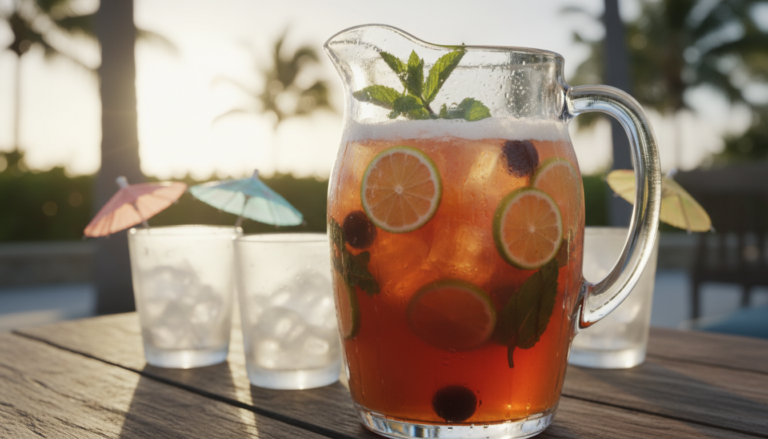
Pitcher Mai Tais
This batch-friendly version of the classic Mai Tai combines two rums with tropical juices and almond-kissed orgeat — island vibes for everyone.
4
servings30
minutes40
minutes300
kcal1
hour10
minutesIngredients
1 cup white rum
1 cup dark rum
0.5 cup orange curacao
1 cup fresh lime juice
0.5 cup orgeat syrup
2 cups pineapple juice
1 cup orange juice
8 slices pineapple
8 pieces maraschino cherry
8 sprigs mint
Directions
- Combine white rum, dark rum, orange curacao, lime juice, orgeat syrup, pineapple juice, and orange juice in a large pitcher.
- Stir the mixture well until fully combined.
- Refrigerate the pitcher until chilled, about 1 hour.
- Serve over ice in individual tiki glasses.
- Garnish each glass with a pineapple slice, maraschino cherry, and a sprig of mint.
Nutrition Facts
- Total number of serves: 4
- Calories: 150kcal
- Cholesterol: 0mg
- Sodium: 620mg
- Potassium: 400mg
- Sugar: 8g
- Protein: 6g
- Calcium: 60mg
- Iron: 2mg
About This Author

Amelia Grace
Editor-in-Chief & Culinary Director
The heart and guiding voice of Daily Dish, Amelia leads our editorial vision and recipe development. With a background in food journalism and over a decade spent in professional kitchens, she has a knack for blending gourmet technique with real-world accessibility. Her goal? To make every reader feel like a confident cook, one dish at a time.
Favorite dish: Creamy lemon risotto with a sprinkle of fresh thyme.
Kitchen motto: “Good food doesn’t have to be complicated — it just has to be made with heart.”















