
There is a particular category of recipe that I find endlessly satisfying to develop and endlessly satisfying to eat: the combination that sounds unlikely in description and tastes completely inevitable in the eating. Pineapple and cottage cheese with Tajín and honey and lime is, on paper, a somewhat unexpected list of ingredients to place in the same cup. In practice, the moment you taste it—the sweet, juicy pineapple against the cool, creamy, slightly tangy cottage cheese against the Tajín’s heat and lime’s brightness—it feels like these ingredients were always supposed to be together, and you simply hadn’t been introduced yet.
This is the snack I reach for when I want something that genuinely refreshes rather than just satisfies—something cool and bright and a little bit tropical that tastes like a small vacation in the middle of a busy week. The Tajín is what makes it something more than a simple fruit-and-cheese combination: it introduces heat and citrus-salt complexity that makes the pineapple taste sweeter and the cottage cheese taste richer, in the same way that the right seasoning always makes everything around it taste more fully of itself.
What I love most about this recipe in a meal prep context is how honestly simple it is—and how that simplicity is not a compromise but an asset. There is nothing to cook, nothing to bake, and nothing to time. There is fruit, and there is a creamy, seasoned mixture, and there is the act of placing one over the other and finishing with a sprig of mint that makes the whole cup look like something from a café menu. Five minutes of Sunday prep. Four days of something genuinely worth reaching for. That is the kind of return on investment that keeps a recipe on the weekly list indefinitely.
─────────────────────────────────────────
The Inspiration Behind This Recipe
This recipe was inspired by the specific and well-established pleasure of fruit with spice and salt—a flavor combination that appears most recognizably in the Mexican street food tradition of fresh fruit with Tajín or chile and lime, but that shows up across cuisines and cultures wherever the right cook has discovered that heat and acid make sweet fruit taste more vividly of itself. The Mango Tajín Fruit Cups in this collection are an expression of that tradition in its simplest form. This recipe takes the same foundational logic and adds a layer: a creamy, protein-rich cottage cheese base that turns a snack into something genuinely sustaining.
The cottage cheese mixture was the creative challenge. Plain cottage cheese is mild and creamy and slightly tangy—a good base, but not a compelling one on its own in a tropical fruit context. The Tajín mixed directly into the cottage cheese along with honey and lime juice transforms it into something with an identity: spiced, bright, faintly sweet, with the Tajín’s dried chili and lime character distributed evenly through every spoonful. The honey balances the Tajín’s heat and the lime’s acidity. The lime juice amplifies the pineapple’s own citrus brightness. And the result is a cottage cheese mixture that tastes specifically, memorably of something rather than generically of dairy.
The fresh mint at the finish is not a garnish in the decorative sense. It is the final flavor note that makes the cup feel complete: a clean, slightly cool, herbal brightness that cuts through the Tajín’s warmth and the honey’s sweetness and leaves the palate refreshed rather than heavy. A cup without it is good; a cup with it is better. It takes three seconds to add, and it is worth those three seconds every time.
─────────────────────────────────────────
A Brief History of Fruit and Dairy Pairings
The combination of fresh fruit with soft dairy—yogurt, fresh cheese, cream—is one of the oldest and most universally distributed flavor pairings in culinary history, appearing across the Mediterranean, the Middle East, South Asia, and the Americas in forms that share a fundamental logic: the dairy’s fat and protein temper the fruit’s acidity and sweetness, and the fruit’s brightness lifts the dairy’s richness, producing a combination that is more balanced and more satisfying than either component alone.
In Indian cuisine, fresh fruit with sweetened yogurt appears across regional traditions from North to South, where the combination of seasonal fruit, honey, and spiced dairy has been both a daily snack and a ritual preparation for centuries. In the Levantine tradition, fresh white cheeses paired with fruit, honey, and dried spices are a staple of mezze spreads. In Eastern European cuisines, cottage cheese and quark served with fresh berries, honey, and a dusting of spice appear on breakfast tables and as light desserts with deep roots in the region’s dairy farming history.
The Mexican-inspired element—Tajín, lime juice—arrives from a completely different culinary tradition but integrates into the fruit-and-dairy combination with remarkable naturalness. The chili-lime seasoning tradition that Tajín represents is itself built on the understanding that spice and acid make fruit more fully itself; applied to a fruit and cottage cheese cup, it produces a preparation that draws simultaneously from several food cultures’ best insights about how fresh ingredients behave together. The result is a snack that belongs to no single tradition and honors all of them, which is the most interesting kind of recipe to cook and to eat.
─────────────────────────────────────────
Why This Preparation Method Works for Meal Prep
The separation of the pineapple and the cottage cheese mixture into distinct layers is the preparation decision that makes this cup meal-prep viable beyond the same-day window. Pineapple contains bromelain—a protease enzyme that, when in prolonged direct contact with protein-containing dairy, begins to break down the cottage cheese’s protein structure, progressively thinning and tenderizing the mixture in a way that produces an unpleasant, watery result by day two if the components are stored in contact. Stored separately and combined at the moment of eating, both components retain their intended textures—the pineapple’s firm, juicy crunch and the cottage cheese mixture’s thick, creamy consistency—for the full storage window.
The Tajín mixed into the cottage cheese rather than sprinkled over the top is a deliberate integration decision. Tajín applied as a surface seasoning remains at the surface—its dried chili and salt flavors are concentrated in the bites that happen to reach the top layer and absent from the spoonful that comes from below. Tajín mixed thoroughly through the cottage cheese before the cup is assembled distributes its flavor evenly throughout the mixture, so every spoonful of cottage cheese in every cup carries the same balanced heat, salt, and citrus character. Uniform seasoning produces a uniformly satisfying cup.
The lime juice mixed into the cottage cheese serves a dual function beyond flavor. Citric acid at the concentration provided by a tablespoon of fresh lime juice lowers the pH of the cottage cheese mixture slightly, which has a mild preservative effect on the dairy and helps the cottage cheese maintain its consistency—resisting the textural softening that can occur in unseasonified dairy stored for several days. The lime juice is doing flavor work and structural work simultaneously, which makes it one of the more efficient additions in the recipe.
─────────────────────────────────────────
Flavor Profile: What to Expect
These cups are bright, tropical, and layered—a flavor profile that is more complex than the six ingredients suggest:
- Sweet, juicy pineapple – The foundational flavor of the cup: intensely tropical, naturally sweet with a gentle acidity, and firm enough to provide a satisfying textural contrast against the creamy cottage cheese above it
- Cool, creamy cottage cheese – The base dairy layer, mild and slightly tangy, provides the protein richness and textural contrast that makes the cup genuinely sustaining rather than merely fruity
- Tajín heat and citrus-salt – Distributed evenly through the cottage cheese mixture, the Tajín’s dried chili warmth and citrus-salt character makes every spoonful taste specifically, boldly of itself—a flavor signature that is immediately recognizable and immediately appealing
- Floral honey sweetness – The honey rounds the Tajín’s heat and the lime’s sharpness into a cohesive, slightly sweet whole—present as a harmonizing background note rather than a dominant sweetness
- Bright lime acidity – Fresh lime juice amplifies the pineapple’s natural citrus character and keeps the cottage cheese mixture from tasting flat or overly rich
- Cool, herbal mint finish – The mint garnish provides a clean, refreshing contrast at the surface—cooling the Tajín’s warmth and brightening the tropical fruit character of the whole cup
The cottage cheese mixture’s flavors integrate more fully after thirty to sixty minutes of refrigerator rest, as the Tajín’s compounds distribute through the dairy base and the lime juice fully permeates the mixture. A cup assembled and chilled for ten minutes before eating—as the recipe suggests—is noticeably more cohesive than one eaten immediately. A cup prepared Sunday and eaten Monday is, in the cottage cheese component specifically, better than the freshly made version.
─────────────────────────────────────────
Tips for Making the Best Pineapple Tajín Fruit & Cottage Cheese Cups
Simple recipes reward attention to their small details more than complex ones do:
- Use fresh pineapple if possible – Canned pineapple in juice is a workable substitute, but fresh pineapple has a firmer texture, a more complex flavor profile, and a significantly better refrigerator lifespan. Canned pineapple continues to soften in the refrigerator over several days; fresh maintains its texture through the full week.
- Drain fresh pineapple briefly before using – Fresh pineapple releases juice as it sits. A brief five-minute drain on a paper towel before dividing into cups reduces excess pooling liquid at the bottom and keeps the cup visually clean through storage.
- Mix the cottage cheese thoroughly – The Tajín, honey, and lime juice need to be fully incorporated into the cottage cheese before portioning. Undermixed cottage cheese delivers uneven seasoning—some bites intensely flavored, others bland. A full minute of stirring produces the uniform distribution that makes each spoonful consistently satisfying.
- Taste and adjust the Tajín level – Tajín’s heat varies slightly between bottles and personal tolerance varies considerably between individuals. Taste the cottage cheese mixture before portioning and add additional Tajín in small increments if a bolder heat is desired—it’s considerably easier to add than to correct.
- Store components separately – This is the most important storage instruction in the recipe. Pineapple in one container, cottage cheese mixture in a sealed jar, and assembly at the moment of eating. The bromelain in pineapple will progressively degrade the cottage cheese’s texture if stored in contact.
- Add mint at serving only – Fresh mint stored on assembled cups darkens and loses its aromatic freshness within hours in the refrigerator. A separate small bag of mint leaves added at the moment of eating produces the intended fresh, herbal finish every day of the week.
Optional: A pinch of finely grated lime zest stirred into the cottage cheese mixture in addition to the juice adds an aromatic citrus depth that the juice alone cannot provide—the essential oils in the zest are fat-soluble and distribute through the dairy base differently, producing a more persistent and more complex citrus character throughout.
─────────────────────────────────────────
Portioning and Container Suggestions
This recipe produces four cups from a single prep session—one per day across a four-day snack or light breakfast rotation. Individual portion-sized glass jars or containers with tight-fitting lids are the ideal vessel for the pineapple base—clear glass allows the vivid yellow-gold of the pineapple chunks to show through, and the sealed environment prevents the pineapple from absorbing refrigerator odors over the storage window.
The cottage cheese mixture stores most efficiently in a single larger jar rather than pre-portioned into four individual containers—a single jar takes up less refrigerator space and allows for flexible portioning based on appetite, since the mixture is spooned over the pineapple at the moment of eating rather than stored as a unit with it. A wide-mouth jar makes spooning easy at snack time without requiring a spoon search at the moment you want to just grab and eat.
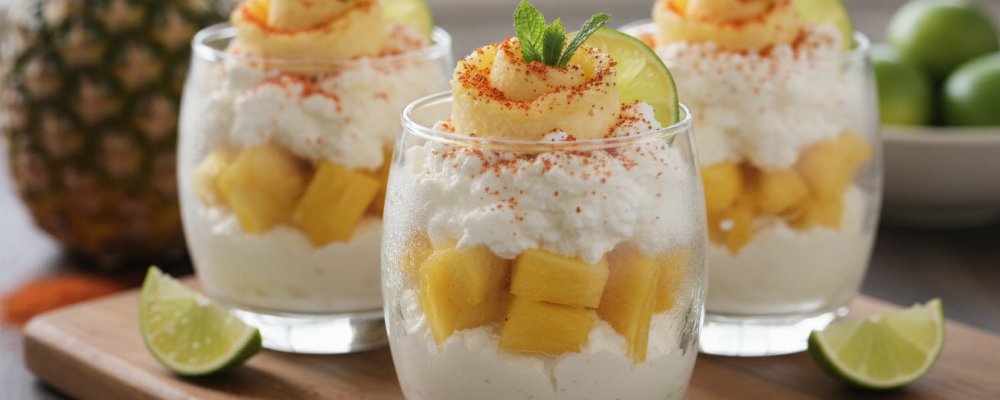
For a visually striking presentation—these cups are appealing enough to serve to guests—use clear glasses or ramekins that show the layered pineapple-to-cottage-cheese ratio, and arrange the mint garnish deliberately rather than simply dropping it on top. A sprig placed at an angle against the rim, with the Tajín’s red-orange color visible against the white cottage cheese, is one of those thirty-second presentation decisions that makes a simple snack feel genuinely considered.
─────────────────────────────────────────
Storage, Reheating, and Shelf Life Tips
- Pineapple storage: Fresh pineapple chunks keep in an airtight container for 4–5 days refrigerated. Canned pineapple (drained) keeps for 3–4 days in the refrigerator after opening. Both should be stored separately from the cottage cheese mixture.
- Cottage cheese mixture: Keeps in a sealed jar for 4–5 days refrigerated. The flavor improves through day two as the Tajín and lime fully integrate; the texture remains consistent through day four.
- Assembled cups: Best consumed within 2 hours of assembly due to the bromelain enzyme interaction between the pineapple and cottage cheese. Pre-assembly for longer storage is not recommended.
- Mint: Store separately in a sealed bag for 4–5 days or standing in a small glass of water covered with a plastic bag in the refrigerator, refreshed every two days.
- No reheating required: This is a cold snack by design—serve directly from the refrigerator.
- Freezer storage: Not suitable. Pineapple loses its texture when frozen and thawed; cottage cheese separates at freezer temperatures. Both are best used fresh within the storage window.
- Room temperature serving: These cups are best eaten cold. At room temperature for more than thirty to forty minutes, the pineapple’s bromelain acts more quickly on the cottage cheese mixture, accelerating any textural changes. Keep refrigerated until the moment of eating.
─────────────────────────────────────────
Why This Recipe Deserves a Spot in Your Meal Prep Rotation
There is a specific kind of satisfaction in a snack that is simultaneously fun to eat and genuinely good for you—one where the experience of eating it is so pleasant that the nutritional case feels like a bonus rather than a justification. This cup is that snack. It is bright and tropical and surprising in the best possible way, with a flavor combination that makes three o’clock feel like a moment worth pausing for rather than something to power through. That experience—the specific pleasure of eating something that tastes as good as it looks—is the most reliable indicator that a recipe will stay in the rotation rather than being made once and forgotten.
It also earns its keep nutritionally in a way that very few snacks manage: high in protein from the cottage cheese, high in vitamin C and bromelain from the pineapple, and seasoned with ingredients that do genuine nutritional work alongside their flavor work. A snack that holds you through the afternoon, requires no cooking, and tastes like a vacation is a rare and genuinely useful thing to have in the refrigerator. These cups are that thing—and five minutes of prep on Sunday is all it takes to have four of them waiting for you, every day, exactly when you need them.
─────────────────────────────────────────
Meal Prep Pairing Suggestions
Pineapple Tajín Fruit & Cottage Cheese Cups pair most naturally with snack preparations that share the same bold, Latin-inspired flavor tradition while offering genuine contrast in texture and temperature. Our Mango Tajín Fruit Cups are the natural companion within the Tajín-forward snack category—both are fresh, citrusy, chili-lime preparations built around tropical fruit, but the mango cups are fruit-only and cool where these cups add the creamy, protein-rich cottage cheese layer that makes them more sustaining and more texturally interesting. The two cover the same flavor tradition at different levels of richness and staying power—perfect rotation partners for different hunger situations across the same week.
For a complete snack rotation that covers sweet, savory, and sweet-savory simultaneously, our Honey Roasted Sunflower Seed Clusters round out the spread with the crunchy, caramelized option that provides a warm, sweet-nutty contrast to both fruit cups’ cool, fresh character. Three snack options—creamy and tropical-spiced, cool and boldly fruity, and warm and caramelized—cover every snacking texture, temperature, and hunger level the week can produce. All three require under thirty minutes combined. All three are genuinely, immediately enjoyable. That is what a well-planned snack rotation looks and tastes like at its best.
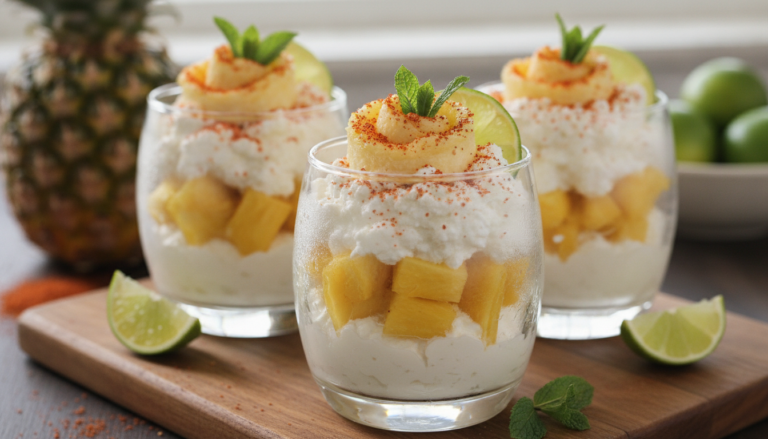
Pineapple Tajín Fruit & Cottage Cheese Cups
These Pineapple Tajín Fruit & Cottage Cheese Cups are a bright, boldly seasoned snack built on sweet pineapple chunks and a honey-lime cottage cheese mixture—a high-protein, tropical-inspired combination that comes together in five minutes and delivers all week long.will love building and devouring.
4
servings30
minutes40
minutes300
kcal1
hour10
minutesIngredients
2 cups pineapple chunks
1 cup cottage cheese
2 tablespoons Tajín seasoning
1 tablespoon honey
1 tablespoon lime juice
4 sprigs fresh mint
Directions
- Divide pineapple chunks evenly into 4 serving cups.
- In a small bowl, mix cottage cheese, Tajín seasoning, honey, and lime juice until well combined.
- Spoon the cottage cheese mixture over the pineapple chunks in each cup.
- Garnish each cup with a sprig of fresh mint.
- Serve immediately or chill for 10 minutes before serving.
Nutrition Facts
- Total number of serves: 4
- Calories: 150kcal
- Cholesterol: 0mg
- Sodium: 620mg
- Potassium: 400mg
- Sugar: 8g
- Protein: 6g
- Calcium: 60mg
- Iron: 2mg
About This Author

Amelia Grace
Editor-in-Chief & Culinary Director
The heart and guiding voice of Daily Dish, Amelia leads our editorial vision and recipe development. With a background in food journalism and over a decade spent in professional kitchens, she has a knack for blending gourmet technique with real-world accessibility. Her goal? To make every reader feel like a confident cook, one dish at a time.
Favorite dish: Creamy lemon risotto with a sprinkle of fresh thyme.
Kitchen motto: “Good food doesn’t have to be complicated — it just has to be made with heart.”