

I have a deep and abiding affection for breakfast recipes that ask nothing of you at the moment you need them most. Not because I’m opposed to morning cooking—I’m not—but because I know that the five minutes between the alarm and the door are rarely available for negotiation, and the difference between a morning that starts well and one that starts in a scramble is often nothing more than having made something on Sunday that is simply, reliably there.
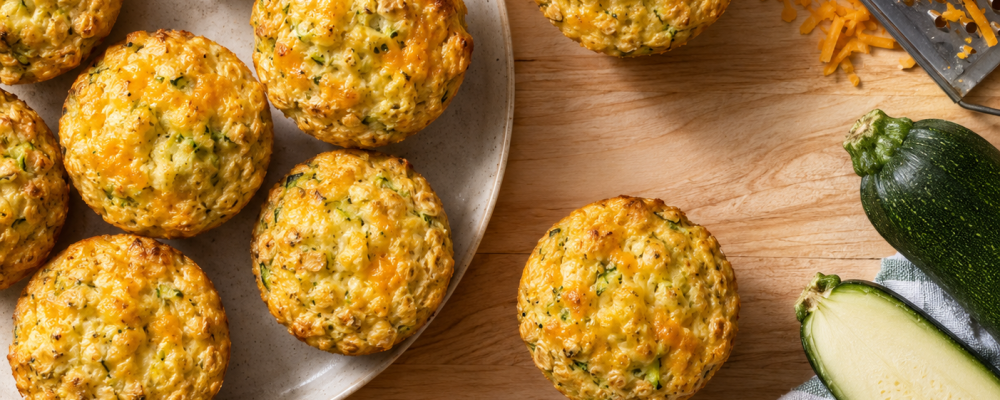
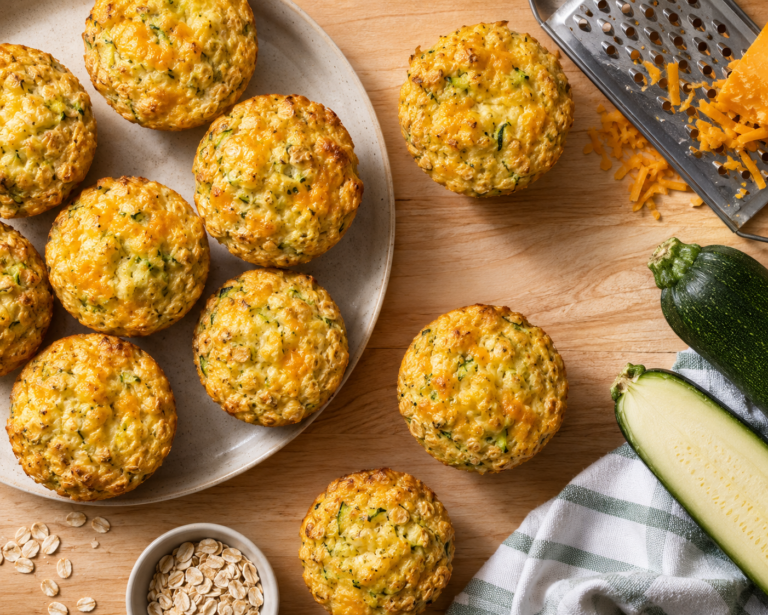
These Zucchini Cheddar Egg & Oat Breakfast Cups are that thing. They are warm and substantial and genuinely delicious—golden on top, custardy in the center, with pockets of melted cheddar and flecks of tender zucchini throughout, and that particular satisfying chew that oats bring to any baked preparation they join. They smell, coming out of the oven, like a proper breakfast made by someone who cared. And they reheat in ninety seconds and taste, in my honest estimation, like they just came out of that oven again.
What I love most about this recipe in a meal prep context is how completely it covers what a weekday breakfast needs to do. It has enough protein from the eggs and cheese to keep you genuinely full through the morning. It has the oats’ fiber doing their quiet work in the background. It has zucchini, which provides moisture and a mild sweetness that keeps the cups from tasting dry or one-dimensional. Everything is present and accounted for—and none of it requires any decision-making at six-thirty in the morning beyond opening the refrigerator and picking up a container.
─────────────────────────────────────────
The Inspiration Behind This Recipe
This recipe was inspired by a question I find myself asking regularly when developing meal prep breakfast options: what is the version of this preparation that is also a vegetable delivery system? Most savory breakfast cups are protein-and-cheese forward, which is wonderful, but they miss an opportunity to make the first meal of the day also a meaningful vegetable serving—something that, across a full week, adds up to a real contribution to the day’s nutritional foundation.
Zucchini was the answer for both practical and culinary reasons. Practically: grated zucchini integrates invisibly into a baked egg-and-oat batter, providing moisture and volume without contributing a strong flavor that would compete with the cheddar and egg. Culinarily: zucchini’s high water content, when properly managed through the pre-bake squeeze step, contributes a steam during baking that keeps the cup’s interior tender and prevents the oats from drying out as they absorb the egg mixture. It is doing structural and moisture work that no other vegetable in the same category does as effectively in a muffin tin preparation.
The rolled oats were the ingredient that took this recipe from a standard egg cup to something more interesting. Oats baked in an egg mixture absorb the surrounding liquid as they cook, softening into a texture that is distinctly different from either baked oatmeal or a plain frittata—somewhere between the two, with a slight chew and a heartiness that makes each cup feel more substantial than its size suggests. They also bind the mixture more effectively than flour would in the same proportion, producing a cup with a more cohesive, sliceable interior that holds its shape through cooling and storage.
─────────────────────────────────────────
A Brief History of Savory Oat Preparations
The use of oats in savory cooking is a tradition far older and far more geographically diverse than the contemporary Western association with oatmeal and granola would suggest. In Scotland, where oats have been a dietary staple since at least the medieval period, savory oat preparations—oatcakes, skirlie (oats toasted with onion and fat), and the oat-based stuffings used in traditional haggis—are as deeply rooted as the sweet porridge tradition and reflect the grain’s versatility as both a thickener and a structural ingredient in savory contexts.
In many traditional cuisines where oats were a primary grain, their savory applications developed out of the same practical logic: oats absorb liquid, provide bulk, and bind other ingredients into a cohesive preparation that holds together under heat. These properties made them useful in savory dumplings, savory baked preparations, and as a thickener for soups and stews long before the contemporary Western breakfast association had established itself. The contemporary interest in savory oat preparations—savory oatmeal, oat-based savory muffins, egg-and-oat cups—is in this sense not an innovation but a rediscovery of the grain’s full culinary range.
The muffin tin format specifically—baking a savory egg-and-vegetable mixture in portioned cups—traces most directly to the contemporary meal prep movement, which adapted the muffin tin from its primary sweet application to a batch-cooking tool for portable, self-contained savory portions. It is, functionally, a modern expression of an ancient logic: portion food before it is needed so that it is ready when hunger arrives.
─────────────────────────────────────────
Why This Cooking Method Works for Meal Prep
Squeezing the excess moisture from the grated zucchini before adding it to the batter is the single most important technique step in this recipe, and the reason is straightforward: zucchini is approximately 95% water by weight, and that water, if allowed to remain in the batter during baking, creates steam that prevents the egg proteins from setting cleanly and produces a cup that is wet and structurally fragile rather than tender and set. A well-squeezed zucchini—wrapped in a clean towel and wrung firmly—removes enough water to allow the batter to bake into a cohesive, set cup without sacrificing the moisture contribution that the zucchini’s remaining water content provides.
The baking powder is the ingredient that distinguishes this preparation from a standard egg cup. In a batter that contains oats and zucchini—both relatively dense additions—the baking powder produces the carbon dioxide that lifts the mixture during baking and prevents the cup from becoming too compact and dense as the oats absorb the egg mixture. The leavening action produces the slightly risen, domed top that gives each cup its characteristic golden crown and its tender, open crumb rather than a dense, flat disc.
Greasing the muffin tin generously—and allowing the cups to cool for several minutes before removing—are the two handling steps that determine whether the cups release cleanly or tear. The egg and oat batter is significantly more adhesive than a standard muffin batter because of its high protein and low-fat content relative to a flour-based cup; it requires a well-greased surface and sufficient cooling time for the structure to firm enough to pull away from the tin cleanly. Both steps are short; neither should be rushed.
─────────────────────────────────────────
Flavor Profile: What to Expect
These cups are warm, savory, and comforting—the flavor profile of a proper breakfast that happens to come in a portable, palm-sized form:
- Rich, savory cheddar – Shredded cheddar melts throughout the cup during baking, creating pockets of creamy, slightly sharp, deeply savory richness that anchor the flavor profile and make every bite feel genuinely satisfying
- Mild, sweet zucchini – Grated zucchini contributes a subtle, slightly sweet vegetable note that keeps the cup from tasting exclusively of egg and cheese—present as a gentle, almost background sweetness that makes the overall profile more complex than it would be without it
- Earthy, slightly chewy oat body – Rolled oats give the cup a distinctive heartiness and a slightly toothsome texture that distinguishes it from a plain egg bite—most noticeable at the edges where they brown slightly
- Clean, complete egg richness – Whisked eggs provide the custardy, golden interior that makes these cups satisfying at a fundamental level—present throughout as both flavor and the structural medium that holds every other component in place
- Bright salt and pepper finish – Simple, direct seasoning that sharpens the cheddar’s depth and brings every other flavor into proper focus—the difference between a cup that tastes fully seasoned and one that tastes flat
The flavors integrate overnight in the refrigerator as the cheddar’s fat distributes further through the egg matrix and the oats continue to absorb surrounding moisture. Day-two cups are marginally more cohesive in flavor than day-one—and their texture, after a proper microwave reheat, is very close to the fresh-baked result.
─────────────────────────────────────────
Tips for Making the Best Zucchini Cheddar Egg & Oat Breakfast Cups
A few precise technique habits will ensure every batch is as good as the first:
- Squeeze the zucchini thoroughly – Grip the grated zucchini in a clean kitchen towel and wring firmly until the towel stops releasing liquid. The amount of water that comes out is typically surprising; removing it is the difference between a cup that bakes set and one that bakes wet. Do not skip this step or abbreviate it.
- Shred your own cheddar – Pre-shredded cheese is coated with anti-caking agents (typically potato starch or cellulose) that prevent it from melting as smoothly as freshly shredded cheese. Freshly shredded cheddar melts into the batter more completely, distributing more evenly and producing a richer, more cohesive cup interior.
- Mix until just combined – Overmixing develops the egg proteins and makes the batter tight, which produces a denser, more rubbery cup than a lightly combined batter. Stir until all ingredients are incorporated and stop there.
- Fill cups consistently – An even fill level produces an even bake. Use a ladle or a ⅓-cup measure to portion the batter and produce cups that bake in the same time across the entire tin.
- Cool before removing – Five minutes minimum. The cup’s structure is still fragile immediately out of the oven. Rushing the release tears the edges and breaks the crust; waiting produces clean, intact cups that stack and store without structural damage.
- Season assertively – The zucchini and oats are relatively neutral ingredients that require salt to taste fully of themselves. Taste the batter before portioning and adjust—the mixture should taste slightly over-seasoned raw, as the egg and oat matrix mellows the salt during baking.
Optional: A thin layer of additional shredded cheddar pressed onto the surface of each cup immediately before baking creates a golden, slightly crispy cheese crust on top that adds visual distinction and a satisfying texture contrast to the tender interior.
─────────────────────────────────────────
Portioning and Container Suggestions
A standard 12-cup muffin tin produces twelve breakfast cups—two to three cups per serving as a complete breakfast, yielding four to six servings from a single batch. Two cups with a piece of fruit produces a complete, nutritionally balanced morning meal; three cups is appropriate for higher-energy mornings or anyone building a higher-protein prep rotation.
These cups stack cleanly in a wide, flat airtight container with a small piece of parchment paper between layers to prevent the cheddar on adjacent surfaces from adhering during refrigeration. Individual daily portions—two or three cups sealed in a small container—make the morning grab completely effortless and the container microwave-safe for direct reheating without transfer.
For on-the-go mornings, these cups are genuinely portable in a way that a bowl or a plate-based breakfast is not—they hold their shape, they reheat in a container that can travel to a desk, and they require nothing more than a single napkin to eat cleanly. That portability, combined with their substantial nutritional content, makes them one of the most genuinely useful breakfasts in the collection for the kind of morning that doesn’t slow down.
─────────────────────────────────────────
Storage, Reheating, and Shelf Life Tips
- Refrigerator storage: Cooled cups keep in an airtight container for up to 4 days. Texture is most tender on days one and two; by days three and four the cups are slightly firmer but still fully enjoyable with proper reheating technique.
- Freezer storage: These cups freeze exceptionally well for up to 2 months. Cool completely, wrap each cup individually in plastic wrap, and transfer to a freezer bag. Thaw overnight in the refrigerator before reheating, or reheat directly from frozen using the oven method.
- Microwave reheating (recommended): Wrap in a damp paper towel and microwave at 50% power for 60–90 seconds. The damp towel creates a steam environment that reheats the interior gently without drying out the egg matrix or toughening the oats. Full power dries the cup and tightens the egg proteins—low power is always the right choice for any egg-based baked preparation.
- Oven reheating: Place on a baking sheet at 325°F for 8–10 minutes from refrigerated. This method restores the slight crispness of the cheddar crust and produces the closest result to the freshly baked cup. Worth the extra time on mornings when texture matters.
- From frozen (oven): 300°F for 18–20 minutes, covered loosely with foil for the first 12 minutes, uncovered for the final 6–8. The foil prevents the surface from over-browning before the interior is heated through.
- Doneness check: A cup that is properly reheated should feel warm to the touch throughout and yield slightly when pressed at the center. A cold center or a surface that is hot while the interior remains cool indicates insufficient reheating time.
─────────────────────────────────────────
Why This Recipe Deserves a Spot in Your Meal Prep Rotation
There is a category of recipe that I think about as quietly essential—the kind that doesn’t make headlines and doesn’t require a particular season or a special occasion but that makes the week measurably better every single time it appears in the refrigerator. This Zucchini Cheddar Egg & Oat Breakfast Cup is in that category. It is not dramatic. It is not the most inventive recipe in the collection. It is simply, steadily excellent—hearty and warm and fully seasoned and made from ingredients that are always available and always affordable.
It is also the kind of recipe that earns its place across seasons and circumstances: equally appealing in the depths of winter, when something warm is the only acceptable morning offering, and in summer, when zucchini is at its most abundant and the freezer version is a genuinely excellent way to extend it. A batch made in twenty-five minutes on a Sunday provides a week of mornings that start well—not perfectly, not dramatically, but well. And in my experience, a morning that starts well is one of the most underrated gifts you can give yourself. This cup delivers it reliably, every single week
Zucchini Cheddar Egg & Oat Breakfast Cups
These Zucchini Cheddar Egg & Oat Breakfast Cups are a golden, savory baked breakfast that combines eggs, rolled oats, shredded cheddar, and grated zucchini into a portable, protein-rich cup that reheats beautifully and tastes genuinely satisfying every single morning..
6
servings15
minutes25
minutes180
kcal40
minutesIngredients
1 cup grated zucchini
6 whole eggs
1 cup rolled oats
0.5 cup shredded cheddar cheese
0.25 cup milk
0.5 teaspoon salt
0.5 teaspoon black pepper
0.25 teaspoon baking powder
Directions
- Preheat the oven to 375°F (190°C) and grease a muffin tin.
- Squeeze excess moisture from grated zucchini using a clean kitchen towel.
- In a large bowl, whisk together eggs, milk, salt, and pepper.
- Add grated zucchini, oats, cheddar cheese, and baking powder to the egg mixture and mix until well combined.
- Divide the mixture evenly among the prepared muffin cups.
- Bake for 20-25 minutes or until the centers are set and the tops are golden.
- Allow to cool for a few minutes before removing from the muffin tin. Serve warm.
Nutrition Facts
- Total number of serves: 4
- Calories: 180kcal
- Cholesterol: 0mg
- Sodium: 620mg
- Potassium: 400mg
- Sugar: 8g
- Protein: 6g
- Calcium: 60mg
- Iron: 2mg
About This Author

Amelia Grace
Editor-in-Chief & Culinary Director
The heart and guiding voice of Daily Dish, Amelia leads our editorial vision and recipe development. With a background in food journalism and over a decade spent in professional kitchens, she has a knack for blending gourmet technique with real-world accessibility. Her goal? To make every reader feel like a confident cook, one dish at a time.
Favorite dish: Creamy lemon risotto with a sprinkle of fresh thyme.
Kitchen motto: “Good food doesn’t have to be complicated — it just has to be made with heart.”















