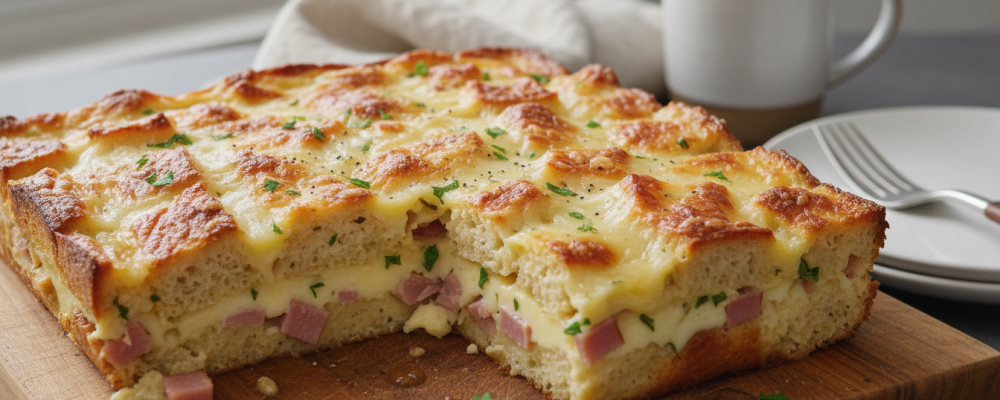

Overnight strata represents one of the most intelligently designed recipes in the brunch canon. By refrigerating the assembled casserole overnight, you accomplish something that no amount of same-day preparation can replicate: complete, even custard absorption throughout every layer of bread. The bread has eight or more hours to absorb the egg mixture fully, swelling with liquid until each piece is saturated from exterior to interior. When baked, this creates a texture that’s simultaneously custardy and structured—each layer identifiable but unified by the egg custard that holds everything together.
What distinguishes this strata from simpler breakfast casseroles is the Dijon mustard in the custard. That single ingredient does significant work: it adds acidity that brightens the eggs’ richness, provides subtle heat that makes the dish more complex, and has particular affinity for both ham and Swiss cheese—the classic croque monsieur combination for good reason. The mustard doesn’t announce itself prominently; it functions as a background note that makes you taste something more sophisticated without being able to identify exactly why.
I appreciate this recipe because it demonstrates the value of patience in cooking. The overnight rest isn’t a convenience feature—it’s a technical improvement that produces better results than rushing the same dish. Home cooks often underestimate how much resting, marinating, and overnight soaking improve final outcomes. This strata is the clearest possible illustration of that principle: the same ingredients assembled and baked immediately would produce a good casserole; assembled and rested overnight produce an exceptional one.
─────────
The Inspiration Behind This Recipe
This recipe draws direct inspiration from the French croque monsieur—that iconic ham and Swiss cheese sandwich on toasted bread with béchamel or mustard. The flavor combination is centuries old and impeccably balanced: salty cured ham, nutty Swiss cheese, the bite of Dijon mustard. The strata format takes those classic elements and transforms them into a brunch-friendly, crowd-feeding casserole that maintains the flavor logic of the original while serving an entirely different practical purpose.
The Dijon mustard addition was the critical insight that elevates this from generic ham-and-cheese casserole to something more sophisticated. Traditional strata recipes often rely solely on salt and pepper for seasoning, producing pleasant but somewhat plain results. By incorporating mustard into the custard itself—rather than spreading it on individual bread slices—you distribute that flavor evenly throughout, ensuring every bite carries that subtle, sharpening quality that makes the dish taste more refined.
What I wanted to create was a recipe that felt appropriate for both casual family breakfasts and elegant entertaining—the kind of dish you’d serve with confidence to guests while also making on regular Sunday mornings when you want something special without effort. The overnight preparation requirement is actually a feature rather than an inconvenience: it forces advanced preparation that results in better food and more relaxed morning hosting. That alignment of good technique and practical benefit is what makes this recipe genuinely valuable.
─────────
A Brief History of Strata
Strata—the Italian word for “layers”—describes savory bread puddings with origins in both European peasant cooking and American home economics. The concept of soaking stale bread in eggs and milk before baking existed across multiple culinary traditions as a practical solution for using bread past its prime. American strata recipes gained particular prominence in the mid-20th century when women’s magazines and home economics curricula promoted make-ahead entertaining strategies.
The savory bread pudding tradition has European precedents in French pain perdu, British bread and butter pudding, and Italian strata di pane. American versions consolidated these influences into a distinctly practical format: layer bread with cheese and protein, pour over custard, refrigerate overnight, bake in the morning. This technique became a staple of holiday brunches, potluck gatherings, and bed-and-breakfast menus precisely because it solved the hosting dilemma of feeding crowds without morning stress.
The ham and Swiss combination specifically reflects French culinary influence on American cooking—croque monsieur’s flavor profile translated into casserole format. This appropriation of sophisticated French flavors into practical American cooking contexts represents a recurring pattern in American culinary history, where European fine dining sensibilities get reinterpreted for home cooking accessibility. The strata format democratizes those flavors, making them available to home cooks without classical training or professional equipment.
─────────
Why This Cooking Method Works
The overnight refrigeration period is not merely convenient—it fundamentally transforms the dish. During those eight or more hours, the bread’s starch molecules absorb the egg-milk custard through osmosis, swelling and softening until each piece is completely saturated. This uniform saturation is impossible to achieve in minutes or even hours. When you bake a strata that’s been properly soaked overnight, every layer contributes equally to the final texture—no dry spots, no areas where custard pooled on top without absorbing. The result is a cohesive, unified casserole rather than bread sitting in egg mixture.
The Dijon mustard serves multiple technical functions beyond flavor. Its acidity helps tenderize the bread slightly during the overnight soak, contributing to that soft, custardy interior texture. The mustard’s natural emulsifiers help the egg-milk mixture maintain consistency throughout the long rest period, preventing separation that might otherwise result in uneven absorption. The flavor compounds in Dijon also intensify overnight as they infuse throughout the custard, creating deeper, more complex seasoning than would be possible with same-day preparation.
Baking uncovered at 350°F creates the golden, slightly crispy top that defines a well-executed strata. The uncovered baking allows moisture to evaporate from the surface, concentrating flavors and creating those caramelized, textured edges. Lower temperatures wouldn’t brown the top adequately; higher temperatures would over-brown before the center sets. The 45-60 minute window accommodates different oven calibrations—the strata is done when the center is set and no longer jiggles when you gently shake the dish. The five-minute rest allows the structure to firm up for cleaner, more attractive slicing.
─────────
Flavor Profile: What to Expect
This strata delivers sophisticated, layered flavors with comforting richness:
- Nutty Swiss cheese – Mild, slightly sweet, with that characteristic nutty depth that intensifies when melted
- Savory diced ham – Salty, smoky pork that provides protein and concentrated flavor throughout
- Dijon mustard complexity – Subtle, sharpening background note that adds sophistication without announcing itself
- Rich egg custard – Creamy, velvety base that unifies all components into cohesive texture
- Caramelized top layer – Golden-brown crust with concentrated cheese and bread flavors
- Tender bread interior – Soft, custardy layers that are set but never rubbery
- Black pepper warmth – Gentle heat that lifts the other flavors
The overall experience is one of refined comfort—this tastes elegant without being fussy, sophisticated without being complicated. The Dijon mustard is the key differentiator from standard breakfast casseroles; it creates that “there’s something extra here” quality that makes people ask what’s in it. The Swiss cheese provides nutty complexity that cheddar doesn’t offer, while the ham’s saltiness is perfectly balanced by the custard’s richness. Each slice should show distinct layers while remaining cohesive and easy to serve.
─────────
Tips for Making the Best Ham and Swiss Overnight Strata
Use day-old bread—slightly stale bread absorbs custard more effectively and holds its structure better than fresh.
- Layer evenly and generously – Distribute ham and cheese consistently so every slice gets equal portions
- Press down after pouring custard – Helps all bread make contact with the liquid for even absorption
- Wrap tightly overnight – Prevents the custard from drying out and forming a skin on top
- Remove from refrigerator early – Allow 30 minutes at room temperature before baking for more even cooking
- Use good Swiss cheese – Imported or high-quality domestic Swiss provides significantly better flavor than processed varieties
- Don’t skip the Dijon – This ingredient transforms the dish; even if you’re not a mustard fan, don’t omit it
- Check doneness carefully – Insert a knife in the center; it should come out clean with no liquid custard
- Rest before slicing – This step is essential for clean, attractive portions
For elevated variations, add caramelized onions between layers, incorporate fresh thyme into the custard, or substitute Gruyère for Swiss for an even more authentically French flavor profile.
─────────
Serving Suggestions and Side Pairings
This strata is substantial and elegant enough to anchor an impressive brunch spread with minimal additional effort. Pair with a simple arugula salad dressed with lemon and olive oil—the peppery greens and bright acidity cut through the rich custard beautifully. Fresh fruit platters provide sweetness and color that complement the savory strata without competing. Roasted cherry tomatoes alongside add bright, acidic flavor and vibrant visual contrast.
For presentation, serve the strata directly from the baking dish for casual occasions, or use a sharp spatula to transfer neat slices to individual plates for more formal service. Garnish with fresh herbs—chives, thyme, or flat-leaf parsley—to add color and freshness. A small dollop of Dijon mustard on the side honors the dish’s inspiration and allows guests to add extra sharpness.
This strata shines at holiday breakfasts, special occasion brunches, overnight guest entertaining, or any time you want impressive results without morning preparation stress. The make-ahead nature makes it perfect for occasions where you want to be present with guests rather than cooking while they arrive. It’s particularly appropriate for Easter brunch, Mother’s Day, or Christmas morning when everyone wants to enjoy the occasion rather than spending it in the kitchen.
─────────
Storage, Reheating, and Make-Ahead Tips
- Overnight is essential: Minimum 8 hours refrigeration for best results; up to 24 hours works well
- Assemble up to 24 hours ahead: Beyond that, bread can become too soggy
- Store baked strata: Cover and refrigerate for up to 4 days
- Reheat individual portions: Microwave for 60-90 seconds or until heated through
- Reheat entire casserole: Cover with foil, warm at 325°F for 20-25 minutes
- Freeze baked portions: Wrap individual slices and freeze up to 2 months; thaw overnight before reheating
- Maintain quality: Reheat covered to prevent drying out, then uncover last 5 minutes to restore some crust
- Serve at room temperature: Works beautifully for brunch buffets where temperature flexibility is helpful
The overnight requirement is genuinely non-negotiable for optimal results—this is one recipe where following the timing instruction makes a measurable difference in the final dish quality. Plan accordingly and you’ll be rewarded with something genuinely exceptional.
─────────
Why This Recipe Deserves a Spot in Your Rotation
This recipe earns its place because it solves the most persistent challenge of brunch hosting: how to serve something genuinely impressive without spending your morning cooking while guests socialize without you. The overnight preparation requirement transforms hosting logistics completely—your work is done before you go to sleep, and morning means only preheating the oven and enjoying coffee while something wonderful bakes. That freedom to be present rather than cooking is enormously valuable for any host.
Beyond practical benefits, this strata delivers sophisticated flavor that exceeds its simple ingredient list. The Dijon mustard, the Swiss cheese, the ham combination creates something that tastes refined and intentional—the kind of dish that makes guests think you have more culinary skill than the recipe actually requires. Food that makes you look good while being genuinely approachable is exactly what belongs in a reliable recipe collection. This strata does both effortlessly, making it worthy of repeated use for years to come.
─────────
Recommended Drink Pairing
The sophisticated French-inspired flavors of this strata—Dijon mustard, Swiss cheese, savory ham—call for beverages that honor that culinary heritage while being appropriate for morning service. Coffee works beautifully, particularly a medium roast with enough body to complement the rich custard without overwhelming the delicate mustard and cheese notes. A café au lait adds creamy texture that mirrors the strata’s custardy interior while providing gentle caffeine to start the morning.
For wine lovers who embrace morning indulgence, a crisp white Burgundy or Chablis provides mineral-driven acidity that cuts through the egg richness while honoring the French flavor profile. Champagne or quality prosecco adds celebratory bubbles and bright acidity—particularly appropriate for holiday mornings or special occasions when this strata most often appears. For a classic Parisian pairing, a simple kir (white wine with a splash of cassis) brings fruit notes and slight sweetness that complements rather than competes.
For non-alcoholic morning beverages, fresh-squeezed orange juice provides bright citrus acidity that cuts through the custard beautifully. Sparkling water with lemon offers palate-cleansing refreshment between bites. Earl Grey tea brings bergamot’s sophisticated citrus aromatics that complement the Dijon’s sharpness in an unexpectedly lovely way. Apple juice provides gentle sweetness and fruit acidity that balances the savory elements without competing. Whatever you choose, something with sufficient acidity is key—the strata’s richness benefits from beverages that refresh and reset the palate, making each bite as satisfying as the first.
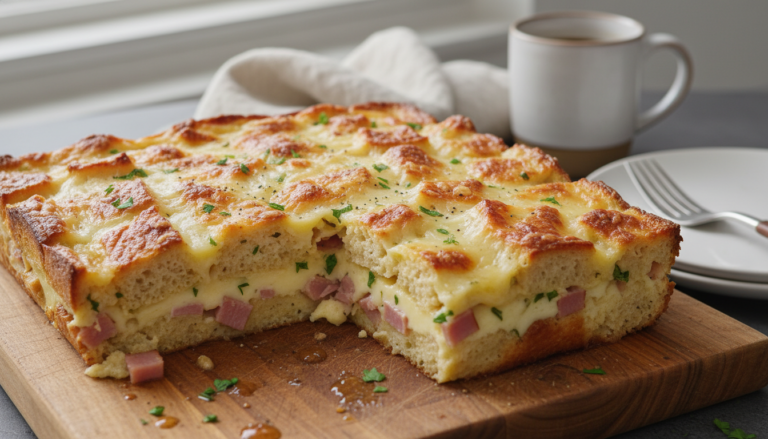
Ham and Swiss Overnight Strata
This Ham and Swiss Overnight Strata transforms simple pantry ingredients into a sophisticated layered casserole—custardy bread, savory ham, and nutty Swiss cheese enriched with Dijon mustard for a make-ahead brunch that delivers elegant results with zero morning effort.classics simultaneously.
8
servings20
minutes1
hour300
kcal1
hour20
minutesIngredients
8 slices bread
1 cup diced ham
1 cup shredded Swiss cheese
6 large eggs
2 cups milk
1 tsp Dijon mustard
1/4 tsp salt
1/4 tsp black pepper
Directions
- Grease a 9×13-inch baking dish.
- Layer half of the bread slices in the prepared dish.
- Sprinkle half of the ham and Swiss cheese over the bread.
- Layer the remaining bread slices over the top.
- Add the remaining ham and Swiss cheese.
- In a large bowl, whisk together eggs, milk, Dijon mustard, salt, and pepper.
- Pour the egg mixture evenly over the bread layers.
- Cover and refrigerate overnight.
- Preheat oven to 350°F (175°C).
- Bake the strata uncovered for 45-60 minutes or until set and golden.
- Let stand for 5 minutes before slicing and serving.
Nutrition Facts
- Total number of serves: 4
- Calories: 300kcal
- Cholesterol: 0mg
- Sodium: 620mg
- Potassium: 400mg
- Sugar: 8g
- Protein: 6g
- Calcium: 60mg
- Iron: 2mg
About This Author

Benjamin Brown
Recipe Developer
Benjamin is our flavor engineer. A classically trained chef turned recipe developer, he’s obsessed with balancing taste, texture, and creativity. He ensures that every recipe we publish is not only delicious but also reliable, approachable, and repeatable — even for beginners.
Favorite dish: Slow-braised short ribs with red wine reduction.
Kitchen motto: “Cooking is part science, part soul.”