
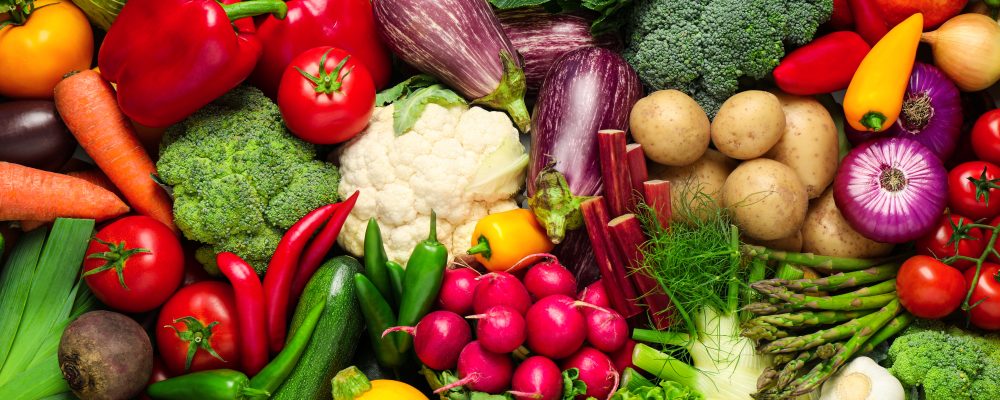

There is a moment that happens in the kitchen that is so familiar it has become invisible.
The green beans dropped into boiling water turn a deeper, more vivid green — a color so much more alive than the raw bean that it seems almost implausible that the heat responsible for it doesn’t eventually destroy it. The beet that bleeds its extraordinary purple into anything it touches. The saffron that transforms a pale broth into something the color of a sunset. The red cabbage that turns a shocking blue when it encounters an alkaline ingredient and returns to its original purple when acid is added.
Color in food is not decoration. It is information — about ripeness, about cooking state, about chemical transformation, about the presence of specific compounds that are doing specific things to the food and to the person eating it.
Understanding the science of color in food — what produces it, what changes it, and why these changes matter — is one of the more illuminating pieces of food knowledge available to any cook. Not because color is the primary consideration in cooking, but because the chemistry that produces color in food is often the same chemistry that produces flavor, texture, and nutritional value.
The color tells you what is happening. And knowing what is happening changes what you do about it.
Chlorophyll and the Green That Doesn’t Last
The vivid green of vegetables is produced by chlorophyll — the molecule responsible for photosynthesis, the light-capturing process that allows plants to convert sunlight into energy. Chlorophyll is one of the most abundant organic molecules on earth and one of the most distinctive colors in the natural world.
The specific chemistry of why chlorophyll is green is worth understanding. Chlorophyll molecules absorb light in the red and blue parts of the visible spectrum and reflect green light — which is why leaves and green vegetables appear green to the human eye. The molecule is held in a specific three-dimensional structure by a magnesium atom at its center, and it is this structure that determines both the color and the function of the molecule.
When heat is applied to green vegetables, the cell walls begin to break down and acids that were compartmentalized inside the cells are released into the cooking liquid. These acids attack the magnesium atom at the center of the chlorophyll molecule, displacing it and replacing it with hydrogen. The resulting molecule — pheophytin — absorbs light differently and appears olive-drab or gray rather than vivid green.
This is the scientific explanation for why overcooked vegetables lose their green color — not because the green was fragile but because the acid attack on the chlorophyll molecule changes its structure and therefore its light-absorbing properties.
The practical implications are specific. Blanching green vegetables in a large quantity of vigorously boiling, well-salted water — and then immediately transferring them to ice water — works so well at preserving green color because the large quantity of water dilutes the released acids, the vigorous boil ensures rapid cooking that minimizes acid release time, and the ice bath stops the cooking immediately before the continued heat can cause further chlorophyll degradation.
The baking soda sometimes recommended in old recipes to preserve green color works by creating an alkaline environment that neutralizes the released acids — but at the cost of making the vegetables mushy, because alkaline conditions break down the pectin in cell walls. The acid neutralization preserves the color at the cost of the texture.
Anthocyanins and the Colors That Change With pH
If chlorophyll is the most common source of green in food, anthocyanins are the most versatile and most dramatic source of color — responsible for the reds, purples, and blues of blueberries, red cabbage, red onions, cherries, grapes, and dozens of other foods.
The extraordinary quality of anthocyanins is their sensitivity to pH — their ability to change color dramatically depending on whether the environment they are in is acidic or alkaline. In acidic conditions, anthocyanins are red or pink. In neutral conditions, they are purple. In alkaline conditions, they are blue or green.
This pH sensitivity is what produces the dramatic color changes that cooks occasionally encounter when working with anthocyanin-rich vegetables. Red cabbage braised with vinegar or apple — acidic ingredients — stays red or turns pink. Red cabbage braised with alkaline ingredients — or simply cooked in hard water with high mineral content — turns blue or gray in a way that looks like something has gone wrong, even though the color change is purely a chemical response to the pH of the cooking environment.
The same chemistry is responsible for the specific color of blueberries — their blue color reflects the slightly alkaline conditions of the fruit’s internal chemistry — and for the way that blueberry muffins sometimes develop a greenish tinge when baked in batter that contains baking soda, a strongly alkaline ingredient that shifts the anthocyanins in the berries toward the green end of the spectrum.
The practical implication for cooks is straightforward: when cooking with anthocyanin-rich ingredients, controlling the pH of the cooking environment controls the color. Adding acid — lemon juice, vinegar, citrus — preserves or enhances the red/pink end of the spectrum. Avoiding alkaline ingredients preserves the purple. Understanding that blue or green discoloration in a dish containing these ingredients is a pH issue, not a spoilage issue, prevents unnecessary alarm.
Carotenoids and the Colors That Survive
The yellow, orange, and red colors of carrots, tomatoes, sweet potatoes, bell peppers, corn, and many other vegetables and fruits are produced by carotenoids — a family of pigment molecules that are, in many ways, the opposite of chlorophyll in terms of their stability under heat.
Carotenoids are fat-soluble rather than water-soluble, which means they are not extracted into cooking water during boiling and are relatively stable under the heat of cooking. A carrot boiled until soft retains its orange color — because the beta-carotene responsible for that color is fat-soluble, protected from the water, and stable at the temperatures involved.
This fat-solubility also has direct implications for the nutritional value of carotenoid-rich vegetables. Carotenoids — including beta-carotene, lycopene, lutein, and dozens of others — are significant dietary antioxidants, and their bioavailability depends on the presence of fat in the meal. Cooked tomatoes served with olive oil are not just a better flavor combination than raw tomatoes without fat — they are a more nutritionally available source of lycopene, because the fat dramatically increases the absorption of the fat-soluble carotenoid in the gut.
This is one of the cases where the science of food color connects directly to the science of food nutrition — where the same fat-solubility that makes carotenoids colorfast in cooking water also makes them fat-dependent for absorption.
The color of the cooked carrot, the roasted sweet potato, the simmered tomato sauce — each is telling a story about specific molecules that are fat-soluble, heat-stable, and nutritionally significant. The color is the information.
The Maillard Brown and the Color of Flavor
The brown color produced by the Maillard reaction — the cascade of chemical reactions between amino acids and reducing sugars that produces the crust of seared meat, the surface of toasted bread, the caramelized exterior of roasted vegetables — is not a single compound but a complex mixture of hundreds of different molecules collectively called melanoidins.
Melanoidins are the brown pigments of the Maillard reaction, and their color is directly connected to their flavor. The same reaction that produces the brown color produces the aromatic compounds responsible for the flavor of browned food — the nutty, complex, roasted notes that distinguish a seared steak from a poached one, a toasted loaf from an untoasted one, roasted garlic from raw garlic.
This connection between brown color and flavor in the Maillard reaction is one of the most useful pieces of food science for any cook to internalize — because it means that the color of a food undergoing the Maillard reaction is a direct indicator of its flavor development. A pale sear means pale flavor. A deep golden-brown means deep, complex flavor. A very dark brown approaching black means the beginning of bitterness from burned compounds.
The color tells you exactly where you are in the flavor development — and therefore exactly when to act.
Betalains and the Color That Bleeds
The extraordinary color of beets — the deep, vivid red-purple that bleeds into everything it contacts with an intensity that no other vegetable quite matches — is produced by a family of pigments called betalains that are chemically unrelated to the anthocyanins responsible for similar colors in other plants.
Betalains exist only in a small group of plants — beets, chard stems, dragonfruit, and a handful of others — and their chemistry is distinct from the flavonoid compounds that produce most plant colors. They are water-soluble and relatively heat-stable compared to many other plant pigments, which is why beets retain their color well through cooking but bleed so dramatically into any liquid or porous food they contact.
The practical management of beet color in cooking is one of the more specific challenges in vegetable preparation. Roasting beets whole in their skin — or wrapping them in foil — contains the betalains until the skin is removed, preventing the color bleeding that makes peeling and cutting raw beets so dramatically messy. Adding acid — lemon juice or vinegar — to beet preparations not only brightens the flavor but slightly stabilizes the color by reducing the pH.
Golden beets — which contain a different form of betalain called betaxanthin rather than the red betacyanin of common red beets — have similar flavor but dramatically different color behavior. They don’t bleed into surrounding ingredients in the same way, which makes them useful in preparations where the visual clarity of other components matters.
Saffron and the Color Worth Its Weight
The most expensive spice in the world by weight — produced from the dried stigmas of the Crocus sativus flower, requiring hundreds of flowers to produce a single gram — owes its extraordinary coloring power to a specific carotenoid-derived compound called crocin.
Crocin is water-soluble, unlike most carotenoids, which makes saffron uniquely effective at coloring water-based preparations like broths, rice dishes, and sauces. A tiny quantity of saffron — a few dozen threads — can transform a colorless broth into a vivid golden-yellow that is one of the most distinctive colors in any culinary tradition.
The color of saffron is inseparable from its flavor and aroma — the same crocin that produces the color contributes to the flavor, and the safranal and picrocrocin compounds that produce the distinctive floral, slightly medicinal aroma and the slightly bitter taste are present in the same threads. Saffron that has lost its color has also lost its flavor — the compounds degrade together.
The technique of blooming saffron — steeping the threads in warm water or broth before adding them to a dish — extracts the crocin and other flavor compounds more completely than adding the threads directly, producing both more vivid color and more pronounced flavor from the same quantity of spice.
The Takeaway
The colors of food are not accidents or aesthetics. They are chemistry — specific molecules doing specific things, responding to specific conditions, telling specific stories about what is happening to the food they color.
Vivid green means properly handled chlorophyll. Olive-drab means acid-damaged pheophytin. The red-to-blue shift of anthocyanins is a pH indicator. The orange of a carotene-rich vegetable signals fat-soluble compounds that require fat for bioavailability. The brown of a well-seared surface signals the Maillard reaction’s flavor compounds at work.
Understanding what the colors mean gives the cook a new way of reading what is happening in the pan — a visual language for the chemistry that is always occurring, whether the cook is watching for it or not.
The colors are telling you something.
It is worth knowing how to listen.














