
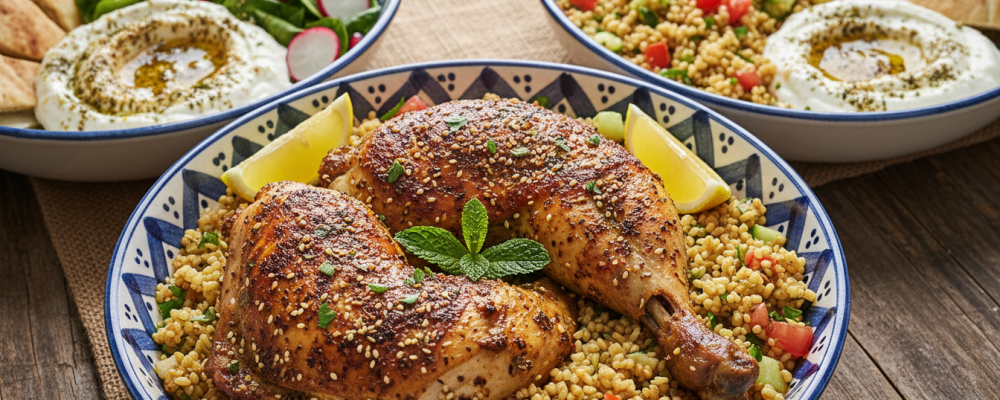

There are ingredients that season a dish, and then there are ingredients that define it—that make a preparation taste specifically, unmistakably of itself in a way that no other combination of spices could quite replicate. Za’atar is the second kind. It is one of the most ancient and most beloved spice blends in Middle Eastern cooking—a mixture of dried thyme and oregano, sumac, sesame seeds, and salt—and the moment it meets heat and olive oil, it produces a fragrance that is genuinely difficult to describe to anyone who hasn’t experienced it and entirely unnecessary to describe to anyone who has.
I think about za’atar the way I think about a few very specific ingredients in this collection: as flavor that carries a sense of place. When the oven reaches temperature and the za’atar-rubbed chicken begins to roast—when that warm, herby, faintly tangy, toasty-sesame fragrance reaches the kitchen—the room changes. It smells like a market, like a warm afternoon somewhere with better light and more time. It smells, specifically, like food that was made with intention and with the knowledge that good spices are one of cooking’s most accessible luxuries.
This bowl is built around that fragrance and everything it promises. The bulgur cooked in chicken broth carries the oven’s warmth through the grain base. The lemon, squeezed at the end, cuts through everything with the kind of brightness that makes you understand why every Mediterranean and Middle Eastern dish seems to end with a wedge of it. The vegetables, simply steamed, are the clean contrast that keeps the bowl from becoming too rich. Everything together is the kind of meal that sustains you through the afternoon and makes you glad, on Wednesday, that you cooked on Sunday.
─────────────────────────────────────────
The Inspiration Behind This Recipe
This recipe was designed around a conviction I hold firmly: that the most useful spice blends in a meal prep context are the ones that do a full flavor profile’s worth of work in a single application. Za’atar—with its dried herbs, its sumac, its sesame seeds—delivers herbaceous, citrusy, nutty, and savory notes simultaneously. Rubbed onto chicken with olive oil before roasting, it creates a crust that seasons the meat throughout the cook rather than simply flavoring the exterior surface. That crust, baked until the sesame seeds toast and the herbs bloom, produces a flavor depth that a single-spice seasoning requires multiple steps and additional ingredients to approximate.
The bulgur was chosen as the grain base specifically because of its compatibility with the za’atar flavor profile. Bulgur wheat—cracked and partially cooked wheat—has a mild, nutty sweetness and a tender, chewy texture that absorbs surrounding flavors without disappearing into them. Cooked in chicken broth rather than water, it takes on a savory depth that makes it a genuinely seasoned component of the bowl rather than a neutral base, and its relatively quick cooking time—twelve to fifteen minutes—allows it to be prepared simultaneously with the roasting chicken without requiring precise timing coordination. A grain that cooks itself while the protein roasts is a significant practical advantage in a meal prep context where oven time is the rate-limiting resource.
The lemon, applied last and generously, is not a garnish. It is the final flavor decision that brings the whole bowl together—the brightness that makes the za’atar’s earthiness come alive, that cuts through the richness of the roasted chicken, and that lifts the grain base from warm and savory into something that tastes complete. In this bowl, as in so much Middle Eastern cooking, lemon is not optional.
─────────────────────────────────────────
A Brief History of Za’atar
Za’atar is one of the oldest documented spice preparations in the world, with references to its culinary and medicinal use appearing in texts from ancient Egypt, the Roman Empire, and across the medieval Arab world. Its name refers to both the spice blend and to the wild thyme-like herb (Origanum syriacum, or Syrian oregano) that is its primary component—a small but meaningful ambiguity that reflects how deeply the herb and the blend it anchors have become intertwined in the regional culinary tradition.
The blend’s cultural significance extends far beyond its flavor. Za’atar appears in the Talmud as a medicinal herb; in medieval Arab medical texts as a treatment for digestive complaints and memory enhancement; and in the everyday cooking of Lebanon, Palestine, Jordan, Syria, and Israel as a breakfast condiment, a meat rub, a flatbread topping, and a dipping blend for olive oil in a form so universal that it is synonymous with hospitality and home in many households throughout the region. The Palestinian culinary tradition, in particular, regards za’atar as a deeply cultural ingredient—one whose cultivation and preservation has become bound up with questions of land and identity that extend well beyond the kitchen.
Bulgur wheat, this bowl’s grain foundation, has an equally deep history in the same region. It has been a staple of Middle Eastern, North African, and eastern Mediterranean cooking for at least four thousand years, produced through a process of parboiling, drying, and cracking wheat that partially cooks the grain and extends its shelf life significantly—an ancient food preservation technology that made it one of the first grains suitable for trade and long-distance transport. Its pairing with roasted chicken and lemon in this bowl follows a flavor logic that has been well-established across the region’s cooking for generations.
─────────────────────────────────────────
Why This Cooking Method Works for Meal Prep
Roasting the chicken at 400°F achieves the specific combination of qualities that make it meal-prep stable across four to five days: a caramelized, herb-set exterior crust that seals in moisture during the cook and continues to protect it during refrigerated storage, and an evenly cooked interior that stays tender rather than drying out because it was never exposed to the high temperatures that accelerate moisture loss. The za’atar crust specifically—with its olive oil carrying the herb compounds into the meat’s surface—creates a more thorough flavor penetration than a dry rub alone would achieve, which means the chicken tastes fully seasoned throughout rather than only at the surface.
Cooking the bulgur in chicken broth and allowing it to steam, covered, for five additional minutes after the heat is turned off is the technique that produces the most evenly cooked, most flavorful grain. The residual steam continues the cooking process gently after direct heat is removed, allowing the grain to absorb the remaining liquid without any risk of scorching at the base. Fluffing with a fork immediately after the rest period separates the grains while they are still warm and pliable—bulgur fluffed cold clumps and compresses where warm bulgur separates cleanly into individual grains.
The component storage approach—chicken, bulgur, and vegetables stored separately and assembled fresh at the moment of eating—is the structural decision that keeps this bowl tasting as vibrant on day four as on day one. The lemon juice specifically must be applied fresh at each serving rather than stored on the assembled bowl; citric acid applied to bulgur during refrigerator storage gradually softens the grain’s texture and can create an off flavor in the broth-based grain over several days. Fresh lemon at serving is not a presentation choice—it is a flavor and texture preservation decision.
─────────────────────────────────────────
Flavor Profile: What to Expect
This bowl is warm, herbal, and deeply cohesive—a flavor profile that tastes like the product of a distinct and long-established culinary tradition:
- Herbaceous, complex za’atar crust – The defining character of the bowl: a fragrant, slightly tangy, toasty blend of dried herbs, sumac, and sesame that forms a fully flavored crust on the roasted chicken and perfumes everything it touches
- Warm, nutty bulgur depth – Broth-cooked bulgur contributes a mild, wheaty nuttiness and a tender chew that carries the bowl’s savory foundation from the grain up through every layer
- Rich, herb-infused roasted chicken – The chicken, seasoned throughout its roasting by the za’atar’s oil-carried compounds, delivers a deeply flavored, moist protein that is more complex than plainly seasoned chicken by every measure
- Bright, clarifying lemon – The final squeeze of lemon is the flavor that completes the bowl—cutting the richness of the chicken and oil, brightening the earthy grain, and tying the Middle Eastern flavor profile into something that feels alive rather than heavy
- Clean vegetable freshness – Steamed mixed vegetables provide a mild, fresh contrast that keeps each bite of the bowl feeling balanced and varied rather than uniformly rich
- Fruity, grounding olive oil – Threading through the chicken rub and settling into the grain base, olive oil adds a quiet, peppery richness that is most perceptible as the underlying fat that carries every other flavor forward
The za’atar’s herbal character deepens overnight as its compounds distribute through the chicken and the surrounding grain. Day-two bowls are consistently more cohesive and more fully integrated in flavor than the freshly assembled version—a pattern that runs reliably through every za’atar-seasoned preparation.
─────────────────────────────────────────
Tips for Making the Best Za’atar Roasted Chicken & Bulgur Bowls
A few specific choices at the seasoning and cooking stages will produce a noticeably better bowl across the full week:
- Use good za’atar – Za’atar quality varies significantly. A fresh, well-made blend should smell immediately aromatic when opened—herbal, slightly tangy, with a distinct sesame note. A stale or low-quality blend produces a muted, flat flavor that no amount of olive oil or lemon can rescue. Specialty grocery stores and Middle Eastern markets typically stock far better za’atar than standard supermarket spice aisles.
- Rub the za’atar mixture under the skin if using bone-in chicken – If using skin-on, bone-in pieces rather than boneless breasts, rubbing a portion of the za’atar-olive oil mixture directly under the skin against the meat produces deeper flavor penetration and a more thoroughly seasoned result. The skin protects the seasoning from burning at the high roasting temperature.
- Rest the chicken before slicing – Five to seven minutes of resting after removing from the oven allows the juices to redistribute. Sliced resting chicken is significantly more moist than sliced hot chicken; the juices that would otherwise run onto the cutting board are retained in the meat where they contribute to both flavor and texture through refrigeration.
- Season the bulgur water – Beyond the chicken broth, add a pinch of salt and a small drizzle of olive oil to the bulgur cooking liquid before the grain goes in. These small additions produce a more fully seasoned grain that requires less additional seasoning at assembly time.
- Apply lemon fresh at every serving – Store the assembled bowl components without lemon and squeeze fresh over each serving immediately before eating. The difference in brightness between fresh-squeezed lemon and lemon applied the night before is immediately perceptible and worth the ten seconds of effort.
- Choose vegetables that steam uniformly – Broccoli, zucchini, green beans, and carrots all steam at similar rates and hold their texture through refrigeration with similar reliability. Avoid very soft vegetables like spinach or tomatoes, which deteriorate quickly once steamed and stored.
Optional: A spoonful of hummus spooned alongside the assembled bowl, or a dollop of plain Greek yogurt, adds a creamy richness that bridges the za’atar chicken and the bulgur beautifully and gives the bowl a composed, mezze-style completeness that feels genuinely restaurant-quality.
─────────────────────────────────────────
Portioning and Container Suggestions
This recipe produces four generous bowls from a single batch—one per lunch or dinner day across a four-day rotation. A three-container system works best: bulgur in one medium flat container, sliced chicken in a second, and steamed vegetables in a third. Keeping all three separate prevents the vegetables’ moisture from softening the bulgur and keeps the chicken’s za’atar crust from bleeding into the grain base overnight—both small separations that produce a noticeably better assembled bowl each day.
Bulgur stores particularly well in flat, wide containers rather than deep ones—the grain’s tendency to compress under its own weight in a tall container can be avoided by storing it in a single generous layer, which also makes reheating more even. A drizzle of olive oil stirred through the bulgur before sealing keeps the grains from sticking together during refrigeration and restores a glossy, well-dressed appearance when the container is opened at lunchtime.
For a complete grab-and-go setup, a half lemon kept in a small zip bag alongside the daily containers takes no additional space and means the lemon is always available at the moment of eating—a detail that seems minor in the planning and matters considerably in the eating. A week of lunches where every bowl gets a fresh squeeze of lemon is a week of lunches that consistently tastes as good as the recipe promises. That consistency is worth planning for.
─────────────────────────────────────────
Storage, Reheating, and Shelf Life Tips
- Roasted chicken storage: Sliced, za’atar-rubbed chicken keeps in an airtight container for up to 4 days in the refrigerator. The za’atar crust continues to season the chicken in storage—day-two and day-three portions are noticeably more herb-forward than the freshly roasted version.
- Bulgur storage: Cooked bulgur keeps for 5 days refrigerated—one of the best grain shelf lives in the collection. Stir in a teaspoon of water or olive oil before reheating to restore its original texture.
- Steamed vegetables: Keep in an airtight container for 3–4 days. Choose firmer vegetables (broccoli, carrots, green beans) for the best refrigerator performance; softer varieties deteriorate more quickly.
- Freezer storage: Sliced chicken and cooked bulgur both freeze well for up to 2 months in separate portioned containers. Steamed vegetables freeze adequately but lose some texture on thawing—fresh-steamed is preferable for the best result.
- Reheating chicken: Microwave at 50–60% power for 60–90 seconds. Full power tightens the protein and can make the za’atar crust go from flavorful to slightly acrid. Low power preserves both the chicken’s moisture and the herb crust’s character.
- Reheating bulgur: Add a teaspoon of water, cover loosely, and microwave at full power for 60–90 seconds, stirring once halfway through.
- Lemon: Always apply fresh at serving—never store pre-squeezed lemon over assembled bowls. See technique notes above.
─────────────────────────────────────────
Why This Recipe Deserves a Spot in Your Meal Prep Rotation
The best argument for keeping this bowl in a weekly rotation is not the nutritional case—though that case is strong—and not the efficiency case—though that case is equally strong. It is the experience case: the specific pleasure of a meal that tastes like it was made with knowledge and care, that carries within it the fragrance of a spice tradition thousands of years old, and that delivers all of that in a container you pull from the refrigerator at lunchtime on a Thursday.
Za’atar does this more efficiently than almost any other ingredient I know. It transforms roasted chicken into something that tastes specifically of the Eastern Mediterranean—aromatic and complex and deeply satisfying in a way that plainly seasoned chicken never is—without requiring any additional steps or any special technique. A spice blend, some olive oil, a hot oven, and a grain cooked in good broth: this is the architecture of a genuinely great weekday meal, and it is entirely achievable on a Sunday afternoon with the simplest of preparations. A rotation that includes this bowl is a rotation that includes something worth looking forward to. That is, in the end, the standard every meal prep recipe should meet—and this one meets it, warmly and completely, every single week.
─────────────────────────────────────────
Meal Prep Pairing Suggestions
Za’atar Roasted Chicken & Bulgur Bowls pair most naturally with other Middle Eastern and Mediterranean-inspired grain bowls that share the same herbal, lemon-forward flavor tradition while offering genuine contrast in protein and spice character. Our Harissa Chicken & Roasted Cauliflower Grain Bowls are the natural rotation partner—both are oven-roasted chicken over a grain base with a distinctly North African or Middle Eastern spice identity, but the harissa bowl’s smoky, paprika-forward heat is a completely different flavor experience from za’atar’s herbaceous, sumac-tinged warmth. Alternating between them across the week provides two genuinely distinct expressions of the same culinary tradition, keeping the rotation varied without requiring any departure from its flavor theme.
For a complete three-bowl weekly spread, our Mediterranean Chickpea Couscous rounds out the rotation with a plant-based, no-cook option that completes the Mediterranean flavor trifecta—same clean, lemon-herb pantry logic, entirely different protein source and preparation method. Three bowls sharing a culinary heritage but offering genuine variety in seasoning, protein, and format: roasted and herbal, spiced and smoky, and fresh and tossed. All assembled in a single Sunday session, all carrying the warmth of a food tradition that has known for thousands of years exactly how to nourish and satisfy. That knowledge, carried through a well-planned meal prep week, is a quiet and genuine gift to every day that follows.
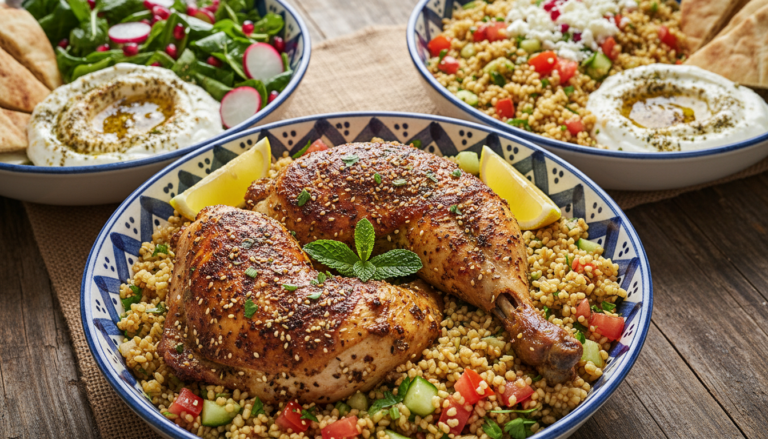
Za’atar Roasted Chicken & Bulgur Bowls
These Za’atar Roasted Chicken & Bulgur Bowls are a warmly herbal, Middle Eastern-inspired meal prep bowl built around an aromatic za’atar crust and nutty bulgur wheat—nourishing, deeply fragrant, and genuinely satisfying from the very first bowl to the last.
4
servings20
minutes40
minutes510
kcal1
hourIngredients
1 whole chicken
2 tablespoons olive oil
3 tablespoons za’atar seasoning
1 cup bulgur wheat
2 cups chicken broth
1 medium lemon
2 cups mixed vegetables
1 teaspoon salt
0.5 teaspoon black pepper
Directions
- Preheat oven to 400°F (200°C).
- Rub chicken with olive oil and za’atar seasoning.
- Place chicken on a baking sheet and roast for 30-35 minutes.
- Simultaneously, bring chicken broth to a boil in a pot.
- Add bulgur, cover, and reduce heat to simmer for 12-15 minutes.
- Let bulgur sit for 5 minutes, then fluff with a fork.
- Steam mixed vegetables until tender.
- Slice roasted chicken and serve over bulgur with vegetables.
- Squeeze lemon over the top before serving.
Nutrition Facts
- Total number of serves: 4
- Calories: 510kcal
- Cholesterol: 0mg
- Sodium: 620mg
- Potassium: 400mg
- Sugar: 8g
- Protein: 6g
- Calcium: 60mg
- Iron: 2mg
About This Author

Amelia Grace
Editor-in-Chief & Culinary Director
Benjamin is our flavor engineer. A classically trained chef turned recipe developer, he’s obsessed with balancing taste, texture, and creativity. He ensures that every recipe we publish is not only delicious but also reliable, approachable, and repeatable — even for beginners.
Favorite dish: Slow-braised short ribs with red wine reduction.
Kitchen motto: “Cooking is part science, part soul.”















