

There’s an ingredient that shows up in nearly every professional kitchen.
It’s not fancy. It’s not expensive. You probably have some version of it at home, but you’re almost certainly not using it the way chefs do.
It’s acid.
And once you understand how professionals think about it, your food will taste more balanced, more vibrant, more complete—without you being able to pinpoint exactly why.
The Missing Piece You Can’t Name
You’ve had this experience before.
You taste something at a restaurant and it’s perfect. You try to recreate it at home. You follow the recipe. You use good ingredients. You nail the technique.
But something’s off. It tastes flat. Dull. One-dimensional.
Nine times out of ten, the problem isn’t what you added. It’s what you left out.
Most home cooks season with salt and pepper and stop there. Chefs add one more thing: a brightening agent that wakes everything up.
It’s Not About Making Things Sour
When chefs talk about acid, they’re not trying to make food taste like vinegar or lemon juice.
They’re trying to create balance.
Fat makes food rich. Salt makes it savory. Sugar adds sweetness. But without acid, all of those flavors sit heavy. They don’t lift. They don’t finish clean.
Acid cuts through richness. It sharpens dull edges. It makes other flavors more vivid without overpowering them.
Done right, you shouldn’t taste the acid itself. You should just notice that everything else tastes better.
It Happens at the End
Here’s where most home cooks miss the mark: they think about acid as an ingredient in the recipe, not as a final adjustment.
Chefs do it differently.
They cook the dish. They taste it. And right before it goes out, they add a small splash of something acidic—just enough to make the flavors snap into focus.
A squeeze of lemon over roasted vegetables. A dash of vinegar in a soup. A few drops of lime juice over tacos.
It’s the last thing that happens, and it’s often the thing that makes the biggest difference.
Different Acids Do Different Things
Not all acids work the same way.
Lemon juice is bright and clean. It works on fish, chicken, vegetables, grains—almost anything.
Red wine vinegar has depth. It’s perfect for rich, savory dishes like braised meats or tomato-based sauces.
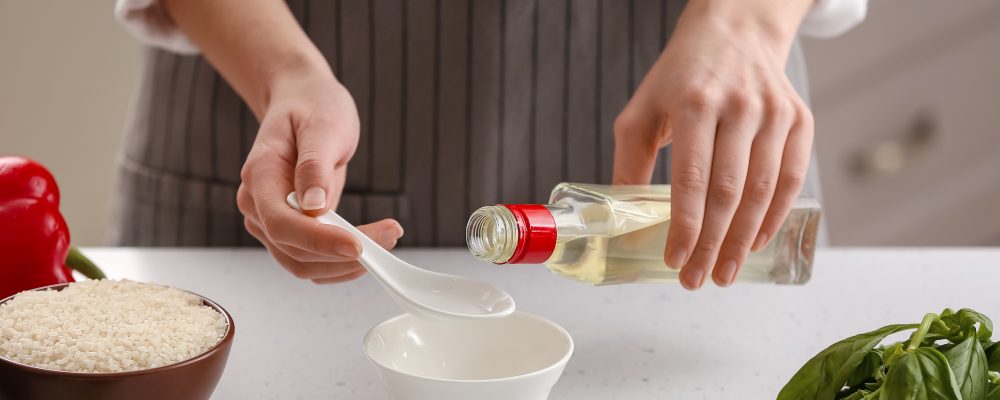
Rice vinegar is mild and slightly sweet. It’s ideal for delicate foods that need a gentle lift.
Lime juice is bold and aromatic. It’s the backbone of most Latin and Southeast Asian cooking.
Chefs don’t just reach for “acid.” They think about which acid fits the dish, the same way they think about which herb or spice to use.
The Taste Test That Changes Everything
Try this next time you make soup, sauce, or stew.
Taste it before you add any acid. Notice how it feels in your mouth—probably a little heavy, a little muted.
Now add half a teaspoon of vinegar or a squeeze of lemon. Taste again.
The difference is immediate. The flavors become more defined. The dish feels lighter, even though you barely added anything.
That’s what chefs are chasing in every dish they make.
Where Home Cooks Go Wrong
Most people either skip acid entirely or add way too much.
Too little, and nothing changes. Too much, and the dish tastes sour or unbalanced.
The key is adding it gradually. A little squeeze. A small splash. Taste. Adjust.
Chefs don’t dump acid into a dish and hope for the best. They add it carefully, tasting as they go, stopping the moment the flavors come alive.
It Works on More Than You Think
Acid isn’t just for salad dressing or ceviche.
It belongs in pasta sauces. Braises. Grain bowls. Roasted meats. Even desserts—lemon juice in a berry compote, a touch of vinegar in caramel.
Any dish that tastes “good but not great” is probably missing acid.
Any dish that feels heavy or one-note almost always improves with a small acidic finish.
The Simple Rule Chefs Follow
If your food tastes flat, add salt.
If your food tastes dull, add acid.
If your food tastes unbalanced, add both.
It’s not complicated. It’s just a habit most home cooks never develop because no one told them to.
What You Can Do Right Now
Keep a lemon and a bottle of vinegar near your stove.
Before you serve anything, taste it and ask: does this need brightness?
If the answer is yes, add a tiny amount of acid. Taste again. Adjust.
That’s it. That’s the technique.
The Takeaway
The difference between home cooking and restaurant cooking often isn’t skill or equipment.
It’s small, intentional adjustments that most people never think to make.
Acid is one of them. And it might be the easiest one to start using today.
Because the food you’re already making is probably closer to great than you realize.
It just needs a squeeze.














