
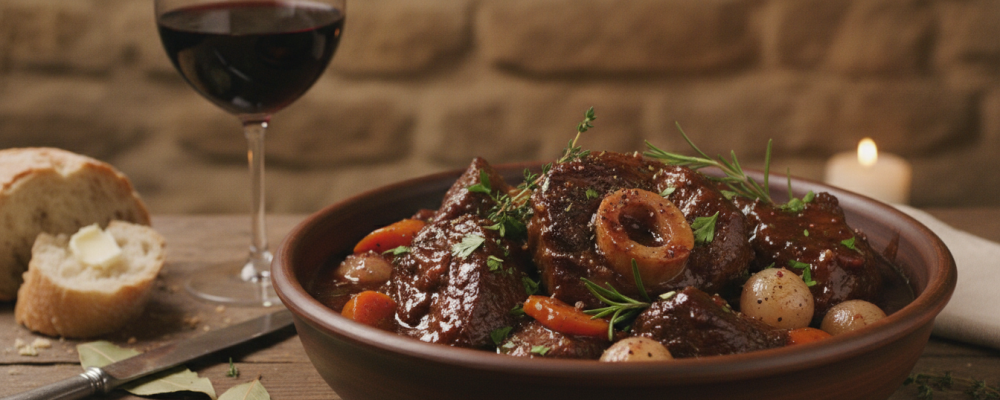

There are recipes that feed you, and then there are recipes that restore you. Braised Beef with Red Wine belongs firmly in the second category. This is the kind of cooking that fills your home with the most extraordinary aromas—wine and herbs and slowly caramelizing beef mingling into something that smells like comfort itself—and delivers a meal that makes everyone at the table go quiet for a moment, just appreciating what’s in front of them. That kind of cooking matters. It reminds us that food can be genuinely nourishing in ways that go beyond nutrition.
What I love most about this dish is the relationship between time and reward. You’re not doing much active work here—the initial browning and sautéing take maybe 20 minutes of your attention, and then the pot does everything else for two and a half hours while you live your life. And yet the results taste like you poured your whole heart into it, because in a sense you did—you chose good ingredients, you took the time to sear the beef properly, and you trusted the process enough to let the low heat do its quiet, patient work. That’s a form of care that comes through in every bite.
The moment I love most in making this recipe is when the red wine goes into the pot. That sizzle and steam, those incredible aromas that rise from the pan as the wine deglazes all those caramelized bits from the bottom—it feels theatrical and wonderful, like the dish is announcing itself. From that moment forward, your kitchen smells like something extraordinary is happening. And it is. The wine is beginning its long conversation with the beef and herbs, slowly breaking down tough connective tissue, melding flavors together, becoming something greater than it was in the bottle.
This is perfect for Wine Wednesday precisely because of that conversation between the wine in the pot and the wine in your glass. When you cook with a good bottle and sip the same wine alongside, there’s a resonance that makes both taste more complete. Open the wine early, pour a glass for yourself while you sear and sauté, and let the cooking itself become part of the pleasure. Wednesday evenings don’t get more civilized than this.
─────────
The Inspiration Behind This Recipe
This recipe draws directly from boeuf bourguignon—the legendary French braise from Burgundy that Julia Child famously introduced to American home cooks in the 1960s. Traditional boeuf bourguignon features beef braised in Burgundy wine with pearl onions, mushrooms, and lardons, representing Burgundy’s dual gifts to the culinary world: exceptional beef country and world-famous Pinot Noir. This version simplifies the preparation while maintaining the essential technique—searing, building a wine-enriched braising liquid, long slow cooking—and adds carrots for sweetness and color. By using chuck beef (accessible and affordable) rather than the traditional stewing cuts and omitting lardons, this version democratizes a classic without sacrificing any of the flavor depth that makes French braised beef so beloved.
─────────
A Brief History of Wine-Braised Beef
The French have been braising beef in wine for centuries, born from practical necessity in wine-producing regions where wine was more abundant than water and served as both cooking liquid and tenderizing agent. The technique of braisage—browning meat then slow-cooking it in liquid in a covered vessel—became fundamental to French cuisine, recognized as one of the most effective methods for transforming tough, inexpensive cuts into tender, luxurious meals. Boeuf bourguignon became internationally famous largely through Julia Child’s 1961 cookbook Mastering the Art of French Cooking, which introduced French technique to American home kitchens and created generations of home cooks who understood that patience and good wine could transform humble ingredients into something extraordinary. The dish remains a benchmark preparation that demonstrates how wine, when cooked into a braise over long periods, loses its alcohol while contributing complex flavor compounds that no other ingredient can replicate.
─────────
Why This Cooking Method Works
The science behind the technique:
- Browning beef first: Creates Maillard reaction that develops complex flavor compounds in both meat and eventual braising liquid
- Flour coating: Creates light thickening when combined with cooking liquid, giving sauce body without cornstarch
- Tomato paste caramelization: Cooking paste for 1 minute develops deeper, less acidic tomato flavor through browning
- Wine deglazing: Alcohol and acid dissolve caramelized fond stuck to pot, incorporating that concentrated flavor into sauce
- Alcohol evaporation: Extended cooking drives off harsh alcohol while leaving behind complex fruit compounds, acidity, and tannins
- Low, slow simmering: Gentle heat (around 200°F) breaks down collagen into gelatin over 2+ hours, creating tender meat and rich sauce
- Covered cooking: Traps steam and creates moist environment that prevents surface drying
- Late vegetable addition: Carrots and mushrooms added in final 30 minutes retain texture and character without becoming mushy
- Herb bundle timing: Thyme and rosemary infuse throughout cooking; removing before serving prevents bitter, over-extracted flavor
- Resting before serving: Allows beef to reabsorb braising liquid for maximum flavor and moisture
─────────
Flavor Profile: What to Expect
Rich • Deep • Wine-Forward • Herbaceous • Deeply Comforting
This braise delivers extraordinary complexity built through time and patience. The beef becomes meltingly tender with concentrated, deeply savory flavor amplified by two and a half hours of gentle cooking in wine-enriched liquid. The sauce is the revelation—mahogany-dark, glossy, and intensely flavored with the wine’s fruit and tannins mellowed into something round and luxurious, tomato paste adding depth and subtle acidity, thyme and rosemary providing aromatic backbone. Carrots contribute natural sweetness that balances the wine’s richness, while mushrooms add earthy umami that deepens the entire dish. The overall effect is profoundly satisfying comfort food—the kind of meal that feels like it took all day because, essentially, it did, and every hour of cooking is detectable in the depth of flavor.
─────────
Tips for Making the Best Braised Beef with Red Wine
Beef selection and preparation:
- Chuck is ideal—its high collagen content breaks down into gelatin during braising, creating rich sauce and tender meat
- Cut into large chunks (2-3 inches)—too small and they fall apart; too large and they don’t cook evenly
- Pat beef completely dry before browning—moisture prevents proper searing
- Season generously with salt and pepper—this is your primary opportunity to season the meat itself
- Bring beef to room temperature (30-45 minutes) before cooking for even browning
The sear is non-negotiable:
- Use a heavy pot (Dutch oven is ideal) that holds heat well and can go from stovetop to oven if needed
- Heat oil until shimmering and almost smoking before adding beef
- Brown in batches—overcrowding steams rather than sears
- 3-4 minutes per side without moving—proper browning takes patience
- Every side should be deeply golden, not just the top and bottom
Wine selection:
- Use a wine you’d genuinely enjoy drinking—it concentrates during cooking
- Medium to full-bodied reds work best: Côtes du Rhône, Cabernet Sauvignon, Merlot, Syrah
- Avoid overly tannic young wines—tannins concentrate during reduction and can become harsh
- Reserve some wine for drinking alongside—cook with one bottle, open another for dinner
Building flavor depth:
- Don’t rush the onion and garlic sauté—they should be soft and beginning to caramelize
- Cook flour and tomato paste for a full minute—raw flour is detectable and unpleasant
- Scrape every caramelized bit from the pot when deglazing—that’s pure concentrated flavor
- Let wine come to a full simmer before adding stock to begin alcohol evaporation
Braising perfection:
- Maintain a very gentle simmer—aggressive boiling toughens meat and makes sauce cloudy
- Check every 30-45 minutes, stirring gently to prevent sticking
- Beef is ready when it yields easily to a fork with no resistance
- Add carrots and mushrooms at the 2-hour mark—they need only 30 minutes
- Remove herb sprigs before serving—they’ve given everything they have
Finishing touches:
- Taste sauce before serving and adjust seasoning—long cooking can mute salt
- If sauce is too thin, remove beef and simmer sauce uncovered to reduce and concentrate
- A pat of cold butter stirred in at the end creates extra richness and glossiness
- Let dish rest 10 minutes before serving—flavors settle and beef reabsorbs liquid
─────────
Wine Pairing Guide
Perfect pairings for Braised Beef with Red Wine:
Côtes du Rhône (Red) ★ Best Match
Grenache-based blend with dark fruit, herbal notes, and earthy character that echoes both the braising liquid and the thyme and rosemary. The wine’s medium to full body stands up to the richness without overwhelming, while its rustic charm feels entirely appropriate for this honest, deeply satisfying preparation. Often made from similar grape varieties that work beautifully as a cooking wine too—use in the braise and drink alongside.
Cabernet Sauvignon
Full-bodied with blackcurrant, cedar, and dark chocolate notes that complement the deeply savory braising liquid. The wine’s tannins soften beautifully against the beef’s richness and the sauce’s gelatin, creating a pairing where each element makes the other taste better. Choose a mid-range bottle rather than a premium aged Cab—the dish’s bold flavors don’t require subtlety in the glass.
Syrah (Northern Rhône or Washington)
Dark fruit, peppery spice, and savory, meaty notes that echo the braise’s character perfectly. Northern Rhône Syrah (Crozes-Hermitage, Saint-Joseph) offers more restraint and earthy complexity; Washington Syrah brings riper fruit and generous body. Both work beautifully with slow-cooked beef.
Merlot (Left Bank Bordeaux Style)
Plush dark fruit, soft tannins, and hints of tobacco and earth that complement the braising liquid without fighting it. The wine’s roundness and approachability make it crowd-pleasing while its body handles the richness comfortably.
Zinfandel (California)
Bold, fruit-forward with jammy berry and peppery character that matches the dish’s intensity. The wine’s slight sweetness can actually complement the carrots’ natural sweetness, while its full body stands up to the richness of two and a half hours of braising.
Alternative pairing: For a truly classic French approach, a Burgundy Pinot Noir (if budget allows) creates the most historically authentic pairing—Burgundy wine with Burgundy-inspired beef preparation. The wine’s earthy, mushroom, and red fruit notes create profound resonance with the dish.
─────────
Serving Suggestions and Side Pairings
Beautiful presentations:
- Rustic comfort: Serve directly from the Dutch oven at the table, ladle generously into shallow bowls
- Classic plating: Spoon beef and vegetables over mashed potatoes, sauce pooled around
- Elegant dinner party: Plate individually with precise arrangement of beef chunks, vegetables, and glossy sauce
Ideal side dishes:
- Garlic Rosemary Focaccia Muffins: Absolutely essential for soaking up the wine-enriched braising liquid
- Creamy mashed potatoes: The classic pairing—rich, buttery potatoes absorb the sauce beautifully
- Creamy Gouda Mashed Potatoes: Elevate the classic accompaniment with cheese for extra indulgence
- Egg noodles: Traditional accompaniment that catches the sauce in every noodle
- Crusty bread: For the most rustic, honest presentation
- Simple green salad: Crisp greens with Dijon vinaigrette provide necessary fresh contrast
For a complete Wine Wednesday spread:
Create a French bistro feast: begin with a simple cheese board and charcuterie while the braise finishes, serve the beef as the centerpiece over mashed potatoes with warm bread, and finish with chocolate mousse or crème brûlée. Offer bold red wines at multiple price points—Côtes du Rhône for everyday elegance, Cabernet for classic pairing, Burgundy Pinot Noir for those who want the full French experience. Add Portobello Mushrooms with Wine and Thyme as an elegant side that doubles down on the wine-and-mushroom theme.
─────────
Storage, Reheating, and Make-Ahead Tips
Storage:
- Refrigerate beef in braising liquid in an airtight container for up to 4 days
- Store together—the liquid prevents beef from drying out
- Fat solidifies on top when cold—skim for a lighter dish, or stir back in for richness
- Flavor improves significantly after a day as beef continues absorbing the braising liquid
Reheating:
- Stovetop (best method): Warm gently in a covered pot over low heat, stirring occasionally, adding a splash of broth or wine if needed
- Oven: Place in covered Dutch oven at 325°F for 30-40 minutes until heated through
- Microwave: Heat in 2-minute intervals at 70% power, covered (texture won’t be quite as good)
- Never rush reheating—aggressive heat can toughen already-tender beef
Make-ahead strategies (this dish is ideal for it):
- Cook completely 1-2 days ahead: Flavors deepen dramatically overnight; this is arguably better made ahead
- Morning prep: Brown beef and build braise before work if using a slow cooker (8 hours on low)
- Freeze: Freeze in braising liquid for up to 3 months; thaw overnight and reheat gently
- For entertaining: Make 2 days ahead, refrigerate, skim fat, and reheat gently while guests enjoy appetizers and wine
The make-ahead advantage:
Refrigerating overnight allows fat to solidify on the surface for easy removal, resulting in a cleaner, less greasy final dish. The flavors also meld and deepen in ways that fresh-cooked braises simply can’t match. This is genuinely one of those dishes that rewards advance preparation.
─────────
Why This Recipe Deserves a Spot in Your Wine Wednesday Rotation
Braised Beef with Red Wine is the kind of cooking that reminds you why we gather around tables, why we take time to prepare real food, and why wine and food have been companions for as long as people have been cooking. This dish isn’t trying to impress through technique or exotic ingredients—it impresses through patience, through the willingness to let time do the work, through the trust that simple things done well are always enough. That philosophy feels deeply right for Wine Wednesday.
What makes this particularly beautiful for wine pairing is the direct connection between what’s in the pot and what’s in your glass. When you cook with red wine and drink red wine alongside, you’re creating a circle of flavor that’s deeply satisfying—the wine’s fruit and tannins appear in the sauce, and drinking them separately creates recognition and resonance rather than contrast. It’s one of the most intuitive pairings in all of cooking, which is perhaps why it’s been practiced in wine-producing regions for centuries.
The make-ahead nature makes this dish a genuine gift for entertaining. You do the work when you have time—perhaps on a Sunday or Tuesday evening—and Wednesday becomes about gathering, pouring wine, and enjoying something extraordinary that required only your planning and foresight. Your guests don’t need to know it took two and a half hours to make; they just need to know it’s the best thing they’ve eaten this week.
Most importantly, this is cooking that nourishes the soul as much as the body. The act of making a braise—the browning, the deglazing, the patient hours of gentle simmering—connects you to generations of cooks who stood at similar stoves with similar pots, feeding people they loved with similar care. There’s a continuity in that which feels meaningful, especially on an ordinary Wednesday when meaning can be hard to find.
So sear that beef properly, pour the wine generously into the pot and into your glass, and let your kitchen fill with those extraordinary aromas. Set a beautiful table, light candles, and create a Wednesday evening that feels like exactly the kind of occasion this dish deserves. Because good food and good wine don’t need a special occasion—they create one.
À votre santé, and happy Wine Wednesday!
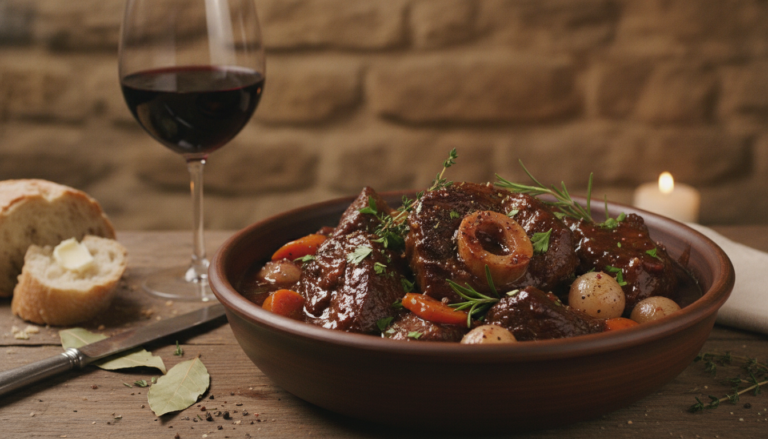
Braised Beef with Red Wine
Hearty beef chunks braised low and slow in red wine with carrots, mushrooms, and herbs—deeply comforting and utterly wine-worthy.
4
servings20
minutes2
hours30
minutes600
kcal2
hours50
minutesIngredients
800 grams beef chuck
1 large onion
2 cloves garlic
2 tablespoons olive oil
1 cup red wine
2 cups beef stock
2 tablespoons tomato paste
2 sprigs thyme
1 sprig rosemary
2 tablespoons flour
200 grams carrots
200 grams mushrooms
1 teaspoon salt
1 teaspoon black pepper
Directions
- Cut the beef into large chunks and season with salt and black pepper.
- Heat olive oil in a large pot over medium-high heat. Brown the beef chunks on all sides, then set aside.
- In the same pot, add chopped onion and garlic. Sauté until translucent.
- Stir in flour and tomato paste and cook for 1 minute.
- Pour in red wine and bring to a simmer, scraping any bits from the pot.
- Add beef stock, thyme, rosemary, and seared beef back to the pot.
- Cover and simmer on low heat for 2 hours, stirring occasionally.
- Add sliced carrots and mushrooms. Cook for another 30 minutes or until vegetables are tender.
- Remove herb sprigs before serving.
Nutrition Facts
- Total number of serves: 4
- Calories: 600kcal
- Cholesterol: 0mg
- Potassium: 400mg
- Sugar: 8g
- Protein: 6g
- Calcium: 60mg
- Iron: 2mg
About This Author

Amelia Grace
Editor-in-Chief & Culinary Director
The heart and guiding voice of Daily Dish, Amelia leads our editorial vision and recipe development. With a background in food journalism and over a decade spent in professional kitchens, she has a knack for blending gourmet technique with real-world accessibility. Her goal? To make every reader feel like a confident cook, one dish at a time.
Favorite dish: Creamy lemon risotto with a sprinkle of fresh thyme.
Kitchen motto: “Good food doesn’t have to be complicated — it just has to be made with heart.”















