
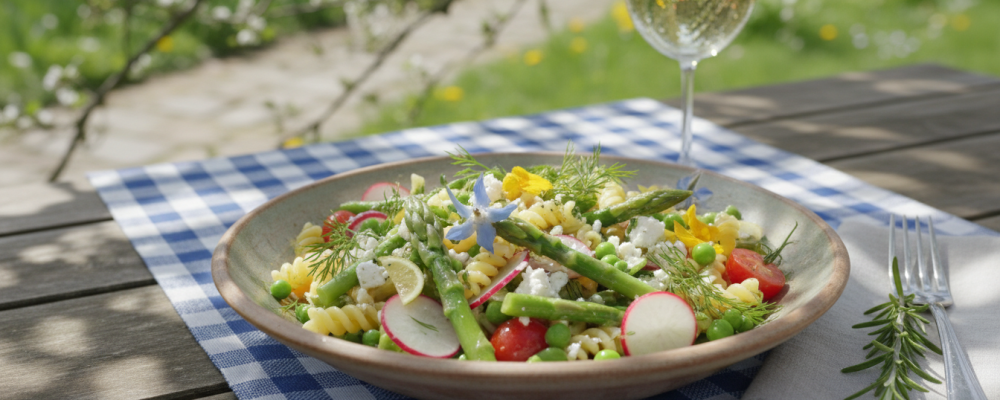

There is a moment every year when the weather shifts just enough that the idea of a warm, heavy dinner loses its appeal and something bright, cold, and vegetable-forward starts calling instead. This Spring Pasta Garden Salad is the recipe I reach for in that moment—and honestly, well beyond it. Crisp cucumber, sweet cherry tomatoes, colorful bell pepper, sharp red onion, and creamy feta tossed with cooled pasta and a clean lemon and olive oil dressing finished with fresh dill. It’s the kind of dish that looks like sunshine on a plate and tastes exactly as good as it looks.
I’ve made more versions of pasta salad than I can count over the years, and what I keep coming back to is the importance of restraint. The best pasta salads are not the ones loaded with every ingredient in the kitchen—they’re the ones where every element earns its place and the dressing ties everything together without overshadowing the freshness of the vegetables. The lemon and olive oil base here is deliberately simple: bright, grassy, and just acidic enough to season the pasta all the way through as it chills. The fresh dill is the finishing touch that makes this salad feel genuinely considered rather than assembled.
What I love about this recipe is its complete versatility. It works as a side dish alongside grilled proteins at a backyard cookout, as a light lunch on its own, as the vegetarian-friendly anchor of a potluck spread, or as a make-ahead meal prep staple that gets better as it sits. Once you have this in your recipe box, it becomes the answer to a surprisingly wide range of “what should I bring?” questions.
The Inspiration Behind This Recipe
This salad was inspired by the Greek and Mediterranean tradition of combining pasta or grains with fresh vegetables, good olive oil, lemon, and feta—a combination that appears across the cuisines of Greece, Turkey, and the broader Eastern Mediterranean in various forms and that has become deeply beloved in American cooking for its simplicity and freshness.
I wanted to create a spring-forward version that leaned into the season’s best produce: cherry tomatoes, cucumber, and bell pepper at their crisp, sweet peak, brought together by a dressing that honors the Mediterranean tradition without asking anything complicated of the cook. Fresh dill was the herbal choice that set this salad apart from more common interpretations—its bright, slightly anise-like flavor is a natural partner for feta and lemon in a way that parsley and basil simply can’t replicate.
A Brief History of Pasta Salad
Pasta salad as Americans know it is largely a 20th-century invention, born from the intersection of Italian-American pasta culture and the cold salad tradition of American picnic and potluck cooking. Cold pasta dishes have existed in Italy for centuries—insalata di pasta is a summertime staple across the country—but the heavily mayonnaise-dressed versions that dominated American cookbooks through the 1970s and 1980s were a distinctly American evolution.
The more recent shift toward olive oil and vinegar-based pasta salads reflects both the broader American embrace of Mediterranean cooking and a general move toward lighter, produce-driven dishes. This Spring Pasta Garden Salad belongs firmly to that modern tradition—a recipe that looks to the Mediterranean for its flavor logic while remaining completely at home in a contemporary American kitchen.
Why This Simple Dressing Works So Well
The restraint of the dressing is a deliberate and important choice. Olive oil and lemon juice, properly seasoned with salt and pepper, do something that more complex dressings often obscure: they let the individual flavors of each vegetable come forward rather than coating everything in a uniform flavor. The feta brings its own salt and tang, the cherry tomatoes bring sweetness and acidity, the cucumber brings cool freshness—the dressing’s job is to harmonize these elements, not dominate them.
Rinsing the pasta under cold water after cooking is equally important. It stops the cooking process immediately, removes excess surface starch that would make the pasta sticky, and brings the temperature down quickly so the dressing can coat each piece evenly rather than being absorbed unevenly as the pasta cools. It’s a small step that has a real impact on the final texture of the salad.
Flavor Profile: What to Expect
This salad delivers a bright, balanced, and deeply refreshing flavor experience:
- Bright, citrusy acidity from the lemon juice dressing that seasons the pasta and lifts every element of the salad
- Grassy, fruity richness from the olive oil that carries the dressing and smooths out the lemon’s sharpness
- Sweet, juicy pops from the cherry tomatoes that provide bursts of freshness throughout
- Cool, clean crunch from the cucumber that refreshes the palate with every bite
- Mild, sweet bell pepper that adds color, crunch, and a gentle vegetal sweetness
- Sharp, pungent red onion that cuts through the creaminess of the feta and adds a lingering savory note
- Salty, tangy feta that distributes its richness throughout the salad and ties the Mediterranean flavors together
- Herbal, fragrant dill that defines the salad’s character and makes every bite feel distinctly spring-like
The overall effect is bright, fresh, satisfying, and completely balanced—a salad that tastes as good on day two as it does the moment it’s made.
Tips for Making the Best Spring Pasta Garden Salad
A few details will ensure this salad is as good as it can possibly be:
- Salt your pasta water generously: The pasta needs to be seasoned from the inside out—water that tastes pleasantly salty produces pasta with flavor that no dressing can fully replicate after the fact.
- Rinse pasta thoroughly under cold water: This is essential for pasta salad. It stops cooking, removes stickiness, and ensures the dressing coats evenly rather than being absorbed unevenly.
- Dice vegetables consistently: Similar-sized pieces of cucumber, bell pepper, and tomato ensure every forkful is balanced and the salad eats evenly throughout.
- Dress while the pasta is slightly warm: Pasta absorbs dressing much better when it still has a little warmth to it. Dress immediately after rinsing and toss well, then refrigerate for the flavors to meld.
- Taste and adjust before serving: The pasta absorbs dressing as it chills—taste after refrigerating and add a squeeze of lemon or drizzle of olive oil if needed to freshen the flavors.
- Add feta and dill just before serving: Both are more vibrant and visually appealing when added at the last minute rather than tossed in while the salad is still warm.
Serving Suggestions and Side Pairings
This pasta salad is one of the most versatile dishes in a warm-weather repertoire:
- As a side dish alongside grilled chicken, salmon, or shrimp at a cookout or backyard dinner
- As a light, complete lunch on its own or with warm pita and hummus
- As the vegetarian anchor of a potluck or picnic spread
- Alongside a simple soup for a complete, light weeknight meal
- As a meal prep staple—portioned into containers for grab-and-go lunches throughout the week
Storage, Reheating, and Make-Ahead Tips
This is one of the most make-ahead-friendly recipes in the collection:
- Refrigerate in an airtight container for up to 4 days. The flavors deepen and meld beautifully as it sits.
- Refresh before serving: After a day in the refrigerator, add a fresh squeeze of lemon juice and a small drizzle of olive oil to revive the dressing that the pasta has absorbed.
- Store feta and dill separately if making more than a day ahead—add them fresh at serving for the best texture and visual appeal.
- This recipe does not freeze well due to the fresh vegetables and olive oil dressing. It is best enjoyed within four days of making.
Why This Recipe Deserves a Spot in Your Rotation
Spring Pasta Garden Salad earns permanent rotation status because it solves so many mealtime problems at once. It’s vegetarian, endlessly adaptable, makes ahead beautifully, travels well, feeds a crowd without breaking the budget, and tastes genuinely fresh and vibrant rather than heavy or forgettable. It’s the kind of dish that gets requested at every gathering it appears at—not because it’s impressive, but because it’s exactly right. And in a recipe collection, “exactly right” is the highest standard there is.
Recommended Drink Pairing
A salad this fresh and bright calls for something equally light and citrus-forward. A Pear Vanilla Gin Fizz is a lovely match—its floral, sparkling character echoes the dill and lemon dressing without competing with the delicate vegetable flavors. A crisp Pinot Grigio or a sparkling Prosecco works beautifully as a wine option, especially for outdoor entertaining.
For non-alcoholic pairings, sparkling water with cucumber and mint or a lightly sweetened lemon verbena iced tea keeps the palate clean and refreshed alongside this bright, springtime salad.
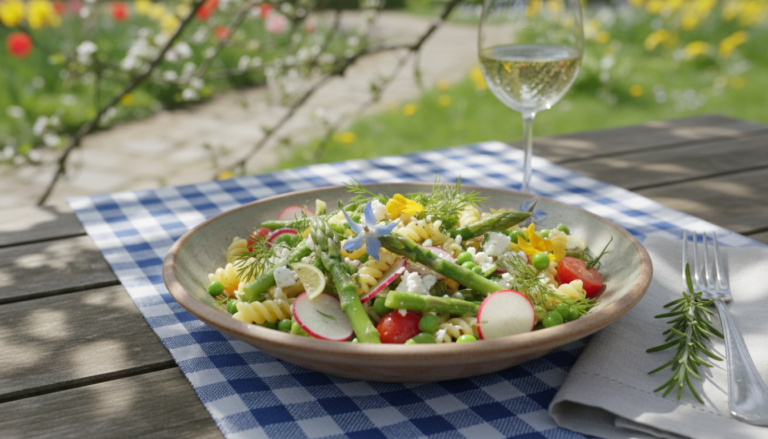
Spring Pasta Garden Salad
Spring Pasta Garden Salad combines tender pasta, cherry tomatoes, cucumber, bell pepper, red onion, and crumbled feta in a bright lemon and olive oil dressing finished with fresh dill—light, vibrant, and perfect for any occasion.
4
servings20
minutes15
minutes320
kcal35
minutesIngredients
200 grams pasta
1 cup cherry tomatoes, halved
1 cup cucumber, diced
1 cup bell pepper, chopped
0.25 cup red onion, finely chopped
0.5 cup feta cheese, crumbled
0.25 cup olive oil
2 tablespoons lemon juice
1 teaspoon salt
0.5 teaspoon black pepper
1 tablespoon fresh dill, chopped
Directions
- Cook the pasta according to package instructions. Drain and rinse under cold water to cool.
- In a large bowl, combine the cooled pasta, cherry tomatoes, cucumber, bell pepper, red onion, and feta cheese.
- In a small bowl, whisk together olive oil, lemon juice, salt, and black pepper.
- Pour the dressing over the pasta salad and toss until everything is well coated.
- Sprinkle with fresh dill and serve chilled or at room temperature.
Nutrition Facts
- Total number of serves: 4
- Calories: 320kcal
- Cholesterol: 0mg
- Sodium: 620mg
- Potassium: 400mg
- Sugar: 8g
- Protein: 6g
- Calcium: 60mg
- Iron: 2mg
About This Author

Amelia Grace
Editor-in-Chief & Culinary Director
The heart and guiding voice of Daily Dish, Amelia leads our editorial vision and recipe development. With a background in food journalism and over a decade spent in professional kitchens, she has a knack for blending gourmet technique with real-world accessibility. Her goal? To make every reader feel like a confident cook, one dish at a time.
Favorite dish: Creamy lemon risotto with a sprinkle of fresh thyme.
Kitchen motto: “Good food doesn’t have to be complicated — it just has to be made with heart.”















