
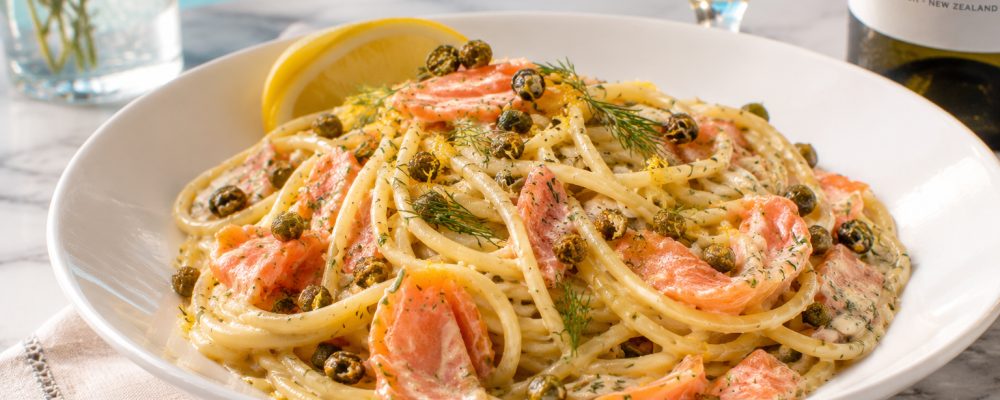

There’s a technique in this recipe that deserves immediate attention before anything else: frying capers until crispy. If you’ve never done this, prepare to have your understanding of what capers can be completely transformed. Raw capers—briny, soft, and assertively tangy—are excellent. Crispy fried capers are something else entirely: golden, crunchy, intensely flavored, with a concentrated saltiness and a texture that provides exactly the kind of contrast a rich cream sauce needs. This single technique elevates the entire dish from good pasta to genuinely memorable cooking, and understanding why it works will change how you think about textural contrast in cooking.
From a culinary science perspective, frying capers exploits the same principles as any high-heat cooking: rapid moisture evaporation followed by surface browning and crisping. Capers are packed in brine or salt, which means they contain significant moisture that must be driven off before crisping can occur. Patting them dry before frying accelerates this process. As the moisture evaporates in hot oil, the exterior dehydrates and crisps while the interior concentrates in flavor. The result is a garnish that delivers far more flavor impact per gram than its raw counterpart—a culinary amplification achieved through technique rather than additional ingredients.
The pairing of smoked salmon with cream sauce is where Scandinavian and Italian traditions meet in genuinely productive conversation. Smoked salmon’s rich, silky texture and complex smoky-briny flavor profile need something substantial to work alongside rather than against. Heavy cream provides that substance while its fat content mellows the salmon’s intensity without masking it. The lemon juice is essential—acid cuts through richness and provides brightness that prevents the sauce from becoming one-dimensional. Dill bridges the cultural gap here, beloved in both Scandinavian salmon preparations and Italian herb cooking, adding fresh, slightly anise-like character that ties the dish together.
Adding smoked salmon at the very end, off the heat or in a just-warmed sauce, is critical. Smoked salmon is already cured and smoked—it doesn’t need cooking, and overcooking would dry it out and diminish its delicate flavor. The residual heat of the pasta and sauce is sufficient to warm it through while maintaining its silky, tender quality. This is cooking that respects the ingredient rather than subjecting it to unnecessary heat.
─────────
The Inspiration Behind This Recipe
This recipe represents a compelling fusion of Italian pasta technique and Scandinavian smoked fish traditions. Italians have long paired pasta with seafood, but typically with fresh fish; the use of smoked salmon reflects Northern European influence where cold-smoking salmon is a centuries-old preservation technique. The combination found natural expression in modern European fusion cooking, where Italian cream sauce technique meets Scandinavian salmon preparations with dill. Crispy capers add a Mediterranean accent that bridges both traditions—capers are prominent in both Italian cooking (particularly from Sicily and Southern Italy) and in classic smoked salmon preparations (lox served with capers and cream cheese). This dish represents global culinary exchange at its most delicious: techniques and ingredients from different traditions combining into something that feels both familiar and genuinely new.
─────────
A Brief History of Smoked Salmon in Culinary Tradition
Salmon smoking has ancient roots in Northern European coastal cultures, where cold-smoking (and later hot-smoking) preserved abundant salmon catches for extended periods. Scandinavian cultures developed sophisticated smoking traditions—Norwegian and Scottish smoked salmon became internationally prized for their delicate, silky texture and complex flavor. The technique of cold-smoking salmon at temperatures below 85°F cures the fish without cooking it, creating a product that’s silky-textured and intensely flavored while remaining raw in texture. Jewish immigrants brought lox (salt-cured salmon) traditions to America, where it became inseparable from bagels, cream cheese, and capers in New York deli culture. Italian-American chefs began incorporating smoked salmon into pasta in the late 20th century as fusion cooking developed, creating dishes that honored both traditions while creating something distinctly contemporary. The combination proved so compelling that it now appears on menus worldwide as a sophisticated, accessible luxury.
─────────
Why This Cooking Method Works
The science behind the technique:
- Caper frying: Rapid moisture evaporation concentrates flavor while surface crisping creates textural contrast impossible to achieve with raw capers
- Deglazing with cream: Using the same pan after capers and butter captures residual flavor while adding richness
- Cream reduction: Gentle simmering evaporates water content, concentrating flavor and increasing viscosity for sauce that coats pasta
- Parmesan emulsification: Cheese melts into cream, contributing fat, protein, and umami while helping sauce cling to pasta
- Acid timing (lemon juice): Adding citrus after cream prevents curdling while preserving bright, fresh flavor
- Dill addition: Fresh herb added near the end preserves volatile aromatic compounds that cooking destroys
- Smoked salmon off heat: Residual temperature warms salmon without cooking it, preserving silky texture and complex smoked flavor
- Al dente pasta: Slightly firm pasta holds up to cream sauce without becoming mushy, providing textural contrast
- Pasta water starch: Reserved water contains starch that helps sauce emulsify and cling if needed
- Immediate serving: Cream sauces thicken as they cool; serving immediately ensures perfect consistency
─────────
Flavor Profile: What to Expect
Silky • Smoky • Briny • Bright • Luxurious
This pasta delivers sophisticated, layered flavors with beautiful contrast throughout. The cream sauce is rich and velvety, enriched with Parmesan’s nutty umami and brightened by lemon juice that prevents heaviness. Fresh dill adds aromatic brightness—slightly anise-like, herbal, and distinctly evocative of Scandinavian salmon preparations. The smoked salmon brings complex character: silky texture, gentle smokiness, oceanic brininess, and rich flavor that permeates the sauce wherever it touches. The crispy capers are the textural revelation—golden, crunchy, intensely salty, and concentrated in flavor, providing contrast that makes every bite more interesting. Together these elements create a dish that feels simultaneously indulgent and refined, comforting and elegant.
─────────
Tips for Making the Best Smoked Salmon Pasta with Crispy Capers
Smoked salmon selection:
- Use cold-smoked salmon (labeled “smoked salmon” or “Nova lox”) rather than hot-smoked for best results
- Cold-smoked has silky, raw-like texture that works beautifully in cream sauce
- Hot-smoked salmon (flakier, fully cooked) creates a different but also valid result
- Quality matters enormously here—buy the best smoked salmon you can afford
- Cut or tear salmon into bite-sized pieces just before adding to sauce
Achieving perfectly crispy capers:
- Pat capers completely dry with paper towels before frying—moisture is the enemy of crispiness
- Use enough oil to shallow-fry (about ¼ inch depth) for even crisping
- Oil must be hot before adding capers—test with one caper first
- Fry in a single layer without crowding
- They’re ready when bubbling subsides and capers turn golden (about 2-3 minutes)
- Remove immediately with a slotted spoon and drain on paper towels
- They crisp further as they cool—don’t worry if they seem slightly soft at first
- Season lightly with salt after frying if desired
Cream sauce technique:
- Use the same pan after removing capers—the residual flavor is valuable
- Don’t let cream boil aggressively—maintain a gentle simmer for smooth texture
- Add Parmesan gradually while stirring to prevent clumping
- Add lemon juice after cream is incorporated to prevent separation
- Taste before seasoning—smoked salmon and Parmesan are both salty
Pasta management:
- Reserve at least 1 cup pasta water before draining
- Add pasta to sauce while both are hot for best coating
- If sauce is too thick, add pasta water gradually until desired consistency
- Don’t rinse cooked pasta—surface starch helps sauce adhere
Critical timing:
- Add smoked salmon off heat or in sauce that’s no longer actively simmering
- Serve immediately—this dish does not wait well
- Have everything prepped before starting; the cooking goes quickly
─────────
Wine Pairing Guide
Perfect pairings for Smoked Salmon Pasta with Crispy Capers:
Chablis ★ Best Match
Unoaked Chardonnay from Burgundy’s northernmost appellation with steely minerality, oyster shell character, and vibrant citrus acidity. The wine’s lean, precise profile cuts through cream beautifully while its mineral quality echoes smoked salmon’s oceanic character. The absence of oak means nothing competes with the dill’s delicacy. This is the pairing that makes both food and wine taste better than they would alone.
Sauvignon Blanc (Loire Valley)
Sancerre or Pouilly-Fumé with herbaceous notes, grapefruit, and mineral complexity that complements both dill and lemon in the dish. The wine’s characteristic grassiness echoes the herb while its bright acidity cuts through cream and balances the salmon’s richness. Loire versions offer more restraint and minerality than New Zealand styles, which suits the dish’s elegance.
Grüner Veltliner (Austria)
Citrus, white pepper, and herbal notes with crisp acidity and medium body. The wine’s characteristic peppery quality adds an interesting dimension to the pairing while its acidity handles cream and cheese with ease. The herbal notes create resonance with dill that feels genuinely complementary.
Champagne (Blanc de Blancs)
100% Chardonnay Champagne with toasty, mineral, citrus character and persistent bubbles that cut through cream magnificently. The wine’s brioche notes complement Parmesan while its acidity brightens the salmon and lemon. Smoked salmon and Champagne is a classic luxury pairing—this pasta version maintains that elegance.
Vermentino (Sardinia)
Italian coastal white with citrus, herbal notes, and saline minerality that resonates naturally with smoked seafood. The wine’s medium body stands up to cream while its oceanic character creates harmony with salmon. Authentic Italian pairing that honors the pasta’s Mediterranean roots.
Alternative pairing: A dry Rosé (Provence style) bridges the dish’s Italian and Scandinavian influences beautifully—its salmon-pink color isn’t coincidental, and its crisp acidity with delicate fruit complements both cream sauce and smoked fish.
─────────
Serving Suggestions and Side Pairings
Beautiful presentations:
- Classic elegance: Twirl pasta into a nest in shallow bowls, drape salmon pieces over top, scatter crispy capers, add fresh dill
- Family-style: Serve from a large bowl with capers on the side so they stay crispy longer
- Individual plating: Use tongs to create height, position salmon artfully, add capers and lemon wedge
Ideal side dishes:
- Garlic Rosemary Focaccia Muffins: For soaking up the lemony cream sauce
- Simple arugula salad: Peppery greens with lemon vinaigrette and shaved fennel provide refreshing contrast
- Cucumber and dill salad: Scandinavian-inspired side that echoes the dish’s flavor profile
- Roasted asparagus: Spring vegetable that complements both salmon and cream sauce
For a complete Wine Wednesday spread:
Create a sophisticated seafood dinner: begin with oysters or a simple smoked salmon board with cream cheese and crackers, serve this pasta as the elegant main course, and finish with lemon panna cotta or fresh berries with cream. Offer Chablis and Sauvignon Blanc side by side to explore how different mineral-driven whites interact with smoked salmon and cream. Add Lemon Butter Scallops as an appetizer for a seafood-forward evening that showcases the versatility of crisp white wines.
─────────
Storage, Reheating, and Make-Ahead Tips
Storage:
- Refrigerate pasta and sauce together for up to 2 days
- Store crispy capers separately in an airtight container at room temperature—refrigerating makes them soft
- Note: Cream sauces and pasta change texture when stored; best enjoyed fresh
Reheating:
- Stovetop (best method): Warm gently in a pan over low heat, adding splash of cream or pasta water to restore consistency
- Avoid microwave if possible—uneven heating can make salmon rubbery and separate the cream sauce
- Add fresh smoked salmon during reheating rather than reheating salmon already in the dish
- Crispy capers cannot be restored once soft—make fresh if reheating the dish
Make-ahead strategies:
- Fry capers up to 2 hours ahead; store at room temperature in a single layer
- Make cream sauce base (through Parmesan addition) up to 1 day ahead; reheat gently and add lemon, dill, and salmon when serving
- Cook pasta fresh when serving—stored pasta becomes sticky and absorbs too much sauce
- For entertaining, this dish is best made fresh; the 20-minute cooking time makes it viable even for company
Reality check:
This dish is genuinely best made and served immediately. The crispy capers soften, the cream sauce thickens, and the smoked salmon changes texture with reheating. Consider it a cook-and-serve preparation rather than a make-ahead, and plan accordingly. The reward for immediate service is a dish that tastes as good as it looks.
─────────
Why This Recipe Deserves a Spot in Your Wine Wednesday Rotation
Smoked Salmon Pasta with Crispy Capers demonstrates a principle I believe in deeply: that the most interesting cooking often comes from unexpected combinations of technique and ingredient. The decision to fry capers—to transform something familiar into something entirely new through simple application of heat—exemplifies the kind of culinary thinking that elevates home cooking beyond following recipes into genuinely understanding food. Once you know how and why crispy capers work, you’ll find yourself applying that technique to other dishes. That’s the mark of a recipe worth studying.
The dish also represents fascinating cultural dialogue on the plate. Italian cream sauce technique meets Scandinavian smoked salmon traditions, anchored by capers that appear in both culinary worlds and dill that bridges them beautifully. This kind of cross-cultural cooking isn’t fusion for its own sake—it’s the natural result of ingredients and techniques that genuinely belong together, regardless of whether their origins share a border. The pairing with mineral-driven white wines creates another layer of dialogue: Chablis’s oyster shell minerality echoing salmon’s oceanic character, the wine’s acidity engaging the cream’s richness in productive tension.
From a Wine Wednesday perspective, this dish offers genuine pairing excitement. Smoked salmon creates challenging, interesting pairing territory—its intensity demands wines with character and acidity rather than neutral or sweet options. Working through that challenge with a glass of Chablis creates one of those moments where you understand, viscerally, why wine pairing matters. The food makes the wine taste more mineral and precise; the wine makes the food taste more vibrant and complex. Neither is as good without the other.
Most importantly, this recipe reminds us that luxury doesn’t always require expensive ingredients or complicated technique. Smoked salmon, a package of spaghetti, a container of capers, some cream—these are accessible ingredients transformed into something that genuinely feels special through understanding and execution. That transformation, achieved through knowledge rather than extravagance, is what cooking at its best has always been about.
So heat that oil properly, watch those capers transform, and add your salmon with care and restraint. Open something mineral and cold, serve immediately at its absolute best, and let Wine Wednesday remind you that the most satisfying cooking rewards both the cook who understands what they’re doing and the guests who benefit from that understanding.
Cin cin!
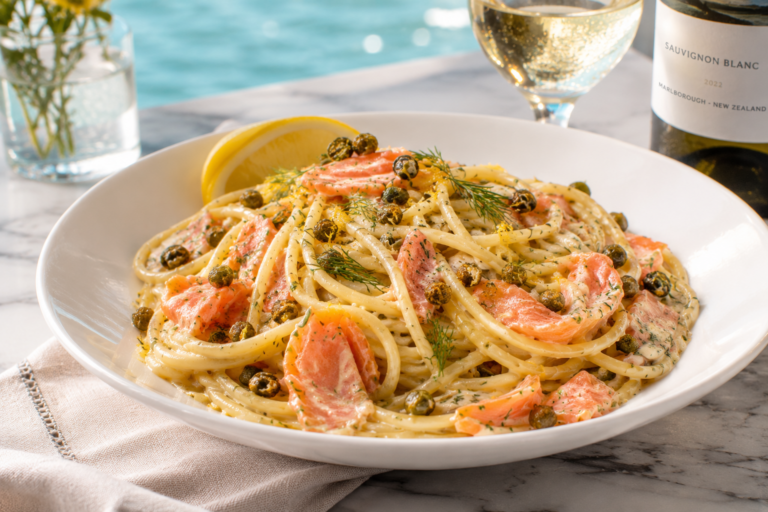
Smoked Salmon Pasta with Crispy Capers
Spaghetti tossed in lemony cream sauce with smoked salmon, Parmesan, and crispy fried capers—sophisticated weeknight elegance at its finest.
4
servings30
minutes40
minutes300
kcal1
hour10
minutesIngredients
300 g spaghetti
200 g smoked salmon
1 cup heavy cream
2 tbsp capers
2 cloves garlic
1 tbsp olive oil
1/2 cup Parmesan cheese, grated
1 tbsp lemon juice
to taste salt
to taste black pepper
1 tbsp butter
1 tbsp fresh dill, chopped
Directions
- Cook the spaghetti according to the package instructions until al dente.
- Heat olive oil in a pan over medium heat and fry capers until crispy. Remove and set aside.
- In the same pan, melt the butter, add minced garlic, and sauté for 1 minute.
- Add the heavy cream and bring to a simmer. Cook until slightly thickened.
- Stir in the Parmesan cheese, lemon juice, and dill. Season with salt and pepper.
- Add the cooked pasta and smoked salmon to the sauce, tossing to combine.
- Top with crispy capers and serve immediately.
Nutrition Facts
- Total number of serves: 4
- Calories: 520kcal
- Cholesterol: 0mg
- Potassium: 400mg
- Sugar: 8g
- Protein: 6g
- Calcium: 60mg
- Iron: 2mg
About This Author

Benjamin Brown
Recipe Developer
Benjamin is our flavor engineer. A classically trained chef turned recipe developer, he’s obsessed with balancing taste, texture, and creativity. He ensures that every recipe we publish is not only delicious but also reliable, approachable, and repeatable — even for beginners.
Favorite dish: Slow-braised short ribs with red wine reduction.
Kitchen motto: “Cooking is part science, part soul.”















