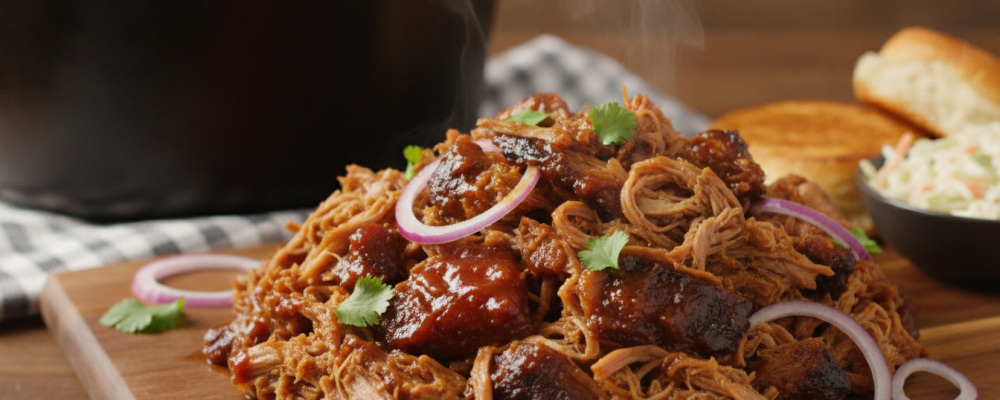

There are certain recipes that feel like a gift to yourself—the kind you start in the morning and come home to at dinnertime, when the whole house smells like something extraordinary has been happening without any effort from you at all. Slow Cooker BBQ Pulled Pork is the definition of that kind of recipe. Pork shoulder, seasoned and swimming in a smoky, sweet BBQ sauce for eight hours on low heat, until the meat is so tender it falls apart at the touch of a fork and the sauce has reduced into something glossy, deeply flavored, and completely irresistible. Piled onto a soft hamburger bun, it is one of the most satisfying sandwiches in American cooking.
I reach for this recipe constantly—for weeknight dinners, casual gatherings, game day spreads, and any occasion where I need to feed a crowd without spending my afternoon in the kitchen. The slow cooker is the great equalizer of entertaining: it asks almost nothing of you and delivers something that tastes like genuine, hours-long effort. The smoked paprika in the sauce is the detail that does the most work here—it adds the low, earthy smokiness that outdoor pit BBQ achieves through wood smoke, translated into a weekday kitchen preparation that requires no grill and no specialized equipment.
What I love most is how the pork’s collagen, broken down over eight hours of gentle heat, enriches the surrounding sauce into something that is more than just seasoned cooking liquid—it becomes the sauce that ties the entire dish together, silky and deeply flavored with everything the pork has given it through the long, slow braise.
The Inspiration Behind This Recipe
This recipe was inspired by the American tradition of low-and-slow pork barbecue—a culinary practice rooted in the cooking traditions of the American South, where whole hogs and pork shoulders were cooked over smoldering wood fires for hours until the collagen broke down, the fat rendered, and the meat became the tender, pull-apart masterpiece that defines Southern BBQ at its finest. The slow cooker version is a practical tribute to that tradition—it cannot replicate the authentic smoke of a wood-fired pit, but with smoked paprika and a bold BBQ sauce, it comes remarkably close in flavor while making the preparation accessible to any home cook with a slow cooker and a free morning.
The brown sugar in the sauce is the addition that makes this recipe distinctly its own: it adds caramelized sweetness that deepens during the eight-hour cook and gives the finished sauce a slightly sticky, glossy quality that makes every strand of pork shimmer when it’s shredded back into the liquid.
A Brief History of BBQ Pulled Pork
Barbecue pulled pork is one of the most deeply rooted and regionally diverse culinary traditions in American cooking, with distinct styles developed across the Carolinas, Tennessee, Texas, Kansas City, and beyond. The Carolinas claim some of the oldest barbecue traditions in American history—whole hog cooking over hardwood coals was practiced by Indigenous peoples of the region and adopted by European settlers in the colonial era, producing the vinegar-based and mustard-based sauces that define Eastern and Western North Carolina BBQ respectively.
Pork shoulder became the primary cut for pulled pork because of its collagen-rich connective tissue and marbled fat content—both of which transform under low, sustained heat into the gelatin and rendered fat that make pulled pork so tender and deeply flavorful. As slow cookers became a household staple in the 1970s and 1980s, the pulled pork technique migrated from outdoor pits to kitchen countertops, democratizing one of America’s most celebrated food traditions and making it accessible for any weeknight dinner.
Why the Slow Cooker Is Perfect for Pulled Pork
Pork shoulder requires exactly the kind of cooking environment the slow cooker provides: sustained, low, moist heat that breaks down collagen into gelatin over time without drying out the lean muscle fibers. At temperatures between 190 and 200°F—the typical range of a slow cooker on low—collagen begins converting to gelatin after approximately four hours and reaches the full pull-apart tenderness that defines great pulled pork at eight.
The braising liquid—BBQ sauce and chicken broth enriched with brown sugar and spices—keeps the pork submerged in a moist, flavorful environment that seasons the meat from the outside in throughout the entire cook. Unlike oven or grill methods, the slow cooker doesn’t allow the surface liquid to evaporate significantly, which means the sauce concentrates slowly and gently rather than reducing to a sticky coating too early in the process. The result is a cooking liquid that by hour eight has absorbed every bit of the pork’s rendered fat and collagen—the best possible base for tossing the shredded pork back into.
Flavor Profile: What to Expect
This pulled pork delivers the layered, deeply satisfying flavor of a proper BBQ preparation:
- Tender, pull-apart pork that has absorbed the surrounding sauce through eight hours of gentle braising
- Smoky depth from the smoked paprika that echoes authentic wood-fire BBQ without requiring a grill
- Sweet, slightly caramelized BBQ sauce enriched with brown sugar that coats every strand of shredded pork in a glossy, sticky finish
- Savory garlic and onion powder that provide a quiet, rounded aromatic base beneath the bolder BBQ flavors
- Chicken broth that enriches the cooking liquid and contributes body to the finished sauce
- Soft, slightly toasted bun that absorbs the sauce and provides the ideal vehicle for the tender pork
The overall effect is smoky, sweet, savory, and deeply satisfying—pulled pork that tastes like it came from a serious BBQ operation.
Tips for Making the Best Slow Cooker BBQ Pulled Pork
A few details will produce a consistently exceptional result:
- Use pork shoulder or pork butt: These cuts have the right fat-to-muscle ratio and collagen content for pull-apart tenderness. Leaner cuts like loin or tenderloin dry out in the slow cooker.
- Don’t rush the cook: Eight hours on low produces better texture and flavor than four hours on high. The gentle, sustained heat breaks collagen down more completely and produces a more tender, juicier result.
- Skim the fat before shredding: After removing the pork, let the cooking liquid rest for five minutes and skim the fat that rises to the surface. A slightly defatted sauce has cleaner, brighter flavor.
- Shred while warm: Warm pork shreds easily and evenly. Let it cool too long and it becomes harder to pull apart cleanly.
- Toss the shredded pork back in the sauce: Don’t skip this step. The pork soaks up even more flavor in the final few minutes of sitting in the sauce, and the sauce coats and seasons every strand.
- Toast the buns: A quick toast in a dry skillet or toaster adds texture and prevents the bun from going soggy under the saucy pork.
Serving Suggestions and Side Pairings
Slow Cooker BBQ Pulled Pork is one of the most versatile proteins in the collection:
- On toasted hamburger buns with coleslaw piled on top for the classic sandwich experience
- Over white rice or mac and cheese for a hearty, comfort-food plate
- In tacos with pickled onion, jalapeño, and crema for a Tex-Mex twist
- On a loaded baked potato alongside sour cream and cheddar
- As the protein anchor of a full BBQ spread with corn on the cob, coleslaw, and cornbread
Storage, Reheating, and Make-Ahead Tips
Pulled pork is one of the finest make-ahead proteins in existence:
- Refrigerate shredded pork in its sauce for up to 5 days. The flavor deepens beautifully overnight.
- Freeze for up to 3 months. Store with a generous portion of sauce to keep the pork moist during freezing and thawing.
- Reheat gently in a covered skillet or pot over low heat with a splash of broth or additional BBQ sauce to restore moisture and sauciness.
- Make ahead by cooking the day before and refrigerating overnight—pulled pork reheats perfectly and the flavors are arguably better the next day.
Why This Recipe Deserves a Spot in Your Rotation
Slow Cooker BBQ Pulled Pork earns its permanent rotation spot by being the recipe that does more with less effort than almost anything in this collection. Set it before work, shred it when you get home, and serve something that feeds a crowd, satisfies deeply, and tastes like you spent your whole day cooking. Once this one is in your weekly repertoire, it becomes the recipe you reach for every time you need dinner to be effortless and excellent simultaneously.
Recommended Drink Pairing
The smoky, sweet BBQ sauce and tender pork call for something bold and refreshing that can stand up to the richness. An Apple Cider Bourbon Cocktail is a natural match—the apple and bourbon notes echo the sweetness of the BBQ sauce while the spirit’s warmth complements the smoked paprika depth beautifully. A cold craft lager or a sweet, unsweetened iced tea with lemon is the classic, crowd-friendly companion that never fails alongside pulled pork.
For non-alcoholic options, a cold sparkling lemonade or a sweetened iced tea keeps things refreshing and traditional alongside one of America’s most beloved BBQ classics.
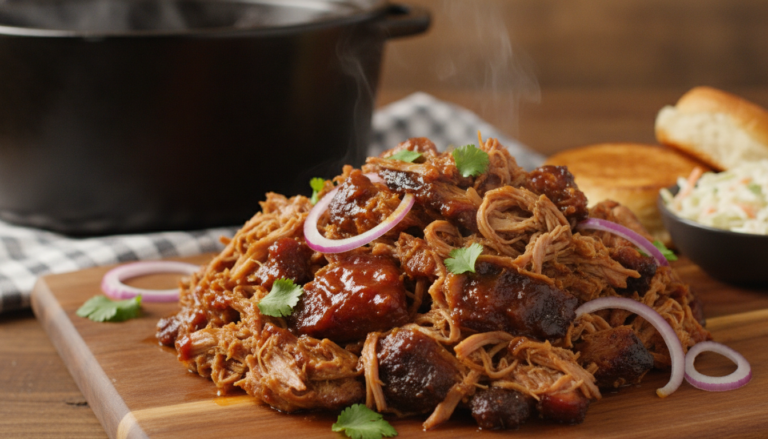
Slow Cooker BBQ Pulled Pork
Slow Cooker BBQ Pulled Pork braises pork shoulder in a smoky, sweet BBQ sauce for eight hours until fall-apart tender—shredded and piled onto toasted buns for a classic, crowd-pleasing sandwich that tastes like genuine BBQ with almost no effort.
8
servings15
minutes8
hours400
kcal8
hours15
minutesIngredients
4 pounds pork shoulder
1 cup BBQ sauce
1 cup chicken broth
1 tablespoon brown sugar
1 teaspoon garlic powder
1 teaspoon onion powder
1 teaspoon smoked paprika
1 teaspoon salt
0.5 teaspoon black pepper
8 buns hamburger buns
Directions
- Place the pork shoulder in the slow cooker.
- In a bowl, mix BBQ sauce, chicken broth, brown sugar, garlic powder, onion powder, smoked paprika, salt, and pepper.
- Pour the mixture over the pork shoulder.
- Cook on low for 8 hours, until the pork is tender.
- Remove the pork from the slow cooker and shred with two forks.
- Return the shredded pork to the slow cooker and mix with the sauce.
- Serve the pulled pork on hamburger buns.
Nutrition Facts
- Total number of serves: 4
- Calories: 400kcal
- Cholesterol: 0mg
- Sodium: 620mg
- Potassium: 400mg
- Sugar: 8g
- Protein: 6g
- Calcium: 60mg
- Iron: 2mg
About This Author

Amelia Grace
Editor-in-Chief & Culinary Director
The heart and guiding voice of Daily Dish, Amelia leads our editorial vision and recipe development. With a background in food journalism and over a decade spent in professional kitchens, she has a knack for blending gourmet technique with real-world accessibility. Her goal? To make every reader feel like a confident cook, one dish at a time.
Favorite dish: Creamy lemon risotto with a sprinkle of fresh thyme.
Kitchen motto: “Good food doesn’t have to be complicated — it just has to be made with heart.”