
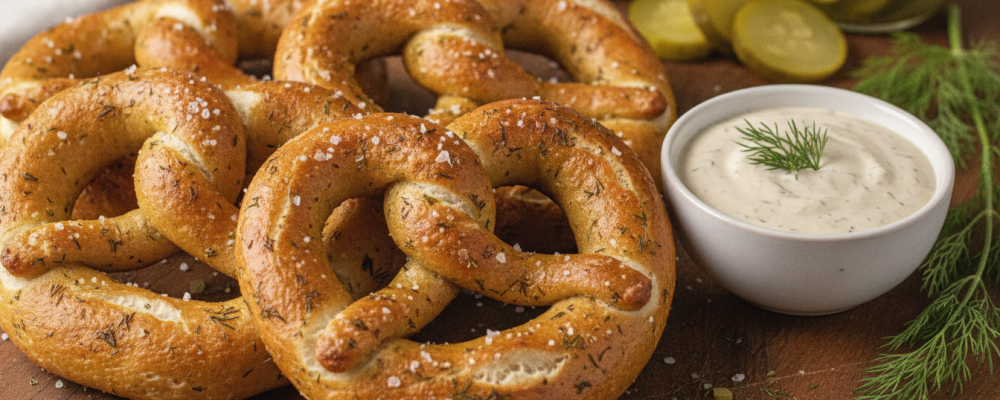

Soft pretzel development occupies a fascinating intersection of bread science and flavor engineering. The pretzel’s distinctive characteristics—its dense, chewy crumb, its glossy exterior, its deep mahogany crust—result from specific chemical reactions that distinguish it from every other bread product. This recipe for Baked Dill Pickle Pretzels respects those foundational principles while introducing a liquid substitution that fundamentally transforms the flavor profile without altering the structural chemistry that makes pretzels pretzels.
The pickle juice substitution deserves careful examination because it’s doing more than simply adding flavor—it’s altering the dough’s chemical environment in meaningful ways. Pickle brine is an acidic solution, typically containing 3-5% acetic acid from the vinegar base. This acidity affects gluten development during kneading: acidic environments slightly tighten gluten networks, producing a slightly more elastic, chewier crumb than neutral-liquid doughs. For pretzels, where chewiness is the defining textural characteristic, this effect is not a problem to manage—it’s an asset to leverage. The pickle juice is, in a very real sense, doing double duty: contributing flavor and enhancing the texture that pretzel enthusiasts specifically seek.
The yeast activation sequence—water, sugar, yeast sitting until foamy—warrants particular attention in this recipe because the subsequent addition of acidic pickle juice could theoretically impact yeast activity. The solution is sequencing: allowing the yeast to establish itself fully in the neutral sugar-water environment before introducing the acidic brine. By the time pickle juice enters the dough, the yeast colony is robust enough to continue functioning effectively despite the slight pH shift. This isn’t accidental; it’s deliberate sequencing informed by understanding how each ingredient affects the others.
The garlic dill butter application at the end addresses a specific limitation of oven-baked versus traditional pretzels. Authentic soft pretzels are dipped in a lye solution before baking, creating the alkaline environment responsible for their characteristic dark crust and distinctive flavor. This recipe substitutes high oven temperature for that chemical process, achieving acceptable browning through the Maillard reaction in the egg-free dough. The butter wash serves a dual purpose: it promotes additional surface browning through its fat content and milk solids, and it delivers the garlic and dill flavor compounds directly to the surface where they’ll be perceived most immediately with every bite.
─────────
The Inspiration Behind This Recipe
Baked Dill Pickle Pretzels emerged from a question I find consistently interesting in recipe development: what happens when you replace a recipe’s primary liquid with something that carries distinct flavor? This technique—liquid substitution—is one of the most efficient methods for introducing flavor throughout a baked good rather than just on its surface. Coffee in chocolate cake, beer in bread, buttermilk in biscuits: in every case, the liquid carries flavor compounds into the dough’s interior where no surface application can reach.
Pickle juice as a liquid substitute makes particular sense for pretzels specifically. The tangy, briny, vinegar-forward character of dill pickle brine complements the pretzel’s naturally savory, slightly malty flavor profile in a way that feels intuitive rather than contrived. There’s already precedent in food culture for this pairing—pickle-flavored snacks have demonstrated sustained consumer enthusiasm, and soft pretzels have always skewed toward bold, assertive seasoning rather than subtlety.
The inspiration also reflects the growing appreciation for fermented and pickled flavors in contemporary food culture, where vinegar-forward, complex, tangy profiles have moved from niche preference to mainstream enthusiasm. This recipe meets that enthusiasm with a technically sound, genuinely delicious execution.
─────────
A Brief History of Soft Pretzels and Pickle Brine in American Food Culture
The pretzel’s history spans at least 1,400 years, with credible evidence of pretzel-shaped bread appearing in early medieval European monasteries. The distinctive twisted shape reportedly represented arms crossed in prayer, and the three holes symbolized the Christian trinity—though food historians debate these origins with the same vigor they bring to most culinary mythology. What’s documented is the pretzel’s migration from European monastery kitchens to street food staple to global snack phenomenon.
German and Pennsylvania Dutch immigrants brought pretzel-making traditions to America in the 18th century, establishing the Pennsylvania pretzel industry that still produces a significant portion of American pretzel consumption. The soft pretzel specifically became associated with American stadium and street food culture in the 20th century, with Philadelphia developing a particular cultural attachment to large, soft, chewy pretzels that distinguishes it from the thin, crispy German varieties.
Pickle brine’s culinary applications extend beyond the jar in ways that American food culture has increasingly embraced. Athletes began drinking pickle juice for electrolyte replacement and muscle cramp prevention in the early 2000s, generating mainstream awareness of brine’s compositional properties. The subsequent pickle flavor trend in snack foods—chips, popcorn, sunflower seeds, and eventually pretzels—reflected genuine consumer enthusiasm for vinegar-forward, briny flavor profiles that pickle juice delivers most authentically.
This recipe sits at the intersection of these two American food traditions: the beloved soft pretzel and the increasingly celebrated pickle brine.
─────────
Why This Cooking Method Works
Yeast activation before acid introduction establishes a robust yeast colony before the pickle juice’s acidity enters the dough. This sequencing protects fermentation activity while still allowing the acid’s structural benefits to manifest during kneading.
Pickle juice as partial liquid replacement distributes flavor compounds throughout the entire dough matrix rather than concentrating them on the surface. This interior flavor distribution is fundamentally different from—and more effective than—any surface application.
Acidity’s effect on gluten tightens protein networks during kneading, contributing to the dense, chewy crumb that defines soft pretzel texture. The pickle juice’s acetic acid is enhancing the textural result that pretzel makers specifically seek.
One-hour rise time develops both flavor complexity through fermentation byproducts and gluten structure through the yeast’s gas production, which stretches and strengthens the protein networks.
High oven temperature (437°F/225°C) creates rapid Maillard browning on the pretzel’s exterior, generating the golden color and complex roasted flavor compounds that distinguish properly baked pretzels from pale, underdeveloped ones.
Butter wash before baking introduces fat and milk solids to the surface that promote additional browning and provide a vehicle for the garlic and dill to adhere and bloom under heat.
Dried dill rather than fresh in the butter wash is a calibrated choice: fresh dill contains more water, which would cause spattering on the hot butter and uneven distribution. Dried dill’s concentrated flavor and lower moisture content makes it more suitable for this specific application.
10-12 minute baking window achieves golden browning without excessive crust formation that would compromise the soft interior texture that defines this pretzel category.
─────────
Flavor Profile: What to Expect
Baked Dill Pickle Pretzels deliver a layered flavor experience that evolves from first bite through finish. The initial impression comes from the butter-glossed exterior—warm, rich, and aromatic with garlic and dill announcing themselves immediately through retronasal olfaction before you’ve even taken a bite.
The dough itself carries the pickle juice’s influence throughout: a background tartness and brininess that’s present in every bite rather than just on the surface. It’s subtle—you taste pretzel first—but the tangy undertone distinguishes this from any conventional soft pretzel you’ve eaten.
Garlic in the butter wash provides warm, savory depth that complements both the pretzel’s wheaty character and the pickle brine’s acidity. Having been heat-applied, it tastes mellow and aromatic rather than sharp.
Dried dill contributes its characteristic herbaceous, slightly sweet, anise-adjacent flavor that defines dill pickle flavor in conjunction with the vinegar from the brine. The two dill elements—juice in the dough, dried herb on the exterior—create layered dill character that’s distinctive and cohesive.
Texture is the pretzel’s other defining characteristic: dense, chewy crumb with slight resistance that gives way satisfyingly, a thin exterior crust with mild crunch, and that characteristic substantial weight that distinguishes soft pretzels from lighter bread preparations.
Salt throughout and on the surface sharpens every other flavor—it’s what makes the garlic more garlicky, the dill more herbaceous, and the pickle character more vibrant.
─────────
Tips for Making the Best Baked Dill Pickle Pretzels
- Use quality pickle juice: The brine from a good-quality dill pickle jar is your primary flavor ingredient. Choose a brine that tastes well-seasoned, garlicky, and genuinely dill-forward rather than just salty.
- Check yeast activity carefully: Foamy yeast after 5 minutes confirms it’s active. If it doesn’t foam, discard and start with fresh yeast—non-foaming yeast will produce dense, under-risen pretzels.
- Knead thoroughly: Proper gluten development requires 8-10 minutes of hand kneading or 5-6 minutes in a stand mixer. Under-kneaded dough produces pretzels that tear rather than stretch.
- Don’t rush the rise: The full hour develops both flavor and structure. A warmer environment (75-80°F) accelerates the process; a cooler kitchen may require additional time.
- Flour your surface judiciously: Too much flour during shaping incorporates into the dough and changes its hydration balance. Use just enough to prevent sticking.
- Roll to even thickness: Uniform rope thickness ensures the entire pretzel cooks evenly. Thick sections remain doughy while thin sections over-brown.
- Traditional baking soda bath: For more authentic pretzel crust and flavor, briefly boil shaped pretzels in a solution of 1 tablespoon baking soda per cup of water before baking. This creates the characteristic crust and color.
- Butter wash immediately before baking: Applying the butter wash too far in advance allows it to be absorbed into the dough rather than remaining on the surface where it promotes browning.
- Rotate the baking sheet: Halfway through baking, rotate the sheet 180 degrees to account for uneven oven heat distribution.
- Rest before serving: Allow pretzels to cool for 3-5 minutes after baking. The interior structure continues setting during this brief rest.
─────────
Serving Suggestions and Side Pairings
Baked Dill Pickle Pretzels work exceptionally well across multiple serving contexts:
As a standalone snack: Serve warm from the oven with dipping sauces arranged alongside—the pretzel’s bold flavor profile pairs with assertive accompaniments rather than subtle ones.
Game day spread: Include alongside wings, cheese dips, and other bold-flavored snacks where the pickle pretzel’s assertive character fits naturally.
Beer pairing event: These pretzels were essentially designed for beer accompaniment—their chewy texture, savory seasoning, and acidity create the classic pretzel-beer complementarity with added complexity.
Charcuterie board anchor: Use as the bread component of a larger board, where their distinctive flavor adds interest alongside cured meats, pickles, and aged cheeses.
Dipping sauce options:
- Spicy brown mustard (the classic pretzel companion)
- Beer cheese dip for doubling down on pub food character
- Cream cheese with chives for cooling contrast
- Ranch dressing to complement the dill
- Honey mustard for sweet-savory balance
- Additional pickle brine for dipping (for serious pickle enthusiasts)
Pairing suggestions:
- Dill Pickle Chex Mix for a cohesive pickle-themed spread
- Sharp cheddar or aged Gouda for cheese board pairing
- Cured meats and charcuterie components
- Cold cuts and grain mustard for a more substantial serving
─────────
Storage, Reheating, and Make-Ahead Tips
Storage: Store completely cooled pretzels in an airtight container or zip-lock bag at room temperature for up to 2 days. Soft pretzels stale relatively quickly due to their low fat content—proper sealing is essential.
Reheating: Wrap individual pretzels in a slightly damp paper towel and microwave for 20-30 seconds to restore softness. Alternatively, reheat in a 300°F oven for 5-7 minutes. The oven method restores more of the exterior texture while the microwave better restores interior softness.
Freezing baked: Cool completely, wrap individually in plastic wrap, and freeze for up to 1 month. Thaw at room temperature for 30-45 minutes, then reheat using the oven method for best results.
Make-ahead dough: Complete the dough through the rise stage, then refrigerate overnight rather than baking immediately. Cold fermentation actually develops more complex flavor. Shape and bake directly from the refrigerator the following day, adding 5 minutes to baking time.
Freezing unbaked: Shape pretzels, arrange on a parchment-lined baking sheet, freeze until solid, then transfer to freezer bags. Thaw in the refrigerator overnight, apply butter wash, and bake as directed.
Garlic dill butter: Make extra and refrigerate for up to 1 week. It’s excellent on toast, pasta, grilled proteins, and roasted vegetables—a useful byproduct of this recipe that repays the extra effort.
Dough scaling: This recipe doubles well. Larger batches don’t require technique adjustments—simply use a larger bowl and ensure adequate kneading time.
─────────
Why This Recipe Deserves a Spot in Your Rotation
Baked Dill Pickle Pretzels earn rotation status because they represent something genuinely uncommon in home baking: a yeast bread recipe that’s both technically instructive and boldly flavored enough to generate real enthusiasm. Most beginner bread projects produce results that are pleasant but not particularly exciting. This recipe produces results that are genuinely distinctive—pretzels that taste immediately recognizable as pretzels but with a flavor dimension that no store-bought version replicates.
From a skill-building perspective, this recipe teaches foundational yeast bread techniques—activation, kneading, fermentation, shaping—in the context of a forgiving, relatively quick project. Pretzels are more tolerant of minor technique variations than delicate pastries or laminated doughs. The skills developed here transfer directly to bread baking more broadly, making this an efficient investment in culinary capability.
The pickle juice substitution demonstrates a transferable principle—liquid substitution as a flavor delivery mechanism—that applies to dozens of other baked goods. Understanding why it works here allows you to apply the same logic to beer in bread, coffee in chocolate cake, or buttermilk in biscuits. Each recipe mastered becomes a lens for understanding others.
Most importantly, these pretzels deliver the specific satisfaction that comes from making something from scratch that’s genuinely better than its commercial equivalent. Store-bought soft pretzels can be serviceable. These cannot be replicated by anything in a bag or a box. That irreplicability—the thing that makes homemade worth the effort—is what puts this recipe in the rotation and keeps it there.
─────────
Recommended Drink Pairing
Beer: This is the quintessential beer pairing in the Monday Munchies collection. A German-style lager or Märzen complements the pretzel’s traditional character while the clean malt profile doesn’t compete with the pickle flavor. A sour ale or Berliner Weisse echoes the brine’s acidity in the glass with genuine complementarity.
Wine: A crisp, dry Riesling from Germany or Alsace provides mineral, citrus-forward character that bridges the pretzel’s German heritage and the pickle’s acidity. Its slight residual sweetness balances the brine beautifully.
Non-alcoholic: Sparkling water with lemon provides effervescent, citrusy refreshment that cleanses the palate between bites without competing with the pretzel’s assertive flavor. Ginger beer offers spicy, sweet contrast that works surprisingly well.
Cocktail: A classic Bloody Mary with its tomato, Worcestershire, and pickle garnish creates obvious and delicious thematic coherence. A Moscow Mule—vodka, ginger beer, lime—provides spicy, effervescent refreshment that cuts through the pretzel’s richness and complements its tang.
Whiskey: A neat pour of rye whiskey, with its characteristic spice and slight sweetness, is perhaps the most sophisticated pairing—the grain character of the spirit and the bread share structural similarities, while the rye’s spice and the pickle’s acidity create interesting complementary complexity.
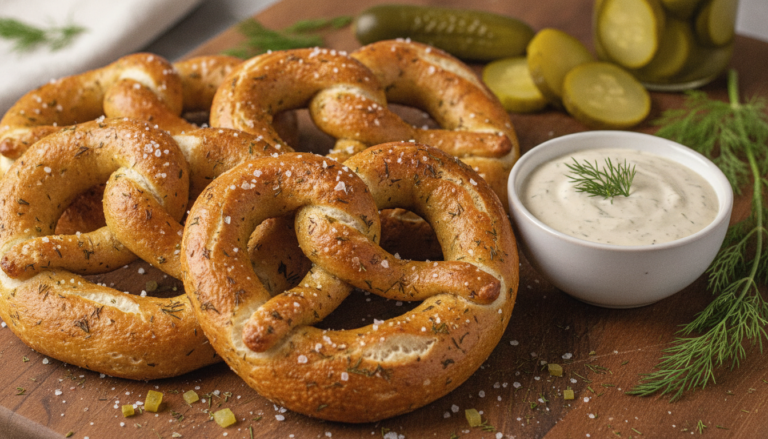
Baked Dill Pickle Pretzels
Baked Dill Pickle Pretzels incorporate real pickle juice directly into the dough and finish with a garlic dill butter glaze for chewy, tangy, deeply flavored soft pretzels that pickle lovers will absolutely obsess over.
8
servings20
minutes25
minutes150
kcal45
minutesIngredients
2 cups all-purpose flour
1 cup water
2 tbsp sugar
1 tbsp active dry yeast
1.5 tbsp dill pickle juice
1 tsp salt
2 tbsp butter
0.5 tsp dried dill
0.5 tsp garlic powder
Directions
- In a bowl, mix water, sugar, and yeast. Let it sit for 5 minutes until foamy.
- Add flour, dill pickle juice, and salt. Knead until smooth.
- Cover the dough and let it rise for 1 hour.
- Preheat the oven to 225°C (437°F).
- Divide dough into small sections and roll each into a pretzel shape.
- Melt butter and stir in dill and garlic powder.
- Brush butter mixture on pretzels.
- Bake pretzels for 10-12 minutes or until golden brown.
Nutrition Facts
- Total number of serves: 4
- Calories: 150kcal
About This Author

Benjamin Brown
Recipe Developer
Benjamin is our flavor engineer. A classically trained chef turned recipe developer, he’s obsessed with balancing taste, texture, and creativity. He ensures that every recipe we publish is not only delicious but also reliable, approachable, and repeatable — even for beginners.
Favorite dish: Slow-braised short ribs with red wine reduction.
Kitchen motto: “Cooking is part science, part soul.”















