
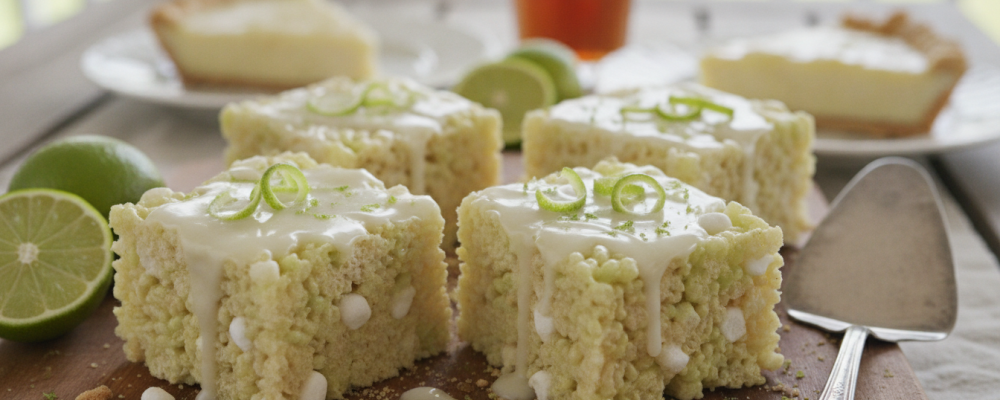

Key Lime Pie Rice Krispie Treats represent a category of recipe development that I find genuinely exciting: taking a universally beloved classic and applying unexpected flavor logic to create something that’s simultaneously familiar and surprising. Rice Krispie treats have an almost perfect textural foundation—crispy, chewy, sweet, with that satisfying resistance when you bite through them. The question I asked myself during development was: what flavors could be introduced into that framework that would create genuine cognitive delight, the kind where your brain says “I know this texture” and “I’ve never tasted this before” simultaneously?
Key lime was the obvious answer once I started thinking about marshmallow’s flavor profile. Marshmallow is essentially pure sugar with vanilla undertones—sweet, neutral, and waiting to be directed. Its high sugar content means it can accommodate significant acidity without becoming unpleasantly sour, because the sweetness and tartness balance each other. Adding lime zest and juice to the marshmallow mixture doesn’t fight the base flavor; it lifts and transforms it, creating something that reads as “citrusy sweet” rather than “candy sweet.” The lime zest specifically is crucial—it contributes aromatic oils that give the treats a genuine key lime character rather than just sourness.
The white chocolate condensed milk topping is where the recipe achieves its key lime pie ambition. Sweetened condensed milk—the essential ingredient in traditional key lime pie filling—combined with white chocolate creates a layer that’s simultaneously rich (from the chocolate’s cocoa butter) and characteristic (from the condensed milk’s concentrated dairy sweetness). This layer is what makes these treats genuinely taste like key lime pie rather than just lime-flavored cereal treats. It’s the creative stroke that transforms a clever idea into a genuinely successful fusion dessert.
─────────
The Inspiration Behind This Recipe
The inspiration for Key Lime Pie Rice Krispie Treats came from thinking about flavor migration—how flavors from one food category can be applied to another with interesting and successful results. Pie flavors specifically translate well to bar and treat formats because the essential flavor elements (crust, filling, topping) can be reimagined in the new context without losing their identity.
Key lime pie’s flavor profile is particularly well-suited to this kind of translation. The three components—graham cracker crust, sweet-tart lime filling, and cream topping—each have analogs in the Rice Krispie treat format. The cereal treat base is crunchy and slightly toasty in the way graham crackers are. The lime-infused marshmallow provides sweetness with the tartness that defines key lime filling. The white chocolate condensed milk layer provides the rich, creamy finish that whipped cream or meringue provides in traditional pie.
The decision to use white chocolate specifically (rather than, say, cream cheese for a more literal key lime connection) was flavor-driven. White chocolate’s cocoa butter provides luxurious mouthfeel without the color or flavor that milk or dark chocolate would contribute—it creates a pale, creamy topping that looks visually appropriate and whose mild flavor allows the lime to remain the dominant note. It also melts more smoothly with condensed milk than cream cheese would, creating a pourable, even-setting topping.
─────────
A Brief History of Rice Krispie Treats & Flavor Innovation
Rice Krispie Treats were created in 1939 by Mildred Day and Malibu Camp Fire Girls, initially as a fundraising treat. Kellogg’s popularized the recipe by printing it on the back of Rice Krispies cereal boxes, and the simple three-ingredient format (cereal, butter, marshmallows) became one of the most widely made treats in American home cooking. The recipe’s genius lies in its simplicity—minimal technique, minimal ingredients, and reliable results that produce something texturally unique and universally appealing.
For decades, the recipe remained essentially unchanged. The innovation, when it came, arrived from multiple directions simultaneously: fancy bakeries began making gourmet versions with mix-ins and toppings; food bloggers began experimenting with flavor infusions; and home bakers recognized that the marshmallow base was essentially a neutral, highly adaptable vehicle for virtually any flavor direction.
The shift from cereal box staple to flavor innovation platform accelerated in the 2010s as food culture increasingly celebrated creative mash-up recipes. S’mores treats, birthday cake treats, chocolate peanut butter treats, and eventually fruit-flavored varieties emerged as bakers explored the format’s potential. Citrus-infused treats—using lemon, orange, and lime—became popular because citrus’s bright acidity creates such effective contrast with marshmallow’s sweetness.
Key lime pie specifically, with its devoted following and distinctive flavor profile, was a natural candidate for the Rice Krispie treat treatment. These treats honor both the beloved pie and the beloved cereal treat while creating something genuinely new.
─────────
Why This Two-Component Method Works
Marshmallow is an ideal vehicle for citrus flavor infusion. Marshmallow is essentially a sugar-gelatin foam—its neutral sweetness and airy structure readily accept additional flavors without resistance. Lime juice’s acidity interacts with the sugar to create a pleasant sweet-tart balance, while the gelatin in marshmallow helps carry the lime’s aromatic compounds throughout the mixture. The key is adding citrus off heat (or right after removing from heat)—prolonged heat would drive off the volatile aromatic compounds in lime zest that give it its characteristic fragrance.
Lime zest contributes aromatics that juice cannot. Lime juice provides acidity and some flavor, but lime zest contains the essential oils—limonene and other terpenes—that give lime its distinctive fragrance and complexity. These oils are fat-soluble and concentrate in the zest rather than the juice. Adding zest to the warm butter-marshmallow mixture allows these oils to bloom and distribute throughout the treats, creating genuine lime flavor rather than just sourness. This is the same principle that makes citrus zest valuable in baking generally.
Working quickly after citrus addition preserves volatile aromatics. The warm marshmallow mixture is essentially a delivery vehicle for the lime’s fragrant compounds, but heat accelerates their evaporation. Adding lime zest and juice, then immediately folding in the cereal and pressing into the pan, minimizes heat exposure time for the aromatics and maximizes how much lime flavor is preserved in the finished treats.
White chocolate and condensed milk create a stable, pourable topping. White chocolate’s cocoa butter melts smoothly and evenly, creating a liquid fat base. Sweetened condensed milk—which is already a liquid at room temperature—combines readily with the melted white chocolate, and the two emulsify together into a smooth, pourable mixture. As this cools and sets in the refrigerator, the cocoa butter resolidifies and the combined mixture firms into a creamy, sliceable layer that holds its shape when cut.
Sweetened condensed milk is the key lime connection. Traditional key lime pie filling is made with condensed milk, lime juice, and eggs. Using condensed milk in the topping creates a direct flavor and ingredient connection to the original pie—the condensed milk’s concentrated, slightly caramelized dairy sweetness is characteristic and instantly recognizable as a key lime pie flavor element. This isn’t arbitrary; it’s deliberate recipe architecture that makes the connection between these treats and their inspiration authentic rather than superficial.
Refrigeration sets the topping through fat crystallization. White chocolate’s cocoa butter solidifies when cooled, transforming the pourable topping into a firm, sliceable layer. The condensed milk’s sugar provides additional structure as it cools. The 30-minute refrigeration is the minimum for a workable result; longer refrigeration creates a firmer topping that cuts more cleanly. The refrigerator-set topping also creates a pleasant temperature contrast between the slightly cooler, firmer top and the room-temperature chewy treat below.
─────────
Flavor Profile: What to Expect
Bright, tangy lime hits immediately and distinctly. The combination of zest and juice in the marshmallow base creates genuine lime character—aromatic and tart, not just vaguely citrusy. The lime’s tartness is balanced by the marshmallow’s sweetness, creating that characteristic sweet-tart profile that defines key lime pie.
Sweet, chewy marshmallow base provides familiar comfort beneath the lime brightness. The marshmallow sweetness is substantial but not cloying because the lime’s acidity provides necessary balance. The texture is that classic Rice Krispie treat combination—crispy cereal, chewy marshmallow binding—that’s texturally satisfying in its own right.
Rich, creamy white chocolate condensed milk topping provides the pie’s filling analog—sweet, rich, with that distinctive condensed milk quality that’s immediately recognizable. The white chocolate adds smoothness and luxury, the condensed milk adds depth and that authentic key lime pie character. Together they create a layer that’s genuinely reminiscent of key lime pie filling.
Textural contrast between layers creates dynamic eating experience. The crispy-chewy cereal treat base contrasts with the smooth, slightly firm topping, creating interest in each bite. This contrast mirrors the original pie’s interplay between crispy crust and smooth filling.
The overall experience is genuinely surprising and delightful. You bite in expecting a Rice Krispie treat and experience key lime pie. The brain’s simultaneous recognition of familiar texture and unexpected flavor creates genuine delight—the kind that makes people stop mid-bite and say “wait, what is this?” That cognitive surprise is one of the most pleasurable experiences in food, and this recipe produces it reliably.
─────────
Tips for Making the Best Key Lime Pie Rice Krispie Treats
Preparing the Citrus:
- Use fresh limes only—bottled lime juice lacks the aromatic complexity of fresh and produces a flatter, less convincing lime flavor.
- Zest before juicing—it’s infinitely easier to zest a whole lime than a cut one.
- Use a microplane for the finest, most flavorful zest—only take the green outer layer, avoiding the bitter white pith beneath.
- You’ll need approximately 3-4 medium limes for sufficient zest and juice for this recipe.
- Measure both before starting—once the marshmallow is melted, you need to work quickly.
Making the Cereal Treat Base:
- Use low heat throughout—impatient high-heat melting scorches butter and marshmallows, creating off flavors and a tougher texture.
- Stir constantly once marshmallows are added—they melt unevenly and the bottom can scorch quickly.
- Remove from heat immediately once marshmallows are completely smooth—residual heat continues cooking.
- Add lime zest and juice off heat to preserve volatile aromatic compounds—stir quickly and thoroughly.
- Fold in cereal immediately after citrus addition—minimizing time between citrus addition and pressing preserves maximum lime aroma.
- Work quickly but thoroughly—you want every piece of cereal coated before the mixture begins to set.
- Use buttered hands or a buttered spatula to press into the pan—the mixture sticks aggressively to ungreased surfaces.
- Press firmly and evenly for a compact, cohesive base that holds together when cut.
Making the White Chocolate Topping:
- Melt white chocolate gently—it burns more easily than dark or milk chocolate and can seize if overheated.
- Microwave in 30-second intervals at 50% power, stirring between each interval—patience prevents burning.
- Add condensed milk to the chocolate (not vice versa) for smoother incorporation.
- Stir until completely smooth—any lumps in the topping will be visible in the finished treats.
- Pour immediately onto the cereal treat base while still fluid—white chocolate begins setting quickly as it cools.
- Spread gently with an offset spatula for an even layer.
Refrigeration and Cutting:
- 30 minutes minimum for the topping to set—but 1-2 hours produces a significantly firmer, easier-to-cut topping.
- Score the topping gently with the tip of a knife before cutting—white chocolate can crack rather than cut cleanly if pressure is applied suddenly.
- Use a sharp knife warmed briefly in hot water and wiped dry—the warmth helps the knife glide through the chocolate topping without cracking it.
- Clean the knife between cuts for the neatest edges.
Flavor Variations:
- Toasted coconut: Sprinkle sweetened toasted coconut over the white chocolate topping immediately after spreading (before it sets) for texture and tropical flavor
- Graham cracker crust layer: Press a thin layer of crushed graham crackers mixed with butter onto the bottom of the pan before adding the cereal treat mixture for a more literal pie crust element
- Extra lime: Drizzle additional lime juice over the white chocolate topping before refrigerating for more pronounced tartness
- Lime zest garnish: Sprinkle additional fresh lime zest over the set topping just before serving for visual appeal and fresh citrus aroma
─────────
Serving Suggestions and Presentation Ideas
Classic Casual:
Cut into squares and arrange on a white serving plate or wooden board. The pale yellow-green topping against the cereal treat base looks clean and inviting. A light sprinkle of lime zest across the top just before serving adds color, freshness, and signals the lime flavor inside. This presentation is simple, beautiful, and appropriate for any casual gathering.
Tropical Themed:
Top each square with a small wedge of fresh lime, a sprinkle of toasted coconut, and a fresh mint leaf for tropical presentation that evokes Key West and summer beaches. Arrange on a platter lined with large tropical leaves for maximum visual impact. This works beautifully for summer parties, luaus, or any tropical-themed event.
Dessert Table Display:
Arrange in neat rows on a tiered serving stand with alternating rows showing the topping side up and the cut side visible. The layers create visual interest. Label with a small sign reading “Key Lime Pie Treats” so guests know the flavor before tasting—the name creates anticipation and excitement.
Individual Wrapped Gifts:
Wrap individual squares in clear cellophane tied with a lime-green ribbon for party favors, hostess gifts, or bake sale items. These travel perfectly and look charming wrapped individually. Include a small card with the flavor description for guests who might not expect citrus in a Rice Krispie treat.
Elevated Plated Dessert:
Place a square on a small white plate with a dollop of whipped cream beside it and a drizzle of additional condensed milk creating an artistic swirl on the plate. Add a fresh lime wheel as garnish and a sprinkle of lime zest for color. This restaurant-quality presentation transforms a simple treat into a proper plated dessert.
Key Lime Pie Deconstructed:
Serve treats alongside small glasses of additional condensed milk mixture for dipping, a bowl of crushed graham crackers for texture, and fresh lime wedges for extra tartness. This interactive presentation lets guests customize their experience and emphasizes the key lime pie inspiration.
─────────
Storage, Make-Ahead, and Serving Tips
Storage:
- Room Temperature: Store in an airtight container for up to 3 days. The white chocolate topping remains stable at cool room temperature. In warm weather, the topping may soften—refrigerate if your kitchen is above 72°F.
- Refrigerator: Store for up to 1 week in an airtight container. Cold treats have a firmer topping and slightly chewier cereal base—a texture many people prefer.
- Freezer: Freeze individually wrapped treats for up to 6 weeks. Thaw at room temperature for 20-30 minutes before serving. The cereal base maintains its texture through freezing and thawing.
- Layer with parchment between stacked treats to prevent the topping from sticking to the base of the treat above.
Make-Ahead Strategy:
These treats are excellent for advance preparation:
- Make 1-2 days ahead—the lime flavor actually deepens as the zest oils continue to infuse throughout the marshmallow
- The white chocolate topping firms more completely with extended refrigeration, making cutting cleaner and easier
- Garnish with fresh lime zest just before serving for the brightest color and freshest aroma
For parties and events, making these the day before produces better results than making them day-of, because the flavors have time to develop and the topping sets fully.
Flavor Development:
Like many citrus-infused baked goods, these treats improve over the first 12-24 hours as the lime zest oils continue to release into the marshmallow. Day-one treats are good; day-two treats are often better—the lime flavor is more integrated and complex.
Serving Temperature:
These treats are delicious at multiple temperatures:
- Room temperature: Chewy, slightly soft topping, maximum lime aroma—classic treat experience
- Cold from refrigerator: Firmer, slightly denser, more pie-like topping, more refreshing—particularly appealing in summer
- Both are valid—serve based on occasion and preference
─────────
Why This Recipe Deserves a Spot in Your Rotation
Key Lime Pie Rice Krispie Treats occupy a genuinely unique position in the dessert landscape—they’re simultaneously one of the most familiar and one of the most surprising things you can serve at a gathering. The Rice Krispie treat format is universally recognized and beloved; the key lime pie flavor is unexpected and delightful. That combination of recognition and surprise creates a dessert moment that’s genuinely memorable.
From a creative pastry perspective, this recipe demonstrates smart flavor migration. Taking a classic pie’s essential flavor elements—tartness from lime, sweetness from condensed milk, richness from cream—and finding appropriate analogs in a completely different dessert format requires understanding both the source dessert’s flavor architecture and the target format’s capabilities. The marshmallow’s ability to accommodate citrus, the condensed milk’s direct connection to key lime pie, the white chocolate’s textural contribution—these aren’t random choices, they’re thoughtful decisions that make the flavor connection authentic.
The accessibility is genuinely remarkable. No baking, minimal technique, pantry staples, 30 minutes of active work. Yet the result is something that could be served at a sophisticated dinner party or a children’s birthday party with equal success. That range—from casual to elevated, from simple to impressive—is rare in any single recipe.
These treats solve real entertaining problems. They travel beautifully (no frosting to smear, no cream to weep). They can be made days ahead without quality loss. They serve crowds efficiently from a single 9×13 pan. They’re individually portable without plates or forks. And they’re unexpected enough that they become a conversation starter rather than just another dessert on the table.
The flavor combination creates genuine delight. The cognitive experience of expecting “Rice Krispie treat” and encountering “key lime pie” is one of the most pleasurable surprises in food—familiar and new simultaneously, comfort and excitement in one bite. That experience is worth recreating and sharing.
If you’re looking for a recipe that combines beloved childhood nostalgia with sophisticated flavor innovation, that’s completely accessible to any skill level, that serves crowds effortlessly, that improves with advance preparation, and that creates genuine delight in everyone who tastes it—this is it. Key Lime Pie Rice Krispie Treats prove that the most exciting desserts are often the ones that make you reconsider what you thought you knew about a familiar format.
─────────
Recommended Drink Pairing
Sparkling Limeade or Lime Soda:
Fresh sparkling limeade or lime-flavored sparkling water creates a flavor echo that amplifies the treats’ citrus character while the effervescence cleanses the palate between bites. The cold, bright beverage contrasts the sweet, chewy treat beautifully. This is the most thematically cohesive pairing—lime meeting lime in complementary forms.
Coconut Water:
Fresh or bottled coconut water provides subtle tropical sweetness and natural electrolytes that pair naturally with key lime’s Florida Keys heritage. The coconut’s mild flavor doesn’t compete with the lime while reinforcing the tropical character. This feels refreshing and appropriate for summer serving.
Piña Colada or Coconut Rum Cocktail:
For adults, a piña colada or coconut rum with lime creates a tropical cocktail pairing that extends the key lime-coconut flavor world of these treats. The combination of rum, coconut, and citrus alongside the lime-condensed milk treats feels cohesive and vacation-inspired.
Iced Green Tea with Lime:
Iced green tea with a squeeze of fresh lime provides gentle tannins and complementary citrus that enhance the treats’ lime character without overshadowing the white chocolate topping’s creaminess. This sophisticated, lighter pairing works beautifully for afternoon tea service or warm weather entertaining.
Vanilla Milkshake:
For a dessert-forward pairing, a cold vanilla milkshake provides creamy, cold contrast to the treats’ chewy texture while vanilla’s sweetness mirrors the white chocolate topping and creates a balanced, indulgent combination. The cold shake against the room-temperature treats creates pleasant temperature contrast.
Key Lime Pie Rice Krispie Treats
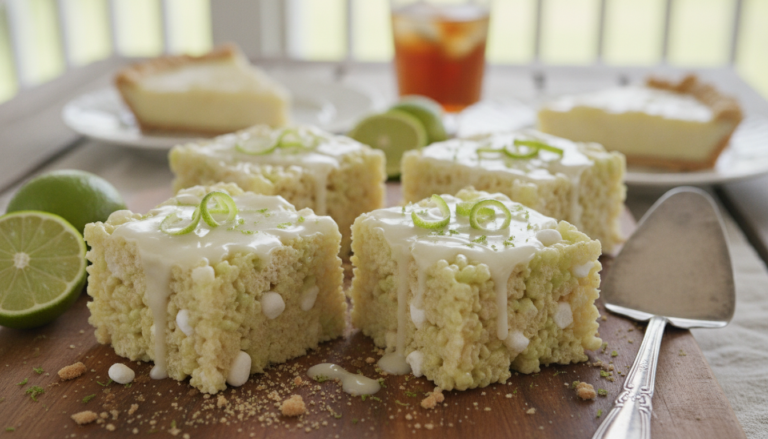
Key Lime Pie Rice Krispie Treats transform the beloved childhood classic into something unexpectedly sophisticated—bright, tangy lime-infused cereal treats topped with a silky white chocolate condensed milk layer that captures every flavor of classic key lime pie in portable, craveable squares.
4
servings30
minutes40
minutes300
kcal1
hour10
minutesIngredients
5 cups Rice Krispies cereal
0.25 cup butter
10 oz marshmallows
1 tbsp lime zest
0.25 cup lime juice
0.25 cup white chocolate chips
0.5 cup sweetened condensed milk
Directions
- Melt butter in a large saucepan over low heat.
- Add marshmallows and stir until completely melted.
- Remove from heat and stir in lime zest and lime juice.
- Quickly fold in Rice Krispies cereal until well coated.
- Press mixture into a greased 9×13-inch pan.
- Melt white chocolate chips and mix with condensed milk.
- Spread the white chocolate mixture on top of the treats.
- Refrigerate until set, about 30 minutes.
- Cut into squares and serve.
Nutrition Facts
- Total number of serves: 4
- Calories: 150kcal
- Cholesterol: 0mg
- Sodium: 620mg
- Potassium: 400mg
- Sugar: 8g
- Protein: 6g
- Calcium: 60mg
- Iron: 2mg
About This Author

Aurora Wright
Pastry Chef & Dessert Editor
Aurora is the sweet side of Daily Dish. A trained pastry chef and dessert stylist, she’s responsible for our mouth-watering cakes, cookies, and confections. She brings precision, artistry, and a touch of whimsy to every recipe she creates — and taste-tests more chocolate than she’ll admit.
Favorite dish: Flourless dark chocolate torte.
Kitchen motto: “Life’s too short to skip dessert.”















