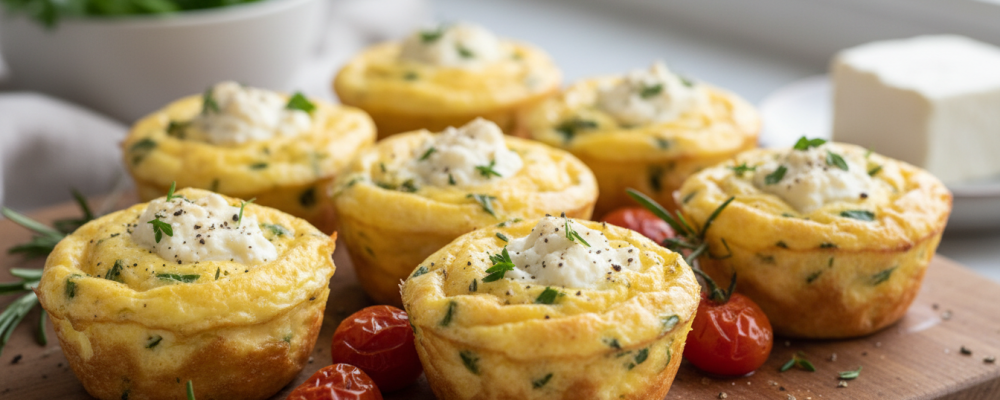

The baked egg cup is a meal prep format with a high floor and a relatively low ceiling in most home kitchen applications. The floor is easy to achieve: eggs, a muffin tin, a moderate oven, twenty minutes. The result is edible, portable, and protein-dense—all the qualities a make-ahead breakfast needs to have. What most recipes in this format fail to achieve is the ceiling: a custard that is genuinely tender rather than rubbery, a filling that has actual flavor rather than seasoning, and a reheated result that still tastes like something worth eating rather than something merely consumed.
The ceiling is determined by three specific variables: the egg-to-milk ratio, the quality and preparation of the fresh herbs, and the choice of cheese. This recipe is designed around the optimal resolution of all three.
The egg-to-milk ratio determines whether the baked custard is tender or tight. Too little milk and the egg proteins coagulate into a dense, bouncy matrix with no internal moisture—the texture of a hard-boiled egg in cup form. The correct amount of milk dilutes the egg proteins enough that they set into a looser, more yielding structure that remains tender through both the initial bake and subsequent reheating. Fresh herbs—specifically fresh basil and thyme rather than dried—contribute volatile aromatic compounds that would be destroyed by the drying process, producing a fragrance in the finished cup that dried herbs simply cannot replicate. And goat cheese, specifically, melts into a baked egg custard in a way that aged cheddar or mozzarella does not: its high moisture content and relatively low melting point allow it to soften into creamy pockets throughout the cup rather than pooling at the base or sitting as a distinct, separate layer. The three decisions together are what make this cup genuinely refined rather than simply convenient.
─────────────────────────────────────────
The Inspiration Behind This Recipe
The design brief for this recipe was to develop a baked egg cup that tasted at home on a brunch menu rather than in a meal prep container—something that could be served to guests with confidence on a weekend and reheated at a desk with equal satisfaction on a Tuesday. The challenge was creating that quality differential using only the specific format’s constraints: a muffin tin, a single-bowl batter, and an oven time under twenty-five minutes.
Fresh herbs were identified early as the most efficient route to that quality differential. The flavor gap between a baked egg cup made with dried herbs and one made with fresh is far wider than the effort differential would suggest—fresh basil and thyme contribute aromatic complexity that is immediately perceptible as sophisticated rather than simply seasoned. Fresh basil’s linalool and eugenol compounds—the same molecules that make it fragrant when torn—survive a moderate bake in a moist custard environment far better than they survive the drying process, which destroys up to 80% of their volatile content. Fresh thyme contributes thymol, a phenolic compound with a clean, slightly medicinal aromatic quality that adds savory depth without adding heat.
Goat cheese was chosen over other options—feta, cheddar, ricotta—for a specific functional reason. Goat cheese’s fat globules are smaller and more uniformly distributed than those of cow’s milk cheese, which means it melts at a lower temperature and distributes more evenly through the egg matrix during baking. In practical terms, this produces a cup where every bite contains a small amount of creamy, tangy goat cheese rather than a cup where the cheese has migrated to one layer or one area during the bake. That even distribution is what gives these cups their characteristic richness throughout rather than in isolated pockets.
─────────────────────────────────────────
A Brief History of Baked Egg Preparations
The tradition of baking eggs in small, individual vessels is one of the oldest in the European culinary repertoire, with documented recipes appearing in French cookbooks as early as the 17th century. The French oeufs en cocotte—eggs baked in small ramekins with cream, herbs, and sometimes truffle or smoked fish—represent the most refined iteration of this tradition, where the combination of gentle oven heat and a cream-enriched environment produces an egg of extraordinary tenderness that has made the preparation a fixture of French café breakfast culture for centuries.
The English and American traditions adapted this format to less formal contexts: the baked egg in toast, the shirred egg on a bed of cream, the egg baked into a hollowed-out vegetable. Each variation applied the same fundamental principle—egg, vessel, moderate heat—to local ingredients and preferences, producing a diverse family of preparations that all share the baked egg’s characteristic quality: a set white and a yolk (or in custard preparations, a set whole-egg mixture) with a texture that is fundamentally different from, and in many ways superior to, the pan-fried or scrambled versions of the same ingredient.
The contemporary muffin tin adaptation—which produces individual, uniform cups from a single batch without requiring individual ramekins—is the home cook’s efficient translation of the cocotte principle into a format suitable for a modern meal prep kitchen. It sacrifices some of the refinement of the original (the gentle, individualized heat environment of a water bath, for example) while gaining the practical advantages of batch production, consistent portioning, and the structural integrity of a baked cup that can be stored, stacked, and reheated without losing its essential character. It is a worthwhile trade for any cook whose goals include both quality and efficiency.
─────────────────────────────────────────
Why This Cooking Method Works for Meal Prep
The muffin tin format distributes the egg custard into twelve identical portions, each of which bakes in the same amount of time and at the same temperature—producing a consistent result across the entire batch that individual pan-baked or skillet preparations cannot achieve. The custard is poured at a uniform depth into each greased cup, and the small, enclosed volume of each cup means the surrounding metal conducts heat evenly from all sides simultaneously, setting the custard from the outside in with a degree of uniformity that a larger pan format can’t replicate.
The milk-to-egg ratio in this recipe is calibrated specifically for a baked custard that remains tender after refrigeration and reheating. Milk dilutes the egg protein network, lowering its effective concentration and producing a gel that sets at a lower final protein density than a pure-egg mixture would. The practical result is a cup that remains soft and yielding after being refrigerated overnight and reheated in the microwave, rather than tightening into a dense, bouncy disc—the most common failure mode of over-baked or protein-dense egg cups. The milk is doing structural work, not merely adding moisture.
Greasing the muffin tin with olive oil rather than butter or cooking spray has a specific functional advantage in this recipe: olive oil has a higher smoke point than butter and produces a cleaner, less greasy release than cooking sprays, which often contain propellants that leave a residue affecting the cup’s exterior texture. Olive oil applied with a pastry brush or paper towel coats the interior of each cup with a thin, even layer of fat that releases the set custard cleanly and contributes a faint, fruity richness to the cup’s exterior edge.
─────────────────────────────────────────
Flavor Profile: What to Expect
These cups operate in a refined, herb-forward register that tastes simultaneously light and deeply satisfying:
- Tender, creamy egg custard – The milk-enriched base produces an egg that is soft and yielding rather than dense—the defining textural quality that separates these cups from a standard baked egg preparation
- Tangy, creamy goat cheese – Distributed evenly throughout the custard, the goat cheese contributes a bright, slightly acidic richness that makes every bite taste more composed than plain egg could manage alone
- Floral, aromatic fresh basil – Basil provides the most prominent aromatic note in the cup—sweet, slightly peppery, and intensely fragrant in a way that dried basil cannot replicate
- Clean, savory fresh thyme – Thyme contributes a grounding herbal depth beneath the basil’s brightness—slightly medicinal, quietly complex, and distinctly sophisticated
- Earthy, wilted spinach – The spinach softens into the custard during baking, contributing a mild, slightly mineral green note and a gentle visual contrast throughout the cup’s interior
- Bright olive oil finish – The light coat of olive oil on the cup’s exterior edges adds a fruity, peppery richness that is most perceptible in the slightly golden, tender outer layer of each cup
The fresh herb character becomes more deeply integrated after an overnight rest, as the basil and thyme compounds distribute further through the cold custard. Day-two cups are noticeably more cohesive and herb-forward than the freshly baked version—a consistent and worthwhile improvement.
─────────────────────────────────────────
Tips for Making the Best Savory Herb & Goat Cheese Egg Bake Cups
Execution at the mixing and portioning stages determines the uniformity and quality of the finished batch:
- Whisk the egg mixture thoroughly – The eggs, milk, salt, and pepper should be whisked until fully homogeneous—no visible streaks of yolk or white. An under-whisked mixture produces cups with uneven texture, where pockets of un-emulsified yolk set at a different density than the surrounding white-dominant custard.
- Chop herbs finely – Large pieces of basil or thyme distribute unevenly and can create pockets of concentrated herb flavor rather than a consistent herbal character throughout. Fine chopping ensures every bite contains a proportional amount of each herb.
- Wring excess moisture from spinach – Fresh spinach contains significant water. While the recipe uses it raw rather than pre-cooked, squeezing the chopped spinach briefly in a paper towel before adding it to the mixture reduces excess moisture release during baking, which can create pools of liquid that prevent the custard from setting cleanly.
- Pour uniformly to 3/4 capacity – A consistent fill level ensures all cups bake in the same time. Over-filled cups overflow during baking; under-filled cups dry out at the edges before the center sets. A ladle or measuring cup pour produces the most consistent result.
- Check doneness by surface appearance, not time alone – The cups are done when the surface is set and lightly golden—no visible jiggle when the tin is gently shaken. Oven temperature varies; the visual check is more reliable than the timer.
- Cool for five minutes before releasing – The custard is still slightly fragile at the moment it comes from the oven. A five-minute rest allows the egg protein structure to firm enough that the cups release from the greased tin cleanly rather than tearing at the edges.
Optional: A small additional crumble of goat cheese pressed onto the surface of each cup just before baking melts into a golden, slightly browned cap that adds visual distinction and an extra hit of tangy richness at the first bite.
─────────────────────────────────────────
Portioning and Container Suggestions
A standard 12-cup muffin tin produces twelve individual egg cups—two to three cups per serving constitutes a satisfying breakfast portion, yielding four to six complete servings from a single batch. Two cups with a piece of fruit or a slice of toasted whole grain bread is a nutritionally complete morning meal; three cups is appropriate for higher-protein requirements or more demanding mornings.
These cups stack cleanly in a wide, flat airtight glass container with a piece of parchment paper between layers to prevent sticking and to protect the cups’ surface from compression damage. Individual daily portions—two or three cups per container, sealed and ready to grab—minimize morning decision-making to the level of opening a refrigerator door. The cups’ compact, cylindrical profile makes them particularly space-efficient in storage, fitting efficiently into the same container footprint as a single large egg preparation would require.
For on-the-go mornings, a container that can travel to a desk microwave is the ideal vessel—no additional plates, no utensils required for heating. The cups are structurally sound enough to be eaten by hand if needed, which makes them one of the most genuinely portable hot breakfast options in the collection and a reliable solution for mornings when the commute and the breakfast overlap.
─────────────────────────────────────────
Storage, Reheating, and Shelf Life Tips
- Refrigerator storage: Baked cups keep in an airtight container for up to 4 days. The herb character deepens through day two and three; the custard texture remains consistent through day four with proper reheating technique.
- Freezer storage: These cups freeze well for up to 2 months. Cool completely, wrap each cup individually in plastic wrap, and transfer to a labeled freezer bag. The fresh herb character diminishes slightly after freezing—still pleasant, but less vivid than the refrigerator version.
- Reheating from refrigerated: Microwave at 50% power for 60–90 seconds. This is the most important reheating instruction in the recipe. Full-power microwaving overheats the egg protein matrix, which tightens and expels moisture—producing a rubbery cup rather than a tender one. Low power and adequate time are the correct reheating parameters for any custard-based preparation.
- Oven reheating: Place cups on a baking sheet at 300°F for 8–10 minutes from refrigerated, covered loosely with foil to retain moisture. This method preserves the most tender texture of all reheating approaches and is worth using when the morning schedule allows.
- From frozen: Thaw overnight in the refrigerator and reheat as above. Alternatively, microwave directly from frozen at 30% power for 2–3 minutes, checking every minute.
- Texture note: Any baked egg preparation will be slightly more tender when freshly made than when refrigerated and reheated—this is an inherent characteristic of egg protein behavior, not a recipe flaw. The low-power microwave method minimizes this difference to the extent that it is achievable without a water bath.
─────────────────────────────────────────
Why This Recipe Deserves a Spot in Your Meal Prep Rotation
From a pure efficiency standpoint, this recipe is difficult to fault. It produces twelve individual, protein-complete breakfast portions from a single twenty-minute baking session, with an ingredient list short enough that the preparation is genuinely repeatable week after week without becoming a logistical burden. The cost per serving is low; the nutritional return is high; the format is more portable than any pan-based egg preparation.
The more compelling argument, however, is the quality one. These cups taste like something you would pay for at a good café—the kind of breakfast item on a brunch menu that makes you think the kitchen is more skilled than perhaps it needs to be. That quality, achieved through the specific combination of fresh herbs, goat cheese, and a milk-enriched custard ratio, is entirely reproducible in a home muffin tin on a Sunday morning. A meal prep breakfast that requires no compromise between the quality of a considered, properly executed preparation and the convenience of a grab-and-reheat routine is, in the specific context of a demanding week, genuinely valuable. This recipe delivers that combination reliably. It belongs in the rotation.
─────────────────────────────────────────
Meal Prep Pairing Suggestions
Savory Herb & Goat Cheese Egg Bake Cups pair most effectively with breakfast preparations that offer genuine contrast in flavor profile and format—ensuring the week’s mornings cover genuine variety within the savory, protein-forward breakfast category. Our Ham & Cheddar Egg Muffin Sandwiches are the natural rotation partner: both are muffin-tin-baked, both are protein-complete, and both reheat in under two minutes for a genuinely effortless weekday morning. But where the egg muffin sandwiches are hearty, familiar, and American in character, these cups are refined, herb-forward, and Mediterranean-inflected—different enough that alternating between them produces a week of mornings with no flavor repetition.
For a complete three-option breakfast rotation, our Peach Ginger Overnight Oat Jars provide a cool, sweet counterpoint that covers the mornings when a savory, protein-forward breakfast isn’t the right call—or when an extra five minutes of sleep takes precedence over reheating anything at all. Three prepped breakfasts covering savory-and-refined, savory-and-hearty, and cool-and-fruit-forward means the full week’s morning options are genuinely varied, genuinely nourishing, and genuinely effortless from the moment the alarm goes off. That is the standard a well-designed breakfast rotation should meet. These three recipes meet it together.
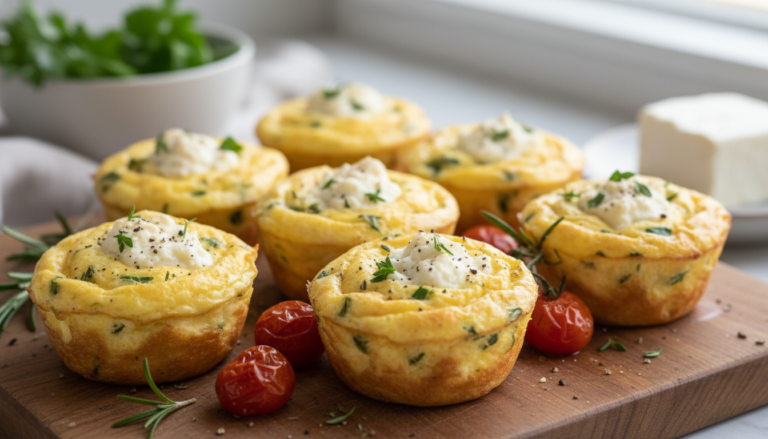
Savory Herb & Goat Cheese Egg Bake Cups
These Savory Herb & Goat Cheese Egg Bake Cups are a refined, protein-packed baked egg breakfast built on a fresh herb and goat cheese custard that tastes considerably more sophisticated than the twenty minutes it took to make them.
6
servings15
minutes20
minutes150
kcal35
minutesIngredients
6 large eggs
1 cup fresh spinach, chopped
0.5 cup goat cheese, crumbled
1 tablespoon fresh basil, chopped
1 teaspoon fresh thyme leaves
0.5 teaspoon salt
0.25 teaspoon black pepper
0.25 cup milk
1 tablespoon olive oil
Directions
- Preheat oven to 350°F (175°C) and lightly grease a muffin tin.
- In a bowl, whisk together eggs, milk, salt, and pepper.
- Stir in spinach, goat cheese, basil, and thyme until well combined.
- Pour mixture into muffin tins, filling each about 3/4 full.
- Bake for 18-20 minutes until egg sets and tops are golden.
- Allow to cool slightly before removing from tin and serving.
Nutrition Facts
- Total number of serves: 4
- Calories: 150kcal
- Cholesterol: 0mg
- Sodium: 620mg
- Potassium: 400mg
- Sugar: 8g
- Protein: 6g
- Calcium: 60mg
- Iron: 2mg
About This Author

Benjamin Brown
Recipe Developer
Benjamin is our flavor engineer. A classically trained chef turned recipe developer, he’s obsessed with balancing taste, texture, and creativity. He ensures that every recipe we publish is not only delicious but also reliable, approachable, and repeatable — even for beginners.
Favorite dish: Slow-braised short ribs with red wine reduction.
Kitchen motto: “Cooking is part science, part soul.”