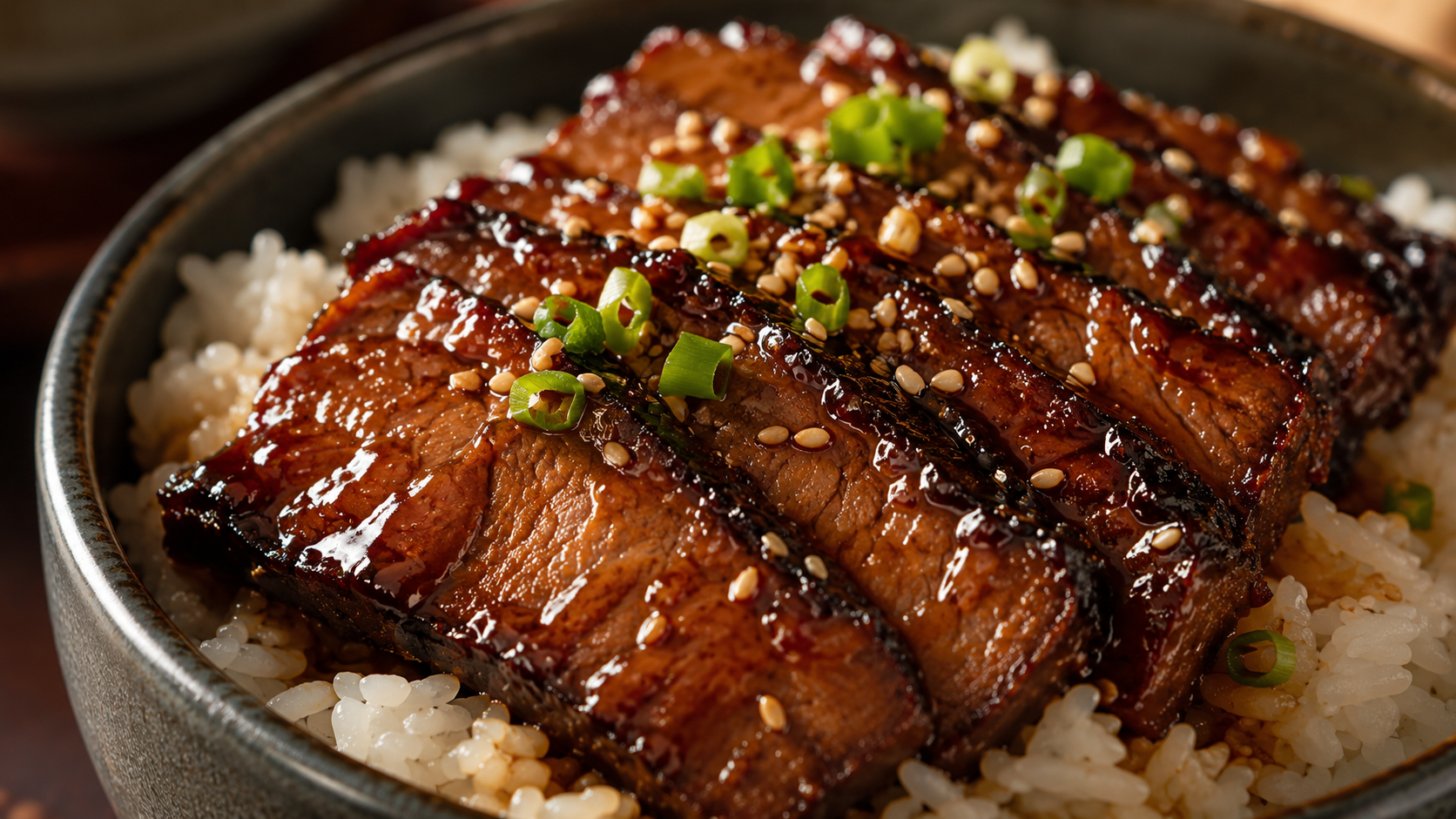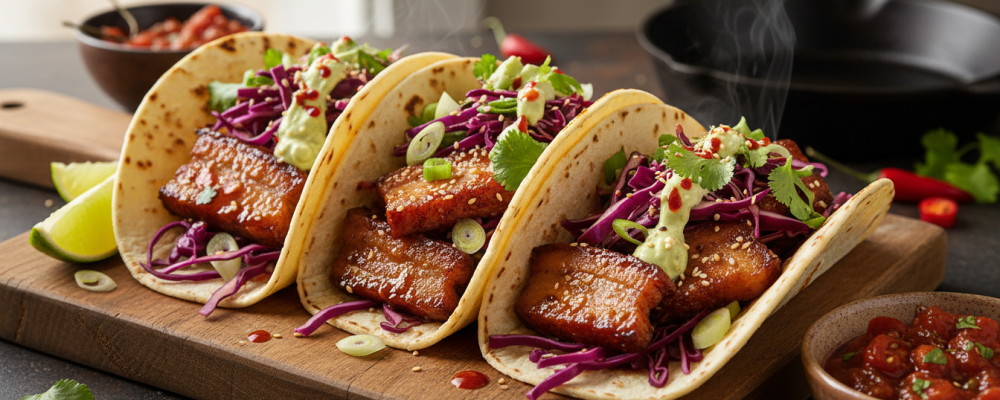

Let’s discuss why pork belly creates such exceptional tacos from a technical and culinary perspective. Pork belly is the cut from which bacon is made—it’s the underside of the pig, consisting of layers of meat interspersed with fat, topped with skin. This layered structure is precisely what makes it ideal for the two-stage cooking method employed here.
The first stage—slow roasting at 320°F for 2.5 hours—serves multiple purposes. The low temperature allows the abundant collagen in the meat to slowly convert to gelatin without rendering all the fat. This creates that characteristic melt-in-your-mouth texture while keeping the meat moist. The orange juice serves dual functions: its acidity helps break down proteins for tenderness, while its natural sugars will eventually contribute to caramelization. The foil cover creates a humid environment that prevents surface drying during this extended cooking period.
The second stage is where magic happens. Increasing the temperature to 428°F and removing the foil allows moisture to escape from the skin. As the skin dehydrates in the high heat, the collagen in the skin contracts and crisps, creating what’s essentially pork crackling—that satisfying crunch that provides textural contrast to the rich meat below. This is the same principle used in Peking duck preparation or Filipino lechon, where achieving crispy skin is considered essential to the dish’s success.
The spice rub—cumin, smoked paprika, garlic—provides aromatic complexity without overwhelming the pork’s natural richness. Smoked paprika particularly complements pork belly’s almost bacon-like character while adding color that becomes more pronounced during the final high-heat crisping.
The minimalist topping approach isn’t an oversight—it’s intentional. Pork belly is so rich and flavorful that it needs sharp, bright elements to cut through that richness: raw red onion provides pungent bite, cilantro adds herbal freshness, and lime offers essential acidity. Additional toppings would create competition rather than complement. This is restraint in service of highlighting the main ingredient.
─────────
The Inspiration Behind This Recipe
This recipe draws inspiration from multiple culinary traditions that celebrate pork belly’s unique qualities. Chinese roast pork (siu yuk) uses similar two-stage cooking for crispy skin and tender meat. Filipino lechon kawali features crispy pork belly served simply with vinegar for cutting richness. Korean samgyeopsal celebrates thick-cut pork belly grilled and wrapped in lettuce. This taco adaptation brings those principles into Mexican format, using citrus and warm spices typical of Latin American pork preparations while maintaining the crispy-tender textural contrast that makes pork belly special across cultures. The result is fusion that makes sense—taking a universally beloved cut and preparing it with techniques that honor its character while presenting it in the accessible, customizable format of tacos. It’s modern cooking that respects tradition while creating something new.
─────────
A Brief History of Pork Belly in World Cuisines
Pork belly has been prized across cultures for centuries precisely because its fat content made it valuable in times when caloric density mattered for survival. In China, pork belly dishes date back thousands of years, with preparations like hong shao rou (red-braised pork belly) considered classics. European traditions gave us bacon, pancetta, and various cured belly preparations. In the American South, pork belly became soul food staples. Interestingly, pork belly was relatively inexpensive until the 2000s, when American chefs rediscovered it and elevated it on restaurant menus. The gastropub movement made pork belly trendy, and suddenly this once-humble cut became sought-after. In Mexican and Latin American cooking, pork belly isn’t traditionally featured as prominently as shoulder or loin, but contemporary chefs have embraced it for tacos, creating preparations that honor Mexican flavoring principles while showcasing this luxurious cut. Today, pork belly represents the intersection of tradition and innovation—an ancient ingredient prepared with modern techniques.
─────────
Why This Cooking Method Works
Low and slow renders fat gradually — The 320°F temperature allows intramuscular fat to render slowly without drying out the meat, creating tenderness while maintaining moisture.
Orange juice tenderizes and flavors — The citric acid breaks down proteins on the meat’s surface while adding subtle sweetness that complements pork’s natural flavor.
Covering creates humid environment — The foil cover traps steam, essentially braising the pork belly and preventing surface drying during the long initial cooking.
Resting before high heat matters — Allowing partial cooking before the final blast ensures the interior is done without burning the exterior during crisping.
High heat crisps the skin — 428°F is hot enough to dehydrate and crisp the skin rapidly without overcooking the now-tender meat beneath.
The skin must be dry — Any moisture prevents crisping. The high heat drives off remaining moisture, allowing the skin to crackle properly.
Resting after cooking redistributes juices — The 10-minute rest allows the meat to relax and juices to redistribute, ensuring every slice is moist.
Thin slicing is essential — Pork belly is so rich that thick slices are overwhelming. Thin slices provide richness without excess.
─────────
Flavor Profile: What to Expect
Indulgent, complex, and deeply satisfying — these tacos deliver incredibly rich, fatty pork with layers of tender, melting meat that’s almost buttery in texture. The crispy, crackling skin provides satisfying crunch and concentrated pork flavor. Smoky paprika and earthy cumin add warm spice notes, while garlic provides savory depth. Orange juice leaves subtle citrus sweetness throughout the meat. Fresh cilantro brings herbal brightness, raw red onion adds sharp, pungent bite, and lime juice provides essential acidity that cuts through all that richness. The corn tortillas offer sweet, toasty base that soaks up the rendered fat beautifully. It’s unapologetically decadent—not light or healthy, but absolutely worth every indulgent bite. The contrast between rich meat and bright toppings creates balance that makes the richness feel purposeful rather than overwhelming.
─────────
Tips for Making the Best Pork Belly Tacos
Choose quality pork belly — Look for pieces with even layers of fat and meat. Avoid pieces that are mostly fat with little meat.
Score the skin (optional) — Making shallow cuts in a crosshatch pattern helps render fat and creates even crisping, though it’s not essential.
Pat the skin dry before final roasting — Use paper towels to remove any moisture. Dry skin crisps better than wet skin.
Don’t skip the resting periods — Rest after the first cooking phase (even 5 minutes helps) and definitely rest after the final crisping before slicing.
Watch the final crisping closely — Every oven is different. Check after 20 minutes to prevent burning. You want deep golden-brown, not black.
Slice against the grain — This creates tender pieces. Identify the direction of the meat fibers and slice perpendicular.
Slice thin — No more than ¼ inch thick. Pork belly is so rich that thick slices are too much.
Use a very sharp knife — The crispy skin can be difficult to cut without crushing the tender meat beneath. Sharp knife is essential.
Save the rendered fat — The fat in the roasting pan is liquid gold. Use it for frying eggs, roasting potatoes, or making refried beans.
Adjust seasoning to taste — Some pork belly is saltier than others. Taste before serving and adjust with additional salt if needed.
─────────
Serving Suggestions and Side Pairings
These rich pork belly tacos pair beautifully with:
- Quick-pickled vegetables (carrots, radish, jalapeños) for tangy, crunchy contrast
- Cabbage slaw with lime vinaigrette for freshness and texture
- Cucumber salad with rice vinegar for cooling, crisp contrast
- Kimchi for Korean-Mexican fusion approach with fermented tang
- Pickled red onions for additional acidity
- Fresh radish slices for peppery crunch
- Salsa verde or tomatillo salsa for bright acidity
- Avocado slices for creamy contrast (though the pork is already quite rich)
- Simple rice to soak up the delicious rendered fat
What NOT to serve:
- Avoid heavy, rich sides like refried beans or cheesy dishes
- Skip cream-based sauces or sour cream—too much richness
- These tacos are so rich they need bright, acidic, fresh accompaniments
Topping philosophy:
- Keep it minimal and bright
- Acid and crunch are your friends
- Let the pork be the star
─────────
Storage, Reheating, and Make-Ahead Tips
Storage:
- Store cooked pork belly in an airtight container in the refrigerator for up to 4 days
- The skin will soften when stored; re-crisping is possible but never quite as good as fresh
- Store toppings separately
Reheating:
- Best method: Reheat in a 400°F oven for 8-10 minutes to warm through and re-crisp the skin
- Alternative: Air fryer at 375°F for 5-7 minutes works excellently
- Microwave works but won’t restore any crispness—meat will be tender but skin will be soft
Make-Ahead Tips:
- Complete the first slow-roasting phase up to 2 days ahead
- Refrigerate the partially cooked pork belly
- Bring to room temperature for 30 minutes, then complete the high-heat crisping just before serving
- This actually works well—the rest period allows flavors to develop
Freezing:
- Freeze cooked pork belly (after first cooking stage, before final crisping) for up to 2 months
- Thaw completely in refrigerator overnight
- Complete the high-heat crisping stage from thawed state
- Texture remains excellent after freezing
Leftover uses:
- Chop and add to fried rice
- Use in ramen or noodle soups
- Make breakfast tacos with eggs
- Create bánh mì-style sandwiches
- Top rice bowls or salads
- The crispy skin makes excellent snacking (pork rinds, essentially)
─────────
Why This Recipe Deserves a Spot in Your Taco Tuesday Rotation
Because some Taco Tuesdays deserve to be extraordinary. These Pork Belly Tacos are the ones you make for special occasions, celebrations, or when you want to create a meal that people will remember and talk about long afterward. Yes, they take three hours. Yes, they’re rich and indulgent. But the payoff is a taco experience unlike anything else—crispy, tender, impossibly flavorful pork that showcases why pork belly has been prized across cultures for centuries. They’re also surprisingly approachable despite seeming fancy; the technique is straightforward, just time-consuming. The recipe works beautifully for small dinner parties because it looks and tastes impressive while requiring minimal last-minute work. Most importantly, these tacos deliver pure pleasure—the kind of deeply satisfying, indulgent food that reminds us why we love cooking and eating. When Taco Tuesday needs to be unforgettable, when you’re celebrating something special, or when you simply want to treat yourself to something truly exceptional, these pork belly tacos are exactly what you need.
─────────
Recommended Drink Pairing
Smoky Mezcal Margarita — The mezcal’s smoke complements the pork’s richness while the citrus cuts through the fat beautifully, creating harmonious complexity.
Classic Lime Margarita — Bright, acidic, and refreshing—exactly what you need to balance the rich pork belly. The tequila’s agave notes pair wonderfully with pork.
Amber or dark beer (Negra Modelo, stout, or brown ale) — The beer’s maltiness and slight sweetness complement the pork’s richness, while carbonation cleanses the palate.
Sake (chilled Junmai) — For an Asian-fusion angle, clean sake with subtle sweetness pairs beautifully with fatty pork without overwhelming it.
Riesling or Gewürztraminer (off-dry) — These slightly sweet white wines with good acidity cut through richness while their fruit notes complement the pork’s natural sweetness.
Sparkling water with lots of lime — For non-alcoholic options, acidic, effervescent drinks are essential to cut through the richness. Add cucumber for extra refreshment.
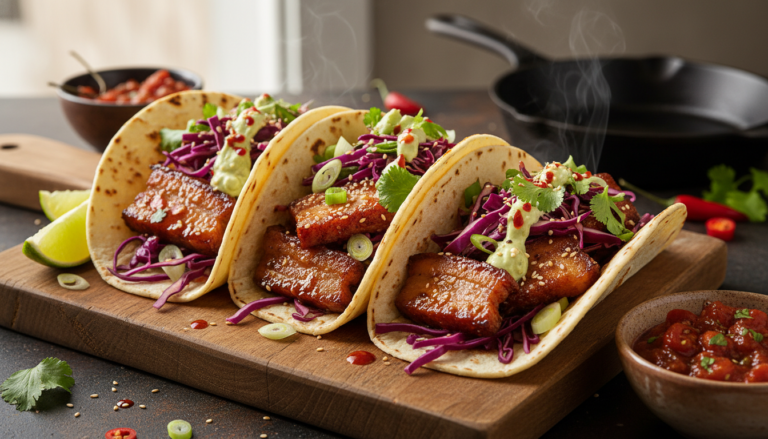
Pork Belly Tacos
Pork Belly Tacos feature succulent pork belly slow-roasted until tender, then crisped to perfection, creating layers of rich, melting meat and shatteringly crispy skin, topped simply with fresh cilantro, sharp red onion, and bright lime for pure indulgence.
4
servings20
minutes3
hours600
kcal3
hours20
minutesIngredients
500 g pork belly
2 tbsp olive oil
3 cloves garlic, minced
1 tsp ground cumin
1 tsp smoked paprika
1 tsp salt
0.5 tsp black pepper
1 cup orange juice
8 pieces corn tortillas
0.5 cup fresh cilantro, chopped
1 medium red onion, sliced
1 medium lime, cut into wedges
Directions
- Preheat oven to 160°C (320°F).
- Rub the pork belly with olive oil, garlic, cumin, smoked paprika, salt, and black pepper.
- Place the seasoned pork belly in a roasting pan and pour the orange juice over it.
- Cover the pan with foil and roast in the oven for 2.5 hours until tender.
- Remove the foil and increase oven temperature to 220°C (428°F).
- Roast for another 30 minutes until the skin is crispy.
- Let the pork rest for 10 minutes before slicing thinly.
- Warm the corn tortillas in a dry skillet over medium heat.
- Assemble tacos by placing sliced pork, cilantro, and red onion on each tortilla.
- Serve with lime wedges for squeezing over the tacos.
Nutrition Facts
- Total number of serves: 4
- Calories: 600kcal
- Cholesterol: 0mg
- Sodium: 620mg
- Potassium: 400mg
- Sugar: 8g
- Protein: 6g
- Calcium: 60mg
- Iron: 2mg
About This Author

Benjamin Brown
Recipe Developer
Benjamin is our flavor engineer. A classically trained chef turned recipe developer, he’s obsessed with balancing taste, texture, and creativity. He ensures that every recipe we publish is not only delicious but also reliable, approachable, and repeatable — even for beginners.
Favorite dish: Slow-braised short ribs with red wine reduction.
Kitchen motto: “Cooking is part science, part soul.”