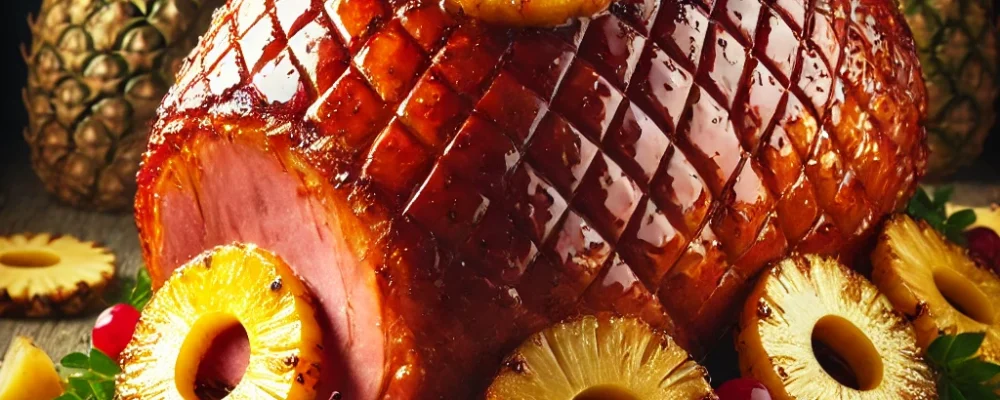
Pineapple-Honey-Glazed-Ham

Pineapple Honey-Glazed Ham

Healthy Fact of the Day

While ham is higher in sodium and fat, it provides complete protein and important minerals like zinc and iron. To make healthier, trim visible fat before cooking. Pineapple adds vitamin C and enzymes that may aid digestion. Consider reducing sugar in glaze or using natural alternatives. The vinegar and mustard add flavor without calories. Fresh herbs provide antioxidants. This is a special occasion dish best enjoyed in moderation. Balance your plate with plenty of vegetables. The protein content makes this quite filling, so smaller portions can be satisfying.

Ingredients


  • 8-10 lb spiral-cut ham
  • 1 fresh pineapple, sliced
  • 1 cup honey
  • 1/2 cup brown sugar
  • 1/2 cup pineapple juice
  • 1/4 cup Dijon mustard
  • 2 tbsp apple cider vinegar
  • 2 tbsp butter
  • 4 cloves garlic, minced
  • 1 tsp ground cinnamon
  • 1/2 tsp ground cloves
  • 1/2 tsp allspice
  • 1/4 tsp nutmeg
  • Maraschino cherries for garnish
  • Fresh thyme sprigs
  • Whole cloves for studding

Instructions

  1. Preheat oven to 325°F (165°C).

  2. Score ham in diamond pattern if not spiral-cut.

  3. Stud with whole cloves at intersections if desired.

  4. Place ham in roasting pan.

  5. Arrange pineapple slices around and on top.

  6. Combine honey, brown sugar, pineapple juice, and mustard for glaze.

  7. Add spices, vinegar, and melted butter to glaze.

  8. Brush ham generously with glaze.

  9. Cover with foil and bake for 1.5 hours.

  10. Uncover, baste every 20 minutes until done.

  11. Broil last 5 minutes until caramelized.

  12. Let rest 20 minutes before serving.

Slice into this Pineapple Honey-Glazed Ham and watch as the sticky, caramelized exterior gives way to juicy meat beneath! Each bite delivers the perfect balance of sweet and savory, with pineapple adding tropical brightness to the smoky ham. Whether you’re hosting family dinner or creating a holiday feast, this glazed ham promises to be the talk of the table. So fire up that oven, mix that glaze, and get ready to create a centerpiece that’ll have everyone reaching for seconds!
Recent Recipes

Chipotle’s Best-Selling Protein of All Time Is

  • April 22, 2026
  • 3 min read

Garlic Cream Bucatini with Peas and Asparagus

  • April 22, 2026
  • 11 min read

The Forgotten Art of Reading a Pan

  • April 22, 2026
  • 7 min read

Air Fryer Steak Tips

  • April 22, 2026
  • 9 min read

Red Lobster’s Endless Shrimp Is Back —

  • April 21, 2026
  • 4 min read

Sushi Tacos with Salmon and Tuna

  • April 21, 2026
  • 9 min read

Why Everything You’ve Heard About Cooking Eggs

  • April 21, 2026
  • 7 min read

Lemon Herb Roasted Chicken

  • April 21, 2026
  • 10 min read

Nutella Just Released Its First New Flavor

  • April 20, 2026
  • 4 min read

Apple Nachos

  • April 20, 2026
  • 10 min read

Tip of the Day

“Always let your meat rest before slicing.”

Whether you're roasting a chicken, grilling steak, or baking pork tenderloin, letting cooked meat rest for 5–10 minutes before slicing allows the juices to redistribute evenly. This simple step keeps your meat juicy and tender, ensuring every bite is flavorful and moist. Bonus: It gives you a moment to plate your sides or garnish for a perfect presentation!

Our Latest Recipes

Blog
Daily Disher

Chipotle’s Best-Selling Protein of All Time Is Coming Back — And It Drops April 28

Chipotle Honey Chicken is a solid high-protein option, and the way you build your bowl makes a big difference in its overall nutritional profile. Choosing a base of brown rice over white adds more fiber, opting for black or pinto beans boosts plant-based protein, and going light on sour cream and cheese keeps saturated fat in check. Loading up on fresh tomato salsa and fajita vegetables instead adds volume and nutrients without significantly increasing calories — making it easy to build a meal that’s as balanced as it is satisfying.

Read More »
Blog
Daily Disher

The Forgotten Art of Reading a Pan

Cooking with a well-seasoned cast iron or carbon steel pan can contribute small but meaningful amounts of dietary iron to food, particularly when cooking acidic ingredients like tomatoes or citrus-based sauces. For individuals with low iron intake, this incidental transfer can be a modest supplemental source — one of the few cases where the cooking vessel itself has a direct nutritional impact on the meal.

Read More »

Get your daily dose of delicious!

Skip to content