
The margarita is arguably the most analyzed cocktail in bartending — everyone has an opinion about the right ratio of tequila to citrus to sweetener, the best glass, the correct garnish, shaken or blended, rocks or up. It’s a drink with strong traditions and passionate adherents. Yet it’s also one of the most adaptable templates in cocktail culture, and the Grapefruit Margarita demonstrates exactly why. By substituting fresh grapefruit juice for a portion of the citrus component, you create something that honors the original’s essential structure while adding a dimension of bittersweet complexity that makes it distinctively its own.
From a technical standpoint, grapefruit brings something unique to the margarita formula. Unlike lemon or lime, which contribute pure acidity and brightness, grapefruit has a bittersweet quality — it’s simultaneously tart, slightly bitter, and fruity in ways that create more complex flavor interactions. This bitterness is actually a valuable cocktail ingredient because it mimics the role of bitters in other drinks, adding depth that prevents the cocktail from being one-dimensionally sweet or tart. The result is a margarita with better balance and more interesting flavor progression.
The agave nectar substitution for standard simple syrup is deliberate and meaningful. Using agave nectar in a tequila cocktail creates what bartenders call a “flavor bridge” — the sweetener shares terroir with the spirit, both derived from agave plants. This botanical connection creates subtle harmony that you might not consciously identify but definitely taste. Agave nectar also has a lower glycemic index than refined sugar and a more complex, slightly floral sweetness that complements grapefruit’s aromatic complexity beautifully.
─────────
The Inspiration Behind This Recipe
The inspiration came from understanding that the Paloma — Mexico’s most popular tequila cocktail — uses grapefruit as its primary citrus component, yet the margarita, which dominates American tequila culture, almost never does. This seemed like a missed opportunity. If grapefruit and tequila work so harmoniously in the Paloma, why not bring that citrus character into the margarita framework while maintaining the structural elements — triple sec, lime, salt rim — that make a margarita what it is?
The hybrid approach produces something genuinely exciting. You get the Paloma’s grapefruit-tequila magic alongside the margarita’s triple sec depth, lime brightness, and satisfying salt rim. The agave nectar provides sweetness that’s more sophisticated than simple syrup and more appropriate to the ingredients involved. Fresh lime juice remains essential — it provides the sharp citrus edge that grapefruit alone can’t replicate, and it connects the drink to the margarita tradition.
What I particularly appreciate about this recipe is how the grapefruit juice changes throughout the drinking experience. The first sip tastes bright and tart. As the ice melts slightly and the temperature rises marginally, the grapefruit’s aromatic compounds become more expressive, revealing floral notes that weren’t initially apparent. The salt rim interacts with each sip differently depending on how much salt contacts the liquid. It’s a cocktail that rewards slow, attentive drinking.
─────────
A Brief History of the Margarita and Grapefruit in Cocktails
The margarita’s origins are deliciously disputed, with at least a dozen people and establishments claiming to have invented it between the 1930s and 1950s. The most widely accepted story credits Dallas socialite Margarita Sames, who reportedly mixed tequila, Cointreau, and lime juice for friends at her Acapulco vacation home in 1948. Regardless of its exact origin, the margarita became America’s most popular cocktail by the late 20th century, a position it maintains today.
The classic margarita formula — tequila, lime juice, triple sec, salt rim — is deceptively simple and endlessly adaptable. Fruit margaritas became particularly popular in the 1970s-80s, with strawberry, mango, and peach variations appearing at Mexican restaurants nationwide. However, these versions often relied on artificial flavors or syrups rather than fresh fruit, creating sweet, candy-like drinks that bore little resemblance to the elegant original.
Grapefruit specifically has deep roots in cocktail culture — the Paloma, the Greyhound (vodka and grapefruit juice), the Sea Breeze, and the Salty Dog all showcase grapefruit’s affinity for spirits. Its bittersweet quality makes it a more sophisticated mixer than many fruits because it provides complexity beyond simple sweetness. The Grapefruit Margarita brings this sophisticated citrus into the margarita tradition, creating a drink that feels both familiar and genuinely new.
─────────
Why This Mixing Method Works
The shaking method is essential for this cocktail because you’re working with fresh juice components that need thorough integration. Fresh grapefruit juice has a slightly different viscosity and oil content than lime juice, and without vigorous shaking, these components could taste separated rather than cohesive. The shaking creates mechanical emulsification that temporarily suspends grapefruit oils throughout the liquid, creating smoother, more integrated flavor.
The agave nectar requires particular attention during shaking because it’s more viscous than simple syrup. You need vigorous, sustained shaking to ensure the agave dissolves completely and distributes evenly throughout the other liquids. Inadequate shaking can leave agave concentrated at certain points in the drink, creating inconsistent sweetness from sip to sip. Shaking hard for 15-20 seconds ensures complete integration.
The salt rim preparation deserves careful technique. Rubbing lime around only the outer edge of the rim (not the inner edge) keeps salt from falling directly into the drink, which would over-salt the liquid. The right amount of salt on the rim should season each sip the way seasoning seasons food — enhancing other flavors rather than being the dominant taste. This distinction between “salt as seasoning” and “salt as flavor” separates well-executed margaritas from ones that taste simply salty. For those who prefer less salt, rim only half the glass, giving drinkers the choice of how much salt contacts their drink.
─────────
Flavor Profile: What to Expect
The Grapefruit Margarita delivers a sophisticated, multi-layered citrus experience:
- Bittersweet Grapefruit Character: Fresh grapefruit’s distinctive combination of tartness, bitterness, and fruity sweetness that creates complexity
- Bright Lime Acidity: Fresh lime juice’s sharp citrus edge that connects the drink to margarita tradition
- Earthy Tequila Backbone: Quality agave spirit’s distinctive character that grounds the citrus components
- Orange Liqueur Depth: Triple sec’s orange complexity that fills the middle of the flavor profile
- Floral Agave Sweetness: Nectar’s nuanced sweetness that harmonizes with both tequila and grapefruit
- Salt Enhancement: Rim salt that amplifies all flavors and adds savory sophistication
- Refreshing, Dry Finish: Ends crisp and slightly bitter, making you reach for another sip
The overall experience is sophisticated and refreshing — more complex than a standard margarita, more structured than a Paloma, and uniquely satisfying in its own right.
─────────
Tips for Making the Best Grapefruit Margarita
Create perfect citrus balance with these essential techniques:
- Fresh grapefruit juice is mandatory: Pre-bottled grapefruit juice tastes flat and bitter without the bright aromatic quality of fresh. Squeeze right before making the cocktail. Ruby red grapefruits offer the most beautiful color and sweetest flavor; white grapefruit provides more pronounced bitterness.
- Use quality blanco tequila: Choose 100% agave tequila — Espolòn, Cimarron, Olmeca Altos, or Cazadores all work beautifully. The tequila’s character comes through clearly in this fresh-juice cocktail.
- Real agave nectar: Look for 100% pure agave nectar, not agave-flavored corn syrup. The difference in flavor is significant and worth seeking out.
- Fresh lime juice always: Never substitute bottled. Fresh lime juice provides the bright acidity that balances grapefruit’s bitterness.
- Quality triple sec: Cointreau is ideal for its genuine orange flavor and quality. Grand Marnier adds richness. Quality triple sec works at more accessible prices.
- Coarse salt for the rim: Kosher salt or sea salt provides better texture than fine table salt. For extra sophistication, use Tajín (chili-lime salt) for a spicy-citrus rim variation.
- Shake vigorously and completely: Give it a full 15-20 second shake. The grapefruit oils need proper agitation to integrate.
For a more bitter, complex version, add 2 dashes of grapefruit bitters to the shaker — they intensify the grapefruit character dramatically.
─────────
Serving Suggestions and Garnish Ideas
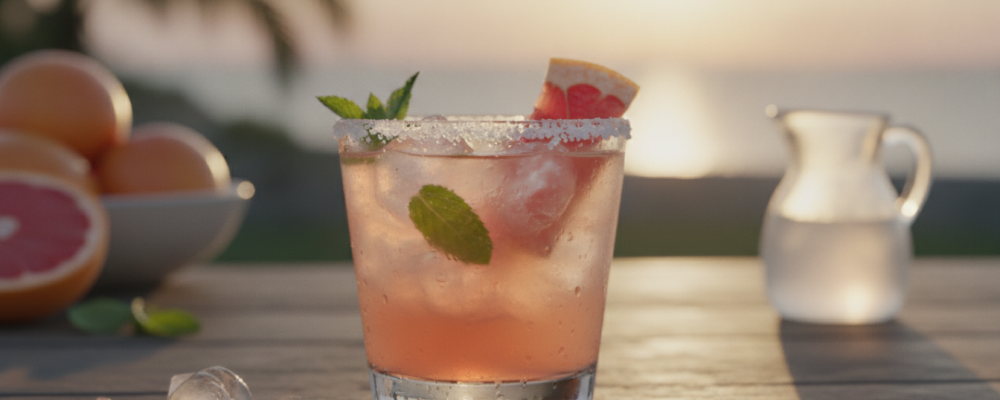
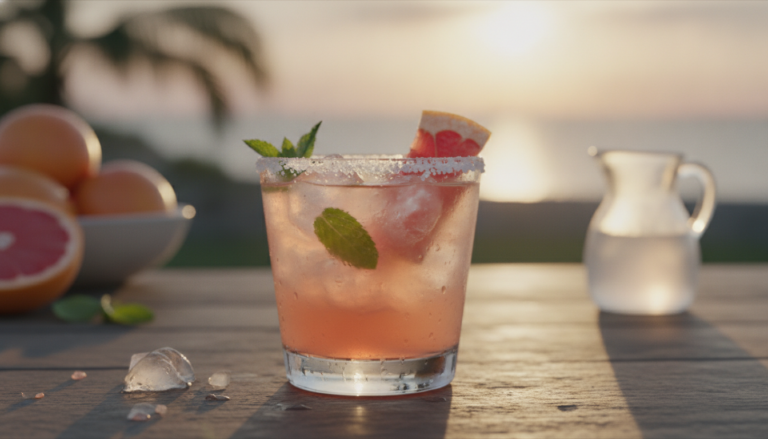
The Grapefruit Margarita looks stunning in traditional margarita glasses with their wide rims that showcase the salt beautifully, though rocks glasses provide a more contemporary presentation that’s become increasingly fashionable. The drink’s pale coral-pink color from ruby red grapefruit is naturally gorgeous, and clear glassware lets that color shine. For casual outdoor entertaining, stemless wine glasses or even Mason jars work beautifully.
The lime and grapefruit wedge garnishes are essential — they provide visual appeal that immediately communicates the drink’s citrus character. Cut a notch in each wedge so it perches on the rim rather than sitting in the drink. A thin grapefruit wheel makes an especially elegant alternative to a wedge, showing off the fruit’s beautiful cross-section. Some bartenders add a sprig of fresh rosemary for herbal aromatic contrast — rosemary and grapefruit is a surprisingly wonderful pairing that adds sophistication without complicating the drink.
This cocktail works beautifully year-round — grapefruit’s peak season in winter makes it particularly appropriate for cold-weather entertaining when you crave something bright and refreshing. It’s perfect for casual weeknight enjoyment, dinner parties with Mexican or Latin American menus, Cinco de Mayo celebrations, brunch gatherings, or any occasion where you want a margarita that feels more sophisticated than the standard. The fresh, adult flavor profile appeals to cocktail enthusiasts while remaining approachable for casual drinkers.
─────────
Storage and Make-Ahead Tips
- Pre-mix the cocktail base: Combine tequila, grapefruit juice, lime juice, triple sec, and agave nectar in a sealed container and refrigerate for up to 4 hours. Shake with ice when ready to serve.
- Fresh grapefruit juice window: Grapefruit juice is best used within 4-6 hours of squeezing for optimal flavor and color. Beyond that, it can develop slight bitterness.
- Fresh lime juice window: Lime juice stays fresh for about 4-6 hours refrigerated before losing brightness.
- Agave nectar storage: Keeps indefinitely at room temperature in a sealed container.
- Tequila and triple sec storage: Both keep indefinitely at room temperature in a cool, dark place.
- Salt rim preparation: Rim glasses up to 2 hours before serving if kept in a cool, dry place. Don’t refrigerate rimmed glasses — condensation makes salt dissolve and clump.
- Batch for parties: Multiply the recipe proportionally and refrigerate the base. Shake individual portions with ice when guests arrive for best texture and temperature.
This cocktail is best made fresh — the grapefruit’s volatile aromatic compounds begin dissipating after squeezing, so fresh juice makes a noticeable difference.
─────────
Why This Recipe Deserves a Spot in Your Rotation
The Grapefruit Margarita earns its place as a permanent fixture in your cocktail repertoire by doing something difficult: improving on a beloved classic without losing sight of what made the original so enduring. This isn’t a gimmick variation or a novelty interpretation — it’s a thoughtful evolution that uses grapefruit’s unique flavor properties to create genuine complexity that the standard margarita doesn’t achieve. Once you’ve tasted a properly made Grapefruit Margarita, you’ll find yourself craving that bittersweet citrus complexity in ways the classic lime version can’t satisfy.
What makes this recipe particularly valuable is how it expands your understanding of citrus in cocktails. Grapefruit isn’t just a substitute for lime — it’s a fundamentally different ingredient with different flavor characteristics that require different handling and create different results. Understanding this distinction makes you a more sophisticated cocktail maker who thinks about ingredients analytically rather than interchangeably. That knowledge, applied across your entire repertoire, elevates everything you make.
─────────
Recommended Food Pairing
The Grapefruit Margarita’s bright, bittersweet citrus character pairs beautifully with the full spectrum of Mexican and Tex-Mex cuisine. Fish tacos are the quintessential companion — the cocktail’s grapefruit acidity complements lime-dressed fish beautifully while its salt rim echoes the seasoning in crispy fish batter or grilled seafood. Shrimp ceviche with grapefruit is another natural pairing, where both drink and dish share the same citrus backbone, creating cohesive flavor harmony.
For heartier fare, consider carne asada with fresh salsa and guacamole — the cocktail’s bitter edge cuts through rich, fatty beef while its citrus freshness balances the richness of avocado. Chicken enchiladas with green tomatillo sauce work beautifully, as the cocktail’s tartness echoes the sauce’s bright acidity. Carnitas tacos with pickled onions and fresh cilantro are another excellent match.
For appetizers and sides, guacamole and chips are essential — the grapefruit margarita and ripe avocado create one of the great food-cocktail pairings in Mexican cuisine. Elote (Mexican street corn) with cotija cheese and lime, jalapeño poppers, or queso fundido all complement the cocktail’s refreshing character. Lighter options like a Mexican chopped salad with jicama, grapefruit segments, and citrus vinaigrette create beautiful thematic connections. The key is choosing foods that have enough bold flavor to stand alongside grapefruit’s assertive bitterness while benefiting from the cocktail’s cleansing acidity between bites.
Grapefruit Margarita
This vibrant margarita combines fresh grapefruit juice with tequila, lime, and agave nectar — beautifully balanced, refreshingly tart, and utterly sophisticated.
4
servings30
minutes40
minutes300
kcal1
hour10
minutesIngredients
4 oz Tequila
4 oz Fresh grapefruit juice
2 oz Lime juice
2 oz Triple sec
1 tbsp Agave nectar
1 cup Ice cubes
1 slice Lime wedge for garnish
1 slice Grapefruit wedge for garnish
1 pinch Salt for rim
Directions
- Prepare glasses by rubbing a lime wedge around the rims and dipping them in salt.
- In a shaker, combine tequila, grapefruit juice, lime juice, triple sec, and agave nectar.
- Add ice cubes to the shaker and shake well until chilled.
- Strain the mixture into the prepared glasses filled with ice.
- Garnish with lime and grapefruit wedges as desired.
- Serve immediately and enjoy.
Nutrition Facts
- Total number of serves: 4
- Calories: 180kcal
- Cholesterol: 0mg
- Sodium: 620mg
- Potassium: 400mg
- Sugar: 8g
- Protein: 6g
- Calcium: 60mg
- Iron: 2mg
About This Author

Benjamin Brown
Recipe Developer
Benjamin is our flavor engineer. A classically trained chef turned recipe developer, he’s obsessed with balancing taste, texture, and creativity. He ensures that every recipe we publish is not only delicious but also reliable, approachable, and repeatable — even for beginners.
Favorite dish: Slow-braised short ribs with red wine reduction.
Kitchen motto: “Cooking is part science, part soul.”