
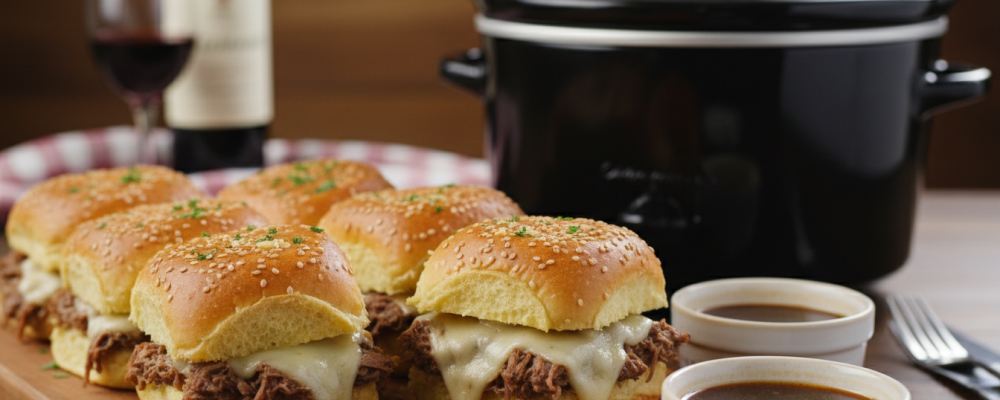

There are recipes that earn a standing ovation every time they appear on the table, and these Crockpot French Dip Sliders are exactly that kind of recipe. Tender, fall-apart beef chuck roast slow-cooked in a rich onion and beef broth au jus, piled onto slider buns with melted provolone and brushed with a garlic-Worcestershire-Dijon butter before being baked until golden—it’s the kind of appetizer or casual dinner that makes people stop mid-conversation to focus on what they’re eating. And the au jus on the side? That alone is worth making this recipe for.
What I love most about this dish is how effortlessly it straddles the line between casual and impressive. The crockpot does the heavy lifting—eight hours on low, and the beef transforms from a humble chuck roast into something deeply savory and fall-apart tender without any supervision from you. But then the final assembly gives you a slider that looks and tastes entirely considered: the golden butter-brushed top, the melted provolone, the shredded beef tucked inside with its accumulated juices. It’s the kind of food that makes people ask if you spent all day in the kitchen when the honest answer is that you didn’t spend much time at all.
The slider format is what takes this beyond a standard French dip sandwich. Bite-sized, shareable, and perfectly portioned for a crowd, these sliders work as a game day appetizer, a casual party main, or a weeknight dinner that feels significantly more special than its effort level warrants. Once you’ve made them, they become a permanent fixture on every gathering menu you plan.
The Inspiration Behind This Recipe
French dip sandwiches have been a fixture of American casual dining since the early 20th century, and the combination of slow-cooked beef, provolone, and au jus for dipping is one of the most satisfying flavor combinations in the American sandwich tradition. Converting that iconic sandwich into a slider format was a deliberate choice to make it more shareable and occasion-friendly—you can feed a crowd of twelve with a single batch, and the smaller size means everyone can have seconds without guilt.
The crockpot was the natural vehicle for this recipe. Beef chuck roast requires long, gentle cooking to break down its collagen into gelatin and achieve that pull-apart tenderness that makes a great French dip so satisfying. The slow cooker replicates the low, moist heat of a traditional braise with almost no active effort, and the braising liquid transforms into a concentrated, deeply flavored au jus that is arguably the best part of the entire dish.
A Brief History of the French Dip
The French dip sandwich was born in Los Angeles in the early 20th century, with two establishments—Philippe the Original and Cole’s Pacific Electric Buffet—each claiming to have invented it around 1918. Both origin stories involve a roll accidentally dropped in beef pan drippings, a customer willing to eat it anyway, and a sauce so good it became the defining element of the sandwich. The “French” in the name refers not to France but to the French roll on which the sandwich is traditionally served.
The French dip became a staple of American sandwich culture throughout the 20th century, prized for the combination of tender roast beef, melted cheese, and the deeply savory au jus that tied the whole experience together. This slider version honors that tradition while adapting it for modern entertaining—same fundamental flavors, same au jus experience, in a format built for sharing.
Why the Crockpot Produces Exceptional Results
Beef chuck roast is a cut with significant connective tissue that needs long, slow, moist heat to transform into something tender enough for pulling and eating in a slider. At high temperatures, the proteins in the connective tissue tighten and toughen before they have time to break down. At the low, sustained temperature of a crockpot—around 190 to 200°F—that connective tissue slowly converts to gelatin over eight hours, producing both the pull-apart tenderness of the shredded beef and the silky, body-rich au jus that results from the gelatin dissolving into the surrounding broth.
The onion soup mix is the flavor shortcut that carries this recipe. Its combination of dehydrated onion, beef flavoring, and seasoning creates an instant, deeply concentrated flavor base that would take hours to develop from scratch on the stovetop. Combined with beef broth, soy sauce, and Worcestershire, it produces an au jus with the depth and complexity of a restaurant-quality braise in a single crockpot insert.
Flavor Profile: What to Expect
These sliders deliver a layered, deeply satisfying flavor experience from first bite to the last dip:
- Fall-apart, deeply savory beef infused with onion, soy, and Worcestershire flavor that builds through eight hours of slow cooking
- Rich, concentrated au jus that is silky, deeply beefy, and perfectly seasoned for dipping—the most important component of any French dip
- Melted, slightly sharp provolone that provides creamy, tangy richness and holds the filling together inside the slider bun
- Garlic-Worcestershire-Dijon butter glaze on the top bun that caramelizes in the oven into a golden, savory, slightly tangy crust
- Soft, slightly toasted slider bun that absorbs the beef juices without falling apart and provides the perfect vehicle for the dip experience
The overall effect is rich, savory, deeply comforting, and interactive in the best possible way—a slider built for the kind of enthusiastic eating that makes everyone at the table happy.
Tips for Making the Best French Dip Sliders
A few details will elevate this recipe from great to genuinely exceptional:
- Don’t rush the braise: Eight hours on low is the right call. Four hours on high produces adequate results but noticeably less tender, less flavorful beef. The collagen breakdown that creates pull-apart texture needs time at gentle heat.
- Skim the au jus before serving: After removing the beef, let the crockpot liquid settle for five minutes and skim any excess fat from the surface. A slightly defatted au jus is cleaner and more refined as a dipping sauce.
- Toss the shredded beef in a ladle of au jus: Before assembling the sliders, mix a spoonful of the cooking liquid back into the shredded beef to keep it moist and well-seasoned through the oven bake.
- Don’t skimp on the butter glaze: The Dijon-Worcestershire butter is what makes these sliders look and taste bakery-finished rather than simply assembled. Apply it generously and evenly over every bun top.
- Cover loosely with foil for the first 10 minutes: This allows the cheese to melt fully before the tops brown. Remove foil for the final five minutes to achieve the golden, slightly crisped finish.
- Serve au jus in individual ramekins: Individual dipping vessels at each place setting make the experience more intentional and keep the sliders from getting soggy on a shared dipping plate.
Serving Suggestions and Side Pairings
These sliders are versatile enough to anchor any occasion:
- As a game day or party appetizer alongside a full spread of dips and sides
- As a casual weeknight dinner with creamy mashed potatoes and roasted green beans
- Paired with a crisp coleslaw or simple green salad for a lighter accompaniment
- Alongside French onion soup for an indulgent, deeply savory French-inspired dinner spread
- With seasoned fries or kettle chips for the full casual dining experience
Storage, Reheating, and Make-Ahead Tips
This recipe is one of the best make-ahead dishes in the collection:
- Refrigerate the shredded beef in its au jus for up to 4 days. The beef stays moist and the flavors deepen significantly overnight.
- Freeze the shredded beef with a generous portion of au jus for up to 3 months. Thaw overnight and reheat gently before assembling.
- Assemble sliders fresh: Build and bake the sliders at serving time for the best texture. Pre-built sliders become soggy as they sit.
- Reheat the au jus in a small saucepan over low heat, adding a splash of beef broth if it has reduced too much during storage.
Why This Recipe Deserves a Spot in Your Rotation
Crockpot French Dip Sliders earn a permanent spot in your recipe collection because they deliver an occasion-quality result with genuinely minimal active effort. Set the crockpot in the morning and come home to tender, deeply flavored beef and a ready-made dipping sauce—then spend fifteen minutes assembling and baking something that looks and tastes like you planned it for days. Whether you’re hosting a crowd or feeding your family on a weeknight, this recipe never misses.
Recommended Drink Pairing
The deeply savory, umami-rich au jus and rich provolone call for a drink with enough body and character to hold its own. A Bourbon Smash Cocktail brings warm, citrusy depth that plays beautifully alongside the slow-cooked beef and Dijon butter glaze. A robust red wine—a Cabernet Sauvignon or a bold Malbec—is the natural wine pairing for a French dip this rich and deeply flavored.
For non-alcoholic options, a sparkling apple cider or a cold, dark unsweetened iced tea with lemon provides the kind of refreshing contrast that makes a slider this rich even more enjoyable between dips.
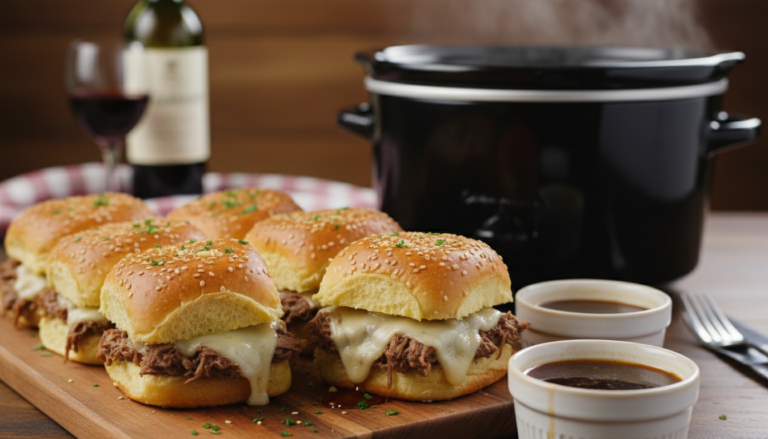
Crockpot French Dip Sliders
Crockpot French Dip Sliders pile tender slow-cooked beef chuck and melted provolone onto butter-glazed slider buns and bake until golden—served with the crockpot au jus for dipping in the most satisfying way imaginable.
6
servings15
minutes8
hours450
kcal8
hours15
minutesIngredients
2 pounds beef chuck roast
1 packet onion soup mix
2 cups beef broth
1/4 cup soy sauce
12 slider buns
6 slices provolone cheese
1 stick unsalted butter
1 tablespoon garlic powder
1 tablespoon Worcestershire sauce
1 tablespoon Dijon mustard
1 teaspoon salt
1 teaspoon black pepper
Directions
- Place the beef chuck roast in the crockpot.
- Sprinkle onion soup mix over the roast.
- Pour beef broth and soy sauce into the crockpot.
- Cook on low for 8 hours or until the beef is tender.
- Preheat the oven to 375°F (190°C) and line a baking sheet with parchment paper.
- Shred the cooked beef using two forks and set aside.
- Slice slider buns horizontally and place bottoms on the prepared baking sheet.
- Distribute shredded beef over each bun evenly.
- Top with provolone cheese slices.
- Place the top halves of the slider buns over the cheese.
- Melt butter in a saucepan and add garlic powder, Worcestershire sauce, and Dijon mustard.
- Brush the butter mixture over the top of the sliders.
- Bake in preheated oven for 15 minutes or until the cheese has melted and tops are golden.
- Serve warm with the crockpot au jus for dipping.
Nutrition Facts
- Total number of serves: 4
- Calories: 450kcal
- Cholesterol: 0mg
- Sodium: 620mg
- Potassium: 400mg
- Sugar: 8g
- Protein: 6g
- Calcium: 60mg
- Iron: 2mg
About This Author

Amelia Grace
Editor-in-Chief & Culinary Director
The heart and guiding voice of Daily Dish, Amelia leads our editorial vision and recipe development. With a background in food journalism and over a decade spent in professional kitchens, she has a knack for blending gourmet technique with real-world accessibility. Her goal? To make every reader feel like a confident cook, one dish at a time.
Favorite dish: Creamy lemon risotto with a sprinkle of fresh thyme.
Kitchen motto: “Good food doesn’t have to be complicated — it just has to be made with heart.”















