Black Eyed Peas Stew

Black Eyed Peas Stew

Healthy Fact of the Day

Black-eyed peas are rich in protein, fiber, and folate, supporting heart health and stable blood sugar levels. Soaking them overnight improves digestibility and reduces cooking time while maintaining nutrients.
Black Eyed Peas Stew

Black Eyed Peas Stew

Recipe by Daily Disher

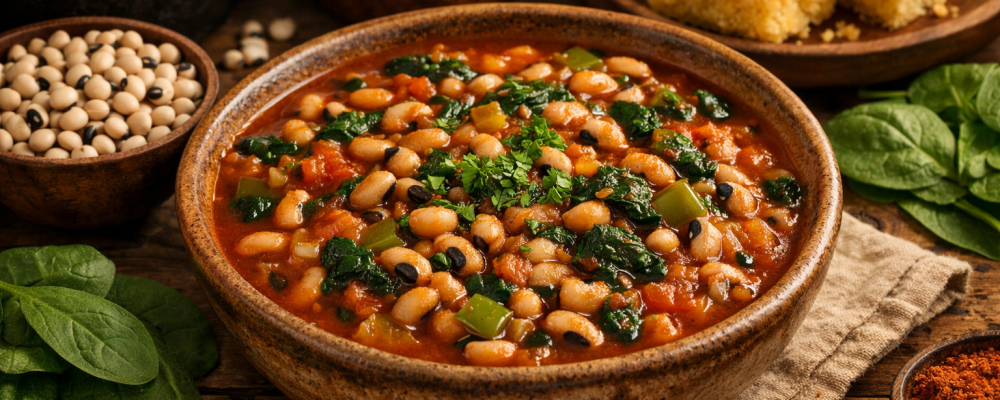
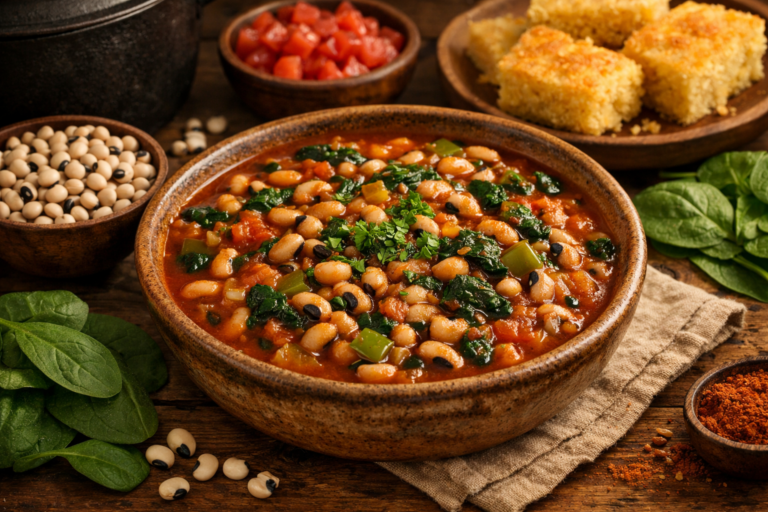
Black Eyed Peas Stew features tender black-eyed peas simmered with onions, bell peppers, tomatoes, and spinach in a flavorful broth spiced with paprika and cumin.

Course: MainCuisine: AmericanDifficulty: Easy
2.8 from 4 votes
Servings

4

servings
Prep time

15

minutes
Cooking time

45

minutes
Calories

350

kcal

1

hour 

    Ingredients

    • 1 cup dried black-eyed peas

    • 2 tablespoons olive oil

    • 1 onion, chopped

    • 2 cloves garlic, minced

    • 1 green bell pepper, chopped

    • 1/2 teaspoon paprika

    • 1/2 teaspoon cumin

    • 4 cups vegetable broth

    • 1 can diced tomatoes

    • 1/2 teaspoon salt

    • 1/4 teaspoon black pepper

    • 2 cups spinach, chopped

    Directions

    • Rinse and soak the black-eyed peas in water for at least 4 hours or overnight for best results.
    • In a large pot, heat olive oil over medium heat. Add chopped onions and cook until they are soft and translucent.
    • Add minced garlic and chopped green bell pepper to the pot. Sauté for a few minutes until the peppers are tender.
    • Stir in paprika and cumin to the sautéed vegetables, mixing well to evenly coat the ingredients with spices.
    • Add soaked black-eyed peas, vegetable broth, and diced tomatoes to the pot. Stir to combine all ingredients.
    • Bring the stew to a boil, then reduce heat to a simmer. Cover the pot and cook for about 45 minutes.
    • Season the stew with salt and black pepper, adjusting to taste. Stir in the chopped spinach until it wilts.
    • Serve the black-eyed peas stew hot, garnished with your choice of fresh parsley or additional spices.

    Nutrition Facts

    • Total number of serves: 4
    • Calories: 350kcal
    • Cholesterol: 0mg
    • Sodium: 620mg
    • Potassium: 400mg
    • Sugar: 8g
    • Protein: 6g
    • Calcium: 60mg
    • Iron: 2mg

    This Black Eyed Peas Stew brings Southern tradition and wholesome nutrition together in a warming bowl that’s perfect for New Year’s Day or any time you want comforting, plant-based goodness. Tender black-eyed peas simmer with aromatic vegetables and tomatoes in a flavorful broth enriched with warm spices like paprika and cumin, while fresh spinach wilts in at the end for a pop of color and nutrients. According to tradition, eating black-eyed peas on New Year’s Day brings good luck and prosperity—and with flavors this good, you’ll want to make this stew all year long.


    2.8 from 4 votes

    Recent Recipes

    Why Everything You’ve Heard About Cooking Eggs

    • April 21, 2026
    • 7 min read

    Lemon Herb Roasted Chicken

    • April 21, 2026
    • 10 min read

    Nutella Just Released Its First New Flavor

    • April 20, 2026
    • 4 min read

    Apple Nachos

    • April 20, 2026
    • 10 min read

    The Stock Secrets Behind Every Great Restaurant

    • April 20, 2026
    • 7 min read

    Spring Vegetable Fettuccine Alfredo

    • April 20, 2026
    • 10 min read

    No-Bake Mini Key Lime Pies

    • April 19, 2026
    • 19 min read

    Zucchini Hummus Roll-Ups

    • April 19, 2026
    • 12 min read

    Turkey Taco Salad Bowls

    • April 19, 2026
    • 13 min read

    Blueberry Lemon Quinoa Porridge

    • April 19, 2026
    • 13 min read

    Tip of the Day

    “Always let your meat rest before slicing.”

    Whether you're roasting a chicken, grilling steak, or baking pork tenderloin, letting cooked meat rest for 5–10 minutes before slicing allows the juices to redistribute evenly. This simple step keeps your meat juicy and tender, ensuring every bite is flavorful and moist. Bonus: It gives you a moment to plate your sides or garnish for a perfect presentation!

    Our Latest Recipes

    Blog
    Daily Disher

    Why Everything You’ve Heard About Cooking Eggs Is Incomplete

    Eggs are one of the few dietary sources of choline, a nutrient essential for brain health, liver function, and fetal neural development during pregnancy. A single large egg contains roughly 147 milligrams of choline — primarily in the yolk — contributing meaningfully toward the recommended daily intake of 425 to 550 milligrams for most adults. Despite decades of concern over dietary cholesterol, current nutritional research increasingly supports eggs as a whole-food protein source with significant micronutrient value.

    Read More »
    Entrees
    Amelia Grace

    Lemon Herb Roasted Chicken

    A whole roasted chicken is one of the most nutritionally complete and economical proteins you can put on the table—delivering high-quality protein, B vitamins, zinc, and selenium across both white and dark meat. Roasting rather than frying keeps the preparation lean and lets the natural flavors of the lemon and herbs do all the work, making this Sunday classic as nourishing as it is deeply satisfying.

    Read More »
    Blog
    Daily Disher

    Nutella Just Released Its First New Flavor in Over 60 Years — And It’s Available Now

    Nut-based spreads like Nutella Peanut can be a satisfying addition to meals and snacks, but they’re calorie-dense, so portion size matters. A thin spread on whole grain toast or a small drizzle over fruit is all you need to get the flavor payoff — using a spoon to measure rather than spreading straight from the jar is an easy way to keep portions in check. Pairing it with high-fiber foods like apple slices or whole grain crackers also helps slow digestion and keeps you feeling full longer.

    Read More »

    Get your daily dose of delicious!

    Skip to content












