

There is a assumption embedded in the way most people think about finding great food.
It involves white tablecloths, or at least the modern equivalent — the carefully lit dining room, the printed menu with small plates and considered descriptions, the reservation made weeks in advance, the expectation of a particular kind of experience that signals, before the first dish arrives, that the food will be serious.
This assumption is wrong. Not always, not completely, but wrong often enough that the people who hold it most firmly are consistently missing some of the most extraordinary food available to them.
The best food does not reliably live where the most effort has been made to signal that it will. It lives where the cooking is most honest — where the cook is making food for people who know what it should taste like, where there is no audience to perform for, where the food exists to satisfy a specific hunger rather than to demonstrate a specific ambition.
That can happen anywhere. And it happens, regularly, in places that the assumption would never lead you to look.
The Lunch Counter That Feeds the People Who Know
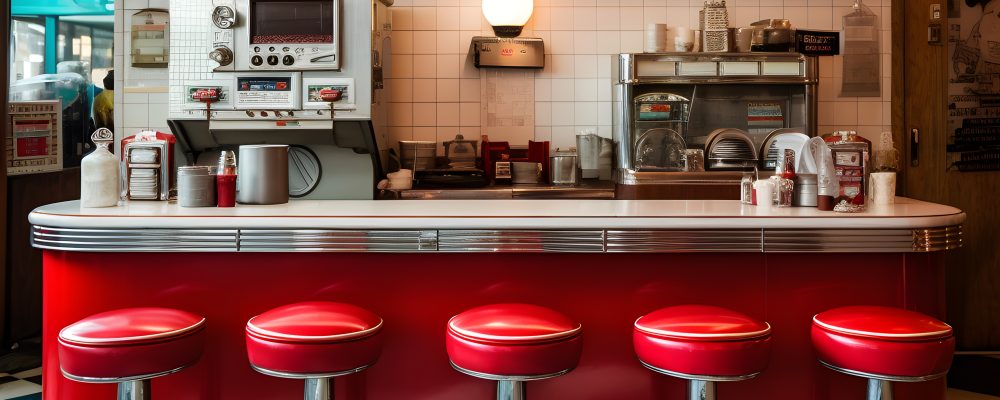
There is a category of restaurant that the most knowledgeable eaters in any city seek out and that the average diner walks past without a second look.
It is the lunch counter, the small family restaurant, the neighborhood spot that has been in the same location for decades and that has never been reviewed in any publication that matters and has never needed to be. Its customers are regulars — people who live or work nearby, who know exactly what they want before they sit down, who would notice immediately if something changed.
This is the food’s quality control. The regular who has been eating the same dish at the same counter for fifteen years is not a forgiving audience. They know what it’s supposed to taste like. They know when the cook changed something. They know when the quality of the ingredients shifted. And they will stop coming if the standard falls.
This audience — invisible to the food press, invisible to the tourist, invisible to anyone who selects restaurants based on recognition rather than knowledge — produces some of the most consistently high-quality cooking available in any city. Not the most innovative. Not the most technically elaborate. But the most honest — the cooking that has been refined over years by the specific, demanding feedback of people who eat it regularly and know exactly what they want.
Finding these places requires a different kind of research than looking at ratings and reviews. It requires asking the people who know — the taxi driver, the construction worker eating lunch, the person behind the counter at the dry cleaner who has lived in the neighborhood for thirty years. It requires being willing to sit somewhere that doesn’t look like the kind of place where great food happens and discovering that it is exactly that kind of place.
The Gas Station in the Right Location
This requires some explanation, because it sounds like an argument for lowered standards rather than a different understanding of where standards can be found.
In certain parts of the American South — and in other regions where the gas station or the convenience store occupies a specific role in the community’s daily life — the food available at the counter of a filling station is not an afterthought. It is the primary product, made by people who know the community and what it expects, with a specificity and a quality that the assumption of what gas station food is would never predict.
The fried chicken at a well-known gas station in rural Louisiana. The breakfast biscuits at the right convenience store in rural Virginia. The tamales at the gas station in certain parts of Texas that has been making the same recipe for twenty years. These are not exceptions to a rule about where good food lives. They are evidence that the rule was wrong.
The food that exists in these places exists because there is a community that needs it and that knows what it should taste like. The same principle that produces the quality of the neighborhood lunch counter — the demanding, knowledgeable regular audience — operates here. The cook knows who is coming in and what they expect. The food reflects that knowledge.
The Food That Travels With People
Some of the most extraordinary food available in any city with a significant immigrant population lives not in restaurants at all but in community spaces — churches, community centers, temple basements, parking lots on weekend mornings — where home cooks are producing food for their own communities.
This food is not made to introduce a cuisine to outsiders. It is not adapted for an audience that is unfamiliar with the flavors and techniques it represents. It is made for people who grew up eating it, who know exactly what it should taste like, who will notice if the spicing is wrong or the texture is off or the dish doesn’t taste the way their grandmother made it.
The pupusas sold outside a Salvadoran church on a Sunday morning. The birria tacos at a pop-up in a parking lot that only locals know about. The Georgian khachapuri at a community center event. The Taiwanese beef noodle soup at a Lunar New Year gathering. The Ghanaian jollof rice at a community fundraiser.
Each of these is a dish made by someone who learned it from someone who learned it from someone — a chain of transmission that carries with it the accumulated knowledge of how the dish is supposed to taste, refined over generations, maintained by the specific pressure of a community that knows exactly what it is.
Finding this food requires relationship. It requires being known to someone who is part of the community, or being invited, or being the kind of visitor who is genuinely curious and genuinely respectful rather than extractive. It cannot be found by searching an app.
But it is worth finding.
The Street Food Standard
Street food — the food sold from carts, from stalls, from trucks, from the vendors who set up in the same spot at the same time every day and who have been doing so for years — is one of the most consistent sources of genuinely excellent food in cities around the world.
The reasons are structural. A street food vendor typically has a very small menu — sometimes a single dish, or a small handful of closely related ones. The entire operation is organized around the production of that dish at volume, with consistency, under conditions that require efficiency and reliability. The cook has made it thousands of times. The equipment is optimized for this specific dish. The supply chain is built around the specific ingredients required.
This combination — single-dish focus, high volume, experienced cook, optimized process — produces a level of consistency and refinement that most full-service restaurants cannot match for the same dish, because the full-service restaurant’s attention and resources are distributed across an entire menu.
The pad thai at the stall in Bangkok that has been making nothing but pad thai for twenty years. The takoyaki at the cart outside Osaka station that has been in the same location since before most of its customers were born. The banh mi at the street sandwich counter in Ho Chi Minh City where the bread is baked daily and the fillings are prepared fresh each morning. The hot dog from the cart in New York that the office workers have been getting from the same vendor for fifteen years.
Each of these is not great food despite its setting. It is great food because of it — because the setting produced the conditions of focus, repetition, and honest audience that great food requires.
The Home Table You Were Lucky Enough to Sit At
There is one more location where the best food lives — the one that is least replicable and most significant.
The home table.
Not the home cook who hosts with ambition and performs for guests, though that can produce wonderful things. The home table of someone who has been cooking the same food for the same people for decades — who has refined a repertoire through the specific, demanding feedback of the people they love, who cook from embodied knowledge rather than recipes, who understand the specific hunger of their specific people in a way that no restaurant can.
The grandmother’s kitchen is a cliché because it is real. The food made there is great not because it is technically sophisticated — it may not be — but because it is the product of a lifetime of attention to specific people’s specific tastes, made with the motivation of love rather than commerce, refined by the most honest and demanding audience available: the people who will tell you, without diplomacy, when it isn’t right.
The traveler who is invited to eat in someone’s home in a country they are visiting — who sits at a table where the food was made for the family rather than for a tourist — is eating better than anything available in any restaurant in that country. Not necessarily more impressive food. Better food. More honest food. Food that is doing exactly what it is supposed to do for exactly the people it was made for.
The Common Thread
All of these places — the neighborhood lunch counter, the gas station in the right location, the church parking lot, the street food stall, the home kitchen — share something that the assumption about where great food lives consistently misses.
They are all making food for people who know what it should taste like.
This is the condition that produces great food more reliably than any other. Not the best ingredients, though those help. Not the most sophisticated technique, though that matters. The presence of an audience that knows — that has an internal reference point for what this dish is supposed to be and will notice when it isn’t — is the condition that keeps cooking honest and keeps standards high in a way that no external review or award can replicate.
The restaurant with the Michelin star is being judged by critics who visit once. The neighborhood lunch counter is being judged by regulars who eat there three times a week. The street food vendor is being judged by the same customers who came yesterday and will come tomorrow.
That judgment is the most demanding quality standard in food. And the food that survives it, year after year, is the food most worth eating.
The Takeaway
The best food is not where the signals say it will be. It is where the cooking is most honest and the audience is most demanding.
Look in the places the assumption overlooks. Ask the people who live in the neighborhood rather than the people who review it. Follow the regulars. Sit at the counter. Accept the invitation to eat in someone’s home.
The most extraordinary meals are often the ones that happen in the most ordinary places.
And the cook who made them was not trying to impress you.
They were just cooking for people they know.














