
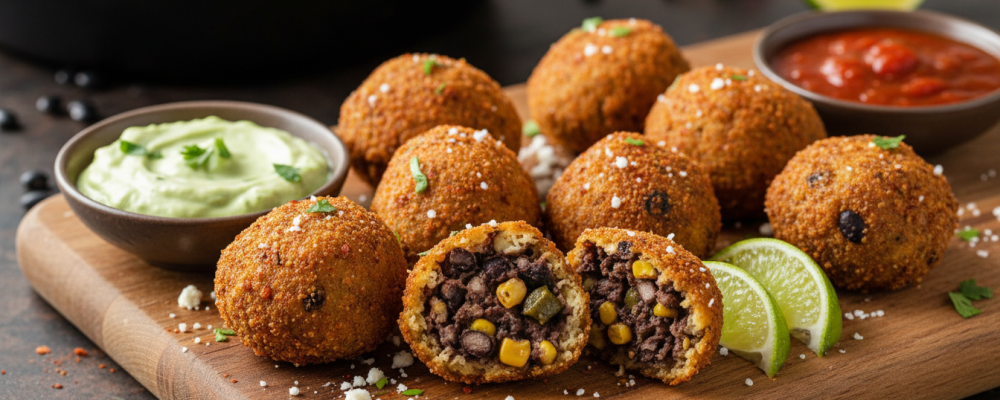

The most persistent problem with bean-based snacks is that they are often designed around nutrition first and everything else second—the result being preparations that are technically adequate but culinarily uninteresting, where the primary flavor is “seasoned bean” and the texture is uniformly soft throughout. The Smoky Black Bean & Cotija Bite is designed to solve both problems simultaneously, by treating the bean mixture as a composed filling with a specific flavor architecture and the corn tortilla as a structural base that contributes its own distinct textural character rather than functioning merely as a vehicle.
The smoked paprika and cumin combination is the flavor decision that defines the entire bite. These two spices share an earthy, warm-toned aromatic register that deepens and amplifies the black bean’s natural earthiness rather than introducing a foreign flavor note. Smoked paprika specifically—not sweet or hot paprika—contributes a dry-smoke character that mimics the flavor of charred or roasted ingredients without any actual smoking required, giving the bite a complexity that reads as more labor-intensive than a spice blend has any right to deliver. The lime juice provides the necessary acid contrast that keeps the earthy spice from feeling heavy, and the cotija—salty, slightly tangy, and crumbly—distributes a concentrated savory richness throughout the mixture that ties every other flavor element together.
The corn tortilla base is not incidental. Corn tortillas baked at 375°F develop a specific crispness at their edges and a firmer, slightly chewy center that behaves structurally very differently from flour tortillas under the same conditions. This textural contrast—crisp edge, yielding center, dense bean topping—is what makes these bites genuinely satisfying to eat rather than one-dimensional in texture. The base choice is a flavor and texture decision, not just a format one.
─────────────────────────────────────────
The Inspiration Behind This Recipe
The design objective for this recipe was efficiency of flavor complexity—producing a snack with the full, developed flavor profile of a composed Mexican-inspired dish using the simplest possible set of ingredients and operations. Black beans, properly seasoned, carry an enormous amount of flavor in a small serving; the challenge is identifying the specific combination of spices, acid, fat, and fresh aromatics that allows them to reach their flavor ceiling rather than sitting at an underdeveloped baseline.
Smoked paprika emerged as the anchor spice through a process of elimination. Chili powder produces a broader, more diffuse heat. Chipotle powder adds smoke but also significant heat that can overpower other flavors in the mixture. Smoked paprika delivers the smoke character with greater restraint and a sweeter, more nuanced undertone that allows the cumin’s earthiness, the lime’s brightness, and the cotija’s salt to remain distinct rather than being subsumed by heat. It is the most precise instrument in this flavor set, and it is the ingredient that makes the mixture taste specifically and memorably of itself rather than generically spiced.
The baked corn tortilla format was chosen over a chip or cracker base for two specific reasons. First, corn tortillas contribute a mild, corn-forward sweetness that complements the smoky bean mixture without competing with it—a flavor compatibility that pre-made crackers can rarely match. Second, baking the loaded tortillas on a sheet pan produces a result that is more structurally stable and more moisture-resistant than a pre-baked chip base, which would soften immediately under the moisture content of the bean spread. The tortilla bakes and the topping simultaneously, creating a unified structure rather than two separately prepared components assembled at the last minute.
─────────────────────────────────────────
A Brief History of Mexican Bean Preparations
The tradition of preparing cooked beans as a seasoned, spreadable base for corn-based preparations is one of the oldest in Mesoamerican culinary history, with roots extending back several thousand years to the indigenous agricultural communities of what is now Mexico and Central America. Black beans—one of several species of Phaseolus vulgaris cultivated in the region since at least 7000 BCE—were among the most important crops in pre-Columbian Mesoamerica, paired consistently with corn and squash in the agricultural and culinary system known as the Three Sisters. The combination of beans and corn in a single preparation is therefore not a contemporary convenience but the continuation of one of the world’s oldest and most nutritionally complete food pairings.
Cotija cheese—the dry, aged, crumbly Mexican cheese that gives these bites their concentrated salty richness—takes its name from the municipality of Cotija in the state of Michoacán, where it has been produced since at least the 16th century. Its flavor profile is often compared to Parmesan or feta: sharp, salty, and capable of contributing significant flavor impact in small quantities. It is specifically suited to Mexican and Mexican-American cooking because its dryness and saltiness resist melting and hold their crumble structure under heat, distributing evenly through a filling or over a preparation without pooling or running—a property that is functionally important in a baked preparation like this one.
Smoked paprika, while not a traditional Mexican spice, has found natural compatibility with Mexican-inspired preparations because of its flavor proximity to the dried and smoked chilis—chipotles, anchos, moritas—that are central to many regional Mexican cooking traditions. Its inclusion here reflects the natural evolution of flavor logic across culinary traditions: an ingredient from a different geography that fulfills a flavor function that the tradition itself developed through different means.
─────────────────────────────────────────
Why This Cooking Method Works for Meal Prep
The decision to bake the bean-topped tortillas rather than serve them assembled-cold is what converts this from a simple dip-and-chip preparation into a meal prep snack with genuine shelf stability and satisfying texture across multiple days. The oven heat does three things simultaneously: it dries the surface of the bean mixture, concentrating its flavors and slightly firming the texture; it crisps the edges and base of the corn tortilla, providing structural rigidity that prevents the tortilla from becoming saturated and soft during refrigerated storage; and it lightly toasts the spices in the mixture, deepening their flavor through the same Maillard chemistry that makes roasted spices taste more complex than raw ones.
Mashing the beans to a texture that is smooth enough to spread but still slightly textured—rather than a completely uniform puree—is the preparation decision that produces the best baked result. A completely smooth bean puree holds too much surface moisture and bakes into a dense, slightly wet layer that doesn’t develop a properly set surface. A slightly textured mash has more surface irregularity, which means more surface area exposed to oven heat, which means more moisture evaporation and a more thoroughly set, flavorful topping. The texture of the mash before baking directly determines the character of the baked surface.
Portioning the mixture evenly onto each tortilla before baking is the step that ensures consistent results across the batch. An uneven distribution produces bites with different topping thicknesses—thicker portions underbake while thinner ones overbake in the same window. A level tablespoon or scoop for each tortilla standardizes the portion, standardizes the bake, and produces a batch where every bite performs identically through storage and reheating.
─────────────────────────────────────────
Flavor Profile: What to Expect
These bites operate in a bold, warmly spiced register with a bright, fresh finish that keeps them from feeling heavy:
- Deep, smoky earthiness – Smoked paprika is the defining flavor signature: dry, slightly sweet, and persistently aromatic, giving the bean mixture a complexity that reads as more developed than its ingredient list suggests
- Warm cumin depth – Cumin’s earthy, slightly nutty warmth runs beneath the paprika as its foundational bass note—the two spices reinforcing rather than competing with each other throughout every bite
- Concentrated, salty cotija – Crumbled cotija distributes a sharp, salty richness throughout the mixture—present in every bite as a savory counterpoint that prevents the bean base from reading as flat or one-dimensional
- Bright lime acidity – Lime juice cuts through the earthy richness of the beans and the fat of the olive oil with a clean, vivid acidity that keeps the overall flavor profile balanced and ensures the bites taste fresh rather than heavy
- Herbal cilantro and onion brightness – Chopped cilantro and green onion provide a fresh, slightly grassy top note that is most perceptible as a fragrance in the first bite and a lingering herbal quality at the finish
- Crisp, corn-sweet tortilla base – The baked corn tortilla contributes its own mild sweetness and a satisfying textural crispness at the edges that anchors every other flavor in a clean, corn-forward base
The spice flavors bloom and deepen overnight as the paprika and cumin continue to develop through the bean mixture in the sealed container. Day-two bites are noticeably more integrated and more deeply flavored than freshly baked ones—a consistent and worthwhile improvement.
─────────────────────────────────────────
Tips for Making the Best Smoky Black Bean & Cotija Bites
Execution at the mashing, seasoning, and portioning stages determines the consistency and quality of the finished batch:
- Mash beans to a slightly textured consistency – Use a fork or potato masher rather than a food processor. The goal is a spreadable paste with small intact bean pieces distributed throughout—not a smooth puree. The texture provides surface irregularity that promotes better moisture evaporation during baking and a more satisfying bite.
- Use smoked paprika specifically – Sweet paprika and hot paprika produce categorically different results. Smoked paprika is the ingredient that gives these bites their defining character; the other varieties cannot substitute for it without changing the flavor profile fundamentally.
- Add lime juice last – Acid added before mashing softens the bean cell walls and produces a wetter, more fluid mixture that is harder to spread and bakes less cleanly. Adding it after mashing and mixing the other ingredients maintains the mixture’s consistency.
- Distribute cotija throughout the mixture, not just on top – Cotija incorporated into the mixture rather than sprinkled only on the surface ensures every bite contains a proportional amount of its concentrated saltiness. Surface-only cotija migrates and clusters during baking, creating uneven seasoning across the batch.
- Use small corn tortillas for uniform bites – Street taco-sized corn tortillas (approximately 4 inches diameter) produce the most practical snack-sized bite. Larger tortillas require more filling to cover the surface adequately and produce portions that are too large for a snack context.
- Don’t overbake – The bites are done when the tortilla edges are crisped and the bean surface looks set and slightly dry. Overbaking drives too much moisture out of the bean mixture, producing a chalky, dense topping rather than the slightly yielding, well-set result the recipe targets.
Optional: A small amount of thinly sliced jalapeño pressed into the bean mixture on each bite before baking adds a direct, clean heat that complements the smoky paprika without obscuring it—and provides a visual distinction that makes the bites immediately identifiable as the spicy option in a snack spread.
─────────────────────────────────────────
Portioning and Container Suggestions
A standard batch yields twelve to sixteen individual bites depending on tortilla size—three to four bites per serving as a satisfying snack, or five to six as a more substantial appetizer portion. The flat, disc format of each bite stacks efficiently in a wide, shallow airtight container with a single piece of parchment paper between layers to prevent sticking and protect the tortilla’s surface crispness from compression damage.
For grab-and-go use, individual daily portions of three to four bites in a small flat container travel cleanly without any risk of filling displacement—the baked bean mixture sets firmly enough during cooling that it doesn’t shift or separate from the tortilla base during transport or handling. A container that can travel directly to a desk microwave eliminates any morning assembly step and makes these one of the simplest snack preps in the collection to actually use across the full week.
For an entertaining presentation—these bites are appropriate for serving guests as well as for daily snacking—arrange them on a board or platter with a small bowl of crema or sour cream alongside and a scatter of additional cotija and fresh cilantro over the surface. The visual is immediately appealing and the preparation investment required is, as with most well-designed snack formats, considerably less than the presentation suggests.
─────────────────────────────────────────
Storage, Reheating, and Shelf Life Tips
- Refrigerator storage: Baked bites keep in an airtight container for up to 4 days. The tortilla base softens slightly in refrigerator storage—still pleasant, but noticeably crisper on day one than day four.
- Crispness restoration: For maximum tortilla crispness at any point during the week, reheat in a 350°F oven for 5–7 minutes rather than microwaving. This re-crisps the tortilla base in a way the microwave cannot achieve.
- Microwave reheating: Microwave at full power for 30–45 seconds per serving. The bean filling heats quickly—check at 30 seconds to avoid overheating, which can dry out the topping and make the cotija rubbery.
- Room temperature serving: These bites are entirely acceptable at room temperature and require no reheating as a snack—the flavors are fully developed cold, and the tortilla base retains adequate structure for handling without heating.
- Freezer storage: Baked bites freeze adequately for up to 2 months, though the tortilla base softens further upon thawing and does not re-crisp as completely as a freshly baked bite. Freeze in a single layer before transferring to a bag. Reheat from frozen in a 350°F oven for 12–15 minutes for the best texture result.
- Cilantro note: Fresh cilantro baked into the mixture retains its flavor but loses its bright green color during the bake and refrigerator storage. For a visually fresher result, reserve a small amount of fresh cilantro to press into the surface of each bite immediately before serving.
─────────────────────────────────────────
Why This Recipe Deserves a Spot in Your Meal Prep Rotation
The case for keeping this recipe in a regular rotation is built on a combination of flavor performance and practical efficiency that is difficult to match in the snack category. The ingredient list is short, pantry-driven, and inexpensive. The preparation requires no special equipment beyond a fork and a baking sheet. And the result—a boldly flavored, structurally sound, fully baked snack bite that holds its quality across four days of refrigeration—delivers a flavor-per-effort ratio that most more complex snack preparations fail to achieve.
The deeper argument is the flavor one. These bites taste specifically, memorably of themselves—the combination of smoked paprika, cumin, cotija, and lime produces a flavor signature that is immediately identifiable and immediately satisfying in a way that more generically seasoned snacks are not. A snack that has a distinct flavor identity is a snack that stays in the rotation because you want it rather than because it’s the easiest option. These bites achieve that distinction without compromise, and that achievement—flavor that is both deliberate and genuinely enjoyable—is the standard every meal prep snack should be held to.
─────────────────────────────────────────
Meal Prep Pairing Suggestions
Smoky Black Bean & Cotija Bites pair most naturally with snack and meal recipes that share the same Latin-inspired flavor ecosystem while offering genuine contrast in format and protein profile. Our Cilantro Lime Shrimp Rice Bowls make the ideal lunch companion—both draw from the same pantry of lime, cilantro, and warm spice, but the shrimp bowl delivers those flavors in a grain bowl format with seafood protein where these bites deliver them in a compact, baked snack format. Pairing them across the same day or the same week creates a flavor coherence that makes the week feel deliberately planned rather than randomly assembled.
For a broader weekly snack spread, our Mango Tajín Fruit Cups provide the fresh, sweet-and-spicy counterpoint that rounds out the Latin-inspired snack rotation beautifully—cool and fruit-forward where these bites are warm and bean-based, bright and tropical where these are smoky and earthy. Two snack options covering the full flavor range of Mexican-inspired eating—savory-and-smoky and sweet-and-spicy—give the week’s snacking a specific and satisfying flavor thread that feels curated rather than coincidental. Both preps require under twenty minutes combined. Both deliver across the full week. That is efficient snack prep done correctly.
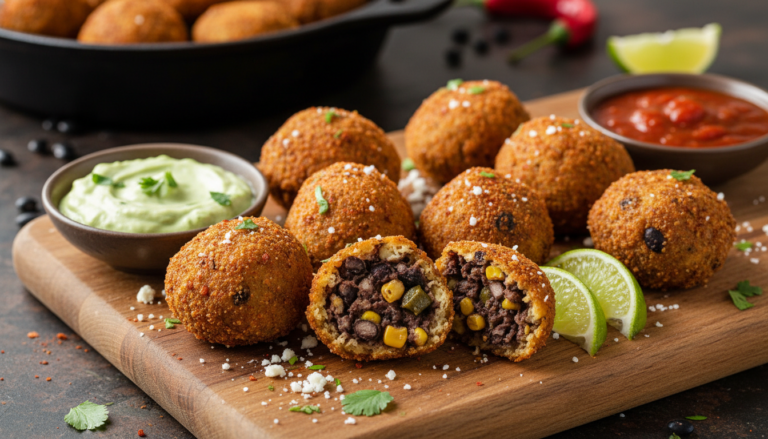
Smoky Black Bean & Cotija Bites
These Smoky Black Bean & Cotija Bites are a boldly seasoned, oven-baked snack built on a smoked paprika and cumin black bean spread on crisp corn tortilla rounds—the kind of snack that looks like an appetizer and works like a meal prep staple.
8
servings20
minutes30
minutes180
kcal50
minutesIngredients
2 cups black beans, cooked
1 cup cotija cheese, crumbled
1 tsp smoked paprika
1 tsp cumin
1 tsp garlic powder
1 tbsp lime juice
1 tbsp olive oil
0.5 cup cilantro, chopped
0.5 cup green onions, chopped
1 pinch salt
1 pinch pepper
16 pieces corn tortillas
Directions
- Preheat the oven to 375°F (190°C).
- Mash the black beans in a large bowl.
- Mix in cotija cheese, smoked paprika, cumin, garlic powder, lime juice, and olive oil.
- Fold in the cilantro and green onions.
- Season with salt and pepper to taste.
- Spoon mixture onto corn tortillas, distributing evenly.
- Place the tortillas on a baking sheet.
- Bake in the preheated oven for 15-20 minutes until slightly browned.
- Remove from oven and let cool slightly before serving.
Nutrition Facts
- Total number of serves: 4
- Calories: 180kcal
- Cholesterol: 0mg
- Sodium: 620mg
- Potassium: 400mg
- Sugar: 8g
- Protein: 6g
- Calcium: 60mg
- Iron: 2mg
About This Author

Benjamin Brown
Recipe Developer
Benjamin is our flavor engineer. A classically trained chef turned recipe developer, he’s obsessed with balancing taste, texture, and creativity. He ensures that every recipe we publish is not only delicious but also reliable, approachable, and repeatable — even for beginners.
Favorite dish: Slow-braised short ribs with red wine reduction.
Kitchen motto: “Cooking is part science, part soul.”















