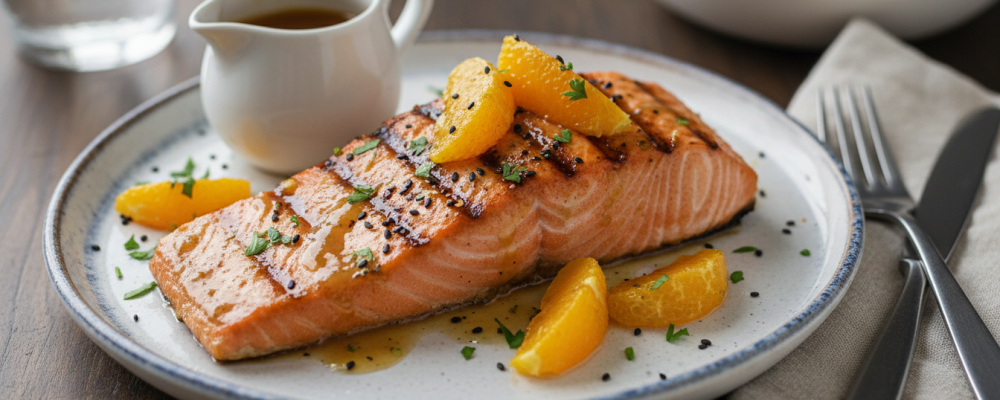

There are grilled salmon recipes that are straightforward and pleasant, and then there are the ones that make you stop and appreciate what a well-built glaze can do to a piece of fish. This Grilled Salmon with Orange Maple Glaze is the second kind. Orange juice and maple syrup, deepened with soy sauce and brightened with fresh ginger and garlic, caramelize on the grill into a lacquered, glossy coating that clings to the salmon and develops those slightly charred, bittersweet edges that make glazed proteins so compelling. It’s elegant enough for a dinner party, fast enough for a Tuesday, and built on a flavor combination—citrus, maple, soy, ginger—that is as cohesive and satisfying as any glaze I’ve developed for fish.
The glaze timing is the technique decision that defines this recipe. Applying it mid-cook rather than at the beginning is critical: salmon grilled from the start with a maple-based glaze over direct heat will burn before the fish is cooked through. The first five to seven minutes skin-side down give the fillet time to cook two-thirds of the way through and develop the structural integrity it needs to be flipped and handled without falling apart. The glaze goes on after the flip, when the flesh side is already mostly set—and at that stage, the concentrated sugars in the maple and orange juice have exactly the right amount of time to caramelize and cling without scorching.
What I appreciate most about this recipe is how the glaze builds on itself. The orange juice provides both sweetness and acidity that balance the maple’s richness. The soy sauce contributes salt and umami depth that prevents the glaze from tasting merely sweet. The fresh ginger and garlic add aromatic warmth that turns a simple glaze into something with genuine complexity. Together they produce a finish that tastes deliberately crafted rather than conveniently assembled.
The Inspiration Behind This Recipe
This recipe draws from two distinct culinary traditions that converge beautifully on a salmon fillet. The maple-soy-ginger combination has deep roots in Pacific Northwest and Japanese-influenced West Coast cooking, where the abundance of both wild salmon and Asian culinary traditions produced some of the most celebrated salmon preparations in American food culture. The orange and maple pairing draws from French and Canadian cooking traditions, where fruit reductions and maple syrups have long been used to glaze game birds, pork, and fish with a sweetness that is earthy and nuanced rather than cloying.
Combining these traditions into a single glaze felt like a natural development—each element reinforces the others, and the finished result is greater than any single tradition alone could produce.
A Brief History of Glazed Salmon and Maple in Cooking
Salmon has been at the center of Pacific Northwest cooking for thousands of years, prized by Indigenous communities who developed dozens of preparation methods for the fish including cedar plank smoking, open-fire roasting, and various salt and herb cures. The arrival of Asian immigrant communities in the Pacific Northwest in the 19th and 20th centuries introduced soy sauce and ginger as natural complements to the region’s abundant salmon, producing the Japanese-influenced preparations that now define much of West Coast salmon cooking.
Maple syrup, produced primarily in the northeastern United States and Canada, has been used as a cooking glaze since at least the 18th century, when Indigenous communities of the Great Lakes and St. Lawrence Valley taught European settlers the process of maple sugaring. Its use in savory cooking—as a glaze for meats and fish—became increasingly common as American cooks discovered its ability to caramelize under heat and add a complex, earthy sweetness that granulated sugar cannot replicate. In this glaze, maple syrup is the ingredient that takes everything from pleasant to genuinely memorable.
Why the Two-Stage Grilling Method Works
The two-stage grilling sequence—skin-side down first, glaze applied after flipping—is the technique framework that makes this recipe consistently excellent rather than occasionally lucky. Understanding why it works makes you a better salmon cook across the board.
Salmon skin, when placed directly on well-oiled hot grill grates, acts as a natural heat buffer. As the skin crisps and the fat under the skin renders, it conducts heat upward through the fillet gradually and evenly—cooking the flesh from the bottom up without the direct heat exposure that causes the flesh side to flare up or dry out. By the time the salmon is ready to flip—when the flesh has turned opaque about two-thirds of the way up the side—the structural integrity is set enough to handle without the fillet breaking apart.
The glaze applied at the flip caramelizes on the now-exposed flesh surface during the final minutes over direct heat, developing the slightly charred, lacquered finish that defines a great glazed fish. The skin side, now facing up, crisps further rather than burning under the glaze—ensuring both sides of the fillet finish correctly and simultaneously.
Flavor Profile: What to Expect
Every element of this glaze contributes to a beautifully layered, satisfying flavor experience:
- Rich, earthy maple sweetness that caramelizes on the grill into a glossy, slightly charred coating with bittersweet edges
- Bright orange acidity that cuts through the maple’s richness and provides a citrusy lift that keeps every bite feeling vibrant
- Savory soy umami that deepens the glaze and prevents it from tasting one-dimensionally sweet
- Warm, aromatic fresh ginger that adds spice and fragrance throughout the glaze without overpowering the delicate salmon
- Mellow, bloomed garlic that rounds out the sauce and adds a savory depth at the base of every flavor note
- Rich, flaky salmon with a slightly crisped skin and moist, tender interior that carries the glaze flavor into every bite
The overall effect is sweet, savory, bright, and deeply satisfying—a glazed fish that tastes like a restaurant preparation from your own grill.
Tips for Making the Best Orange Maple Glazed Salmon
A few technique details will produce consistently excellent results:
- Oil the grates generously: Salmon skin sticks readily to under-oiled grates. Brush or wipe the grates with oil immediately before the salmon goes on—not five minutes before.
- Don’t move the salmon during the first stage: Let it cook undisturbed for the full five to seven minutes skin-side down. Moving it before the skin has had time to release naturally from the grates tears the skin and makes flipping much harder.
- Reduce the glaze slightly if it seems thin: A thicker glaze coats and caramelizes more effectively than a watery one. Two minutes in a small saucepan over medium heat concentrates it into a better coating consistency if needed.
- Apply the glaze generously: Use a pastry brush and coat the entire flesh surface with a generous, even layer—don’t be shy. The glaze is what makes this recipe memorable.
- Rest before serving: Two minutes off the grill allows the glaze to set slightly and the juices to redistribute. Serve too soon and the glaze runs and the fillet loses moisture.
- Use a fish spatula: A flexible fish spatula makes flipping salmon on the grill dramatically easier and reduces the risk of the fillet breaking apart.
Serving Suggestions and Side Pairings
This salmon is versatile enough to anchor a wide range of meals:
- Over jasmine or brown rice with steamed bok choy for an Asian-inspired, complete dinner plate
- Alongside roasted asparagus or broccolini for a clean, elegant pairing that lets the glaze shine
- On a simple green salad with a sesame-ginger vinaigrette for a lighter presentation
- With cilantro lime rice and black beans for a more casual, complete meal
- Served with roasted sweet potatoes and a cucumber salad for a sweet-savory balance throughout the plate
Storage, Reheating, and Make-Ahead Tips
Glazed salmon is best eaten fresh, but holds up reasonably well:
- Refrigerate cooked salmon for up to 2 days. Salmon is best eaten as fresh as possible.
- Reheat gently in a covered skillet over low heat or in a 300°F oven—avoid high heat, which dries out the fish quickly.
- The glaze can be made up to 3 days in advance and refrigerated—bring to room temperature before brushing for easier application.
- Leftover salmon is excellent served cold over salad greens or flaked into a grain bowl with the remaining glaze drizzled over the top.
Why This Recipe Deserves a Spot in Your Rotation
Grilled Salmon with Orange Maple Glaze earns its place as the salmon recipe that makes guests genuinely impressed and weeknight cooks genuinely satisfied. It’s fast, nutritionally excellent, and produces a finished dish with the kind of glossy, caramelized, restaurant-quality presentation that most home cooks assume requires far more skill than this recipe actually demands. Once this technique and flavor combination are in your hands, you’ll find yourself returning to it whenever you want a dinner that delivers on every level.
Recommended Drink Pairing
The sweet citrus and maple character of this glaze calls for something equally vibrant and aromatic. A Ginger Grapefruit Paloma is a natural match—the grapefruit echoes the orange in the glaze while the ginger plays beautifully against the fresh ginger in the sauce. A dry, lightly oaked Chardonnay or a Pinot Gris is the wine pairing of choice—rich enough to stand up to the maple without overpowering the salmon’s delicate flesh.
For non-alcoholic options, a sparkling orange and ginger water or a cold yuzu lemonade keeps the palate refreshed and complementary alongside this bright, caramelized glaze.
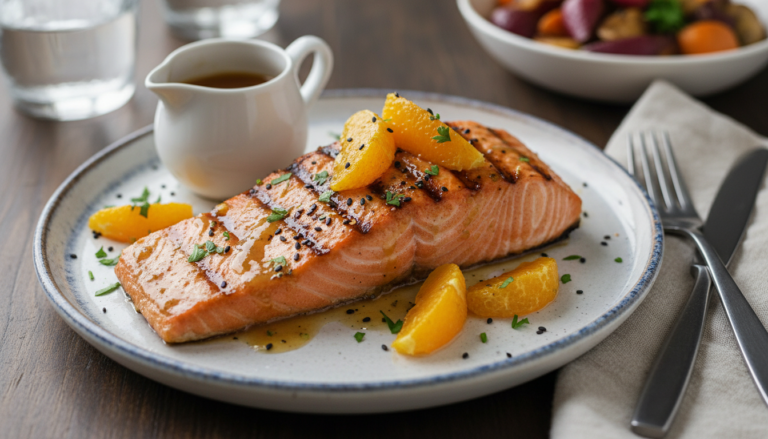
Grilled Salmon with Orange Maple Glaze
Grilled Salmon with Orange Maple Glaze lacquers tender salmon fillets in a caramelized orange juice, maple syrup, soy, and ginger glaze that is bold, bright, and deeply satisfying—the grilled salmon recipe that earns a standing request.
4
servings15
minutes15
minutes400
kcal30
minutesIngredients
4 fillets salmon
0.5 cup orange juice
0.25 cup maple syrup
1 tablespoon soy sauce
1 teaspoon ginger, freshly grated
1 teaspoon garlic, minced
1 pinch salt
1 pinch black pepper
2 tablespoons olive oil
Directions
- Preheat grill to medium-high heat.
- In a bowl, mix orange juice, maple syrup, soy sauce, ginger, and garlic.
- Season salmon fillets with salt and pepper.
- Brush olive oil on grill grates to prevent sticking.
- Place salmon on grill, skin-side down, and cook for 5-7 minutes.
- Brush glaze over salmon and cook for an additional 5-7 minutes.
- Remove from grill and let rest for a couple of minutes before serving.
Nutrition Facts
- Total number of serves: 4
- Calories: 400kcal
- Cholesterol: 0mg
- Sodium: 620mg
- Potassium: 400mg
- Sugar: 8g
- Protein: 6g
- Calcium: 60mg
- Iron: 2mg
About This Author

Benjamin Brown
Recipe Developer
Benjamin is our flavor engineer. A classically trained chef turned recipe developer, he’s obsessed with balancing taste, texture, and creativity. He ensures that every recipe we publish is not only delicious but also reliable, approachable, and repeatable — even for beginners.
Favorite dish: Slow-braised short ribs with red wine reduction.
Kitchen motto: “Cooking is part science, part soul.”