
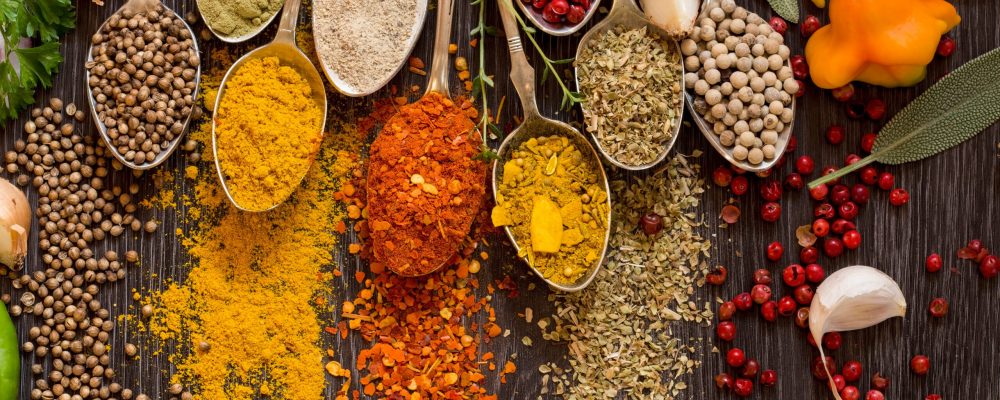

There is a small, dried berry that once commanded a price higher than gold.
Not metaphorically. Not as an expression of its cultural value or its culinary importance. Literally higher than gold, by weight, in the markets of medieval Europe — a commodity so valuable that it was used as currency, accepted as tax payment, demanded as ransom, and hoarded by merchants who understood that control of its supply was control of the most significant trading relationship in the known world.
The pepper trade shaped the ancient world in ways that are difficult to overstate. It motivated the voyages that mapped the globe. It built and destroyed fortunes. It was the reason that Vasco da Gama sailed around Africa, that Columbus sailed west into the unknown, that the Dutch East India Company became the most powerful commercial enterprise in the history of the world up to that point.
And it ended up, eventually, in a small glass shaker on virtually every dining table in the Western world — so ubiquitous, so inexpensive, so thoroughly democratized that most people reach for it without a thought and use it without knowing that they are touching one of the most consequential commodities in human history.
This is the story of spice. Not of pepper specifically — though pepper is the place to start — but of the broader category of dried aromatics that moved along trade routes for thousands of years, that divided empires and united tables, and that transformed the flavor of the world in ways that are still present in every kitchen.
Why Spice Was Worth Fighting For
Before refrigeration, before the global food system that makes almost any ingredient available anywhere at any time, the preservation and palatability of food was one of the central challenges of daily existence for most of humanity.
Meat spoiled. Vegetables rotted. The monotony of a diet limited by season and geography was not just a culinary complaint — it was a genuine hardship that affected health, morale, and the quality of daily life in ways that are difficult to fully appreciate from the vantage point of a world with refrigerators.
Spices addressed this hardship in multiple ways simultaneously. Their antimicrobial properties — the same compounds that produce their flavor and fragrance — slowed the spoilage of meat and other perishables. Their intense flavor transformed ingredients that would otherwise be unpalatable — meat past its prime, preserved fish, stale grain — into something edible. And they provided the kind of flavor variety that made a limited and repetitive diet more bearable.
For these reasons, spices were not luxury goods in the modern sense — items purchased for pleasure by people who could afford more than they needed. They were practical necessities, valued because they solved problems that affected everyone, and expensive because the supply chain that delivered them from their origins in South and Southeast Asia to the markets of Europe was long, difficult, and controlled by intermediaries who understood their leverage.
The Arab traders who dominated the overland spice routes for centuries maintained their monopoly partly through the deliberate mystification of their sources — spreading stories about spices growing in lakes guarded by monsters, harvested under conditions of extreme danger, available only to those with the knowledge and courage to obtain them. The mystery was manufactured, but its commercial effect was real. As long as the origins of spice remained obscure to European buyers, the price remained high and the Arab intermediaries remained indispensable.
The Routes That Moved the World
The spice trade routes were among the most significant commercial infrastructure in the pre-modern world — not just roads and sea lanes but entire ecosystems of trade, diplomacy, credit, and cultural exchange that connected Asia, the Middle East, Africa, and Europe in a web of commercial relationships that had profound effects on every civilization they touched.
The Silk Road — the network of overland trade routes connecting China to the Mediterranean — carried spices alongside silk, porcelain, and other luxury goods across thousands of miles of desert, mountain, and steppe. The journey from the spice-producing regions of South Asia to the markets of Venice or Genoa could take years and pass through dozens of intermediary hands, each adding cost to the final price.
The maritime spice route — connecting the Maluku Islands, the original source of cloves and nutmeg, through the Indian Ocean to the Persian Gulf and Red Sea, and from there overland or by sea to the Mediterranean — was even longer and more complex. The monsoon winds that made this route navigable were understood and exploited by Arab and Indian sailors for centuries before European navigators learned to use them.
The desire to access these routes directly — to eliminate the Arab intermediaries who controlled them and capture the enormous profit margin their position provided — was the primary commercial motivation behind the European age of exploration. The Portuguese, the Spanish, the Dutch, and the English each sought, through different routes and with different strategies, to insert themselves into the spice trade at a point closer to the source. The world map that resulted from their efforts — the Americas encountered, Africa circumnavigated, Asia reached by sea — was, in significant part, a map drawn in the pursuit of pepper and cloves and nutmeg.
The Spice That Started a Genocide
Of all the spices that drove the age of exploration, nutmeg produced the most extreme and most brutal consequences — consequences that reveal the degree to which the commercial logic of the spice trade could overwhelm every other consideration.
Nutmeg and mace — both produced from the fruit of Myristica fragrans — grew, in the early seventeenth century, only on the Banda Islands, a tiny archipelago in what is now Indonesia. The Dutch East India Company, which had established commercial dominance over the region, was determined to maintain its monopoly on nutmeg production by controlling the islands entirely.
When the Bandanese people resisted Dutch control — defending their right to trade with multiple parties rather than accepting the exclusive terms the Dutch demanded — the response was catastrophic. Between 1621 and 1622, Dutch forces under Jan Pieterszoon Coen systematically massacred or expelled the vast majority of the Bandanese population. An indigenous population estimated at fifteen thousand was reduced, within a matter of years, to a few hundred survivors.
The Banda Islands were then repopulated with Dutch colonists and enslaved laborers who were forced to produce nutmeg under conditions of extreme brutality — all in service of maintaining the commercial monopoly on a spice that was used, in Europe, primarily to flavor food and to treat digestive complaints.
This is the most extreme version of a pattern that repeated throughout the history of the spice trade — the willingness of commercial and imperial powers to commit extraordinary violence in pursuit of control over the flavor compounds that grew in specific places and that the world had decided it could not do without.
The Democratization of Spice
The transformation of spice from luxury commodity to everyday pantry staple is one of the more remarkable reversals in the history of food.
For most of the period during which the spice trade dominated global commerce, the availability of spice was a reliable marker of wealth and status. The household that could afford to season its food with pepper and cinnamon and cloves was a household of means. The household that could not ate plainer food — food defined by its lack of the aromatic complexity that spice provided.
Several developments converged, over the course of the seventeenth and eighteenth centuries, to begin reversing this relationship. The Dutch monopoly on nutmeg was broken when French agents smuggled nutmeg seedlings out of the Banda Islands and established production in other colonial territories. The Portuguese monopoly on the pepper trade from India was disrupted by Dutch and English competition. The establishment of spice cultivation in multiple colonial territories — in the Caribbean, in Africa, in other parts of Asia — increased supply and drove down prices.
By the nineteenth century, spices that had once commanded extraordinary prices were becoming commodities — still valuable, still traded in significant volume, but no longer the specific objects of geopolitical competition that they had been. By the twentieth century, they were pantry staples — available in any grocery store, affordable to virtually any household, reached for without thought in the preparation of everyday food.
The small glass shaker of black pepper that sits on the dining table next to the salt is the endpoint of a history that includes the mapping of the globe, the massacre of indigenous peoples, the construction of the modern colonial system, and the commercial rivalry of the world’s great powers.
What Remains in the Kitchen
The spices that drove this history are still in use — in forms and combinations that reflect the movements of people and ideas that the spice trade itself set in motion.
Cinnamon in the Mexican chocolate drink chamurrado — a combination that reflects the encounter between Old World spice and New World cacao that Spanish colonialism produced. Cardamom in Scandinavian baking — a flavor so embedded in Swedish and Norwegian pastry traditions that it seems indigenous, though it arrived via the Viking trade routes to Constantinople. Turmeric in the golden milk drinks that have spread from South Asian culinary tradition into global wellness culture. The garam masala in the Indian dish that arrived at the British table through colonialism and became so thoroughly domesticated that chicken tikka masala was once named the unofficial national dish of the United Kingdom.
Every spice blend, every spiced dish, every cuisine that uses the aromatics of distant geographies tells a story of movement — of trade and colonialism and migration and cultural exchange that deposited these flavors in kitchens far from where they originated.
The kitchen is, in this sense, a historical archive. The spices in the cabinet are not just flavor agents. They are artifacts of the connections — peaceful and violent, voluntary and coerced — that made the world the specific shape it is.
The Takeaway
The spice in the cabinet has a history longer and more consequential than almost any other ingredient available in any kitchen.
It was worth dying for, once. Worth crossing oceans for. Worth, to the people who controlled it, worth committing atrocities to protect.
It is now worth almost nothing, commercially — a small expense in the grocery budget, replaced without thought when it runs out.
This democratization is a genuine good. The flavors that once marked the distinction between the powerful and the powerless are now available to everyone who cooks.
But knowing the history of what is in the cabinet — understanding what moved across the world to put pepper and cinnamon and cloves and nutmeg in a jar on a pantry shelf — is worth the knowing.
It makes the cooking more interesting.
And the food, somehow, more resonant.














