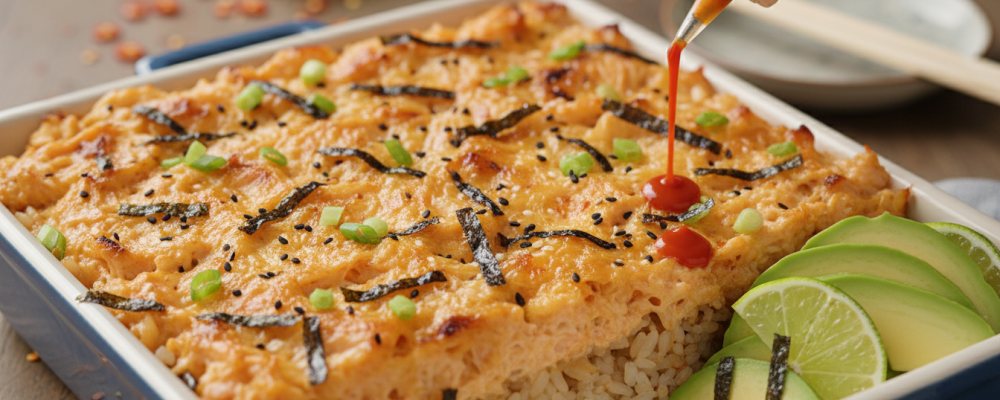

There are recipes that feel genuinely of the moment—dishes that capture something about how people want to eat right now—and the sushi bake is one of them. This Spicy Salmon Sushi Bake takes everything that makes a great spicy salmon roll so compelling—the creamy sriracha mayo, the savory soy-kissed salmon, the seasoned sushi rice, the fragrant furikake—and delivers it in a format that feeds an entire table at once without requiring anyone to roll a single piece of sushi. It is clever, it is casual, it is deeply satisfying, and it has become one of the most popular shared dishes in modern American food culture for very good reason.
What drew me to developing this recipe was the engineering challenge at its center: how do you take a Japanese-inspired flavor combination that is built on precision and restraint and translate it into a baked casserole format without losing what makes it special in the first place? The answer, it turns out, is sequence and proportion. The sushi rice foundation needs to be properly seasoned—vinegar, sugar, salt—before anything else goes on top, because the rice carries the entire dish. The salmon needs to be draped in spicy mayo before it goes into the oven so the fat in the mayonnaise bastes the fish as it bakes, keeping it moist and flavorful through the full thirty minutes. And the furikake and sesame seeds need enough heat to toast slightly on top, adding a nutty, aromatic finish that ties every element together.
The nori on the side is the detail that makes this dish interactive in the best possible way. Scoop a portion of the bake onto a piece of nori, fold it, eat it like a hand roll—suddenly a casserole dish becomes a sharing experience that captures the communal, playful spirit of a great sushi dinner without any of the technical barrier.
The Inspiration Behind This Recipe
The sushi bake phenomenon originated in the Filipino-American community in Hawaii, where it became a beloved potluck and party dish in the 2010s before going viral across social media platforms in the early 2020s. The format—seasoned rice topped with a creamy, mayo-based seafood mixture and baked until golden—draws from the Japanese tradition of baked sushi preparations like yaki onigiri and baked scallop sushi, adapted into a large-format, shareable dish perfectly suited to the Filipino-American tradition of communal, abundant party food.
This version centers the spicy salmon combination that is among the most beloved flavor profiles in American sushi culture—a straightforward but brilliant pairing of fresh salmon and sriracha-spiked mayonnaise that has become a staple of sushi menus across the country. In baked form, that combination develops a slightly caramelized exterior and a creamy, rich interior that is arguably more satisfying than its raw sushi counterpart.
A Brief History of the Sushi Bake
While traditional Japanese sushi is built on centuries of refined technique—the precise seasoning of rice, the freshness and handling of fish, the balance of flavors in each piece—the sushi bake represents a distinctly American adaptation of those flavors into a more casual, accessible format. It belongs to the same tradition of cultural culinary adaptation that produced California rolls in the 1970s and spicy tuna in the 1980s: Japanese-inspired flavors reinterpreted for American preferences and occasions.
The sushi bake’s rise to mainstream popularity in the early 2020s reflects a broader cultural moment in which home cooks embraced globally inspired comfort food in large-format, shareable presentations. It is at once a celebration of Japanese culinary tradition and a thoroughly American potluck dish—proof that the most successful food adaptations are those that honor their source while making something genuinely new.
Why This Method Works
The baking method is doing several important things simultaneously in this recipe, and understanding them makes you a better cook of the dish. The sushi rice, pressed into an even layer in the baking dish, forms a stable, lightly crisped base after thirty minutes at 400°F—the edges firm up and develop a subtle toastiness that adds textural interest to what would otherwise be plain cooked rice.
The mayonnaise coating on the salmon is the technique detail that makes the fish genuinely excellent rather than simply baked. Mayonnaise is an emulsion of oil and egg—when applied to fish and baked, it bastes the salmon continuously as the oil heats, keeping the exterior moist and creating the slightly caramelized, golden crust that makes a great baked salmon so satisfying. The sriracha in the mayo adds heat that blooms gently under oven heat rather than sharpening, producing a more rounded, integrated spice than raw sriracha applied post-bake would deliver.
Flavor Profile: What to Expect
This bake delivers a full, layered flavor experience that rewards the communal, hand-roll eating style:
- Tangy, slightly sweet sushi rice that provides a vinegar-kissed, cohesive base with lightly crisped edges from the oven
- Rich, tender salmon that bakes moist and flaky under its mayo coating, with savory soy sauce seasoning through the flesh
- Creamy, spicy mayo that caramelizes slightly on top and provides bold, sriracha-forward heat in every bite
- Savory, umami-packed furikake that toasts lightly in the oven and seasons the entire top layer with nori, sesame, and dried fish notes
- Toasted sesame seeds that add nutty crunch and visual appeal throughout
- Crisp nori sheets on the side that add a briny, oceanic wrapper for each scoop—the essential interactive element
The overall effect is creamy, spicy, savory, tangy, and deeply satisfying—a sushi bake that tastes exactly like its inspiration.
Tips for Making the Best Spicy Salmon Sushi Bake
A few details make a meaningful difference in the finished dish:
- Season the rice while hot: Sushi vinegar seasoning absorbs into warm rice much more effectively than cold. Mix it in immediately after cooking and fan or stir to cool quickly.
- Press the rice firmly and evenly: An even, compact rice layer is essential for a stable base that holds up when scooped onto nori.
- Don’t skimp on the spicy mayo: A generous, even coating of the sriracha mayo over the salmon is what keeps the fish moist and creates the golden, caramelized top. A thin layer will dry the fish.
- Adjust the sriracha ratio: The mayo-to-sriracha ratio is adjustable—start with less sriracha for a milder bake and increase to taste.
- Apply furikake generously: Furikake is the seasoning that gives this dish its distinctly Japanese character—don’t be shy with it.
- Serve immediately with nori: The nori softens quickly once it’s near the warm bake. Keep it on the side and serve the moment the dish comes out of the oven for the best texture contrast.
Serving Suggestions and Side Pairings
This bake is a complete, crowd-pleasing centerpiece that works beautifully with a few complementary sides:
- Sliced avocado or a simple avocado salsa for a cool, creamy accompaniment
- Pickled ginger and wasabi on the side for the full sushi experience
- A simple cucumber salad with rice vinegar dressing for a crisp, acidic contrast
- Edamame with sea salt for a light, protein-forward starter
- Miso soup for a warming, umami-rich accompaniment that honors the Japanese inspiration
Storage, Reheating, and Make-Ahead Tips
This bake is best fresh from the oven but holds reasonably well:
- Refrigerate leftovers in an airtight container for up to 2 days. Salmon is best eaten soon after cooking.
- Reheat in a 350°F oven covered loosely with foil until warmed through—avoid the microwave, which can make the salmon rubbery and the rice gummy.
- Season the rice ahead: The vinegar-seasoned sushi rice can be made several hours in advance and held at room temperature—do not refrigerate uncooked sushi rice as it hardens.
- Prepare the spicy mayo up to 3 days in advance and refrigerate until ready to use.
Why This Recipe Deserves a Spot in Your Rotation
Spicy Salmon Sushi Bake earns its place as the dinner party dish that generates more conversation than any other on this list. It’s unexpected, impressive, interactive, and genuinely delicious—a dish that makes people feel like they’ve discovered something even when you’ve been making it for months. Whether it’s a casual Friday night dinner, a potluck contribution, or the centerpiece of a weekend spread, this bake delivers an experience that standard casserole dishes simply can’t match.
Recommended Drink Pairing
A dish this bold and Asian-inspired calls for something clean, refreshing, and just slightly sweet. A Pineapple & Coconut Margarita is a vibrant, tropical pairing that echoes the Pacific Rim spirit of the sushi bake while cutting through the richness of the spicy mayo beautifully. A cold sparkling sake or a crisp Japanese lager is the more traditional option that honors the dish’s culinary origins.
For non-alcoholic options, a sparkling yuzu lemonade or a cold jasmine green tea with honey keeps the palate refreshed and complementary alongside the bold, umami-rich flavors of this bake.
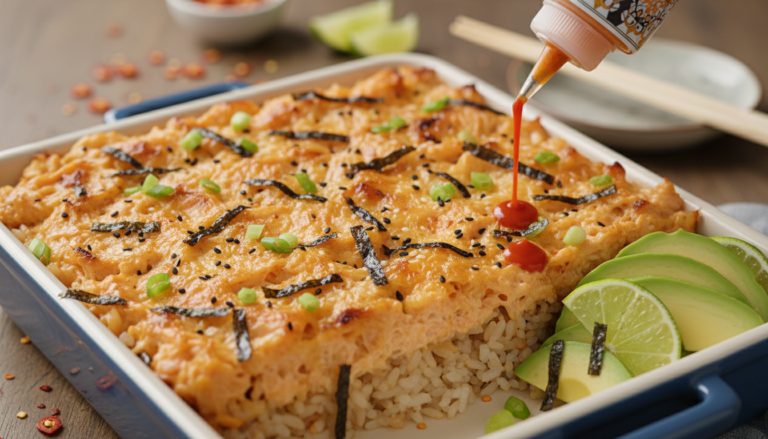
Spicy Salmon Sushi Bake
Spicy Salmon Sushi Bake layers soy-seasoned salmon and sriracha mayo over seasoned sushi rice, topped with furikake and sesame seeds and baked until golden—served with nori for scooping in the most fun, crowd-pleasing dinner format imaginable.
8
servings20
minutes30
minutes400
kcal50
minutesIngredients
2 cups sushi rice
3 tbsp rice vinegar
1 tbsp sugar
1 tsp salt
1 lb salmon fillet
1 cup mayonnaise
2 tbsp sriracha sauce
1 tbsp soy sauce
2 tbsp furikake seasoning
1 sheet nori (seaweed)
1 tbsp sesame seeds
Directions
- Preheat oven to 400°F (200°C).
- Cook sushi rice according to package instructions. Combine cooked rice with rice vinegar, sugar, and salt.
- Spread rice evenly in a 9×13 inch baking dish.
- Season salmon with soy sauce and place on top of rice.
- In a bowl, mix mayonnaise and sriracha to create spicy mayo.
- Spread the spicy mayo over the salmon.
- Sprinkle furikake seasoning and sesame seeds over the top.
- Bake for 25-30 minutes, until salmon is cooked through.
- Serve sushi bake with nori pieces on the side.
Nutrition Facts
- Total number of serves: 4
- Calories: 400kcal
- Cholesterol: 0mg
- Sodium: 620mg
- Potassium: 400mg
- Sugar: 8g
- Protein: 6g
- Calcium: 60mg
- Iron: 2mg
About This Author

Benjamin Brown
Recipe Developer
Benjamin is our flavor engineer. A classically trained chef turned recipe developer, he’s obsessed with balancing taste, texture, and creativity. He ensures that every recipe we publish is not only delicious but also reliable, approachable, and repeatable — even for beginners.
Favorite dish: Slow-braised short ribs with red wine reduction.
Kitchen motto: “Cooking is part science, part soul.”