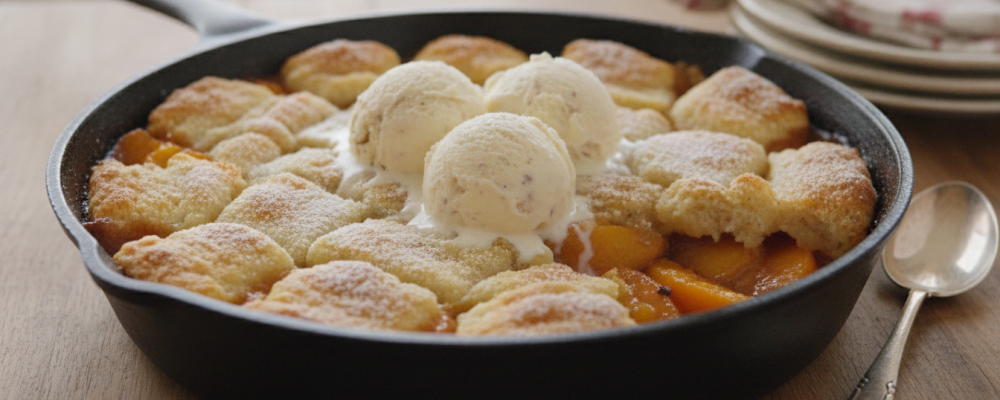

Peach cobbler occupies a special place in American dessert history, and for good reason—it’s the kind of recipe that demonstrates how chemistry and technique conspire to create something extraordinary from humble ingredients. As a pastry chef, I’m endlessly fascinated by the “don’t stir” cobbler method, where butter, batter, and fruit layer themselves deliberately and then rearrange during baking through nothing more than heat, density, and physics. The result is a dessert with multiple distinct textures from a single pan and one simple assembly process. That’s elegant food science disguised as easy home baking.
What happens in the oven during this cobbler is genuinely beautiful to understand. The melted butter in the bottom of the pan heats first and most intensely, becoming almost fry-like in its effect on the batter that sits above it. The batter contains baking powder, which creates lift and structure as it heats. The peaches on top release juice that seeps downward through the batter, creating that characteristic syrupy layer at the bottom. Meanwhile, exposed batter surfaces brown and crisp where butter has risen up through them. You end up with multiple textural zones—crusty golden top, cake-like middle, syrupy peachy bottom—all from one pour-and-bake process. That’s the magic of cobbler methodology, and it never stops being wonderful.
I make this cobbler constantly throughout peach season because it celebrates the fruit perfectly—it doesn’t smother or overcomplicate the peaches, it simply creates the ideal setting for them to shine. Fresh summer peaches, baked until their juices concentrate and their sweetness intensifies, surrounded by buttery, golden batter that exists specifically to showcase them. That’s the philosophy I bring to all fruit desserts: the fruit is the star, and technique is just the supporting cast.
─────────
The Inspiration Behind This Recipe
Easy Peach Cobbler belongs to the “self-saucing” family of Southern baked desserts—recipes where the assembly seems too simple to produce anything special, yet the oven transforms basic components into something genuinely extraordinary. This technique appears throughout Southern baking traditions: chocolate lava cakes, dump cakes, self-saucing puddings, and various cobbler methods all rely on the principle that certain ingredient combinations, when subjected to heat in specific configurations, will rearrange themselves into more complex structures than their assembly suggests.
The specific technique here—melted butter in pan, batter poured over it, fruit added on top, no stirring—is a masterclass in understanding ingredient behavior. Each component does exactly what its physical and chemical properties dictate. Butter rises because fat is less dense than the water-based batter. Batter develops structure from gluten and egg proteins. Fruit releases juice because heat breaks down cell walls. Cinnamon sugar on top creates a fragrant, slightly crispy surface layer. None of this requires intervention—just proper layering and appropriate heat.
What inspired my version specifically was wanting to honor the technique’s simplicity while ensuring maximum peach flavor. Too many cobbler recipes bury the peaches under excessive batter or oversweeten them until they lose their natural character. I wanted a recipe where the peaches taste like themselves—fruity, fragrant, with that characteristic stone fruit tartness—enhanced but not transformed by the baking process and the surrounding batter.
─────────
A Brief History of American Cobblers
Cobbler’s history in American cooking is rich and regionally specific. The dessert emerged in the early 19th century among British colonists who had the ingredients for traditional pie (fruit, sugar) but lacked proper pie equipment (rolling pins, pie tins) or the oven conditions for proper pastry. Rather than making laminated pie crust—which requires controlled temperatures and specific technique—these resourceful cooks dropped biscuit dough over fruit or poured simple batters, creating something humbler but equally delicious.
The name “cobbler” likely comes from the appearance of the biscuit topping—lumpy and irregular, resembling a cobblestone street. Different regions developed distinct cobbler styles: the South favored thinner, batter-based cobblers (like this version) while other regions preferred thicker biscuit-topped versions. Some cobblers pour fruit over batter, some pour batter over fruit, and some layer both multiple times. Each variation produces different textural results from the same basic ingredients.
Peach cobbler specifically became the most beloved cobbler variation in the American South, where Georgia and South Carolina peach orchards produced abundant summer harvests. The dessert became a fixture of church suppers, family reunions, and home kitchens throughout the region. “Church ladies’ cobbler” became a cultural institution—recipes passed through generations, each cook adding their own small variation while preserving the essential character.
The introduction of canned peaches in the early 20th century democratized cobbler by making it year-round rather than strictly seasonal. While fresh summer peaches produce the finest cobbler, canned peaches deliver excellent results when fresh aren’t available, ensuring this beloved dessert can grace tables in January as readily as July.
─────────
Why This Pour-Over Cobbler Method Works
Butter creates the foundation for all textural development. When you melt butter directly into the baking dish, you establish the bottom layer of fat that will drive the cobbler’s textural complexity. As the oven heats, this butter becomes extremely hot—essentially a shallow frying medium. The batter that contacts this hot butter develops a crispy, golden underside while cooking more gently toward its top surface, creating vertical texture gradient in the batter layer.
The density separation is the key to the technique. When you pour batter over melted butter without stirring, you create a two-density system. Butter (pure fat, less dense than the water-containing batter) wants to rise. As the oven heats everything, the butter becomes more fluid and rises through the batter along paths of least resistance—primarily the edges where the pan sides create gaps. This rising creates those characteristic golden, almost fried edges and contributes to the irregular, beautiful surface of baked cobbler.
Baking powder creates lift from within the batter. As the batter heats, baking powder releases carbon dioxide, causing the batter to expand upward. This creates the cake-like structure in the middle section of the cobbler—open crumb, tender texture, different from both the crispy edges (where butter rose and fried the surface) and the bottom (where butter contact created a denser layer). The result is multiple textural zones within a single batter layer.
Peaches release juice that creates natural syrup. As peaches heat, their cell walls break down and they release liquid. This juice is naturally sweet and intensely peach-flavored. As it seeps downward through the batter, it creates two effects: it adds flavor and moisture to the batter layers it passes through, and it pools at the bottom (mixed with the butter), creating that characteristic syrupy layer underneath the batter that makes every cobbler so satisfying.
Cinnamon sugar on top creates a fragrant crust. The sugar sprinkled over the peaches caramelizes during baking, creating a slightly crispy, fragrant surface layer on the peaches. This caramelization deepens the peach flavor and adds complexity—baked peaches with caramelized sugar taste more sophisticated than raw or simply heated peaches. The cinnamon provides aromatic warmth that complements stone fruit beautifully.
The 45-minute bake time allows full transformation. All of the above processes—butter rising, batter developing structure, peach juice releasing and pooling, sugar caramelizing—require sustained heat over time. Shorter baking produces undercooked batter and insufficient caramelization. The full 45 minutes allows complete transformation from simple layered ingredients to the complex, multi-textured cobbler the method produces.
Fresh versus canned peaches affect the final result differently. Fresh summer peaches have more water content and more pronounced acidity and aroma. They release more juice during baking, creating a wetter syrup layer, and their flavor is more complex and nuanced. Canned peaches are already softened and sweeter, releasing less additional juice and producing a slightly firmer final texture. Both are delicious—fresh peaches produce a more vibrant, complex cobbler while canned peaches produce a slightly more uniform, reliably sweet result year-round.
─────────
Flavor Profile: What to Expect
Sweet, fragrant peach dominates the flavor landscape completely. Fresh peaches bring floral aromatics, bright acidity, and that characteristic stone fruit sweetness that can’t be replicated. Canned peaches provide a concentrated, sweeter, more uniform peach flavor without the fresh acidity. Either way, peach is unmistakably the star—it permeates the batter, infuses the syrup at the bottom, and concentrates on the surface where the cinnamon sugar has caramelized it beautifully.
Warm cinnamon spice weaves throughout, enhancing rather than masking the peach flavor. Cinnamon and stone fruit are natural partners—cinnamon’s warmth amplifies peach’s sweetness and adds aromatic complexity that makes the cobbler smell as wonderful as it tastes. The cinnamon appears most intensely on the caramelized top surface but permeates the entire dessert subtly.
Buttery, golden batter provides the rich, comforting foundation. The batter isn’t sweet or strongly flavored on its own—it’s a neutral vehicle that absorbs peach juice, develops texture from the butter, and provides the structural contrasts (crispy edges, tender middle) that make cobbler so satisfying. Vanilla adds subtle warmth and depth to the batter without calling attention to itself.
Multiple textures create constant interest. Crispy, golden edges where butter rose and created that almost-fried surface. Tender, cake-like middle sections where the batter developed structure. Syrupy, juicy bottom where peach juice and butter pooled together. Soft, slightly caramelized peach pieces throughout. Every spoonful hits these elements differently depending on where you scoop.
The overall experience is warm, comforting, and deeply satisfying. This cobbler tastes like summer, like grandmothers’ kitchens, like Saturday afternoon baking and Sunday supper tables. It’s sweet without being cloying, rich without being heavy, simple without being plain. Served warm with cold vanilla ice cream, it achieves the kind of perfection that makes you understand why simple recipes become classics.
─────────
Tips for Making the Best Easy Peach Cobbler
Choosing and Preparing Peaches:
- Fresh peaches (peak season): Use ripe but firm peaches—overly soft peaches release too much liquid and become mushy. Peel by scoring an X on the bottom, blanching in boiling water for 30 seconds, then transferring to ice water—the skin slips off easily. Slice into ½-inch wedges.
- Canned peaches: Drain thoroughly before using—excess syrup makes the cobbler too sweet and too wet. Use peaches in juice rather than heavy syrup for better flavor and texture control.
- You’ll need approximately 4-5 medium fresh peaches or two 15-ounce cans for a 9×13 pan.
- Macerate fresh peaches briefly: Toss with 2 tablespoons sugar and let sit 10 minutes—this draws out juice and concentrates flavor before baking.
Preparing the Butter:
- Melt butter in the baking dish in the preheating oven rather than separately—this ensures the butter is at the right temperature when batter is added.
- Watch carefully: You want fully melted, slightly sizzling butter but not browned or burned.
- Use the full amount of butter—don’t reduce it. The butter is integral to the cobbler’s texture, not just flavor.
- Swirl the pan gently to ensure butter coats the bottom evenly before adding batter.
Making the Batter:
- Whisk dry ingredients first (flour, sugar, baking powder, salt) to ensure even distribution of leavening.
- Add milk and vanilla and stir just until smooth—a few small lumps are fine. Overmixing develops gluten and creates tough batter.
- The batter should be pourable but not watery—similar to pancake batter consistency.
- Room temperature milk incorporates more smoothly than cold.
The Critical Assembly:
- Pour batter over hot butter without stirring—this is the absolute cardinal rule. Any stirring disrupts the density separation that creates the cobbler’s characteristic texture.
- The butter will pool around the edges—this is correct and desired.
- Add peaches evenly across the entire batter surface for consistent coverage in every serving.
- Sprinkle cinnamon sugar evenly—don’t dump it all in one place.
- Resist stirring at any point from batter addition to serving.
Baking and Serving:
- Don’t open the oven for the first 30 minutes—temperature disruption affects the butter-rising process.
- Look for golden-brown top with visible bubbling around the edges as signs of doneness.
- The center should be set but may look slightly wet from peach juice—this is correct.
- Let cool 5-10 minutes before serving—this allows the syrup to thicken slightly and prevents burning your mouth.
- Serve warm with vanilla ice cream for the quintessential experience.
Flavor Variations:
- Peach-raspberry: Scatter ½ cup fresh raspberries over the peaches before baking for tartness and color
- Peach-ginger: Add ½ teaspoon ground ginger to the batter for warm, spicy depth
- Brown sugar top: Replace granulated sugar in the topping with brown sugar for deeper caramel notes
- Almond: Add ¼ teaspoon almond extract to the batter—almonds and peaches are natural partners
─────────
Serving Suggestions and Presentation Ideas
Classic Southern Comfort:
Scoop generous portions into wide bowls with a large scoop of vanilla ice cream melting alongside. The ice cream melts into the warm cobbler, creating its own sauce. Serve with a long-handled spoon and plenty of napkins—this is joyfully messy eating at its best.
Whipped Cream Elegance:
For a slightly lighter option, top warm cobbler portions with freshly whipped cream (lightly sweetened with a hint of vanilla) instead of ice cream. Add a fresh mint sprig and a thin peach slice as garnish. This presentation feels more refined while maintaining the dessert’s rustic character.
Family-Style Serving:
Bring the entire baking dish to the table with a large serving spoon and stack of bowls. The golden, bubbling cobbler still in its pan looks beautiful and inviting—no need for plating. Set out vanilla ice cream and whipped cream for self-service. This is the most authentic, convivial way to serve cobbler.
Individual Ramekin Presentation:
For elegant dinner parties, bake cobbler in individual 8-ounce ramekins (reduce baking time to 30-35 minutes). Place each ramekin on a small plate with a scoop of vanilla ice cream beside it. Add a fresh peach slice and mint leaf for garnish. This transforms humble cobbler into a sophisticated plated dessert.
Caramel Upgrade:
Serve with ice cream and a generous drizzle of caramel sauce over both cobbler and ice cream. Add toasted pecans for crunch and a pinch of sea salt to amplify all the caramel, peach, and butter flavors. This takes the cobbler from weeknight comfort to special occasion indulgence.
Brunch Presentation:
Serve at room temperature or slightly warm as part of a brunch spread. Portion into smaller servings, top with Greek yogurt instead of ice cream, and drizzle with honey. The tangy yogurt balances the sweet cobbler and feels morning-appropriate. Garnish with fresh peach slices and mint.
─────────
Storage, Reheating, and Make-Ahead Tips
Storage:
- Room Temperature: Cover tightly with foil and store at room temperature for up to 2 days—the butter content makes this stable without refrigeration for short periods.
- Refrigerator: Store covered for up to 5 days. The cobbler firms up when cold but reheats beautifully to restore that fresh-baked texture.
- Freezer: Freeze portions wrapped tightly for up to 3 months. Thaw overnight in the refrigerator then reheat before serving.
Reheating:
This cobbler reheats exceptionally well:
- Microwave: Individual portions for 45-60 seconds until warm throughout—the syrupy bottom becomes beautifully liquid again
- Oven: Cover with foil and reheat at 325°F for 15-20 minutes until warmed through—this restores the crispy edges better than microwave
- The entire baking dish can be reheated covered at 325°F for 20-25 minutes
Make-Ahead Strategy:
While this cobbler is easy enough to make fresh:
- Prepare peaches (slice, macerate) up to 4 hours ahead, refrigerate covered
- Mix dry batter ingredients the night before, store in an airtight container
- Bake up to 1 day ahead and reheat before serving—it reheats beautifully and the flavors actually deepen
For summer entertaining, baking it in the morning and reheating before dinner is an ideal approach that minimizes day-of effort while serving warm cobbler.
Fresh vs. Make-Ahead Quality:
- Fresh from the oven: Crispy edges, distinct textural zones, maximum peach aroma—peak experience
- Next day reheated: Slightly softer textures overall, deeper integrated flavors, still exceptional
- Cold from refrigerator: Firm, almost cake-like texture, intense concentrated flavors—surprisingly delicious eaten cold
Seasonal Strategy:
- Peak summer: Make with fresh local peaches—this is when the cobbler is at its absolute best
- Year-round: Use canned peaches packed in juice—excellent results any time
- Frozen peaches: Thaw completely and drain thoroughly before using—works well as a seasonal bridge
─────────
Why This Recipe Deserves a Spot in Your Rotation
Easy Peach Cobbler is one of those foundational recipes that every home baker needs—not because it’s impressive or technically demanding, but because it’s reliably, consistently, deeply delicious with almost no effort. It’s the recipe you make when summer peaches are perfect and you want to do them justice without complicated technique. It’s the recipe you make from canned peaches in January when you need warmth and comfort. It’s the recipe that produces audible appreciation from everyone who eats it.
What makes this cobbler technically interesting is the sophisticated outcome from simple assembly. The don’t-stir method, the butter rising through batter, the peach juice creating natural syrup, the cinnamon sugar caramelizing on the surface—these are all genuine pastry science phenomena that produce real textural complexity. This isn’t simple cooking that produces simple results; it’s simple assembly that produces complex results through smart technique. Understanding why it works makes you a better baker even as you enjoy an easy recipe.
The ingredient flexibility is genuinely valuable. Fresh or canned peaches, different sugar types, optional additions like ginger or almond extract—this recipe accommodates variation without losing its essential character. You can make it with whatever peaches are available (fresh, canned, even frozen) and still produce excellent cobbler. That resilience is rare in baking, which tends to punish substitution, and it makes this recipe practical and reliable year-round.
The warm-fruit-with-cold-cream experience is one of the great dessert combinations. Temperature contrast in dessert creates genuine pleasure—the warm, syrupy cobbler melting cold ice cream creates flavors and textures that neither could produce alone. That combination of warm and cold, sweet and creamy, fruity and rich is deeply satisfying in a way that neither component achieves independently. Easy Peach Cobbler with vanilla ice cream is a complete, perfect dessert experience.
This recipe connects to something culturally important. Peach cobbler is more than a dessert—it’s Southern culinary heritage, family tradition, summer memory, and communal joy baked into a pan. Making it connects you to generations of home cooks who made the same dish with the same simple technique. That connection gives this recipe weight and meaning beyond its ingredients.
If you’re looking for a recipe that delivers maximum comfort with minimum effort, that celebrates fresh fruit at its seasonal peak, that works year-round with pantry staples, and that produces the kind of warm, bubbling, fragrant dessert that makes everyone at the table happy—this is it. Easy Peach Cobbler proves that the most beloved recipes are often the simplest ones, and that understanding why simple techniques work makes them even more satisfying to execute.
─────────
Recommended Drink Pairing
Sweet Tea – Classic Southern:
Cold sweet tea is the quintessential Southern pairing—culturally appropriate, refreshing, and perfectly matched to cobbler’s warmth and sweetness. The tea’s tannins provide slight bitterness that balances the cobbler’s sweetness while the cold temperature contrasts the warm dessert beautifully. This pairing is exactly right for any gathering where cobbler is served.
Sparkling Rosé or Peach Bellini:
A chilled sparkling rosé provides bright acidity and effervescence that cuts through the cobbler’s richness while complementing peach flavors. A peach Bellini (sparkling wine and peach puree) doubles down on peach flavor and feels festive—perfect for summer celebrations or brunch service.
Bourbon – Neat or On the Rocks:
For adults, good Kentucky bourbon with its caramel, vanilla, and oak notes is a natural companion to peach cobbler. The two are classic Southern partners—bourbon’s warmth amplifies the cobbler’s cinnamon spice while its natural stone fruit notes (bourbon often has subtle peach character) create harmony. A peach bourbon variety creates perfect thematic pairing.
Iced Coffee or Cold Brew:
Cold brew coffee or iced coffee with cream provides bitter contrast that balances cobbler’s sweetness while the cold temperature plays against the warm dessert. Coffee’s roasted notes create pleasant contrast with the fruity, spiced cobbler. This pairing feels more grown-up and works beautifully for afternoon or evening service.
Vanilla Cream Soda:
For a non-alcoholic option with nostalgic charm, vanilla cream soda provides sweetness and vanilla notes that echo the cobbler’s vanilla batter while the carbonation refreshes the palate. Cold and bubbly against warm and syrupy—this contrast is deeply satisfying and works for all ages at casual family gatherings.
Easy Peach Cobbler
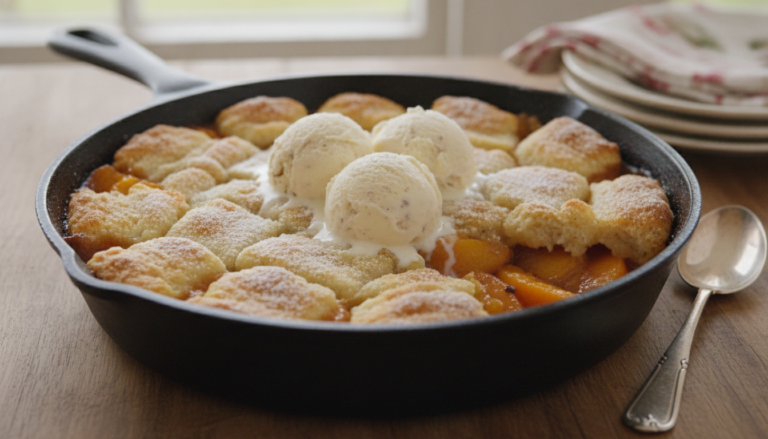
Easy Peach Cobbler is the quintessential Southern comfort dessert—golden, butter-rich batter rising up around sweet, cinnamon-kissed peaches to create a bubbling, fragrant dessert that tastes like summer and feels like home in every spoonful.
6
servings15
minutes45
minutes370
kcal1
hourIngredients
4 cups fresh or canned peaches
1 cup granulated sugar
1/2 cup unsalted butter
1 cup all-purpose flour
1 cup milk
1 teaspoon baking powder
1/4 teaspoon salt
1 teaspoon vanilla extract
1/2 teaspoon ground cinnamon
Directions
- Preheat oven to 375°F (190°C).
- In a medium saucepan, melt butter over low heat.
- In a mixing bowl, combine flour, 1/2 cup sugar, baking powder, and salt.
- Stir in milk and vanilla until smooth batter forms.
- Pour melted butter into a 9×13-inch baking dish.
- Pour batter over butter without stirring.
- Spread peaches evenly over the batter.
- Sprinkle remaining sugar and cinnamon on top.
- Bake for 45 minutes or until golden brown.
- Let cool for a few minutes before serving.
Nutrition Facts
- Total number of serves: 4
- Calories: 320kcal
- Cholesterol: 0mg
- Sodium: 620mg
- Potassium: 400mg
- Sugar: 8g
- Protein: 6g
- Calcium: 60mg
- Iron: 2mg
About This Author

Aurora Wright
Pastry Chef & Dessert Editor
Aurora is the sweet side of Daily Dish. A trained pastry chef and dessert stylist, she’s responsible for our mouth-watering cakes, cookies, and confections. She brings precision, artistry, and a touch of whimsy to every recipe she creates — and taste-tests more chocolate than she’ll admit.
Favorite dish: Flourless dark chocolate torte.
Kitchen motto: “Life’s too short to skip dessert.”