
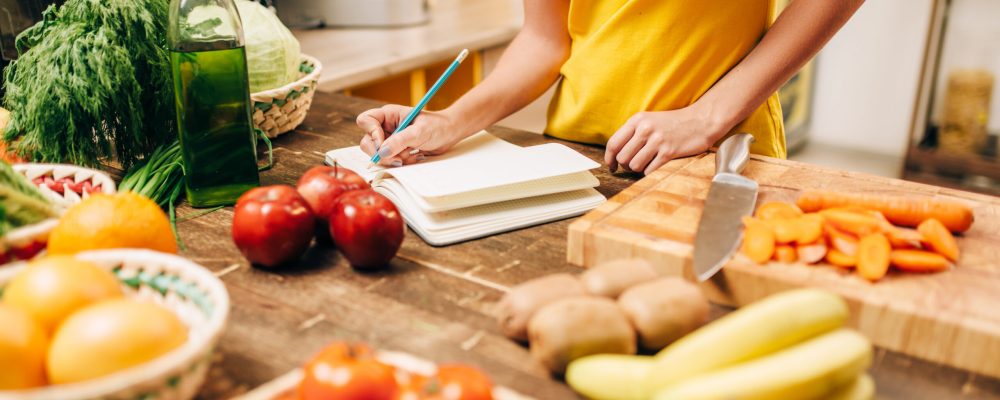

There is a French phrase that every culinary student learns in the first week of professional training.
Mise en place.
It translates, roughly, as “everything in its place.” And while the phrase itself has become familiar enough to appear in food writing and cooking shows with some regularity, what it actually means — not as a concept but as a practice, as a discipline, as a way of approaching every cooking session — is something that most home cooks have never fully internalized.
Mise en place is not just about having your ingredients prepped before you start cooking. It is a complete philosophy of kitchen organization that shapes how professional cooks think, move, and make decisions under pressure. And the gap between a home cook who understands it and one who doesn’t is visible from the moment the first pan goes on the stove.
What Mise en Place Actually Means in Practice
In a professional kitchen, no cook begins cooking without completing prep first. Everything that will be needed during the cooking process — every vegetable diced, every herb picked and chopped, every sauce component measured, every piece of equipment in its designated place — is ready before the heat goes on.
This is not a preference. It is a non-negotiable operating standard, enforced by the reality that a restaurant kitchen during service moves too fast for any other approach to work. A line cook who needs to stop mid-dish to chop a shallot or find a spoon is a line cook who has fallen behind — and in a professional environment, falling behind has immediate and visible consequences.
But the discipline of mise en place produces something beyond mere efficiency. It produces a fundamentally different quality of cooking — because a cook who is not scrambling to prep while cooking is free to pay full attention to the cooking itself. The heat, the pan, the texture, the smell, the color of the fond — all the sensory information the pan is generating can be fully processed by a cook who isn’t simultaneously hunting for a lid or measuring olive oil.
Home cooks who prep as they go — chopping the onion after the garlic is already in the pan, measuring spices while the protein is searing, finding the colander while the pasta water boils over — are dividing their attention in ways that consistently produce worse results than the task itself requires.
The Setup Is Part of the Recipe
Professional cooks don’t just prep ingredients before cooking. They arrange them.
Every prepped component has a designated position in the cook’s station — placed in the order it will be used, in a container sized to what’s needed, within arm’s reach without requiring any searching or repositioning. This arrangement is thought through before cooking begins, based on the sequence of the recipe and the layout of the cooking station.
The result is a cook who moves through a recipe in a single, continuous flow — reaching, adding, adjusting — without pausing, searching, or backtracking. The physical organization of the station mirrors the logical sequence of the dish. Every movement is deliberate and efficient.
Home cooks typically have their ingredients on the counter in the order they were unpacked from the bag — which is rarely the order they’ll be used. Finding the cumin after the onions have been softening for three minutes, realizing the stock is in the back of the refrigerator when the fond needs deglazing immediately, discovering the pan lid is in the wrong cabinet while steam is building — these are not bad luck. They are the predictable results of a kitchen that hasn’t been set up before cooking begins.
Cleaning as You Go Is a Professional Discipline, Not a Personality Trait
One of the most consistent habits in a professional kitchen that home cooks observe but rarely adopt is the continuous cleaning that happens throughout service — not just at the end.
A professional cook’s station is kept clean and clear throughout the cooking process. Used bowls go immediately into the dish pit. Cutting boards get wiped down between tasks. Spills are addressed the moment they happen. Equipment not currently in use is returned to its place.
This is not fastidiousness for its own sake. A cluttered, dirty station makes cooking worse in concrete ways. A cutting board with residue from the last task contaminates the next one. A counter covered in used bowls and scattered ingredients leaves no room to work. A station that needs to be cleared before the next step can begin creates a pause at exactly the moment when continuous attention is most needed.
Clean as you go is a professional discipline because it makes the cooking itself better — not just the cleanup afterward. The cook who maintains a clear station throughout service is cooking in a different environment than the one who lets the chaos accumulate and deals with it at the end.
Time Is Managed Backward, Not Forward
Professional cooks think about timing differently than most home cooks — and the difference in approach produces dramatically different results when multiple dishes need to be ready at the same moment.
Home cooks typically think forward through time: start this, then add that, then start the next thing. Professional cooks think backward: the dish needs to be plated at 7:00pm, so the protein needs to come out of the oven at 6:50, which means it goes in at 6:20, which means it needs to be seasoned and brought to temperature by 6:15, which means prep needs to be done by 6:00.
This backward mapping — from the desired endpoint back to the necessary starting points — allows a professional cook to coordinate multiple dishes, multiple components, and multiple timing requirements simultaneously without any of them suffering. Everything is working toward the same moment rather than each element racing to catch up with the last.
Home cooks who start everything in sequence and hope it finishes together are working without a plan. They produce meals where the protein is perfect but the vegetables went cold ten minutes ago, or where everything is ready except for one component that needed twice as long as anticipated and is holding up the entire plate.
The Mental Checklist That Runs Before Every Service
Before any cooking begins in a professional kitchen, an experienced cook runs through a mental checklist that most home cooks have never developed.
Do I have everything I need? Is it prepped? Is it in the right place? Do I know the sequence of the dish? Do I know where the potential bottlenecks are? Is my equipment ready — pans seasoned, tools accessible, heat sources working? Have I thought through what could go wrong and where?
This pre-cooking audit is not anxiety. It is the professional habit of identifying and resolving problems before they become problems — before the heat is on and the clock is running and a missing ingredient or a cold pan or a wrongly sized bowl creates a cascade of errors that compound through the rest of the cooking session.
Home cooks who discover mid-cook that they’re out of an ingredient, that the pan they need is dirty, or that they misread the recipe and needed to start something an hour ago are not unlucky. They skipped the audit.
The Takeaway
Mise en place is not a restaurant concept that doesn’t apply at home. It is the foundational professional habit that makes every other technique in the kitchen more effective — because it creates the conditions under which cooking can be done with full attention, full control, and full awareness.
Prep completely before the heat goes on. Arrange ingredients in the order they’ll be used. Keep the station clean throughout. Think backward from the finish time. Run the mental checklist before you start.
None of this requires a professional kitchen. It requires a professional mindset — applied, deliberately, to the home cooking environment.
The mise en place is already set. The only question is whether you’ve done yours.














