
There is a skill that every experienced line cook develops that no recipe teaches and no cooking show adequately explains.
It’s not a technique in the traditional sense. It’s not a method with steps and timing. It’s something closer to a language — one that the pan speaks constantly during cooking and that most home cooks have never been taught to hear.
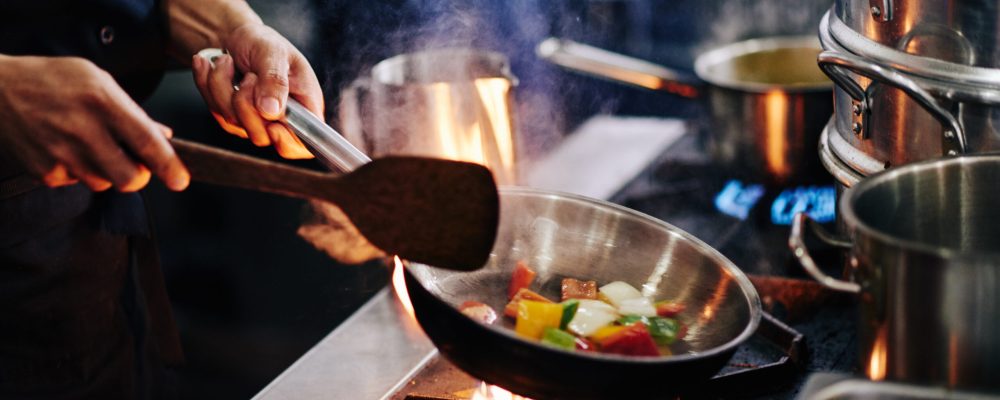
Professional cooks read their pans. They listen to them. They interpret the sound of a sizzle, the behavior of oil, the color of fond developing on the bottom, the way steam rises or doesn’t, the smell that changes as a dish moves from one stage to the next. All of this information is available to every cook standing at every stove — but only the cook who knows what it means can act on it.
Sound Is the First Language of a Hot Pan
Walk into a restaurant kitchen during service and close your eyes. The sound of cooking is constant — a layered, shifting mix of sizzles, spits, and hisses that experienced cooks monitor the way a musician monitors pitch.
A loud, aggressive sizzle when food hits the pan means the pan is hot and dry contact is being made — the conditions for browning and crust development. A weak, quiet sizzle means the pan wasn’t hot enough, the food was too wet, or both. No sizzle at all means something has gone wrong before it starts.
As cooking progresses, the sound changes — and those changes carry information. A sizzle that starts loud and gradually softens tells the cook that moisture is escaping and the food is drying out at the surface, approaching the conditions for browning. A sizzle that starts quiet and gets louder as the pan recovers heat is a signal that the initial temperature drop from cold food has passed and the sear is now developing properly.
Professional cooks make adjustments based on sound alone — turning heat up when a sizzle goes too quiet, giving food more time before flipping when the sound tells them the crust isn’t ready. The pan communicates continuously. Learning to listen is the skill.
The Color of the Pan Tells You Where the Dish Is Going
Beyond sound, the visual information available from a hot pan is rich and specific — and almost entirely ignored by home cooks who are focused on the food rather than the surface beneath it.
Fond — the layer of caramelized proteins and sugars that develops on the bottom of a pan during cooking — tells a cook the complete story of what has happened and what is about to happen. Light golden fond means browning is developing at a moderate pace and the heat is manageable. Deep brown fond, approaching the edges of the pan, means the heat is high and the flavor is concentrating rapidly. Black patches in the fond mean something has gone past the point of no return and the next sauce made in this pan will taste bitter.
Professional cooks watch their fond constantly. When it starts to build too quickly — darkening faster than the food above it is cooking — they add a splash of liquid to arrest the browning, lower the heat, or move the pan. When it’s building too slowly — barely coloring after several minutes — they raise the heat or make sure the food isn’t releasing too much moisture.
The fond is not waste to be cleaned away. It’s a record of every decision made in that pan, and it tells the cook what the next decision should be.
Fat Behavior Is a Temperature Gauge
The fat in a pan — whether oil or butter — communicates temperature with a precision that rivals any thermometer, to a cook who knows what to look for.
Cold oil added to a cold pan sits flat and still. As the pan heats, the oil begins to shimmer — small ripples moving across the surface as the heat creates convection currents. As temperature continues to rise, the oil thins and moves more fluidly, and the shimmer becomes more pronounced. At the threshold of searing temperature, a faint wisp of smoke begins to appear at the edges. These visual stages are calibrated, consistent, and available to anyone looking for them.
Butter communicates even more explicitly. It melts, then foams as its water content evaporates, then subsides as the water is gone and the temperature rises. A second foam appears as the milk solids begin to brown. Each stage is a temperature signal — and a cook who knows the stages knows, without a thermometer, exactly where the butter is in its heat curve.
Home cooks who add food to the pan the moment the fat goes in — before it has reached temperature — are working blind. They’ve put food into a cold environment and are waiting for the heat to catch up, which it will, eventually — but the opportunity for the initial sear has already been lost.
Steam Rising Tells the Story of Moisture
The steam that rises from a pan during cooking carries more information than most home cooks extract from it.
A thick column of steam rising from a pan means moisture is present in volume — either from the food itself, from added liquid, or from a pan that was too crowded and is now steaming rather than searing. For a cook trying to develop browning, thick steam is a warning signal: the surface temperature is being held below browning threshold by the moisture in the cooking environment.
A thin, light wisp of steam — or no steam at all — means the cooking surface is dry and hot, and the conditions for browning and crust development are in place. This is the environment a cook trying to sear is looking for.
Professional cooks manage steam actively. They reduce the heat when they need to release moisture slowly without browning. They raise it and leave the pan uncrowded when they want moisture to escape quickly so browning can begin. They cover the pan when they want to trap steam for gentle, moist cooking, and leave it uncovered when they want to drive moisture off.
The lid is not just a cover. It’s a valve that controls the moisture environment inside the pan — and whether it goes on or comes off changes the cooking fundamentally.
Smell Is the Warning System
Of all the signals a pan sends, smell is the one that most often indicates something is about to go wrong — and the one that professional cooks respond to fastest.
The smell of butter moving from browned to burned comes with a specific sharpness that arrives seconds before the color confirms it. The acrid edge of garlic beginning to scorch has a distinct quality that differs from its earlier sweet, toasty fragrance. The clean, grassy smell of a properly searing protein is different from the heavier, slightly acrid smell that arrives when the heat is too high and the sugars in the surface are burning rather than caramelizing.
Professional cooks trust their noses as primary instruments. They identify where a dish is in its cooking process by smell — and they know that a changing smell often requires a response before the eyes have confirmed what the nose already detected.
Home cooks who cook with their attention elsewhere — watching television, checking their phone, attending to something in another room — are cutting themselves off from the primary sensory stream that cooking generates. The pan is always talking. The cook has to be present to hear it.
The Takeaway
Reading a pan is not a mysterious gift that professional cooks are born with. It’s a learned language — one built from paying attention to the same signals, over and over, until their meaning becomes automatic.
Sound, color, fat behavior, steam, smell — each one carries specific, actionable information about what is happening inside the pan and what needs to happen next. A cook who has learned to read these signals doesn’t need to check a timer or cut into food to see if it’s done. The pan tells them.
The information has always been there. It just takes knowing what to listen for.