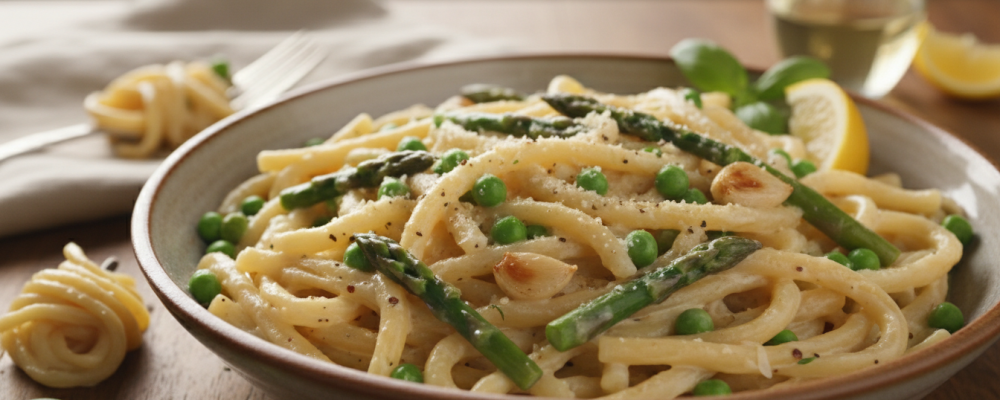

There’s something absolutely delightful about pasta that celebrates the seasons, and Garlic Cream Bucatini with Peas and Asparagus is spring on a plate. Those vibrant greens against the creamy sauce, the way the hollow bucatini captures both sauce and tiny peas inside each tube, the brightness of lemon zest cutting through rich cream—it all feels fresh, light, and joyful in a way that makes you want to throw open the windows and invite friends over for dinner.
What I love most about this dish is how it strikes that perfect balance between indulgent and refreshing. Yes, there’s heavy cream and Parmesan creating that luxurious sauce, but the vegetables bring vitality and brightness that keep everything feeling springy rather than heavy. The asparagus stays tender-crisp, the peas pop with sweetness, and that lemon zest at the end is like a little burst of sunshine that ties the whole thing together.
Bucatini is an underrated pasta choice that deserves more attention. Those hollow tubes aren’t just visually interesting—they’re functional genius. The cream sauce flows through the center while coating the outside, and those little peas get caught inside, creating surprise bites of sweetness. It’s pasta that’s interactive and fun to eat, and somehow that makes the whole meal feel more special.
This is perfect for Wine Wednesday because it’s elegant without being stuffy, impressive without being stressful, and pairs beautifully with crisp white wines that complement the vegetables’ freshness while standing up to the cream’s richness. It’s the kind of meal that makes a Wednesday evening feel like a celebration—like you’re treating yourself to something lovely just because you can, just because you deserve it.
─────────
The Inspiration Behind This Recipe
This recipe draws from the Italian tradition of primavera preparations—dishes that celebrate the arrival of spring vegetables with light, fresh approaches. While “pasta primavera” became popular in Italian-American cuisine during the 1970s, the concept of showcasing seasonal vegetables in pasta has deep roots in Italian home cooking. The combination of peas and asparagus is classically spring, appearing together in countless Italian dishes from risottos to frittatas. By using a cream-based sauce enriched with Parmesan and brightened with lemon, this bucatini captures both the richness Italians love and the freshness that defines the season.
─────────
A Brief History of Bucatini and Seasonal Pasta
Bucatini—thick, hollow spaghetti-like pasta—originated in Central Italy, particularly Lazio (the region around Rome), where it’s featured in classic dishes like bucatini all’amatriciana. The name comes from “buco,” meaning hole, referring to the pasta’s distinctive hollow center created during the extrusion process. This design isn’t merely aesthetic; it increases surface area for sauce adherence while creating pockets that trap smaller ingredients. The Italian tradition of cooking with seasonal vegetables dates back millennia, when eating locally and seasonally wasn’t a choice but a necessity. Spring vegetables like peas, asparagus, and fava beans were celebrated after long winters of root vegetables and preserved foods, appearing in dishes that honored their brief season with simple preparations that let their fresh flavors shine.
─────────
Why This Cooking Method Works
The science behind the technique:
- Al dente pasta: Slightly undercooked pasta has a firm bite and better sauce absorption capacity
- Pasta water starch: Reserving cooking water provides starchy liquid that helps emulsify and thin sauce
- Garlic in olive oil: Fat-soluble garlic compounds release into oil, distributing flavor throughout the dish
- Cream reduction: Heavy cream thickens naturally when heated, concentrating flavor and creating body
- Parmesan emulsification: Cheese melts into hot cream, adding both thickening power and nutty, salty flavor
- Vegetable timing: Adding peas and asparagus together allows both to cook to perfect tender-crisp texture
- Pasta finishing in sauce: Tossing cooked pasta with sauce allows absorption and creates cohesive dish
- Lemon zest finishing: Adding citrus at the end preserves bright, fresh flavor that would fade if cooked
- Bucatini structure: Hollow tubes capture sauce inside and out, creating maximum flavor in every bite
─────────
Flavor Profile: What to Expect
Creamy • Fresh • Garlicky • Bright • Elegant
This pasta delivers luxurious creaminess balanced by vibrant spring vegetables. The garlic cream sauce is rich and silky with nutty Parmesan depth, coating each strand of bucatini in velvety goodness. Sweet peas provide little bursts of fresh flavor, while asparagus adds earthy, slightly grassy notes with tender-crisp texture. Garlic brings aromatic warmth without overwhelming, and the lemon zest at the finish adds bright, citrusy notes that lift the entire dish and prevent it from feeling heavy. The bucatini’s hollow structure means you get sauce and peas inside each bite, creating a satisfying, flavor-packed experience. It’s comfort food that feels fresh and seasonal—indulgent yet light.
─────────
Tips for Making the Best Garlic Cream Bucatini with Peas and Asparagus
Pasta preparation:
- Bucatini takes longer to cook than regular spaghetti—follow package times carefully
- Salt pasta water generously for properly seasoned pasta
- Reserve at least 1-2 cups pasta water before draining—you’ll likely need it
- Cook pasta 1 minute less than package directions if finishing in sauce
- Don’t rinse cooked pasta—surface starch helps sauce adhere
Vegetable preparation:
- Cut asparagus into 1-2 inch pieces on the bias for elegant presentation
- Use tender asparagus spears; trim woody ends by snapping where they naturally break
- Frozen peas work perfectly—no need to thaw before adding to sauce
- Fresh peas can be used when available—they’ll need slightly longer cooking
- Don’t overcook vegetables—they should be tender-crisp with bright color
Creating perfect cream sauce:
- Use freshly grated Parmesan for best melting—pre-grated contains anti-caking agents
- Add Parmesan gradually while stirring to prevent clumping
- Keep heat at medium-low once cream is added to prevent curdling
- If sauce is too thick, add pasta water a splash at a time
- If sauce is too thin, let it simmer gently to reduce
- The sauce will thicken as it sits, so keep it slightly looser than desired final consistency
Garlic technique:
- Mince garlic finely for even distribution
- Don’t let garlic brown—it becomes bitter (sauté just until fragrant, about 1 minute)
- Fresh garlic is essential—jarred won’t provide the same aromatic punch
- For mellower garlic flavor, use more cloves cooked gently; for stronger, use fewer cooked quickly
Assembly and finishing:
- Add pasta to sauce (not sauce to pasta) for better coating
- Toss gently but thoroughly to ensure even coverage
- Add pasta water as needed to create silky, clingy sauce
- Grate lemon zest directly over the pasta just before serving for maximum brightness
- Serve immediately—cream sauces don’t wait well
─────────
Wine Pairing Guide
Perfect pairings for Garlic Cream Bucatini with Peas and Asparagus:
Pinot Grigio (Italian) ★ Best Match Crisp, light-bodied white with green apple and citrus notes that complement the fresh vegetables beautifully. The wine’s bright acidity cuts through cream without overwhelming, while its subtle minerality enhances the asparagus’s earthy character. The clean, refreshing quality makes each bite feel lighter and more vibrant.
Vermentino Italian coastal white with herbal notes, citrus brightness, and saline minerality that pairs naturally with spring vegetables. The wine’s medium body provides enough weight for the cream sauce while maintaining the freshness needed for peas and asparagus. Subtle almond notes complement the Parmesan beautifully.
Sauvignon Blanc (Loire Valley or New Zealand) Herbaceous, grassy character echoes the asparagus, while vibrant acidity cuts through richness. The wine’s citrus and green notes enhance the lemon zest and vegetables, creating a harmonious pairing. Choose Loire Valley for more restraint, New Zealand for more intensity.
Soave Garganega-based white with delicate almond and white flower notes, crisp acidity, and elegant minerality. The wine’s subtle character won’t overpower the vegetables while providing enough structure to stand up to the cream sauce. Classic Italian pairing that feels authentic.
Verdicchio Crisp Italian white with citrus, almond, and herbal notes that complement both cream and vegetables. The wine’s bright acidity and medium body make it wonderfully food-friendly, while its subtle complexity adds interest without competing with the dish.
Alternative pairing: A light-bodied, unoaked Chardonnay (like Chablis) offers more body than the lighter whites while maintaining the crisp acidity and minerality that vegetables demand.
─────────
Serving Suggestions and Side Pairings
Beautiful presentations:
- Elegant individual bowls: Twirl pasta into nests, arrange asparagus tips on top, grate fresh Parmesan over, add lemon zest
- Family-style: Serve in a large, shallow bowl, toss at the table, pass extra cheese
- Rustic platter: Arrange on a serving dish, garnish generously with herbs and lemon
Ideal accompaniments:
- Garlic Rosemary Focaccia Muffins: Essential for soaking up the delicious garlic cream sauce
- Simple arugula salad: Peppery greens with lemon vinaigrette echo the dish’s brightness
- Burrata or fresh mozzarella: Creamy cheese with heirloom tomatoes adds protein and richness
- Prosciutto-wrapped breadsticks: For those wanting a meat component alongside the vegetarian pasta
- Lemon Butter Scallops: Add as a protein option for a complete surf-and-garden meal
For a complete Wine Wednesday spread: Create a spring vegetable celebration: start with a vegetable antipasto (marinated artichokes, roasted peppers, olives), serve this bucatini as the main course with warm focaccia, and finish with lemon panna cotta or berry tart. Offer multiple crisp white wines to explore how different Italian whites interact with the creamy vegetables. Add Garlic Parmesan Roasted Shrimp for guests who want a seafood option alongside the vegetarian pasta.
─────────
Storage, Reheating, and Make-Ahead Tips
Storage:
- Refrigerate pasta in an airtight container for up to 3 days
- Vegetables may soften slightly but flavor remains excellent
- Cream sauce will thicken when cold—expect to add liquid when reheating
Reheating:
- Stovetop (best method): Reheat gently in a pan over low heat, adding milk, cream, or pasta water to restore consistency, stirring frequently
- Microwave: Heat in 1-minute intervals at 70% power, stirring between and adding liquid to prevent drying
- Add a splash of cream or pasta water and a sprinkle of fresh Parmesan to refresh
- Don’t overheat—vegetables can become mushy and cream can separate
Make-ahead strategies:
- Prep vegetables (trim asparagus, measure peas) up to 1 day ahead; store refrigerated
- Make sauce base (through cream addition) up to 1 day ahead; finish with cheese and vegetables when serving
- Cook pasta al dente, toss with olive oil, refrigerate up to 1 day; reheat in sauce
- For entertaining, prep all components and assemble quickly when ready to serve
Seasonal variations:
- Summer: Substitute zucchini and cherry tomatoes for peas and asparagus
- Fall: Use mushrooms and butternut squash
- Winter: Try kale and sun-dried tomatoes
- Year-round: Broccoli and spinach work beautifully
─────────
Why This Recipe Deserves a Spot in Your Wine Wednesday Rotation
Garlic Cream Bucatini with Peas and Asparagus proves that elegant, restaurant-quality pasta doesn’t require hours of work or complicated techniques. This is the kind of dish that makes you feel like you’re dining at a charming Italian trattoria—where simple, seasonal ingredients are treated with respect and allowed to shine. The combination of creamy indulgence and fresh vegetables creates something that feels simultaneously comforting and light, satisfying yet refined.
What makes this perfect for Wine Wednesday is how it celebrates both the pasta and the wine equally. The crisp white wines that pair with this dish don’t just wash it down—they actively enhance it, with their acidity cutting through cream, their minerality complementing vegetables, and their brightness echoing the lemon zest. It’s a partnership rather than one element dominating the other, which is exactly what wine pairing should be.
The recipe also demonstrates that vegetarian cooking can be just as satisfying and wine-worthy as meat-based dishes. The asparagus and peas provide texture, flavor, and visual appeal that make you forget you’re not eating protein. This is vegetables-as-the-star cooking, where seasonal produce gets the respect it deserves rather than being relegated to side dish status.
Most importantly, this is cooking that respects your time while delivering impressive results. The bucatini cooks, the sauce comes together in minutes, the vegetables need just a brief simmer, and suddenly you’ve created something that looks and tastes like you spent far more effort than you actually did. That efficiency combined with elegant presentation makes this exactly the kind of dish Wine Wednesday was made for.
So embrace the spring vegetables, don’t be shy with the Parmesan, and let that lemon zest work its magic at the end. Open something Italian and crisp, set a pretty table, and let Wine Wednesday remind you that treating yourself well doesn’t require complicated recipes—it just requires good ingredients, proper technique, and the intention to make an ordinary evening feel special.
Buon appetito, and here’s to springtime in a bowl!
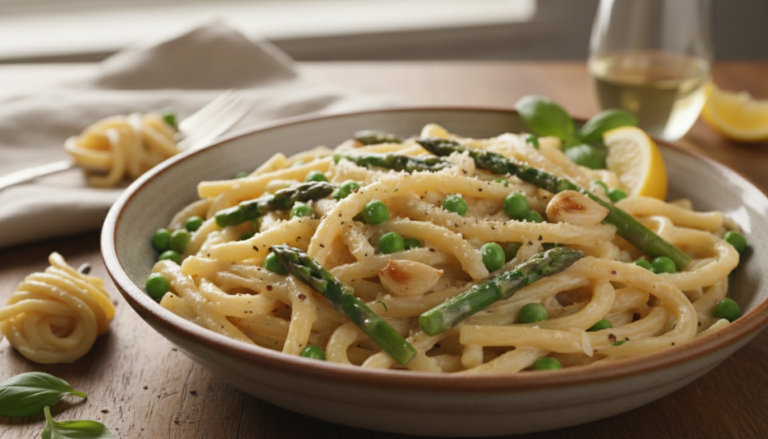
Garlic Cream Bucatini with Peas and Asparagus
Creamy bucatini tossed with bright green vegetables in garlicky Parmesan sauce—fresh, elegant comfort that pairs beautifully with wine.
4
servings15
minutes20
minutes520
kcal35
minutesIngredients
12 oz bucatini pasta
2 tablespoons olive oil
4 cloves garlic, minced
1 cup heavy cream
1 cup parmesan cheese, grated
1 cup peas, frozen
1 bunch asparagus, chopped
1 teaspoon salt
0.5 teaspoon black pepper
1 tablespoon lemon zest
Directions
- Cook bucatini according to package instructions until al dente. Drain and set aside, reserving some pasta water.
- Heat olive oil in a large skillet over medium heat. Add minced garlic and sauté until fragrant.
- Add heavy cream to the skillet, stirring occasionally until it begins to simmer.
- Stir in parmesan cheese until melted and combined with the cream.
- Add peas and asparagus to the skillet, cooking until the asparagus is tender-crisp.
- Season the sauce with salt and black pepper.
- Combine the cooked bucatini with the sauce, adding reserved pasta water to reach desired consistency.
- Garnish with lemon zest before serving.
Nutrition Facts
- Total number of serves: 4
- Calories: 520kcal
- Cholesterol: 0mg
- Sodium: 620mg
- Potassium: 400mg
- Sugar: 8g
- Protein: 6g
- Calcium: 60mg
- Iron: 2mg
About This Author

Amelia Grace
Editor-in-Chief u0026amp; Culinary Director
The heart and guiding voice of Daily Dish, Amelia leads our editorial vision and recipe development. With a background in food journalism and over a decade spent in professional kitchens, she has a knack for blending gourmet technique with real-world accessibility. Her goal? To make every reader feel like a confident cook, one dish at a time.
Favorite dish: Creamy lemon risotto with a sprinkle of fresh thyme.
Kitchen motto: “Good food doesn’t have to be complicated — it just has to be made with heart.”