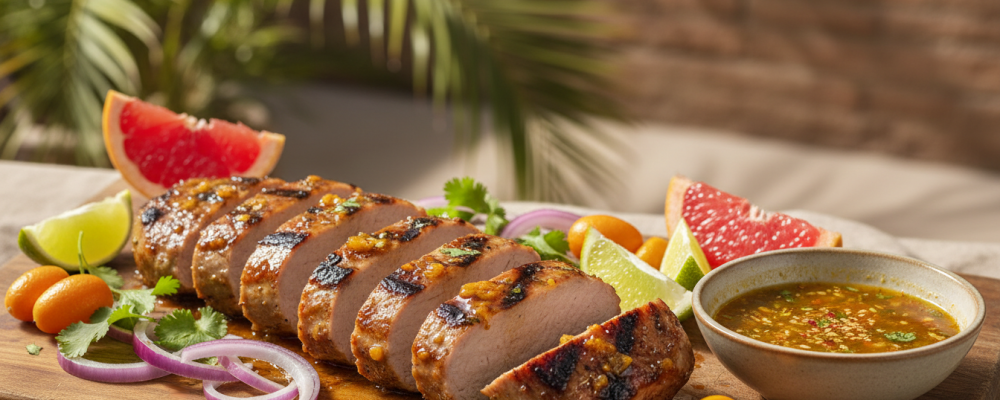

If there’s one technique I come back to more than any other when developing pork recipes, it’s a great marinade—and citrus-based marinades are in a category of their own. This Citrus Marinated Pork is built on the kind of foundational flavor logic that makes sense the moment you taste it: bright orange and lemon juice tenderize and perfume the meat, cumin adds warmth and depth, and the garlic ties everything together into something that tastes far more complex than the ingredient list suggests. It’s a recipe that rewards patience and delivers every single time.
I developed this one with weeknight practicality in mind, but it has the kind of flavor that feels weekend-worthy. The overnight marinade is where the real work happens—while you sleep, the citrus and garlic are doing exactly what they’re supposed to, breaking down the surface of the tenderloin and infusing it with everything you need for a finished roast that is juicy, aromatic, and deeply savory. The oven does the rest. It’s a recipe that respects your time and doesn’t ask for much in return.
What keeps me coming back to this particular combination is the balance. Citrus marinades can tip toward acidic and flat if the ratios are off, but with the right amount of olive oil, cumin, and garlic, you get something that is bright without being sharp, warm without being heavy. The cilantro garnish at the end isn’t just cosmetic—it adds a fresh, herbal lift that pulls the whole plate together.
The Inspiration Behind This Recipe
This recipe draws from the Latin cooking tradition of using citrus as both a marinade and a flavor base for pork—a practice deeply rooted in Cuban, Mexican, and Peruvian cuisines, where dishes like lechón asado and al pastor have long showcased the power of citrus and spice on pork. Those traditions understand something that a lot of Western cooking overlooks: acid doesn’t just tenderize, it transforms. It changes the texture, opens up the surface for seasoning penetration, and creates a finished flavor that tastes like more than the sum of its parts.
I also wanted to create something adaptable—a recipe that works equally well sliced over rice, served in tacos, or plated as a straight roast for a more formal dinner. The Citrus Marinated Pork is all of those things, and that versatility is a big part of why it earned a place in this collection.
A Brief History of Citrus-Marinated Pork
The use of citrus in marinades for pork has roots stretching back centuries across Latin America and the Caribbean. In Cuba, mojo—a sauce and marinade made from sour orange juice, garlic, and olive oil—is one of the most iconic flavor profiles in the cuisine, used to marinate everything from whole roasted pigs to weeknight pork shoulders. In Mexico, citrus plays a central role in al pastor marinades and cochinita pibil, the slow-roasted Yucatecan pork dish that uses bitter orange to achieve its signature flavor.
The scientific reasoning behind this culinary tradition is sound: the acidity in citrus juice partially denatures surface proteins, which tenderizes the outer layers of the meat and allows fat-soluble flavor compounds from garlic and cumin to penetrate more deeply. What generations of cooks discovered through instinct and tradition, food science has since confirmed. This recipe honors that lineage while keeping the technique accessible for any home kitchen.
Why This Cooking Method Works
Roasting a citrus-marinated pork tenderloin at 375°F hits the sweet spot between thorough cooking and moisture retention. High enough to develop a golden exterior and concentrate the marinade’s flavors at the surface, but gentle enough to protect the lean interior of the tenderloin from drying out.
The resting period after roasting is not optional—it’s essential. Pork tenderloin is a lean, fast-cooking cut, and the carryover cooking that happens during a five-minute rest allows the juices to redistribute throughout the meat rather than running out on the cutting board. Sliced too early, even a perfectly cooked tenderloin will lose moisture. Rested properly, it stays juicy from edge to center.
The marinade itself also creates a natural basting effect as it reduces in the baking dish, forming a lightly caramelized, intensely flavored fond that can be spooned over the sliced pork at serving.
Flavor Profile: What to Expect
Every element of this marinade contributes something distinct:
- Bright citrus acidity from the orange and lemon juice that permeates the surface of the pork and lightens the overall flavor
- Savory, mellow garlic that deepens and sweetens as it roasts alongside the tenderloin
- Warm earthiness from the cumin, which grounds the brightness of the citrus and gives the dish a Southwestern character
- Clean, grassy freshness from the cilantro garnish that lifts the finished plate
- Richness from the olive oil that carries the fat-soluble flavors deep into the meat and helps create a beautiful exterior
The result is a roast that is bright, savory, warm, and fresh all at once—balanced in a way that makes it genuinely crowd-pleasing.
Tips for Making the Best Citrus Marinated Pork
The details matter here. Keep these in mind for consistent, excellent results:
- Marinate overnight when possible: Two hours is the minimum, but overnight is where the real flavor development happens. Don’t shortcut this step if you have the time.
- Use fresh citrus juice: Bottled juice lacks the volatile aromatics that make a citrus marinade sing. Fresh-squeezed orange and lemon make a noticeable difference.
- Pat the pork dry before roasting: Excess marinade on the surface can steam rather than sear. A quick pat with paper towels helps the exterior develop color and texture.
- Use a meat thermometer: Pork tenderloin goes from perfectly cooked to overdone quickly. Pull it at 145°F internal temperature for a slightly rosy, juicy center.
- Reserve some marinade for basting: Set aside a small portion before adding the pork—this gives you a clean basting liquid to use during roasting without cross-contamination.
- Rest before slicing: Five minutes minimum, tented loosely with foil. This step makes a real, measurable difference in juiciness.
Serving Suggestions and Side Pairings
The versatility of this pork is one of its strongest qualities. It works across multiple serving formats:
- Sliced over cilantro lime rice with black beans for a complete, satisfying dinner
- Tucked into warm tortillas with avocado, pickled onion, and a squeeze of lime for exceptional tacos
- Served alongside Slow Roasted Greek Lemon Potatoes for a bright, citrus-forward pairing
- Plated with roasted sweet potatoes and a simple green salad for a cleaner, lighter meal
- Sliced thin and layered into grain bowls with roasted corn and a creamy jalapeño sauce
Storage, Reheating, and Make-Ahead Tips
This pork is an excellent candidate for meal prep:
- Refrigerate sliced leftovers in an airtight container for up to 4 days.
- Freeze whole or sliced tenderloin for up to 2 months. Freeze with any pan drippings to help retain moisture during reheating.
- Reheat gently in a covered skillet over low heat with a splash of orange juice or broth to revive the flavors and prevent drying.
- Marinate ahead: The pork can sit in the marinade for up to 24 hours, making it an ideal prep-ahead protein for busy weeks.
The citrus flavors actually continue to develop as the pork rests, making leftovers genuinely excellent the next day.
Why This Recipe Deserves a Spot in Your Rotation
This is the kind of recipe that makes weeknight cooking feel elevated without requiring weekend-level effort. It’s lean, flavorful, versatile, and endlessly adaptable—equally at home on a casual Tuesday dinner table or plated up for guests on a Saturday night. The marinade does the heavy lifting, the oven handles the rest, and what comes out is a pork tenderloin that tastes like it came from somewhere far more impressive than your home oven.
Once you’ve made it, you’ll find yourself reaching for it constantly—especially when you want something that feels special without feeling complicated.
Recommended Drink Pairing
The bright citrus and cumin notes in this dish call for something equally vibrant. A classic Ginger Grapefruit Paloma is a natural match—the grapefruit echoes the citrus in the marinade while the ginger adds a warm, spiced edge that complements the cumin beautifully.
For wine, a dry, unoaked Albariño or a light-bodied Pinot Gris brings enough acidity to mirror the citrus without competing with the savory pork. For a non-alcoholic option, a sparkling citrus agua fresca or a lightly sweetened hibiscus tea keeps things refreshing alongside this bright, flavorful roast.
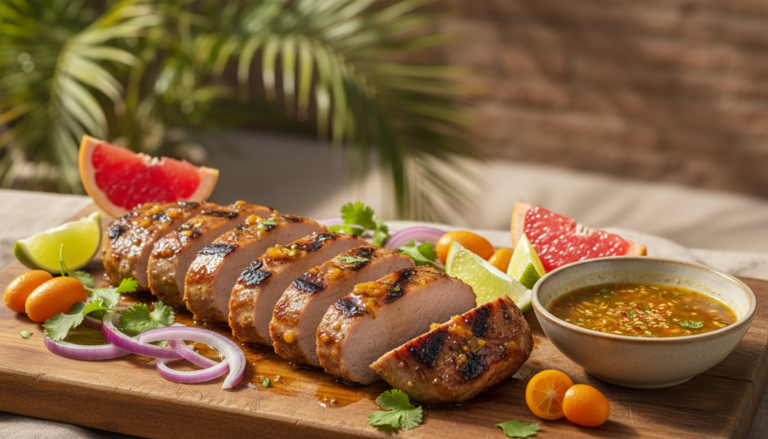
Citrus Marinated Pork
Citrus Marinated Pork soaks a lean pork tenderloin in a bold orange, lemon, garlic, and cumin marinade before roasting it to juicy, golden perfection—fresh cilantro and all.
4
servings15
minutes45
minutes350
kcal1
hourIngredients
1 pound pork tenderloin
1/4 cup orange juice
1/4 cup lemon juice
1 tablespoon olive oil
2 cloves garlic, minced
1 teaspoon salt
1/2 teaspoon black pepper
1 teaspoon ground cumin
1 tablespoon fresh cilantro, chopped
Directions
- Combine orange juice, lemon juice, olive oil, garlic, salt, pepper, and cumin in a bowl.
- Place pork tenderloin in a resealable bag, pour marinade over pork, and seal bag.
- Refrigerate and marinate for at least 2 hours or overnight for more flavor.
- Preheat oven to 375°F (190°C).
- Remove pork from marinade and place in a baking dish.
- Roast in preheated oven for 45 minutes or until internal temperature reaches 145°F (63°C).
- Let rest for 5 minutes before slicing.
- Garnish with fresh cilantro before serving.
Nutrition Facts
- Total number of serves: 4
- Calories: 350kcal
- Cholesterol: 0mg
- Sodium: 620mg
- Potassium: 400mg
- Sugar: 8g
- Protein: 6g
- Calcium: 60mg
- Iron: 2mg
About This Author

Benjamin Brown
Recipe Developer
Benjamin is our flavor engineer. A classically trained chef turned recipe developer, he’s obsessed with balancing taste, texture, and creativity. He ensures that every recipe we publish is not only delicious but also reliable, approachable, and repeatable — even for beginners.
Favorite dish: Slow-braised short ribs with red wine reduction.
Kitchen motto: “Cooking is part science, part soul.”