
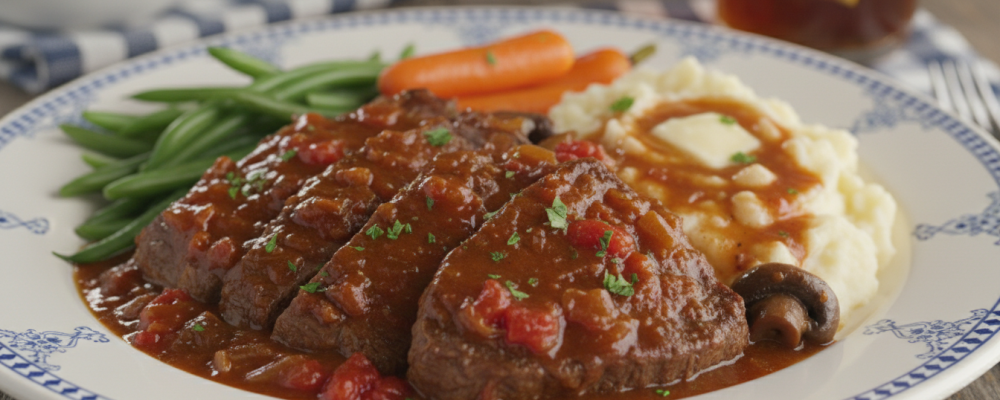

There are certain recipes that carry the weight of generations in every bite, and Old Fashioned Swiss Steak is one of them. This is the kind of dish that defined Sunday dinners in mid-century American households—braised low and slow until the tough round steak becomes something genuinely tender, wrapped in a rich, tomato-based sauce thick with softened vegetables and deep, savory flavor. It’s not a flashy recipe, and it doesn’t need to be. It’s a masterclass in what patience and proper technique can do with an inexpensive cut of meat.
I’ve been drawn to braised beef recipes throughout my career because they demand something from the cook that modern weeknight recipes often skip: respect for process. You cannot rush Swiss steak. The pounding, the dredging, the browning, the long simmer—each step is there for a reason, and understanding why each one matters is what separates a mediocre result from a genuinely exceptional one. This recipe taught me early on that the best food often comes from the most humble ingredients handled with care.
What I find most compelling about Swiss steak is that it transforms one of the least glamorous cuts in the butcher case into something that holds the table’s attention from the first spoonful of sauce to the last. The round steak becomes fork-tender. The tomatoes and broth reduce into a sauce that is rich, slightly acidic, and deeply savory. The carrots and bell pepper add sweetness and body in the final stretch. Taken together, it’s a dish with real soul—and soul, in a braise, is everything.
The Inspiration Behind This Recipe
My inspiration for developing this recipe was a desire to honor the kind of cooking that has largely faded from regular weeknight rotation—not because it’s difficult, but because it requires time that modern schedules rarely accommodate. Swiss steak is worth reclaiming. It’s economical, deeply nourishing, and produces a finished dish that rivals far more expensive preparations in both flavor and satisfaction.
This recipe also gave me an opportunity to dig into the mechanics of a proper braise—the dredging in seasoned flour that thickens the braising liquid, the browning that builds the flavor foundation, the slow simmer that coaxes tenderness from a tough cut. These are techniques every home cook benefits from understanding, and Swiss steak is one of the best vehicles for learning them.
A Brief History of Swiss Steak
Despite the name, Swiss steak has no particular connection to Switzerland. The “swiss” in the name refers to a fabric-finishing process called “swissing”—running material through heavy rollers to smooth and tenderize it. Applied to cooking, the technique involves pounding or rolling tougher cuts of meat to break down the muscle fibers before braising. The dish became a staple of American home cooking throughout the early and mid-20th century, appearing in countless church cookbooks, home economics courses, and family recipe boxes across the country.
It was a practical recipe born of practical times—round steak was affordable and widely available, and the braising method transformed it into something that could feed a family well. Over the decades, Swiss steak became associated with the kind of comfort food that feels rooted in place and memory. Revisiting it today is less about nostalgia than it is about recognizing that some techniques and flavor combinations simply endure because they work.
Why This Cooking Method Works
Every step in this recipe is purposeful, and understanding the method makes you a better cook for it. Pounding the round steak begins the tenderizing process by physically breaking down tough muscle fibers before heat is ever applied. Dredging in seasoned flour serves two functions: it creates a crust that browns beautifully in the skillet, and it introduces a thickening agent that gradually dissolves into the braising liquid, giving the sauce its body and richness.
Browning the steak before braising is non-negotiable. The Maillard reaction—the chemical process that occurs when proteins and sugars are exposed to high heat—creates dozens of flavor compounds that simply cannot be replicated by simmering alone. That browned crust is the foundation of the dish’s depth. The subsequent low, slow braise in tomatoes, broth, and Worcestershire sauce does what no amount of high heat can: it breaks down collagen in the connective tissue into gelatin, which enriches the braising liquid and produces the silky, coating sauce that makes this dish so satisfying.
Flavor Profile: What to Expect
This dish builds flavor in layers across every stage of cooking:
- Deep, savory beef richness from the browned steak and reduced beef broth that carries through the entire sauce
- Bright, acidic tomato that tenderizes the meat further and adds complexity to the braising liquid
- Umami depth from the Worcestershire sauce that amplifies the beefy foundation without announcing itself
- Aromatic sweetness from the long-cooked onion and garlic that melt into the sauce entirely
- Earthy sweetness from the carrots and bell pepper added in the final simmer that add body and a fresh, vegetable contrast
The result is a sauce that is thick, rich, slightly tangy, and deeply layered—the kind that demands something to soak it up.
Tips for Making the Best Old Fashioned Swiss Steak
Technique matters here more than in most recipes. These details will make a real difference:
- Pound thoroughly: Use a meat mallet and work both sides of the steak until the fibers are visibly broken down. This is the most important step for tenderness.
- Season the flour generously: The dredging flour seasons the exterior of the steak and becomes part of the sauce—it should be well-salted and peppered.
- Brown in batches if needed: Crowding the pan causes steaming rather than browning. Give each piece space and don’t rush this step.
- Scrape the fond: When you add the onions after removing the steak, use a wooden spoon to scrape up all the browned bits from the bottom of the pan. That fond is pure flavor.
- Keep the simmer low: A gentle simmer—not a rolling boil—is what produces tender meat. High heat toughens rather than tenderizes.
- Add the vegetables in stages: Carrots and bell pepper go in during the final 30 minutes so they retain some texture rather than disappearing into the sauce entirely.
Serving Suggestions and Side Pairings
Swiss steak was made for the kind of sides that can stand up to a rich, saucy braise:
- Creamy mashed potatoes to soak up every drop of the tomato-beef sauce
- Buttered egg noodles for a classic, old-fashioned pairing
- White or brown rice as a simple, neutral base that lets the sauce shine
- Crusty bread for mopping the plate clean
- A simple side salad or steamed green beans to add freshness alongside the richness
Storage, Reheating, and Make-Ahead Tips
Like most braises, this one is arguably better the next day:
- Refrigerate leftovers in an airtight container with the sauce for up to 4 days.
- Freeze the steak and sauce together for up to 3 months. Thaw overnight in the refrigerator before reheating.
- Reheat gently in a covered skillet or Dutch oven over low heat, adding a splash of beef broth if the sauce has thickened too much.
- Make ahead entirely—Swiss steak reheats beautifully and the flavors deepen significantly overnight, making it an ideal dish for meal prep or entertaining.
Why This Recipe Deserves a Spot in Your Rotation
Old Fashioned Swiss Steak is proof that great cooking doesn’t require expensive ingredients or complicated technique—it requires understanding and patience. This is a recipe that rewards the time you give it, delivering a finished dish with the kind of deep, honest flavor that feels increasingly rare in an era of shortcuts. It’s economical, nourishing, and genuinely satisfying in a way that stays with you. Once you’ve made it, you’ll understand why it was a staple for so long—and why it deserves to be again.
Recommended Drink Pairing
A full-bodied red wine is the natural companion to a braise this rich and deeply flavored. A Cabernet Sauvignon or a Côtes du Rhône-style blend—bold, tannic, with dark fruit and earthy undertones—matches the intensity of the tomato-beef sauce without being overwhelmed by it. A Malbec is another excellent choice, particularly if you prefer something a little softer and fruitier.
For cocktails, a Bourbon Smash Cocktail brings warm, oaky depth that plays beautifully alongside the Worcestershire-spiked braising sauce. For non-alcoholic options, a rich tomato-based sparkling water or a dark, unsweetened iced tea with lemon keeps the palate in the right register for a dish this savory and substantial.
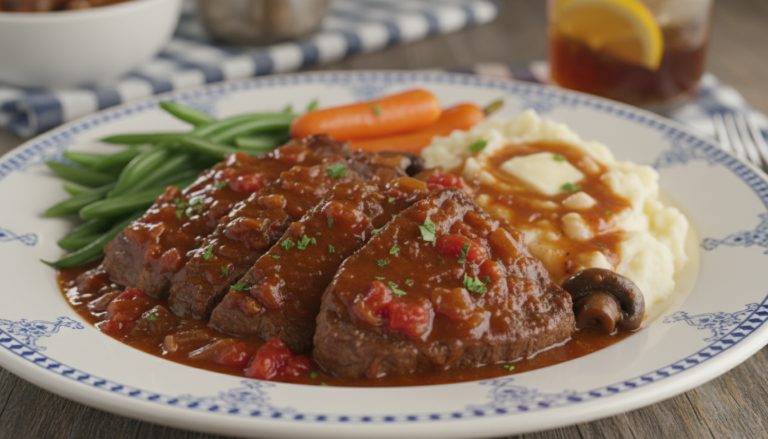
Old Fashioned Swiss Steak
Old Fashioned Swiss Steak slow-braises tenderized round steak in a rich tomato and beef broth sauce with Worcestershire, onion, carrots, and bell pepper until fork-tender and deeply flavorful—true comfort food from scratch.
4
servings20
minutes2
hours450
kcal2
hours20
minutesIngredients
2 pounds round steak
1/2 cup all-purpose flour
1 teaspoon salt
1/2 teaspoon black pepper
2 tablespoons vegetable oil
1 medium onion, sliced
2 cloves garlic, minced
2 cups canned diced tomatoes
1 cup beef broth
2 tablespoons Worcestershire sauce
1 cup carrots, sliced
1 cup green bell pepper, chopped
Directions
- Pound the round steak to tenderize and cut into serving-size pieces.
- Mix flour, salt, and pepper, then coat steak pieces in the mixture.
- Heat oil in a large skillet and brown the steak on both sides.
- Remove steak, add onion and garlic to the skillet, and sauté until soft.
- Return steak to the skillet; add tomatoes, beef broth, and Worcestershire sauce.
- Cover and simmer for 1.5 hours, occasionally stirring to prevent sticking.
- Add carrots and bell pepper; cover again and simmer for an additional 30 minutes.
- Serve the steak with the vegetable mixture on top.
Nutrition Facts
- Total number of serves: 4
- Calories: 450kcal
- Cholesterol: 0mg
- Sodium: 620mg
- Potassium: 400mg
- Sugar: 8g
- Protein: 6g
- Calcium: 60mg
- Iron: 2mg
About This Author

Benjamin Brown
Recipe Developer
Benjamin is our flavor engineer. A classically trained chef turned recipe developer, he’s obsessed with balancing taste, texture, and creativity. He ensures that every recipe we publish is not only delicious but also reliable, approachable, and repeatable — even for beginners.
Favorite dish: Slow-braised short ribs with red wine reduction.
Kitchen motto: “Cooking is part science, part soul.”















