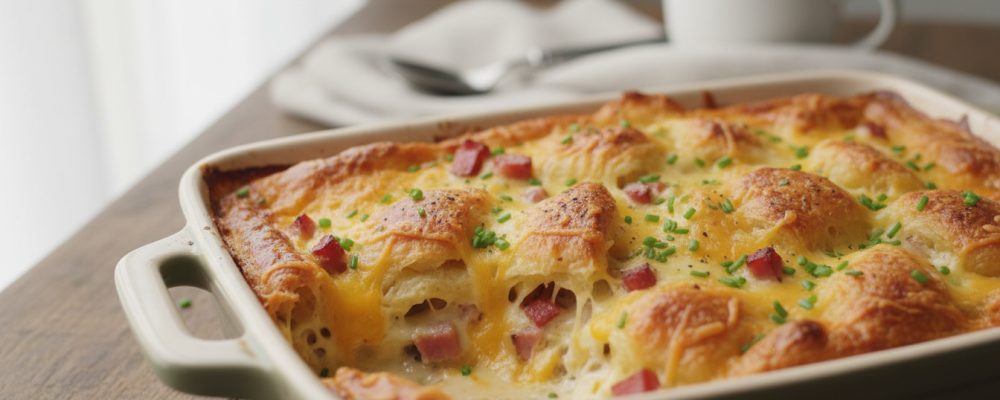

Breakfast casseroles represent efficient cooking at its finest—you’re creating a complete meal in one dish that can be assembled ahead, feeds a crowd, and delivers consistent results. This Smoked Ham & Cheese Croissant Casserole takes that practical format and elevates it significantly by using croissants instead of regular bread. The laminated pastry structure of croissants—those thin layers of butter and dough—creates textural complexity that standard bread cubes simply can’t match. When soaked in custard and baked, croissants maintain some of their flaky character while also becoming tender and custardy, creating a dish that’s simultaneously crispy and creamy.
What makes this casserole successful is understanding how croissants behave differently from bread in custard applications. Regular bread absorbs liquid uniformly and becomes soft throughout. Croissants, with their butter-rich layers, resist saturation initially but then soak up custard in a way that creates textural variation—some parts stay flaky and crisp, others become soft and pudding-like. This complexity is what separates good breakfast casseroles from exceptional ones.
The combination of smoked ham and sharp cheddar provides essential savory depth. The ham’s smokiness adds complexity that plain ham wouldn’t deliver, while sharp cheddar contributes both tang and pronounced flavor that survives baking. The custard ratio—eggs to milk—is calibrated to fully saturate the croissants without creating a wet, loose texture. Each component serves a specific purpose in creating a dish that’s greater than the sum of its parts.
─────────
The Inspiration Behind This Recipe
This recipe emerged from recognizing that day-old croissants—often discounted at bakeries—represent an underutilized ingredient in savory cooking. We readily use stale bread for bread pudding, stuffing, and strata, but croissants offer something special: built-in buttery richness that standard bread requires added fat to achieve. By treating croissants as a premium bread product rather than just a breakfast pastry, you unlock new culinary possibilities.
The specific combination of smoked ham and cheddar came from analyzing classic French and American breakfast traditions. Croissants au jambon (ham and cheese croissants) are a French café staple, establishing that these flavors work beautifully with buttery pastry. American breakfast casseroles traditionally feature ham and cheese in egg-based dishes. Combining these traditions creates something that honors both culinary heritages while being accessible to home cooks without specialized training or equipment.
What I wanted to achieve was a casserole that felt special enough for holiday brunches or important gatherings but remained simple enough for regular weekend meals. The ingredient list is deliberately short—no exotic components, no complicated techniques—because the quality of the base ingredients (good croissants, real smoked ham, sharp cheddar) does most of the work. This represents efficiency and quality working together rather than competing.
─────────
A Brief History of Breakfast Casseroles
Breakfast casseroles evolved from European bread-based dishes like bread pudding and strata, which originated as economical ways to use stale bread. The concept traveled to America with European immigrants, where it adapted to include regional ingredients and preferences. The modern breakfast casserole—particularly egg-based versions—gained popularity in the mid-20th century as make-ahead convenience became increasingly valued in American home cooking.
The strata specifically (an Italian word meaning “layers”) refers to savory bread puddings that combine bread, eggs, milk, cheese, and various proteins or vegetables. These dishes became popular for brunch service because they could be assembled the night before and baked in the morning, eliminating last-minute preparation stress. Church socials, holiday gatherings, and bed-and-breakfast establishments embraced breakfast casseroles for their practicality and crowd-feeding capabilities.
Using croissants instead of bread represents a more recent innovation, emerging as croissants became widely available in American bakeries and supermarkets in the late 20th century. This substitution elevates the humble breakfast casserole into something more refined while maintaining the practical benefits that made the dish popular. It demonstrates how classic recipes continue evolving as ingredients become more accessible and cooks experiment with premium substitutions.
─────────
Why This Cooking Method Works
Tearing croissants into bite-sized pieces rather than cutting them creates irregular edges with more surface area for custard absorption. These rough edges also crisp beautifully during baking, creating textural contrast between the crusty exterior pieces and the softer interior portions. The varying sizes ensure some pieces become completely saturated and custardy while others maintain more structure and flakiness—this variation is desirable, not a flaw.
The custard ratio of eggs to milk creates the right consistency for full saturation without excess liquid pooling in the bottom of the dish. Too many eggs would make the casserole dense and rubbery, similar to a frittata. Too much milk would create a soupy texture that never fully sets. This specific proportion allows the croissants to absorb the custard completely while still setting into a cohesive, sliceable casserole with proper structure.
Baking at 350°F provides gentle, even heat that cooks the custard through without curdling the eggs or burning the croissant pieces that extend above the custard line. The 40-minute timing allows the center to set completely while the top develops golden-brown color and slight crispness. The ham and cheese distribute throughout during baking as the casserole expands and settles, ensuring every portion includes all components. Letting it rest after baking allows the structure to firm up, making slicing and serving much cleaner and more successful.
─────────
Flavor Profile: What to Expect
This casserole delivers rich, savory complexity with elegant balance:
- Buttery croissant – Flaky, rich pastry flavor that permeates every bite
- Smoky ham – Deep, savory notes with pronounced smokiness that adds sophistication
- Sharp cheddar tang – Melted cheese pockets with pronounced flavor and slight acidity
- Savory custard – Rich, eggy base that ties everything together
- Black pepper heat – Subtle spice that lifts the other flavors
- Golden crispy top – Caramelized croissant pieces that provide textural contrast
- Creamy interior – Soft, custardy center that’s rich and satisfying
The overall experience is one of luxurious comfort—this tastes indulgent and special without being overly heavy or rich. The smoky ham prevents it from tasting one-dimensional, while the sharp cheddar adds complexity that mild cheese couldn’t provide. Each forkful should include flaky croissant bits, tender custard, smoky ham, and melted cheese. It’s the kind of dish that makes people slow down and savor rather than just eating quickly to fuel up.
─────────
Tips for Making the Best Smoked Ham & Cheese Croissant Casserole
Use day-old croissants rather than fresh—they absorb custard better without becoming mushy or falling apart completely.
- Don’t skimp on croissant quality – Use real butter croissants, not margarine-based substitutes
- Dice ham evenly – Consistent pieces ensure even distribution throughout the casserole
- Layer strategically – Distribute ham and cheese throughout layers rather than just on top
- Press down gently – After pouring custard, press croissant pieces down to ensure saturation
- Let it soak – If possible, assemble 30 minutes before baking to allow maximum absorption
- Check for doneness – Center should be set (not jiggly) when you gently shake the pan
- Cool before slicing – 10 minutes rest time allows the structure to firm up for cleaner cuts
- Use quality ham – Real smoked ham, not deli-style honey ham, for best flavor
For extra richness, add a handful of gruyere along with the cheddar, or sprinkle the top with parmesan before baking for additional golden crust and nutty flavor.
─────────
Serving Suggestions and Side Pairings
This casserole is substantial enough to be the main course for brunch, but it benefits from lighter sides that provide contrast. A simple green salad with vinaigrette cuts through the richness and adds freshness. Fresh fruit salad—particularly citrus segments or berries—provides bright acidity and palate-cleansing sweetness. Sliced tomatoes with fresh basil and balsamic glaze offer a light, Mediterranean-inspired complement.
For a more complete brunch spread, serve alongside roasted asparagus or sautéed spinach for vegetables, and offer crusty bread or toast points for those who want additional starch. The casserole pairs beautifully with both sweet and savory sides, making it versatile for various menu compositions. Coffee, mimosas, or Bloody Marys all work well as beverage pairings depending on the occasion’s formality.
Presentation-wise, this casserole looks beautiful served directly from the baking dish—rustic and inviting. Cut it into squares and use a sturdy spatula to transfer portions to individual plates. Garnish with fresh herbs like chives or parsley for color and freshness. For buffet service, keep the casserole in a warming tray or chafing dish to maintain temperature throughout the meal.
─────────
Storage, Reheating, and Make-Ahead Tips
- Assemble completely ahead: Build the entire casserole, cover tightly, refrigerate overnight before baking
- Bake from cold: Add 10-15 minutes to baking time if casserole goes directly from refrigerator to oven
- Freeze unbaked: Assemble in a freezer-safe dish, wrap tightly, freeze up to 2 months
- Bake from frozen: Thaw overnight in refrigerator, then bake as directed
- Store leftovers: Cover and refrigerate for up to 4 days in an airtight container
- Reheat portions: Microwave individual servings for 60-90 seconds until heated through
- Reheat entire casserole: Cover with foil and warm at 325°F for 20-25 minutes
- Refresh texture: For best results, reheat in the oven rather than microwave to restore some crispness
The make-ahead nature of this casserole is one of its greatest assets—you can prepare it the night before a gathering and simply bake it in the morning, allowing you to be present with guests rather than cooking while they arrive.
─────────
Why This Recipe Deserves a Spot in Your Rotation
This recipe earns its place because it solves the common brunch hosting challenge: how to serve something impressive without requiring extensive morning preparation or constant attention. The make-ahead capability means you can prep the night before and simply bake when needed, giving you time to set the table, make coffee, and actually enjoy your guests. The fact that it uses croissants elevates it beyond standard breakfast casseroles, making it feel special enough for important occasions.
Beyond practicality, this casserole genuinely tastes exceptional. The combination of buttery croissants, smoky ham, and sharp cheese creates sophisticated flavor that appeals to diverse palates. It’s rich enough to feel indulgent but balanced enough that you don’t feel overstuffed after eating. The textural variation—crispy top, custardy middle, flaky croissant bits throughout—keeps each bite interesting. These qualities make it a recipe you’ll return to repeatedly for brunches, holiday breakfasts, and any time you need to feed a group something truly delicious.
─────────
Recommended Drink Pairing
The rich, savory nature of this casserole pairs excellently with beverages that provide either complementary depth or contrasting brightness. Coffee is the classic morning choice—a medium to dark roast with enough body to stand up to the smoky ham and buttery croissants. The coffee’s bitterness balances the richness while its roasted notes complement the golden, crispy top. A café au lait or cappuccino adds creamy texture that harmonizes with the custardy interior.
For celebratory brunches, mimosas offer sparkling refreshment with citrus brightness that cuts through the butter and cheese. The champagne’s acidity cleanses your palate between bites, preventing flavor fatigue. Bloody Marys bring savory complexity and spice that complement the ham while adding their own bold personality—particularly good if you’re serving this for a more substantial brunch or lunch. For white wine lovers, a crisp Sauvignon Blanc or unoaked Chardonnay provides acidity and fruit notes that balance the richness without overwhelming the delicate croissant flavor. Non-alcoholic options include fresh-squeezed orange juice for bright, sweet contrast, or sparkling water with lemon for simple palate cleansing. Strong black tea—particularly English Breakfast or Assam—offers traditional accompaniment with tannins that cut through the butter and cheese, making it ideal for those who prefer tea over coffee. For a lighter option, green tea provides gentle, grassy notes that refresh without competing with the casserole’s savory elements.
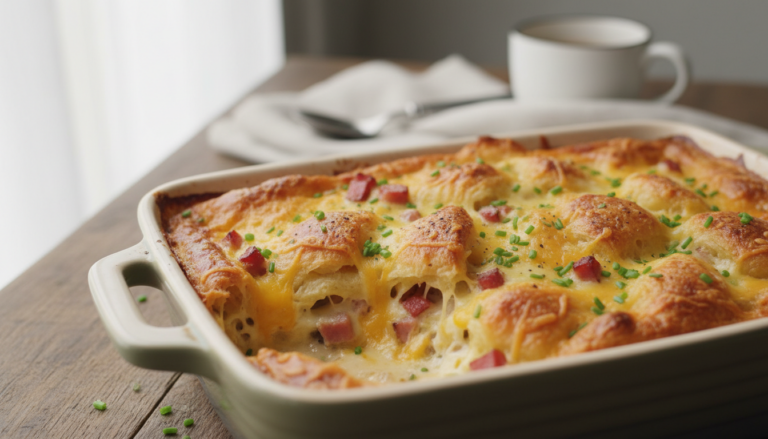
Smoked Ham & Cheese Croissant Casserole
This Smoked Ham & Cheese Croissant Casserole elevates breakfast strata to new heights—buttery croissant pieces soaked in savory custard and studded with smoky ham and sharp cheddar for a dish that’s both elegant and comforting.
6
servings15
minutes40
minutes450
kcal55
minutesIngredients
6 croissants
1 cup smoked ham, diced
1.5 cups cheddar cheese, shredded
0.5 cup milk
4 eggs
0.5 teaspoon salt
0.25 teaspoon black pepper
Directions
- Preheat oven to 350°F (175°C).
- Tear croissants into bite-sized pieces and place in a greased baking dish.
- Sprinkle diced smoked ham and cheddar cheese over the croissants.
- In a bowl, whisk together milk, eggs, salt, and black pepper.
- Pour egg mixture evenly over the croissants, ham, and cheese.
- Bake in the preheated oven for 40 minutes or until casserole is set and golden.
- Let cool slightly before serving.
Nutrition Facts
- Total number of serves: 4
- Calories: 450kcal
- Cholesterol: 0mg
- Sodium: 620mg
- Potassium: 400mg
- Sugar: 8g
- Protein: 6g
- Calcium: 60mg
- Iron: 2mg
About This Author

Benjamin Brown
Recipe Developer
Benjamin is our flavor engineer. A classically trained chef turned recipe developer, he’s obsessed with balancing taste, texture, and creativity. He ensures that every recipe we publish is not only delicious but also reliable, approachable, and repeatable — even for beginners.
Favorite dish: Slow-braised short ribs with red wine reduction.
Kitchen motto: “Cooking is part science, part soul.”