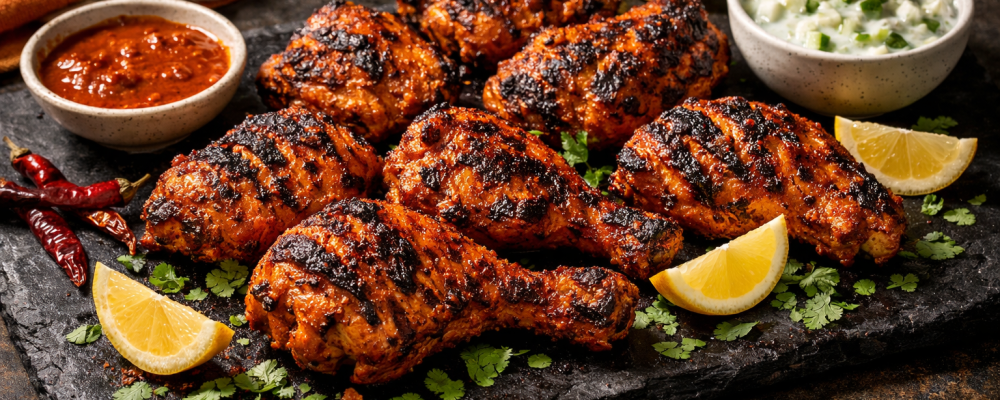

There are recipes that represent an entire culinary tradition in a single dish—preparations so fundamental, so deeply rooted in the culture that produced them, and so consistently spectacular in their results that they’ve transcended regional boundaries to become beloved around the world. Tandoori Chicken is exactly that kind of recipe. The vivid, deeply spiced marinade of yogurt, tandoori masala, ginger, garlic, and aromatic spices that transforms raw chicken into something charred, smoky, and deeply fragrant is one of the great flavor achievements in the history of cooking—and it’s remarkably achievable in a home oven with results that genuinely honor the original.
From a recipe development perspective, what I find most compelling about this dish is the marinade’s multi-layered technical function. The yogurt isn’t just a flavor carrier—its natural acidity and enzymes actively tenderize the chicken proteins during the long marination period, producing a finished bird that’s extraordinarily juicy and tender even after high-heat oven cooking. The deep cuts made in the chicken before marinating aren’t just decorative—they’re channels that allow the marinade to penetrate far beyond the surface, ensuring the spice mixture seasons the meat all the way to the bone. These are techniques refined over centuries of cooking in the tandoor, and they work just as brilliantly translated to a modern oven.
This is one of those recipes where the overnight marinade genuinely, dramatically changes the finished dish. Don’t rush it.
The Inspiration Behind This Recipe
This recipe was inspired by a deep professional respect for the Indian subcontinent’s tandoor cooking tradition—one of the oldest and most sophisticated cooking techniques in the world. The tandoor, a cylindrical clay oven fired to temperatures that can exceed 480°C, produces a specific kind of cooking result that’s virtually impossible to replicate exactly in a conventional oven: an intense, dry heat that chars the exterior of the meat almost instantaneously while the high-fat, spice-rich marinade caramelizes into a deeply complex crust that’s simultaneously crispy, fragrant, and deeply flavored.
Adapting that extraordinary result for a home oven was a creative challenge I approached with great respect for the original—understanding that while the precise heat and smoke of a clay tandoor cannot be replicated, the fundamental flavor principles of the dish absolutely can. High oven temperature, an overnight marinade, proper meat preparation, and a strategic broil at the end to develop char are the techniques that bring the home version as close as possible to the original without compromising the integrity of the dish.
The result is a chicken that honors every element of what makes Tandoori Chicken so extraordinary—deeply spiced, slightly charred, irresistibly fragrant, and juicy in a way that few other cooking methods can achieve.
A Brief History of Tandoori Cooking
The tandoor is one of the oldest cooking vessels in human history, with evidence of clay oven cooking dating back over five thousand years to the Indus Valley Civilization—one of the world’s earliest and most sophisticated ancient cultures. The technique of cooking meat on skewers in the intense heat of a clay oven has been refined and celebrated throughout the Indian subcontinent, Central Asia, and the Middle East for millennia, producing a cooking tradition of extraordinary depth and sophistication.
Tandoori Chicken as the world now knows it is most directly associated with the culinary traditions of the Punjab region—both the Indian and Pakistani sides of the border—where the dish became particularly celebrated for its bold, fragrant spice profile and its spectacular visual presentation. The dish gained enormous international prominence through the Indian restaurant culture that flourished in Britain and beyond throughout the mid-twentieth century, becoming one of the most widely recognized and beloved expressions of Indian cuisine worldwide.
The vivid red-orange color of classic Tandoori Chicken comes traditionally from the combination of chili powder, tandoori masala, and—in many restaurant versions—a small amount of food coloring that enhances the visual drama of the finished dish. This home version achieves its striking color naturally from the masala and spice combination alone.
Why This Cooking Method Works
Every technical decision in this recipe serves the goal of replicating the tandoor experience as faithfully as possible in a conventional oven. The deep cuts in the chicken are the first and most important preparation step—without them, the marinade seasons only the surface of the meat, producing a flavorful crust but relatively unseasoned interior. The cuts create channels that carry the marinade deep into the thickest parts of the chicken, ensuring the spice mixture flavors the meat all the way through.
The extended marination period—three hours minimum, overnight ideally—is the technique that produces the extraordinary tenderness and depth of flavor that defines great Tandoori Chicken. The yogurt’s lactic acid gently denatures the surface proteins of the chicken, creating a more permeable surface that allows the marinade to penetrate further while also beginning a gentle tenderization process that continues throughout the entire marination period.
High oven heat—200°C—is essential for developing the slight char on the chicken’s surface that gives Tandoori its characteristic smoky, slightly bitter edge. The halfway turn ensures even charring on all sides, and the final minutes under a broiler, if desired, can bring that char even closer to the authentic tandoor result.
Flavor Profile: What to Expect
Tandoori Chicken delivers one of the most complex, deeply layered, and utterly distinctive flavor experiences in all of global cooking:
Deep, slightly charred exterior with the characteristic caramelized, smoky edge that defines great tandoori cooking and provides a slightly bitter, intensely aromatic crust in every bite
Warm, deeply complex tandoori masala that delivers a symphony of spice—coriander, cumin, cardamom, and more—woven through every element of the marinade and finished chicken
Gentle chili heat that builds warmly and lingeringly without overwhelming the aromatic complexity of the masala and the natural flavor of the chicken
Earthy, aromatic cumin that adds a warm, slightly nutty depth to the spice profile and grounds the more volatile aromatics of the masala beautifully
Bright, clean lemon acidity that cuts through the richness of the yogurt marinade and provides a fresh, citrusy finish that keeps every bite feeling balanced
Fragrant ginger and garlic paste that form the most essential aromatic foundation of the dish—together they create the unmistakable, deeply savory base that defines Indian cooking at its most fundamental
Juicy, deeply seasoned chicken interior that contrasts beautifully with the charred, spiced exterior for a textural and flavor experience that’s genuinely extraordinary
Tips for Making the Best Tandoori Chicken
Patience and attention to a few key details produce results that genuinely honor this extraordinary dish:
Marinate overnight without exception: Three hours is the absolute minimum, but overnight marination produces a dramatically more flavorful, more tender, and more deeply colored result. If you can plan ahead, this is the single most impactful thing you can do for the quality of the finished dish.
Make the cuts deep enough: The cuts in the chicken should reach the bone in thicker pieces like thighs and drumsticks. Superficial cuts don’t allow enough marinade penetration to make a meaningful difference.
Use full-fat yogurt: Low-fat yogurt contains less of the fat and acid needed for effective tenderization and results in a marinade that coats the chicken less effectively. Full-fat Greek yogurt produces the best texture and the most richly colored crust.
Don’t skip the oil in the marinade: Oil helps the spices adhere to the chicken and promotes even browning and char development in the oven. It’s an essential component of the marinade rather than an optional addition.
Use a wire rack over the baking tray: Elevating the chicken on a wire rack allows hot air to circulate completely around every piece, promoting more even cooking and charring than a flat baking tray surface allows.
Finish under the broiler: Two to three minutes under a hot broiler after the main bake adds the final char that brings the home version closest to the authentic tandoor result—watch carefully to prevent burning.
Serving Suggestions and Side Pairings
Tandoori Chicken is traditionally and most beautifully served as part of a larger Indian-inspired spread:
Warm naan or roti alongside for tearing and scooping—absolutely essential and completely irreplaceable in the traditional serving experience
Basmati rice seasoned with cumin and cardamom for a fragrant, elegant grain pairing that complements the bold spices of the chicken
A cooling raita—yogurt with cucumber, mint, and cumin—to provide a refreshing, creamy contrast to the heat and char of the chicken
Fresh lemon wedges and chopped coriander for squeezing and scattering at the table—traditional garnishes that add brightness and freshness to every plate
A simple kachumber salad of diced tomato, cucumber, and red onion dressed with lemon juice and chaat masala for a fresh, acidic counterpoint to the rich, spiced chicken
Storage, Reheating, and Make-Ahead Tips
Tandoori Chicken holds up beautifully through storage and is excellent both reheated and served cold.
Refrigerate cooked chicken in an airtight container for up to 4 days—the spices continue to develop and the flavor actually improves with time.
Reheat in a 180°C oven covered loosely with foil for 15 minutes, then uncovered for 5 minutes to restore the char on the exterior. Avoid microwaving, which makes the chicken tough and eliminates the textural contrast between the charred exterior and juicy interior.
Leftover Tandoori Chicken is exceptional in wraps, rice bowls, salads, and flatbreads—making it one of the most versatile leftover proteins in any global recipe repertoire.
The marinated raw chicken can be frozen for up to 2 months and cooked directly from thawed—the freezing process actually enhances the marinade penetration, producing an even more deeply flavored result.
Why This Recipe Deserves a Spot in Your Rotation
Tandoori Chicken deserves a permanent, honored place in your recipe collection because it represents one of the great achievements of global cooking—a dish with five thousand years of culinary tradition behind it, a flavor profile that’s genuinely unlike anything else in the weeknight repertoire, and a result that consistently produces the kind of wide-eyed, delighted response at the table that very few recipes can honestly claim. Bold, deeply spiced, slightly charred, and extraordinarily juicy, this is the recipe that makes cooking feel like a genuine connection to something larger than a single meal.
Once you’ve made it, it becomes the dish you return to every time you want dinner to feel like a genuine, memorable occasion.
Recommended Drink Pairing
The bold, complex spice profile and slight char of Tandoori Chicken call for a drink with enough character and refreshment to complement its intensity without competing with the intricate masala flavors. A cold Indian lager like Kingfisher or Cobra is the most authentic and fitting choice—light, crisp, and perfectly suited to cooling the gentle heat of the spices. For wine lovers, an off-dry Riesling or a Gewürztraminer is an inspired pairing—both wines have a natural affinity for bold Indian spices and provide the aromatic complexity and gentle sweetness that complement the masala beautifully.
For non-alcoholic options, a chilled mango lassi is the most traditional and deeply satisfying accompaniment—its creamy sweetness providing the perfect contrast to the char and spice of the chicken. A sparkling water with lime and fresh mint or a chilled rose water lemonade also pair beautifully with the bold, aromatic character of this extraordinary dish.
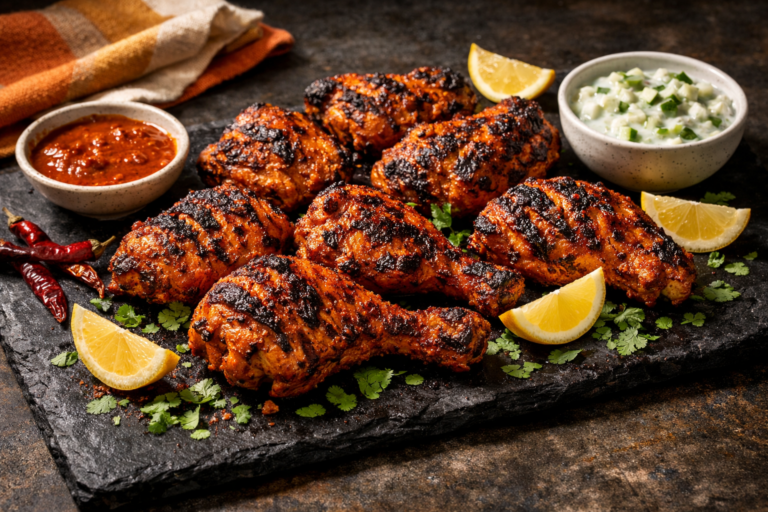
Tandoori Chicken
Chicken marinated overnight in yogurt, tandoori masala, ginger, and garlic then roasted until charred and deeply fragrant—bold, authentic, and completely unforgettable.
4
servings3
hours45
minutes300
kcal3
hours45
minutesIngredients
1 kg chicken, whole or pieces
200 g yogurt
2 tbsp tandoori masala
2 tbsp lemon juice
1 tbsp ginger paste
1 tbsp garlic paste
1 tsp chili powder
1 tsp turmeric
1 tsp salt
2 tbsp cooking oil
1 tsp ground cumin
Directions
- Make deep cuts on the chicken pieces.
- Mix yogurt, tandoori masala, lemon juice, ginger paste, garlic paste, chili powder, turmeric, salt, and oil in a bowl.
- Coat the chicken in the marinade thoroughly, ensuring it gets into the cuts.
- Let the chicken marinate in the refrigerator for at least 3 hours, ideally overnight.
- Preheat the oven to 200°C (392°F).
- Place the marinated chicken on a baking tray lined with foil.
- Bake in the oven for 35-45 minutes, turning halfway through, until cooked and slightly charred.
- Serve hot with lemon wedges and fresh coriander.
Nutrition Facts
- Total number of serves: 4
- Calories: 300kcal
- Cholesterol: 0mg
- Sodium: 620mg
- Potassium: 400mg
- Sugar: 8g
- Protein: 6g
- Calcium: 60mg
- Iron: 2mg
About This Author

Benjamin Brown
Recipe Developer
Benjamin is our flavor engineer. A classically trained chef turned recipe developer, he’s obsessed with balancing taste, texture, and creativity. He ensures that every recipe we publish is not only delicious but also reliable, approachable, and repeatable — even for beginners.
Favorite dish: Slow-braised short ribs with red wine reduction.
Kitchen motto: “Cooking is part science, part soul.”