
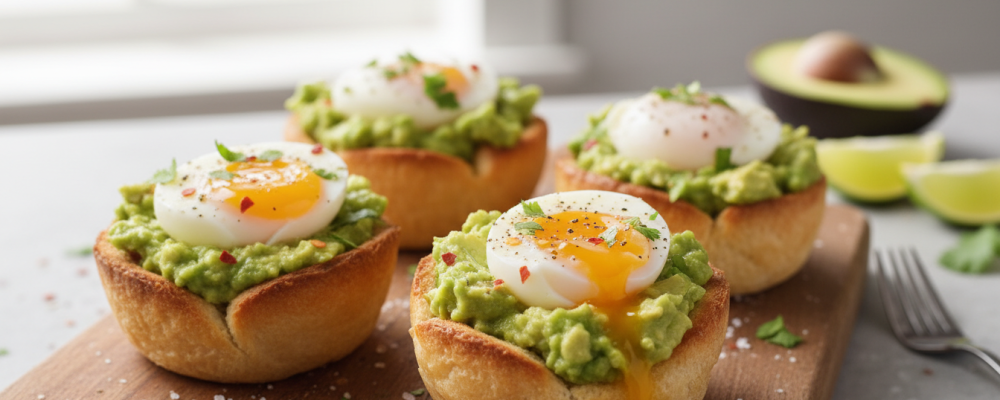

Avocado toast is one of the most popular breakfast preparations of the last decade, and for good reason—it is nutritionally balanced, fast to assemble, and genuinely satisfying in a way that simpler breakfast options frequently aren’t. It also has a fundamental structural problem that makes it nearly impossible to meal prep in its traditional form: the moment a slice of toast is topped with mashed avocado and a cooked egg, the clock starts running. The toast softens, the avocado oxidizes, and the egg—however it was prepared—begins to deteriorate in texture within the hour. For a meal prep recipe, that lifespan is completely inadequate.
This recipe solves that problem by rethinking the format. Rather than preparing avocado toast and then trying to preserve it, the approach here is to construct a self-contained unit—a whole grain bread cup baked into structural rigidity in a muffin tin—that holds the avocado and egg filling without softening in the same way a flat toast slice would. The cup format increases the surface area of bread exposed to direct oven heat, producing crispness on three sides rather than one, which dramatically extends the structural integrity of the finished cup through refrigeration and reheating.
The result is a breakfast that performs where traditional avocado toast fails in a meal prep context: it reheats without becoming soggy, it holds its shape through transport, and it delivers the same flavor experience—bright avocado, runny-edged yolk, lime, chili heat—in a format that was designed from the ground up for the demands of a five-day breakfast rotation. The format change is not aesthetic. It’s functional.
─────────────────────────────────────────
The Inspiration Behind This Recipe
The specific challenge this recipe was built around was portability—or more precisely, the consistent failure of egg-based breakfast meal preps to travel without significant quality loss. Frittatas and egg muffins solve part of the problem: they’re self-contained, protein-rich, and reheat reasonably well. But they sacrifice the textural contrast between a crispy exterior and a tender interior that makes a great breakfast genuinely enjoyable rather than merely adequate. The goal here was to preserve that contrast in a format that could survive refrigeration.
The muffin tin bread cup is the structural innovation that makes this possible. When a rolled-flat bread slice is pressed into the cup of a muffin tin and pre-baked, it sets into a rigid shell with a crispy inner surface and a slightly softer outer base. That rigid shell, crucially, does not collapse under the weight of the avocado and egg filling the way a flat toast slice would. It distributes the moisture of the filling across a wider surface area and, because it has been pre-baked to partial crispness before filling, resists absorption long enough to be reheated and eaten with its texture largely intact.
The avocado filling was chosen specifically because mashed avocado, when properly seasoned with lime juice—which acts as both a flavor brightener and a mild preservative through its acidity—holds its color and flavor better in an enclosed space than it does exposed to open air. Inside the sealed bread cup, oxidation is significantly slowed. Assembled cups stored in an airtight container retain their color and flavor quality far longer than open-faced avocado toast ever could.
─────────────────────────────────────────
A Brief History of Baked Egg Preparations
Baked egg dishes have a long and geographically diverse culinary history, rooted in the same basic insight across many cultures: an egg cracked into a vessel and placed in a heat source produces a result that is more controlled, more portable, and more easily scaled than pan-fried or scrambled preparations. The French cocotte egg—an egg cracked into a small ramekin with cream and herbs and baked until just set—is perhaps the most elegant iteration. Shakshuka, the North African and Middle Eastern preparation of eggs poached in spiced tomato sauce, is another expression of the same principle applied with entirely different flavoring logic.
The American egg-in-toast format—sometimes called “egg-in-a-hole” or “toad-in-the-hole”—is a more casual version of this tradition, using bread itself as the vessel and pan heat rather than oven heat. The move to a muffin tin cup format is a relatively recent home cook innovation that takes the egg-in-bread concept and applies oven heat uniformly, producing consistent results across multiple cups simultaneously—a critical advantage in a meal prep context where batch cooking is the goal.
Avocado as a breakfast ingredient has its own deep roots, particularly in Mexican and Central American culinary traditions where avocados have been cultivated and eaten for thousands of years. Its widespread adoption as a breakfast staple in contemporary American cooking is a reflection of both its nutritional profile and its exceptional versatility as a base—mild enough to carry other flavors, rich enough to function as a satisfying anchor, and structurally cooperative when mashed into a format that holds its shape inside a bread cup.
─────────────────────────────────────────
Why This Cooking Method Works for Meal Prep
The two-stage bake is the key technical decision in this recipe, and both stages serve a specific and necessary function. The first bake—five minutes at 375°F with the bread cups empty—accomplishes two things: it sets the shape of the cup so it holds the filling without collapsing, and it begins drying out the interior surface of the bread, creating a barrier that slows moisture absorption from the avocado and egg filling during the second bake. Skipping this step and filling the cups immediately would result in a soggy base before the eggs are even close to set.
Rolling the bread flat before pressing it into the muffin tin is equally important. Unrolled bread is too thick and springy to conform to the cup shape cleanly—it tends to fold unevenly, creating gaps where the filling can pool and saturate the bread rather than sitting cleanly in the center. A rolling pin compresses the bread into a thin, pliable sheet that drapes into the muffin cup smoothly and bakes into a uniform shell with consistent wall thickness throughout.
The ten-minute second bake is calibrated for egg whites that are fully set with yolks that retain some movement—a critical balance for a meal prep recipe. A fully cooked, hard yolk will turn rubbery and dry when reheated; a slightly under-set yolk will finish cooking during reheating and arrive at serving temperature with the right texture. This is the same principle that applies to reheating any egg preparation: the initial cook should aim slightly underdone to account for the additional heat of reheating. For meal prep eggs specifically, precision in the initial bake produces a dramatically better reheated result.
─────────────────────────────────────────
Flavor Profile: What to Expect
These toast cups deliver a layered, balanced breakfast profile that covers richness, brightness, heat, and earthiness in a compact, cohesive bite:
- Toasty, wheaty structure – Whole grain bread provides a nutty, slightly earthy base with a crispness that gives each cup its defining textural contrast against the soft filling
- Rich, creamy avocado – Mashed avocado brings a cool, buttery creaminess that fills the cup and carries the lime and seasoning notes throughout every layer
- Bright citrus lift – Lime juice cuts through the richness of the avocado and the egg yolk with a clean acidity that keeps the overall profile from feeling heavy
- Savory egg depth – The baked egg—whites set, yolk still carrying some richness—contributes a familiar, deeply satisfying savory note that anchors the whole cup
- Warm chili heat – Red pepper flakes deliver a slow-building heat at the finish that adds energy and contrast without overpowering the more delicate flavors beneath
- Herbal freshness – Chopped cilantro adds a clean, green, slightly citrusy aromatic note that brightens the cup at the surface and complements the lime underneath
The flavor profile holds well through refrigeration—the avocado’s lime seasoning actually deepens slightly overnight as the acid permeates the mash more fully, and the bread cup’s toasty notes remain present after a brief oven reheat. These are one of the few egg-based breakfast preps that taste genuinely close to freshly made at day three.
─────────────────────────────────────────
Tips for Making the Best Smashed Avocado Egg Toast Cups
Executing this recipe well is primarily a matter of technique in the prep stage and timing precision in the bake:
- Use slightly stale bread – Bread that is one or two days old is drier and more pliable than fresh bread, rolls flatter more easily, and produces a crisper cup with better moisture resistance. Fresh bread can be used but benefits from a 30-second dry toast in a skillet first.
- Choose whole grain or sourdough – Denser bread varieties hold their shape in the muffin tin better than soft white sandwich bread, which can collapse under the weight of the filling before it has fully crisped.
- Roll firmly and evenly – Apply consistent pressure across the full surface of the bread when rolling. Thin spots will crisp faster and may crack; thick spots may not crisp enough to hold the filling cleanly.
- Press the bread all the way to the base of the cup – The bread should be in full contact with the muffin tin on all sides. Air gaps between the bread and the tin result in unevenly baked walls and an unstable cup structure.
- Season the avocado thoroughly – The avocado is doing the heavy flavor lifting in the base layer. Taste it before filling the cups and adjust lime, salt, and pepper to a level that seems slightly assertive—the egg and bread will mellow it in the final dish.
- Crack eggs carefully – Use a small bowl to crack each egg into individually before tipping into the cup. This prevents broken yolks and shell fragments, and allows you to control placement so the yolk sits centered in the cup rather than pooling to one side.
Optional: A thin slice of smoked salmon layered between the avocado and the egg before baking adds a sophisticated richness and a salty, smoky dimension that pairs exceptionally well with the lime and cilantro.
─────────────────────────────────────────
Portioning and Container Suggestions
A standard 12-cup muffin tin produces 12 individual toast cups—three cups per serving is a satisfying breakfast portion, yielding four complete servings from a single batch. Alternatively, two cups alongside a piece of fruit or a small yogurt makes a well-rounded meal prep breakfast with less bread volume.
Once cooled completely, the toast cups stack reasonably well in a wide, shallow airtight container with a piece of parchment paper between layers to prevent sticking and protect the structural integrity of the top cups. Individual portion containers—three cups per container—allow for grab-and-go efficiency without any morning assembly or measuring.
Glass containers are the preferred storage vessel for reheating convenience, but any airtight container with a flat base works well. Avoid stacking too many layers—three cups high maximum—as the weight of upper layers can compress and flatten lower cups during refrigeration, compromising the cup shape that makes this recipe function as well as it does.
─────────────────────────────────────────
Storage, Reheating, and Shelf Life Tips
- Refrigerator storage: Assembled toast cups keep in an airtight container for up to 3 days. Beyond day three, the bread begins to absorb moisture from the filling and loses its structural integrity.
- Freezer storage: Freeze fully baked and cooled cups in a single layer before transferring to a freezer bag for up to 1 month. The bread cup and egg freeze well; the avocado filling may darken slightly but retains its flavor. Thaw overnight in the refrigerator before reheating.
- Oven reheating (recommended): Place cups on a baking sheet in a 350°F oven for 8–10 minutes. This method restores crispness to the bread cup and heats the filling evenly without toughening the egg whites. This is significantly better than microwave reheating for texture.
- Microwave reheating: If oven reheating isn’t possible, microwave at 50% power for 60–90 seconds. Full power will toughen the egg whites and make the bread chewy—lower power and a longer time produces a markedly better result.
- Avocado tip: If the avocado surface has darkened slightly in storage, the flavor is unaffected—darkening is purely cosmetic and a normal result of oxidation. A small squeeze of fresh lime juice over the top before reheating refreshes both appearance and flavor.
- Garnish fresh: Red pepper flakes and cilantro are best added fresh at serving rather than stored on the cups—they retain their color, texture, and aromatic quality far better when applied just before eating.
─────────────────────────────────────────
Why This Recipe Deserves a Spot in Your Meal Prep Rotation
From an efficiency standpoint, this recipe delivers an unusually high return on a modest investment of prep time. One muffin tin, one baking session, thirty minutes of total kitchen time, and the result is twelve individually portioned breakfast units that are portable, protein-complete, and genuinely satisfying. The cost per serving is low, the ingredient list is short, and the recipe requires no specialized equipment beyond a standard muffin tin and a rolling pin.
The deeper case for keeping this in regular rotation is structural: it solves a problem that most egg-based breakfast preps don’t. The format is inherently portable in a way that a frittata slice or a scramble simply isn’t—a toast cup is self-contained, holds its filling without spilling during transport, and reheats into something that tastes close enough to freshly made that the meal prep reality is largely imperceptible. For a recipe built entirely around the constraints of advance preparation, that is precisely the right outcome.
─────────────────────────────────────────
Meal Prep Pairing Suggestions
Smashed Avocado Egg Toast Cups pair most effectively with breakfast recipes that offer genuine contrast in both format and flavor profile, building a rotation where each morning feels like a distinct choice rather than a minor variation on the same meal. Our Blueberry Lemon Quinoa Porridge provides the ideal counterpoint—warm, sweet, and grain-based where the toast cups are savory, structured, and bread-based. Rotating between them across the week gives the breakfast rotation a natural rhythm without requiring any additional prep complexity.
For a complete three-option breakfast lineup, our Sun-Dried Tomato & Egg White Frittata rounds out the spread with a third protein-forward option that covers the same savory, egg-centered territory from an entirely different angle—Mediterranean flavors, a sliceable format, and a lighter profile that complements both the toast cups and the porridge without redundancy. Three prepped breakfasts across five mornings means every day begins with a real choice, real variety, and the kind of nourishing start that sets the structural conditions for a productive day. That is what a well-designed breakfast rotation is supposed to deliver.
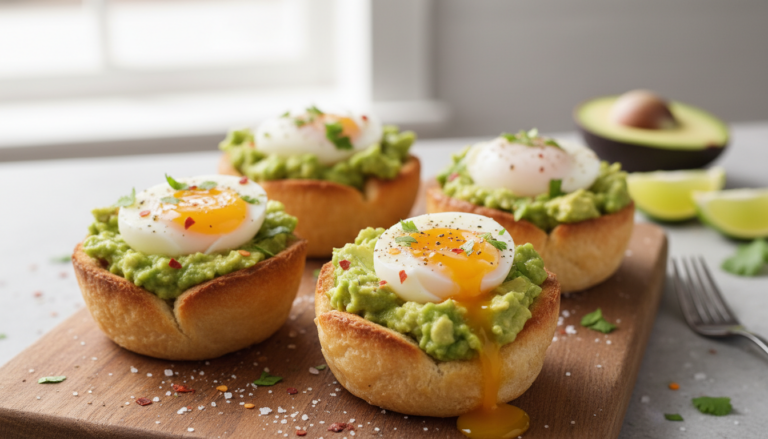
Smashed Avocado Egg Toast Cups
These Smashed Avocado Egg Toast Cups transform the classic avocado toast into a self-contained, oven-baked breakfast that’s portable, protein-rich, and ready to reheat every morning of the week.
4
servings15
minutes15
minutes250
kcal30
minutesIngredients
4 slices whole grain bread
2 avocados
4 eggs
1 tbsp lime juice
1 tbsp olive oil
1 tsp salt
0.5 tsp black pepper
1 pinch red pepper flakes
1 tbsp chopped cilantro
Directions
- Preheat the oven to 375°F (190°C).
- Cut the crusts off the bread slices and roll flat with a rolling pin.
- Press each slice of bread into the cup of a muffin tin to form a cup shape.
- Bake the bread cups in the preheated oven for 5 minutes until slightly crisp.
- Scoop the avocado flesh into a bowl and mash it with lime juice, olive oil, salt, and pepper.
- Divide the mashed avocado mixture evenly among the toasted bread cups.
- Crack an egg into each avocado-filled bread cup.
- Bake in the oven for approximately 10 minutes, or until the egg whites are set.
- Remove the toast cups from the oven and sprinkle with red pepper flakes and cilantro.
- Serve warm and enjoy your delicious avocado egg toast cups.
Nutrition Facts
- Total number of serves: 4
- Calories: 250kcal
- Cholesterol: 0mg
- Sodium: 620mg
- Potassium: 400mg
- Sugar: 8g
- Protein: 6g
- Calcium: 60mg
- Iron: 2mg
About This Author

Benjamin Brown
Recipe Developer
Benjamin is our flavor engineer. A classically trained chef turned recipe developer, he’s obsessed with balancing taste, texture, and creativity. He ensures that every recipe we publish is not only delicious but also reliable, approachable, and repeatable — even for beginners.
Favorite dish: Slow-braised short ribs with red wine reduction.
Kitchen motto: “Cooking is part science, part soul.”















