
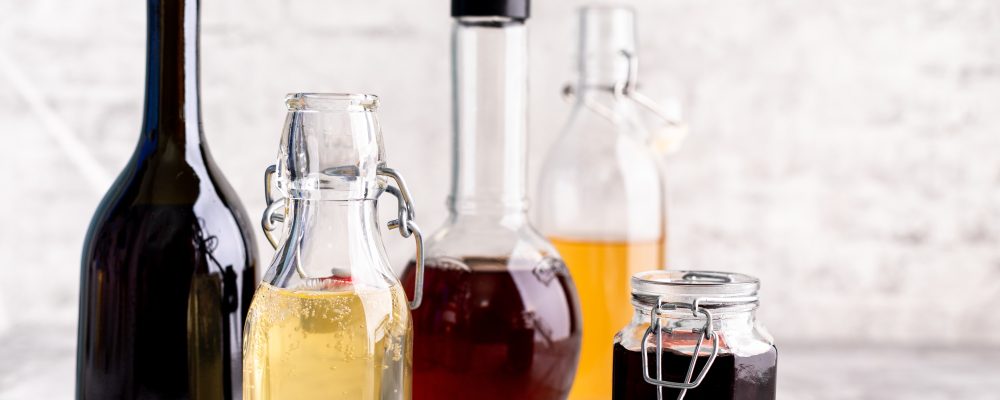

There is a shelf in most home kitchens that holds one bottle.
Sometimes two. A white vinegar that gets used for cleaning as often as cooking and a balsamic that was purchased for a specific recipe and has been sitting largely untouched since. Perhaps an apple cider vinegar, bought during a health-focused period, used occasionally and mostly forgotten.
This shelf represents one of the most significant missed opportunities in any home pantry — because vinegar is not a single ingredient with a single flavor and a single purpose. It is a family of ingredients as varied and as expressive as wine — which is, in most cases, exactly what it began as — with a range of flavors, intensities, and applications that the single-bottle pantry cannot begin to explore.
The cook who understands vinegar — who has four or five genuinely different vinegars available and who knows what each one does and when to reach for it — has access to one of the most powerful flavor-building tools in any kitchen. The cook with one bottle of white vinegar is working with a fraction of what the ingredient category offers.
What Vinegar Actually Is
Vinegar is the product of a two-stage fermentation process.
In the first stage, sugars are converted to alcohol by yeast — the same process that produces wine, beer, or cider. In the second stage, acetic acid bacteria convert the alcohol to acetic acid — the compound responsible for vinegar’s characteristic sharp, sour flavor.
The specific flavor of a vinegar reflects both stages of this process. A wine vinegar begins with wine and retains many of the flavor compounds of the wine from which it was made — the specific grape varieties, the fermentation conditions, the regional character of the original wine. A cider vinegar begins with apple cider and carries the specific fruity, slightly tannic quality of the apples that produced it. A rice vinegar begins with rice wine and has a milder, more delicate character than grape-based vinegars.
This means that the flavor of a vinegar is not just acidity. It is acidity embedded in a specific flavor context — a framework of wine or fruit or grain character that shapes how the acidity registers and what it does to the food it touches.
This is why different vinegars are not interchangeable. The substitution of red wine vinegar for rice wine vinegar in an Asian preparation is not a neutral adjustment — it introduces a grape-based flavor profile into a context where it doesn’t belong. The substitution of balsamic for sherry vinegar in a pan sauce changes the character of the sauce in ways that are significant and often undesirable.
The right vinegar for the right application is not a matter of pickiness. It is a matter of flavor coherence.
The Vinegars Worth Having
The collection of vinegars that covers the widest range of cooking applications without redundancy is smaller than most cooks imagine — five or six bottles, each doing something distinct, that together provide a toolkit for virtually any preparation that requires acid.
Red wine vinegar is the workhorse of the Western pantry — sharp, assertive, with the specific tannic quality of red wine that makes it the right choice for robust preparations. Vinaigrettes for hearty salads. Marinades for beef and lamb. The deglazing of a pan after searing red meat. Preparations from the Mediterranean tradition that expect the specific character of red wine vinegar rather than a more neutral alternative.
White wine vinegar is gentler than red — the same wine-based character but without the tannin, producing a cleaner, more delicate acidity that is appropriate for more refined preparations. Béarnaise and other French butter sauces where the acid provides structure without competing with the butter’s richness. Vinaigrettes for delicate lettuces. Pickled vegetables where the clarity of the vinegar’s color matters as much as its flavor.
Sherry vinegar is perhaps the most underused vinegar in the home pantry and the one whose discovery most consistently produces the reaction of a cook who has been missing something significant. Produced from sherry in the same region of Spain that produces the wine — the Jerez region of Andalusia — sherry vinegar carries the specific nutty, slightly oxidized, complex character of aged sherry. It is sweeter and more rounded than either red or white wine vinegar, with a depth that makes it particularly valuable as a finishing element — a splash added to a finished braise or a drizzle over a roasted vegetable that adds complexity beyond simple acidity.
Apple cider vinegar — made from fermented apple cider — carries the specific fruity character of the apples that produced it, with a mild, slightly sweet acidity that makes it appropriate for dressings, for pickling, and for preparations where a gentle acid is preferable to the assertiveness of wine vinegar.
Rice wine vinegar, in its unseasoned form, is the mildest and most delicate of the common cooking vinegars — with a clean, slightly sweet acidity that makes it appropriate for Asian preparations, for delicate pickling, and for any context where acidity is needed without any vinegar character asserting itself.
And balsamic — the traditional aged product of Modena and Reggio Emilia, not the commercial approximation that fills most grocery store shelves — is in a category of its own. True aged balsamic, made from reduced grape must and aged for a minimum of twelve years in a succession of different wood barrels, is sweet, syrupy, extraordinarily complex, and expensive enough that it is used in drops rather than splashes. It is not a cooking vinegar in the traditional sense — it is a finishing ingredient, drizzled over Parmigiano, over strawberries, over a piece of aged beef at the table.
The Flavor Transformation That Aging Produces
Of all the vinegars available, the aged varieties — the sherry vinegars with designated aging, the traditional balsamic, the wine vinegars from small producers who age their product in wood barrels — are the ones that most dramatically demonstrate what time does to fermented products.
Freshly made wine vinegar is sharp and one-dimensional — clean acidity without complexity. Wine vinegar aged in wood for several years develops secondary flavor compounds as the vinegar slowly oxidizes and the wood contributes tannins and aromatic compounds. The result is a vinegar with depth, with sweetness that is not added sugar but the product of concentration and transformation, with a complexity that the unaged version does not begin to possess.
Traditional balsamic is the extreme expression of this principle. Beginning as Trebbiano grape must — the juice of the entire grape, with its skin and seeds, reduced over heat to a sweet, concentrated syrup — it spends a minimum of twelve years moving through a succession of barrels made from different woods. Each wood contributes different aromatic compounds. The concentration increases as liquid evaporates through the barrel walls. The acetic acid bacteria work slowly in the increasingly sweet, increasingly concentrated environment. What emerges from the final barrel after twelve or twenty-five or fifty years of this process is something that shares very little with the grape must it began as.
The best traditional balsamic vinegars — sold in small bottles that reflect their significant aging cost — are among the most complex flavored condiments in any culinary tradition. They are not used for cooking, where heat would destroy the volatile compounds that produce their complexity. They are used for finishing, where a few drops can transform a simple preparation into something that demonstrates what time can do to food.
How Vinegar Works in Cooking Beyond Salad Dressing
The most common application of vinegar in home cooking — the salad dressing — is also the most limiting way to think about what the ingredient does and what it can be used for.
Vinegar as a pan sauce component: a splash of red wine vinegar or sherry vinegar added to a hot pan after meat has been seared and removed, combined with the fond and a small amount of stock, produces a quick sauce with acidity and complexity in seconds. The acid lifts the caramelized fond from the pan, the heat drives off some of the vinegar’s sharpness, and what remains has the specific depth that characterizes pan sauces in professional kitchens.
Vinegar as a pickling medium: the quick pickle — vegetables submerged in a mixture of vinegar, water, sugar, and salt for an hour or overnight — is one of the most useful techniques in the summer kitchen, producing a bright, acidic condiment from whatever vegetable is abundant. Quick-pickled cucumbers, quick-pickled red onions, quick-pickled jalapeños — each of these uses vinegar’s acidity to transform a raw vegetable into something that provides brightness and contrast to any dish it accompanies.
Vinegar as a braising liquid: a small amount of wine vinegar added to a braise — not enough to taste as vinegar in the finished dish, but enough to contribute acidity that balances the richness of the fat and the depth of the long cooking — is a professional technique that home cooks rarely employ. The acidity of the vinegar interacts with the collagen in the meat, accelerating the conversion to gelatin and producing a more tender result in less time.
Vinegar as a finishing element: the small amount of good vinegar added to a finished dish — a splash of sherry vinegar over a roasted vegetable, a few drops of aged balsamic over a piece of grilled fish — is the most underused application of vinegar in home cooking and one of the most impactful. The brightness it adds to a completed dish is different from what acid added during cooking produces — it registers on the palate immediately, lifting and clarifying the flavors of the whole dish.
The Vinegar Pantry as an Investment
The vinegar shelf worth building requires a relatively modest investment — a few bottles in the fifteen to thirty dollar range for the quality versions of sherry vinegar and aged wine vinegars, a small bottle of traditional balsamic if the budget allows, and the standard apple cider and rice wine vinegars that are available everywhere at modest prices.
The return on this investment, measured in the improvement it produces in the cooking that uses these ingredients, is among the highest available in any kitchen. The sherry vinegar that transforms a pan sauce. The aged balsamic that elevates a simple preparation to something extraordinary. The rice wine vinegar that makes an Asian-influenced dressing taste coherent rather than wrong.
Vinegar is the most concentrated acid available in any kitchen — a few drops changes a dish in ways that are immediately and significantly perceptible. The investment in a range of good vinegars is the investment in one of the most powerful finishing tools any cook has access to.
The Takeaway
The vinegar shelf deserves more than one bottle.
Build it gradually — starting with whatever is most used and most absent from the current collection. Add the sherry vinegar first if the cooking tends toward European preparations. Add the rice wine vinegar first if Asian-influenced cooking appears frequently. Add the aged balsamic when there is something worth finishing with it.
Each addition expands the range of what is possible at the finishing stage of every dish — the stage where professional kitchens apply the specific brightness and complexity that home cooking consistently underutilizes.
The most overlooked shelf in the home pantry deserves the most attention.
It will repay it immediately.














