
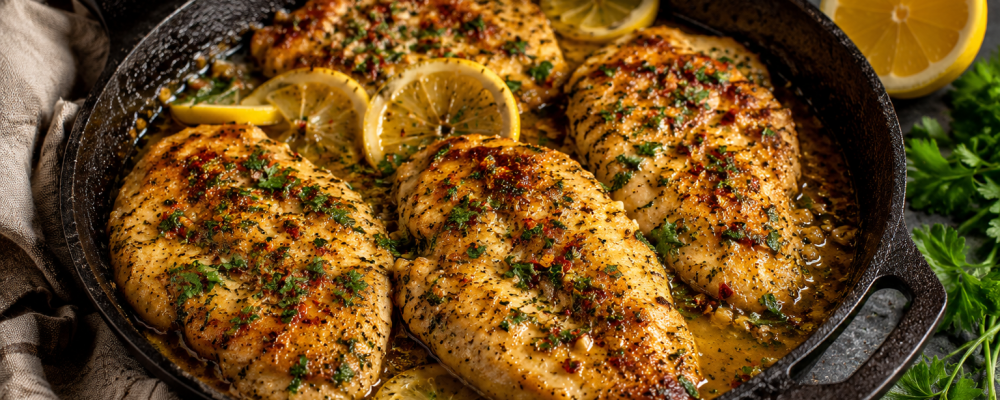

There are pan sauces that finish a dish, and there are pan sauces that define it. The cowboy butter in this recipe falls emphatically into the second category. Butter, garlic, lemon juice, Dijon mustard, honey, and red pepper flakes—built in the same skillet that seared the chicken, dissolving every bit of fond and dripping into something glossy, complex, and deeply satisfying. Cowboy Butter Lemon Chicken is one of those dinners where the sauce does the heavy lifting while the technique does the legwork, and the result is a plate that looks restaurant-worthy and cooks in under twenty-five minutes.
The butterfly cut is the technique decision that makes this recipe work so efficiently. Splitting the chicken breast horizontally to half its original thickness creates two thinner, even pieces that sear in significantly less time than a whole breast—developing a golden, slightly crisped exterior quickly enough that the interior doesn’t overcook before the crust is set. That golden crust is the foundation of the sauce: when the butter goes into the same skillet and the chicken fond dissolves into it, the sauce inherits the full character of the sear before a single additional ingredient is added.
The Dijon mustard is the detail I’m most deliberate about in the sauce construction. It acts as an emulsifier—helping the lemon juice and butter stay cohesive rather than separating into a greasy pool—while adding a sharp, tangy complexity that cuts through the honey’s sweetness and prevents the sauce from tasting one-dimensional. The honey, in turn, moderates the mustard’s edge and creates the glaze-like quality that makes the sauce cling to the chicken rather than pool around it. Every ingredient is doing double duty, and the result is a sauce with genuine depth.
The Inspiration Behind This Recipe
Cowboy butter originated as a compound butter—softened butter enriched with garlic, herbs, and chile—served alongside grilled steaks in the American steakhouse tradition. Its application as a pan sauce, rather than a cold compound butter, represents the evolution of the concept into something more practical and more dynamic: built to order in the skillet, incorporating the flavors of whatever protein was cooked before it. Applied to butterflied chicken breast with lemon and Dijon, it produces a preparation that sits at the intersection of French bistro cooking and American backyard boldness.
Why the Sear-Then-Sauce Method Defines This Dish
The sequence of this recipe—sear the chicken, remove it, build the sauce in the same pan, return the chicken—is the foundational technique of French pan sauce cookery applied to an American flavor combination. When the butter melts in the hot, fond-covered skillet, it immediately begins absorbing the concentrated drippings left by the seared chicken. The garlic blooms in that butter, the lemon juice deglazes the remaining fond, and the mustard and honey create the emulsified, glossy consistency that makes the sauce coat the returned chicken rather than slide off it. The low-heat finish ensures the chicken cooks through gently without the sauce breaking or the butter burning.
Flavor Profile: What to Expect
- Golden, seared chicken with a slightly crisped, smoked paprika-seasoned exterior that carries savory depth through every slice
- Glossy cowboy butter sauce that is simultaneously rich, tangy, slightly sweet, and warmly spiced
- Dijon mustard sharpness that cuts through the butter’s richness and provides the emulsifying structure the sauce needs
- Bright lemon acidity that lifts the entire sauce and keeps every bite feeling vibrant
- Honey sweetness that creates the glaze-like quality and balances the mustard and lemon
- Red pepper heat that builds gently and provides a lingering warmth
- Fresh parsley that adds herbal brightness and a clean finish
Tips for Making the Best Cowboy Butter Lemon Chicken
- Butterfly evenly: An even thickness across both halves ensures both cook through at the same rate. Uneven butterflying produces one overcooked and one undercooked half.
- Get the skillet hot before the chicken goes in: A properly hot skillet with hot oil develops the golden crust in two to three minutes per side. A cold or warm skillet produces pale, steamed chicken.
- Don’t move the chicken during the sear: Let it sit undisturbed until it releases naturally from the skillet surface. Forcing it before the crust is set tears the exterior.
- Reduce heat before adding butter: Butter burns quickly in a screaming-hot pan. Lower the heat to medium before building the sauce to ensure the garlic blooms without the butter browning.
- Simmer briefly with chicken returned: Low heat for two to three minutes is all that’s needed once the chicken is back in the sauce—enough to coat it thoroughly and finish cooking without breaking the emulsion.
Serving Suggestions and Side Pairings
- Over creamy mashed potatoes or buttered pasta to soak up the cowboy butter sauce
- Alongside roasted asparagus or broccolini for a clean, fresh vegetable contrast
- With warm crusty bread to scoop up every last drop of the sauce
- Sliced over a simple arugula salad with the pan sauce drizzled as a warm dressing
Storage and Make-Ahead Tips
- Refrigerate for up to 3 days. The sauce solidifies as it chills—reheat gently in a covered skillet over low heat with a splash of broth to restore consistency.
- Butterfly and season the chicken up to 24 hours in advance and refrigerate uncovered for a slightly drier surface that sears more effectively.
- This dish does not freeze well due to the butter-based sauce separating upon thawing.
Why This Recipe Deserves a Spot in Your Rotation
Cowboy Butter Lemon Chicken earns its rotation spot as the weeknight dinner that punches decisively above its effort level. The sauce is the kind of thing people taste and immediately want the recipe for—bold, bright, and built with just enough complexity to feel genuinely crafted. Once this one is in your regular lineup, it becomes the answer whenever you want dinner to feel like a proper occasion without the work that phrase usually demands.
Recommended Drink Pairing
The bright lemon and rich cowboy butter sauce call for something with enough acidity and character to hold its own. A Cranberry Orange Whiskey Sour brings bright fruit and citrus that plays beautifully against the Dijon and honey while complementing the smoked paprika’s warmth. A crisp, unoaked Chardonnay or a Sauvignon Blanc is the natural wine pairing—both bright enough to cut through the butter without overpowering the delicate chicken.
For non-alcoholic options, sparkling water with lemon and fresh herbs or a cold, lightly sweetened ginger lemonade keeps the palate clean and refreshed alongside a sauce this richly flavored.
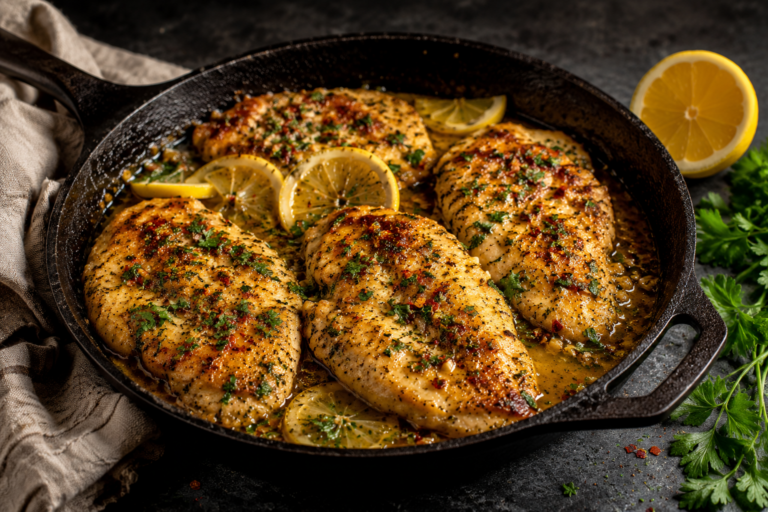
Cowboy Butter Lemon Chicken
Cowboy Butter Lemon Chicken sears butterflied chicken golden, then builds a glossy garlic butter sauce with lemon, Dijon mustard, honey, and red pepper flakes in the same skillet—rich, bright, and deeply satisfying in under 25 minutes.
4
servings15
minutes30
minutes450
kcal45
minutesIngredients
1.5 pounds chicken breast
1 cup unsalted butter
1 medium lemon, juiced
4 cloves garlic, minced
1 tablespoon Dijon mustard
1 teaspoon smoked paprika
1 tablespoon honey
1 teaspoon red pepper flakes
1 teaspoon salt
0.5 teaspoon black pepper
2 tablespoons fresh parsley, chopped
1 tablespoon olive oil
Directions
- Butterfly the chicken breasts and season with salt, pepper, and smoked paprika.
- In a skillet over medium heat, add olive oil and sear chicken until golden brown. Remove and set aside.
- In the same skillet, melt butter and add garlic, cooking until fragrant.
- Stir in lemon juice, Dijon mustard, honey, and red pepper flakes. Simmer briefly.
- Return chicken to the skillet, coating evenly in the sauce.
- Cook on low heat until chicken is cooked through.
- Garnish with fresh parsley before serving.
Nutrition Facts
- Total number of serves: 4
- Calories: 450kcal
- Cholesterol: 0mg
- Potassium: 400mg
- Sugar: 8g
- Protein: 6g
- Calcium: 60mg
- Iron: 2mg
About This Author

Benjamin Brown
Recipe Developer
Benjamin is our flavor engineer. A classically trained chef turned recipe developer, he’s obsessed with balancing taste, texture, and creativity. He ensures that every recipe we publish is not only delicious but also reliable, approachable, and repeatable — even for beginners.
Favorite dish: Slow-braised short ribs with red wine reduction.
Kitchen motto: “Cooking is part science, part soul.”















