
There is a very specific kind of satisfaction in a snack that is genuinely hard to stop eating—not because it’s sweet or rich in the way that makes you feel you’ve had too much, but because it’s savory and bright and textural in the way that keeps the next bite feeling as good as the last one. This is that snack. Sesame Ginger Edamame Bites are the kind of thing I make when I want something that feels genuinely indulgent in the eating without asking much of me in the making, and they deliver on that promise completely, every single time.
What I love about edamame as a snack base—beyond its impressive nutritional credentials, which are real and meaningful—is that it has a character of its own. It is not a neutral ingredient waiting to be told what to taste like. It is sweet and slightly grassy and genuinely satisfying in a way that most snack bases aren’t, and when you toss it in sesame oil and soy sauce and fresh ginger and roast it until it’s warm and slightly caramelized at the edges, it becomes something more than the sum of those flavors. It becomes a snack with a point of view.
The panko at the end is the detail I won’t let you skip. I know it seems like the kind of finishing touch that could be omitted without consequence, and you might be tempted to decide it isn’t worth the extra step. It is. The panko scatters over the warm, slightly sauced edamame and catches in the sesame seeds and the green onion and creates a crunch that is completely different from anything else in the bowl—lighter, crispier, more ephemeral than the sesame seed’s toastiness—and it makes the whole bite feel genuinely exciting from the first scoop to the last. Keep the panko. It earns its place.
─────────────────────────────────────────
The Inspiration Behind This Recipe
This recipe was inspired by the specific pleasure of izakaya snacking—the Japanese pub food tradition of small, shareable dishes built around bold, simple flavors that are designed to be eaten slowly and enjoyed genuinely, rather than consumed mechanically between meals. Izakaya snacks tend to be salty, umami-forward, and finished with brightness—citrus, herbs, a hit of sesame—in a way that keeps every bite tasting fresh even when the ingredients are warm and deeply seasoned. That flavor logic translates naturally and beautifully into a meal prep snack context, where the same qualities—boldness, brightness, genuine flavor depth—are exactly what keeps a snack from feeling like a compromise.
Sesame oil and soy sauce form the seasoning foundation because they are two of the most efficient flavor-delivery ingredients available in an Asian-inspired preparation. Both are umami-rich and deeply savory, and together they create a glaze that coats the edamame’s surface completely during roasting and begins caramelizing at the edges by the fifteen-minute mark, concentrating their flavor in a way that saucing without roasting cannot achieve. The fresh ginger—minced finely enough to distribute through every bean—adds an aromatic warmth and a clean citrus-adjacent brightness that is the flavor note that makes the whole preparation taste specifically intentional.
The lime juice and green onion, added after roasting, are the finishing elements that make the bites taste freshly made rather than simply prepped ahead. Lime added before roasting would lose its aromatic freshness in the oven; added after, it introduces a vivid, clean brightness that cuts through the sesame’s richness and makes the whole bowl taste alive. Green onion added hot wilts and loses its color; added warm, it retains its bite and its brightness and adds the gentle allium freshness that the bowl needs at the finish.
─────────────────────────────────────────
A Brief History of Edamame
Edamame—the Japanese word for “stem beans,” a reference to the way the pods were historically sold still attached to their stems—has been consumed in Japan for at least a thousand years, with documented culinary references appearing as early as the 13th century. Fresh soybeans eaten in their pods as a snack alongside sake and beer became one of the most enduring fixtures of Japanese food culture, particularly in summer months when the beans are harvested young and sweet, before their sugar content converts to starch. The tradition of boiling edamame in salted water and eating them directly from the pod remains the most common preparation throughout Japan today.
The soybean itself—from which edamame is simply the fresh, immature form—has a history in East Asian cultivation stretching back more than five thousand years, with origins in northeastern China and records of its cultivation and use in Chinese agriculture dating to the 11th century BCE. The soybean was one of the five sacred crops of ancient China alongside rice, wheat, millet, and barley—a designation that reflects its nutritional importance as one of the few plant sources of complete protein available to agricultural communities without access to consistent animal protein.
Edamame’s global popularity outside Japan is a relatively recent development, accelerating through the 1990s and 2000s as Japanese cuisine gained international recognition and health-conscious eaters discovered the bean’s extraordinary nutritional profile. Its adoption into the snack category—roasted, seasoned, and eaten as a standalone bite rather than as a pod-served accompaniment—reflects the broader contemporary movement toward plant-based snacking that is as satisfying as it is nourishing. This recipe is a direct expression of that movement: a traditional ingredient, modernized in format, and seasoned in a way that honors its Japanese culinary roots while making it genuinely appealing to the daily rhythms of a contemporary meal prep week.
─────────────────────────────────────────
Why This Cooking Method Works for Meal Prep
Roasting rather than steaming or sautéing is the cooking method that produces the best meal prep result for this specific preparation, and the reason is moisture management. Steamed edamame retains its water content, producing a bean that is tender but slightly wet—a texture that becomes progressively wetter in refrigerator storage as condensation accumulates in the sealed container. Roasted edamame loses surface moisture to the oven’s dry heat in the first minutes of baking, resulting in a bean with a slightly firmer exterior and a more concentrated flavor that holds up through the storage window rather than degrading.
The sesame oil and soy sauce coating, applied before roasting, serves as both a seasoning medium and a surface treatment. The oil coats each bean with a thin, even fat layer that promotes even heat distribution during roasting—preventing the exterior from drying unevenly or scorching before the interior is warmed through. The soy sauce’s sodium content draws a small amount of moisture from the bean’s surface early in the roast, concentrating at the exterior and caramelizing in the oven’s heat into the slightly tacky, deeply flavored surface that makes the finished bites satisfying to eat and structurally receptive to the post-roast additions.
Adding the panko breadcrumbs after roasting rather than baking them with the edamame is the technique decision that preserves their textural contribution through the storage window. Panko baked onto sauced edamame absorbs the liquid in the sauce during roasting and arrives at the finish soft and wet—functionally indistinguishable from a plain roasted bean. Panko scattered over the warm finished bites stays dry and crisp, contributing its characteristic light, airy crunch—a distinctly different texture from anything else in the preparation—for as long as it remains separate from the edamame’s moisture. For meal prep, this means portioning the panko separately and adding it at serving time, which maintains the crunch across the full week.
─────────────────────────────────────────
Flavor Profile: What to Expect
These bites are bold, layered, and deeply satisfying—a flavor profile that rewards attention across every snacking occasion:
- Nutty, toasted sesame richness – Sesame oil infuses every bean with a warm, slightly smoky nuttiness that is the bowl’s primary aromatic character—present throughout and deepened by the sesame seed garnish’s toasty crunch
- Savory soy sauce depth – Soy sauce provides the umami foundation that makes the bites taste genuinely substantial—salty, deeply savory, and concentrated at the beans’ caramelized edges
- Warm, aromatic fresh ginger – Minced fresh ginger distributes through the roasted edamame as a bright, slightly citrusy warmth that makes every bite taste more lively and more specifically flavored than the seasoning base alone could achieve
- Natural, slightly sweet edamame – The bean’s own mild sweetness comes forward beneath the sesame-soy seasoning—a grounding note that keeps the preparation from feeling aggressively savory and gives each bite a pleasing softness
- Bright lime acidity – Added post-roast, the lime’s vivid citrus note cuts through the sesame’s richness and gives the bowl a freshness that makes it taste assembled moments ago rather than prepped days earlier
- Crisp panko contrast – The lightest, most ephemeral textural element: an airy, neutral crunch that plays against the sesame seeds’ toasty firmness and the edamame’s yielding resistance in a way that makes each bite texturally interesting throughout
- Herbal green onion brightness – The sliced green onion provides a clean, mild allium note at the surface—fresh and slightly sharp against the deeper, warmer flavors below
The sesame and ginger character deepens overnight as the fat-soluble aromatics continue to distribute through the edamame’s surface. Day-two bites are noticeably more cohesive in flavor—the sesame, ginger, and soy having settled into the bean’s exterior as a unified, deeply seasoned whole.
─────────────────────────────────────────
Tips for Making the Best Sesame Ginger Edamame Bites
Simple preparations reward careful attention to their few critical steps:
- Use shelled, fully thawed edamame – Frozen edamame should be fully thawed and patted dry before tossing in the seasoning. Excess surface moisture from freezing dilutes the sesame oil and soy sauce coating and produces a bean that steams rather than roasts in the first minutes of oven time.
- Spread in a single layer with space – Edamame that touches during roasting steams at the contact points rather than roasting evenly across the full surface. Space between beans on the sheet pan produces more caramelization and more consistent flavor development across the batch.
- Mince ginger very finely – Large pieces of ginger concentrate heat and flavor unevenly, producing bites with occasional intense ginger hits rather than a consistent warmth throughout. Finely minced ginger—almost a paste—distributes evenly through every bean in the coating toss.
- Toss lime juice and sesame seeds while still warm – The warm edamame absorbs the lime juice more receptively than cold edamame, and the warm surface helps the sesame seeds adhere rather than rolling off. The brief window between the oven and cooling is the right moment for these finishing additions.
- Store panko separately – This is the single most important storage instruction in the recipe. Panko stored on the assembled bites absorbs moisture from the edamame and soy sauce overnight and loses its crunch entirely by the next morning. A small separate container of panko scattered over each day’s portion at serving maintains the textural contrast the whole week.
- Use fresh ginger, not ground – Ground ginger produces a different and less interesting flavor in this preparation—dry and slightly medicinal where fresh ginger is aromatic, citrusy, and bright. The difference is significant enough to be worth the extra step of grating or mincing a small knob.
Optional: A very small drizzle of chili oil or a pinch of red pepper flakes added with the lime juice introduces a gentle heat that complements the ginger’s warmth and the sesame’s nuttiness in a way that makes the bites genuinely difficult to stop reaching for.
─────────────────────────────────────────
Portioning and Container Suggestions
A standard batch yields approximately four generous snack servings—a small handful of edamame per serving as a satisfying between-meal snack, or a larger portion as a light pre-dinner offering. The edamame portions most efficiently into individual daily servings in small airtight containers or zip bags, each pre-portioned with a small separate container or bag of panko for that day’s crunch addition.
The compact, uniform size of individual edamame beans makes these bites one of the most space-efficient snack preps in the collection—four servings take up very little refrigerator space, and their modest container footprint means they integrate easily alongside larger meal prep components without requiring dedicated shelf space.
For an entertaining presentation—these bites are a genuinely good party snack—serve them warm from the oven in a wide, shallow bowl with the panko scattered lavishly over the top alongside a small dish of additional soy sauce for dipping. The combination of warm roasted edamame, toasted sesame, and that light panko crunch is the kind of snack that disappears faster than any more elaborate preparation and earns more enthusiastic feedback than most. That is the reliable magic of bold, simple flavors executed well.
─────────────────────────────────────────
Storage, Reheating, and Shelf Life Tips
- Refrigerator storage: Roasted edamame keeps in an airtight container for up to 4 days. The sesame-ginger flavor deepens through day two; texture remains firm and satisfying through day three.
- Panko storage: Store separately at room temperature in a sealed bag for up to 1 week. Add fresh to each day’s portion immediately before eating.
- Reheating: Microwave at full power for 30–45 seconds per serving. Edamame heats quickly—overheat and it becomes tough. Alternatively, spread on a sheet pan and warm in a 325°F oven for 5 minutes for a result closer to freshly roasted, with some surface crispness restored.
- Room temperature serving: These bites are excellent at room temperature—the sesame aroma is most forward without heat suppression, and the texture is at its most pleasant. A valid no-reheat option for desk snacking.
- Freezer storage: Not recommended for assembled bites—the roasting’s textural improvements don’t survive a freeze-thaw cycle well. Plain, shelled edamame freezes perfectly; roast from frozen after thawing for a freshly made result any time.
- Green onion: If storing assembled, the green onion maintains its flavor reasonably well through day two. For maximum brightness and color on days three and four, store separately and add at serving.
─────────────────────────────────────────
Why This Recipe Deserves a Spot in Your Meal Prep Rotation
The best snacks in a weekly rotation are the ones that you reach for not because they’re the only option but because they’re specifically what you want—because there’s something about the flavor, the texture, or the experience of eating them that makes them feel like a deliberate choice rather than a default. These edamame bites are that snack. The sesame-ginger-soy combination is assertive enough to feel genuinely satisfying at three in the afternoon, the lime and panko keep every bite tasting fresh, and the whole thing is warm and aromatic in a way that makes the brief moment of reaching into the container and picking up a handful feel, in the way that the best small things do, like a small pleasure rather than a task.
They also earn their practical credentials with characteristic efficiency: twenty minutes of prep, four days of snacking, a complete plant-based protein in every handful. But the reason to make them every week isn’t the nutritional argument or the prep efficiency—it’s the way they taste, specifically and consistently, every single time. A snack that you genuinely look forward to is a snack that does everything a meal prep snack is supposed to do. These do it beautifully.
─────────────────────────────────────────
Meal Prep Pairing Suggestions
Sesame Ginger Edamame Bites pair most naturally with snack preparations that share their bold, savory, Asian-inspired flavor tradition while offering genuine contrast in texture and temperature. Our Chili Lime Pepita Clusters make a compelling companion—both are roasted, seed or legume-based snacks with a bright citrus finish, but the clusters are sweet-spicy and caramelized where these bites are savory-umami and warmly gingered. The two cover different snacking moods within the same bold-flavored tradition without any flavor overlap.
For a broader snack rotation that provides cool freshness alongside the warm, roasted character of these bites, our Everything Bagel Hummus & Snap Pea Bites provide the no-cook, creamy, vegetable-based alternative that gives the week’s savory snacking genuine variety in both temperature and format. Three snack options covering roasted-and-sesame, caramelized-and-spiced, and cool-and-creamy means every afternoon snack occasion across the week has something that fits it specifically—and all three together require less than forty minutes of combined Sunday prep for a snack lineup that is genuinely, specifically good at every hour it’s needed.
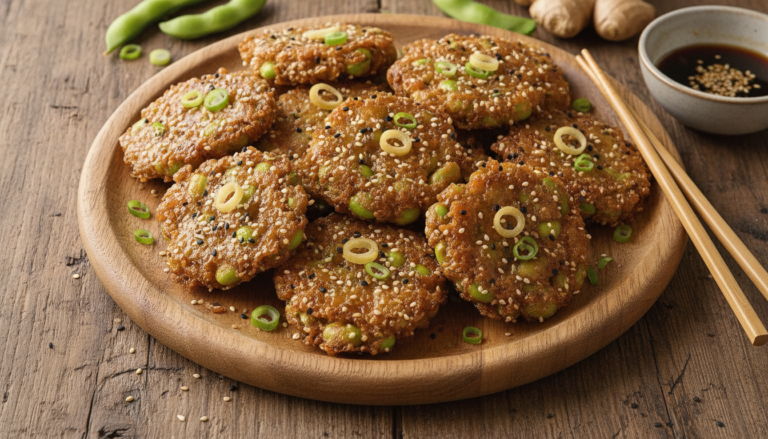
Sesame Ginger Edamame Bites
These Sesame Ginger Edamame Bites are a quick-roasted, flavor-forward snack that brings the bright, umami-rich character of sesame-ginger seasoning to edamame—finished with toasted sesame seeds, lime, and a panko crunch that makes every bite genuinely irresistible.
4
servings15
minutes20
minutes180
kcal35
minutesIngredients
1 cup edamame, shelled
2 tablespoons sesame oil
1 tablespoon soy sauce
1 teaspoon fresh ginger, minced
1 tablespoon sesame seeds
2 tablespoons green onions, chopped
1 teaspoon lime juice
2 tablespoons panko breadcrumbs
Directions
- Preheat oven to 375°F (190°C).
- In a bowl, combine edamame, sesame oil, soy sauce, and ginger. Mix well.
- Spread the mixture onto a baking sheet.
- Roast for 15 minutes or until edamame is tender.
- Remove from oven and let cool slightly.
- Toss with sesame seeds, green onions, and lime juice.
- Sprinkle with panko breadcrumbs before serving.
Nutrition Facts
- Total number of serves: 4
- Calories: 180kcal
- Cholesterol: 0mg
- Sodium: 620mg
- Potassium: 400mg
- Sugar: 8g
- Protein: 6g
- Calcium: 60mg
- Iron: 2mg
About This Author

Amelia Grace
Editor-in-Chief & Culinary Director
The heart and guiding voice of Daily Dish, Amelia leads our editorial vision and recipe development. With a background in food journalism and over a decade spent in professional kitchens, she has a knack for blending gourmet technique with real-world accessibility. Her goal? To make every reader feel like a confident cook, one dish at a time.
Favorite dish: Creamy lemon risotto with a sprinkle of fresh thyme.
Kitchen motto: “Good food doesn’t have to be complicated — it just has to be made with heart.”