
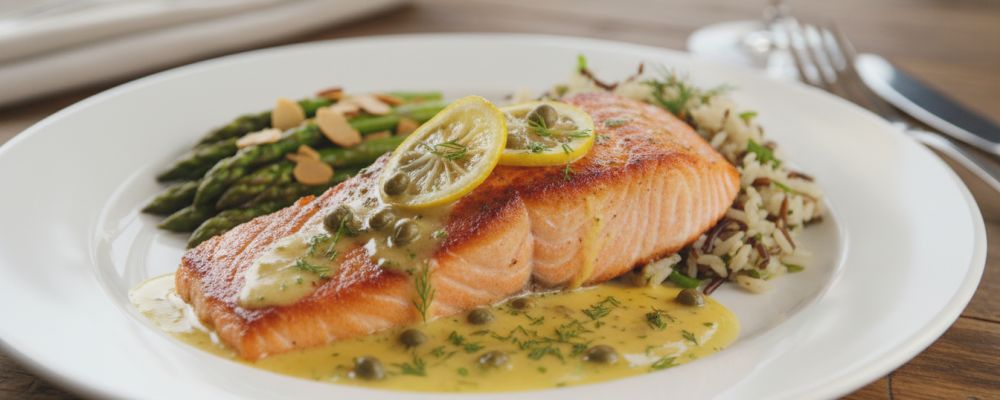

There’s a particular satisfaction in mastering restaurant techniques at home, and pan-searing salmon perfectly is one of those skills that separates confident cooks from tentative ones. Pan-Seared Salmon with Lemon Caper Butter Sauce demonstrates that impressive cooking often comes down to understanding fundamentals: proper heat management, patience to let protein develop a crust, and the technique of building a quick pan sauce that transforms simple ingredients into something elegant. This is cooking that rewards attention and precision while remaining genuinely accessible.
What makes this dish compelling from a technical standpoint is how each element serves a specific purpose. The olive oil provides high-heat fat for searing without burning. Seasoning just before cooking prevents salt from drawing out moisture prematurely. Starting skin-side down allows the skin to crisp while protecting the delicate flesh from direct heat. The butter sauce, built in the same pan, captures every bit of flavorful fond (caramelized bits) from searing, while lemon juice provides acidity that balances richness, capers add briny complexity, and garlic contributes aromatic depth.
The lemon-caper combination is classic French preparation, appearing in dishes like piccata and grenobloise. This pairing works because salmon’s rich, fatty flesh needs brightness to prevent it from feeling heavy. Lemon provides that brightness chemically through acidity while capers add textural interest and a briny note that complements salmon’s natural oceanic character. The butter sauce serves as the medium that ties everything together—emulsifying lemon juice into a cohesive coating that clings to the salmon rather than pooling on the plate.
From a wine pairing perspective, this dish presents an ideal scenario for crisp white wines. Salmon’s richness calls for wines with body, but the lemon-caper sauce demands acidity and brightness. The answer lies in white wines that balance these requirements—wines with enough weight to stand up to salmon while maintaining the crisp, refreshing quality that seafood preparations need. Sauvignon Blanc’s herbaceous character and vibrant acidity, or Chablis’s mineral backbone and citrus notes, create pairings where wine and food enhance rather than compete with each other.
─────────
The Inspiration Behind This Recipe
This recipe draws from classic French technique, particularly saumon piccata or saumon grenobloise—preparations where fish is pan-seared and finished with a bright butter sauce enriched with lemon and capers. The French perfected the art of quick pan sauces (sauces rapides) that capture fond, add acid and aromatics, and finish with butter for luxurious texture. Capers, native to the Mediterranean but embraced throughout French cooking, provide the briny complexity that prevents butter sauces from becoming one-dimensional. This preparation became popular in American restaurants during the nouvelle cuisine movement of the 1970s and 80s, when chefs emphasized lighter sauces and allowed quality ingredients to shine. The technique represents cooking that’s sophisticated yet simple—restaurant quality achievable at home with proper execution and quality ingredients.
─────────
A Brief History of Lemon-Caper Sauces
Lemon and capers have been paired in Mediterranean cooking for centuries, with ancient Romans using capers as both condiment and medicine. The combination became particularly prominent in Italian piccata preparations (typically veal or chicken) and French grenobloise sauce (classically served with skate wing). Both traditions emphasize the interplay between rich protein, bright citrus, and briny capers. As French cuisine evolved in the 19th and 20th centuries, chefs refined butter-based pan sauces that could be made quickly after searing protein, capturing fond and creating cohesive sauces without requiring separate preparation. This technique became fundamental in professional kitchens and was later democratized through cooking shows and home cooking movements. Today, lemon-caper butter sauce represents accessible elegance—a restaurant-quality preparation that home cooks can execute with confidence.
─────────
Why This Cooking Method Works
The science behind the technique:
- Patting salmon dry: Removes surface moisture that would prevent proper browning and create steam instead of sear
- High-heat searing: Creates Maillard reaction (caramelization) at 300°F+ that develops complex flavors and attractive color
- Skin-side down first: Protects delicate flesh from direct heat while allowing skin to crisp; fat renders from skin, basting the fish
- Minimal movement: Leaving salmon undisturbed allows proper crust formation; moving too soon tears flesh or prevents browning
- Medium-rare to medium doneness: Salmon cooked to 120-125°F internal temperature remains moist; overcooking creates dry, chalky texture
- Deglazing with lemon juice: Acid dissolves caramelized proteins (fond) stuck to pan, incorporating that flavor into sauce
- Butter emulsification: Butter melts into lemon juice and pan drippings, creating cohesive sauce rather than separated fat
- Caper brininess: Salt and vinegar in capers provide flavor contrast while their small size adds textural interest
- Garlic aromatics: Cooking garlic in butter releases fat-soluble flavor compounds throughout sauce
- Quick sauce timing: Building sauce after removing salmon prevents overcooking while fish rests
─────────
Flavor Profile: What to Expect
Rich • Bright • Briny • Elegant • Balanced
This salmon delivers perfectly cooked fish with rich, buttery flesh and crispy, golden skin. The exterior has savory depth from proper searing, while the interior remains moist and flaky. The lemon caper butter sauce is where everything comes together—silky richness from butter, bright citrus acidity from lemon (both juice and zest for complexity), briny pops from capers, and aromatic warmth from garlic. Fresh parsley adds a clean, herbaceous note that lifts the entire dish. The sauce is neither too thick nor too thin—it should coat the salmon with glossy elegance. The overall effect is refined and balanced—rich without being heavy, bright without being sharp, sophisticated yet comforting.
─────────
Tips for Making the Best Pan-Seared Salmon with Lemon Caper Butter Sauce
Salmon selection and preparation:
- Choose skin-on fillets (1-1.5 inches thick) for best results—skin protects flesh and crisps beautifully
- Wild-caught salmon (sockeye, king, coho) has more flavor; farmed Atlantic salmon is milder and fattier
- Look for firm flesh with bright color and no fishy smell
- Check for pin bones by running fingers along the fillet; remove with tweezers or pliers
- Bring salmon to room temperature (15-20 minutes) before cooking for even doneness
- Pat completely dry—this is critical for achieving crispy skin
Achieving perfect sear:
- Use a heavy pan (stainless steel or cast iron) that holds heat well
- Heat pan until oil shimmers and almost smokes
- Season salmon just before placing in pan—salt draws out moisture if applied too early
- Place salmon skin-side down and press gently with spatula for 10 seconds to ensure even contact
- Don’t touch or move salmon for 4-5 minutes—patience is essential for crispy skin
- Salmon is ready to flip when it releases easily from pan
- Flip only once—multiple flips prevent proper crust development
- For medium-rare (recommended), cook to 120-125°F internal temperature
Sauce perfection:
- Don’t clean the pan after removing salmon—fond is flavor
- Reduce heat to medium before adding butter to prevent burning
- Let garlic cook just 1 minute—burnt garlic is bitter
- Use fresh lemon juice, not bottled—the difference is dramatic
- Include lemon zest for additional brightness and aromatic oils
- Rinse capers before adding to control saltiness
- Simmer sauce briefly to meld flavors and thicken slightly
- If sauce breaks (separates), whisk in a splash of water or broth to re-emulsify
- Taste and adjust—add more lemon for brightness, more butter for richness
Timing and doneness:
- Use a meat thermometer for accuracy—visual cues alone can be misleading
- Salmon continues cooking after removal from heat (carryover cooking)
- Medium-rare: 120-125°F (translucent center)
- Medium: 125-130°F (slightly opaque center) ★ Most popular
- Well-done: 135°F+ (fully opaque but drier)
Skin crispy vs. skinless: If you prefer skinless, ask your fishmonger to remove skin, or remove it after cooking (it slides off easily). The cooking method remains the same.
─────────
Wine Pairing Guide
Perfect pairings for Pan-Seared Salmon with Lemon Caper Butter Sauce:
Sauvignon Blanc (New Zealand or Loire Valley) ★ Best Match Crisp, vibrant acidity with herbaceous notes and citrus flavors that mirror the lemon in the sauce beautifully. New Zealand versions bring tropical fruit and intensity, while Loire Valley offers more restraint and minerality. The wine’s bright acidity cuts through butter and salmon’s richness while the herbaceous character complements capers. Classic pairing that feels both elegant and refreshing.
Chablis Unoaked Chardonnay from Burgundy with steely minerality, green apple flavors, and vibrant acidity. The wine’s lean, precise character won’t overpower delicate salmon, while its citrus notes echo the lemon and its body stands up to butter. The minerality adds complexity that elevates the entire pairing.
Pinot Grigio (Italian – Friuli or Alto Adige) Crisp, light-bodied with subtle almond and citrus notes. Premium Italian Pinot Grigio offers more complexity than basic versions, with enough acidity for the sauce and enough delicacy not to overwhelm the salmon. Clean, refreshing choice that lets the fish shine.
Albariño Spanish coastal white with saline minerality, stone fruit flavors, and bright acidity. The wine’s oceanic character makes it a natural partner for seafood, while its body stands up to butter without overwhelming. The slight salinity echoes the capers beautifully.
Champagne or Quality Sparkling Wine For special occasions, bubbles and acidity cut through richness magnificently while the wine’s elegance matches the dish’s sophistication. Blanc de Blancs (100% Chardonnay) offers particular synergy with salmon’s delicate character and butter sauce’s richness.
Alternative pairing: A light-bodied, fruit-forward Pinot Noir (especially from Oregon or cooler-climate regions) offers enough body for salmon without overwhelming, with earthy notes that complement rather than compete. Unconventional but surprisingly effective for those who prefer red with richer fish.
─────────
Serving Suggestions and Side Pairings
Beautiful presentations:
- Classic elegance: Center salmon on white plate, spoon sauce over and around, garnish with lemon wedge and fresh parsley
- Modern plating: Create a swoosh of sauce, place salmon on top, add microgreens and lemon zest
- Rustic charm: Serve directly from the pan family-style with crusty bread for sauce-soaking
Ideal side dishes:
- Garlic Rosemary Focaccia Muffins: Essential for soaking up that lemon butter sauce
- Spinach Mushroom Orzo: Creamy, elegant pasta that complements without competing
- Roasted asparagus: Classic pairing with lemon butter drizzle
- Simple arugula salad: Peppery greens with lemon vinaigrette echo the dish’s brightness
- Garlic mashed potatoes: Creamy comfort that absorbs sauce beautifully
- Roasted baby potatoes with herbs: Light, flavorful base for the salmon
For a complete Wine Wednesday spread: Create a coastal seafood celebration: start with oysters or a shrimp cocktail, serve this pan-seared salmon as the elegant main course with refined sides, and finish with lemon panna cotta or key lime pie. Offer multiple white wine options to explore how different styles interact with the lemon-caper sauce. Add Lemon Butter Scallops or Garlic Parmesan Roasted Shrimp to create a seafood-focused menu that showcases various preparations and wine pairing possibilities.
─────────
Storage, Reheating, and Make-Ahead Tips
Storage:
- Refrigerate cooked salmon in an airtight container for up to 2 days
- Store sauce separately from salmon to maintain texture
- Note: Salmon is best enjoyed fresh; texture degrades when reheated
Reheating (not ideal, but if necessary):
- Oven (best method): Reheat at 275°F for 10-12 minutes, just until warmed through
- Microwave: Heat at 50% power in 30-second intervals (texture won’t be as good)
- Stovetop: Warm gently in a covered pan with a splash of water over low heat
- Never overheat—overcooked salmon becomes dry and chalky
- Crispy skin won’t survive reheating—expect softer texture
Make-ahead strategies:
- Season salmon up to 2 hours ahead; refrigerate covered
- Bring to room temperature before cooking
- Make sauce ingredients (mince garlic, juice lemon, rinse capers) ahead for quick cooking
- Critical: This dish is best made and served immediately—the cooking time is so short that “make-ahead” isn’t necessary
Cold serving option: Leftover salmon is excellent cold or at room temperature over salads, in grain bowls, or flaked into pasta—don’t feel compelled to reheat.
Pro tip for entertaining: Complete all prep (salmon seasoned, ingredients measured, sides nearly ready) before guests arrive. The actual cooking takes only 15 minutes, so you can prepare this while everyone’s enjoying appetizers and wine, then serve it immediately at peak perfection.
─────────
Why This Recipe Deserves a Spot in Your Wine Wednesday Rotation
Pan-Seared Salmon with Lemon Caper Butter Sauce represents everything Wine Wednesday should celebrate—restaurant-quality cooking that’s genuinely achievable at home, elegant flavors that make ordinary evenings feel special, and a dish that pairs beautifully with crisp white wines you’ll actually want to drink. This isn’t complicated cooking requiring professional training; it’s fundamental technique executed with attention and care, yielding results that make you feel like a capable, confident chef.
What makes this particularly compelling from a culinary perspective is how mastering this dish unlocks a entire category of cooking. Learn to pan-sear fish properly and build a quick butter sauce, and you’ve gained skills that apply across countless preparations—different proteins, different flavor profiles, same fundamental technique. That’s the kind of cooking education that pays dividends forever.
The wine pairing aspect is where this dish truly excels for Wine Wednesday. Sauvignon Blanc doesn’t just accompany this salmon—it completes it, with the wine’s acidity cutting through butter while echoing the lemon, the herbaceous notes complementing capers, and the crisp finish refreshing your palate for the next bite. It’s the kind of food-and-wine synergy that makes you understand why pairing matters, why certain combinations work while others merely coexist.
Most importantly, this is cooking that respects your time while delivering maximum impact. Fifteen minutes of focused attention yields salmon with crispy skin, tender flesh, and a silky sauce that looks like it came from a high-end restaurant kitchen. That efficiency combined with undeniable elegance makes this exactly the kind of dish Wine Wednesday was made for—impressive results without stress, sophistication without pretension, quality without compromise.
So heat that pan properly, trust your technique, and remember that sometimes the most impressive cooking is also the simplest. A perfectly seared piece of salmon, a bright butter sauce, and a glass of crisp white wine—that’s not just dinner. That’s culinary confidence, and it tastes absolutely magnificent.
Bon appétit!
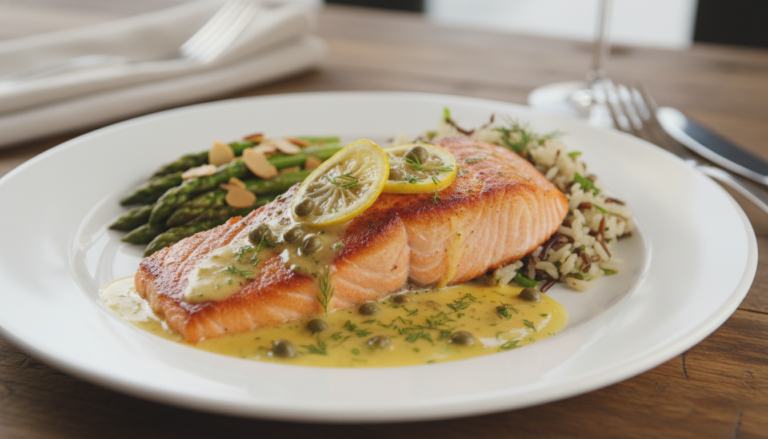
Pan-Seared Salmon with Lemon Caper Butter Sauce
Golden pan-seared salmon with silky butter sauce brightened by lemon and capers—effortless sophistication that pairs beautifully with wine.
4
servings30
minutes40
minutes300
kcal1
hour10
minutesIngredients
4 fillets salmon
2 tablespoons olive oil
1 teaspoon salt
0.5 teaspoon black pepper
2 tablespoons butter
3 tablespoons capers
1 lemon juice and zest
1 tablespoon fresh parsley
2 cloves garlic, minced
Directions
- Pat the salmon fillets dry with paper towels, then season with salt and black pepper.
- Heat olive oil in a large pan over medium-high heat. Add salmon fillets, skin side down.
- Sear the salmon for 4-5 minutes on each side until browned and cooked through.
- Remove the salmon from the pan and set aside.
- In the same pan, reduce the heat to medium and add butter.
- Once the butter has melted, add the minced garlic and sauté for 1 minute.
- Add lemon juice, zest, and capers. Stir and let simmer for 2 minutes.
- Return salmon to the pan and coat with the sauce.
- Garnish with fresh parsley before serving.
Nutrition Facts
- Total number of serves: 4
- Calories: 420kcal
- Cholesterol: 0mg
- Sodium: 620mg
- Potassium: 400mg
- Sugar: 8g
- Protein: 6g
- Calcium: 60mg
- Iron: 2mg
About This Author

Benjamin Brown
Recipe Developer & Wine Enthusiast
Benjamin is our flavor engineer. A classically trained chef turned recipe developer, he’s obsessed with balancing taste, texture, and creativity. He ensures that every recipe we publish is not only delicious but also reliable, approachable, and repeatable — even for beginners.
Favorite dish: Slow-braised short ribs with red wine reduction.
Kitchen motto: “Cooking is part science, part soul.”















