
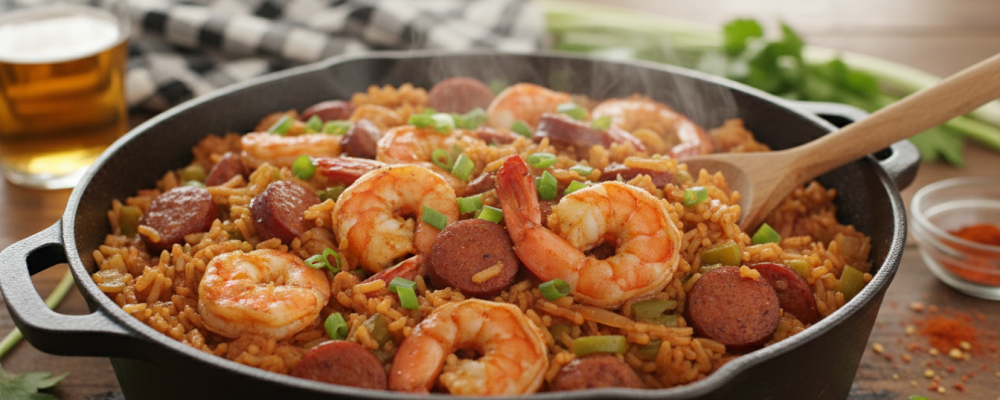

There are dishes that define a region so completely that eating them feels like visiting a place—and jambalaya is one of them. This One Pot Shrimp & Sausage Jambalaya captures everything that makes Louisiana’s most celebrated rice dish so enduring: andouille sausage that seasons the pot from the moment it browns, long-grain rice that absorbs the spiced tomato-and-broth cooking liquid until every grain tastes like the dish itself, tender shrimp folded back through at the finish, and the kind of concentrated, deeply layered flavor that most people assume takes hours to build. This version comes together in a single pot in under an hour—and it tastes like New Orleans in every forkful.
Jambalaya is a recipe where technique matters more than the ingredient list, and the sequence of this recipe is built deliberately around that principle. The shrimp go in first and come out early—cooked just to pink and set aside—because shrimp that simmer for twenty minutes in rice broth become rubbery and overcooked by the time everything else is done. The sausage browns in the same pot, rendering its fat and building the fond that seasons the vegetables and rice that follow. The rice cooks directly in spiced broth enriched by the tomatoes and every bit of flavor the sausage and vegetables have left behind. That accumulation is what makes a great jambalaya taste complex after thirty minutes of cooking—not the spice level, but the sequence.
The difference between good jambalaya and great jambalaya often comes down to one thing: patience at the browning stage. Don’t rush the sausage. Don’t stir the vegetables before they’ve had time to soften. Let the rice simmer undisturbed without lifting the lid. The pot will reward you generously if you give it the time it’s asking for.
The Inspiration Behind This Recipe
This recipe draws from the Creole jambalaya tradition—the tomato-enriched version of the dish associated with New Orleans proper, as distinguished from the Cajun “brown” jambalaya of the rural Louisiana parishes, which omits tomatoes and develops its color from the browned meat and vegetables alone. Both traditions are great; the Creole version’s tomato base adds brightness and body that makes it particularly well-suited to a home kitchen where a screaming-hot cast iron and wood-fire heat aren’t available.
The shrimp-and-andouille combination is the classic protein pairing of Creole cooking—the interplay of smoky, spiced sausage and sweet Gulf shrimp that appears throughout the cuisine in everything from gumbo to étouffée. In jambalaya, these two proteins define the dish’s character more than any other ingredient, and this recipe treats them with the respect they deserve.
A Brief History of Jambalaya
Jambalaya is one of the most distinctive and beloved dishes in American regional cooking, with roots stretching back to the French and Spanish colonial periods of Louisiana history. The dish is widely believed to have evolved from the Spanish rice dish paella, brought to Louisiana by Spanish settlers in the 18th century and transformed by the addition of local ingredients—Creole tomatoes, andouille sausage, Gulf shrimp, and the Cajun and Creole spice traditions that define Louisiana cooking.
The dish developed two primary regional styles: Creole jambalaya, made in New Orleans and enriched with tomatoes, and Cajun jambalaya, made in the rural parishes south and west of New Orleans where tomatoes were less available and the dish developed its distinctive darker, browned character. Both versions share the fundamental technique of cooking rice directly in a seasoned broth alongside smoked pork and seafood—a technique that produces the most flavorful rice dish in American cooking and has made jambalaya one of the defining symbols of Louisiana food culture worldwide.
Why the One-Pot Method Produces Superior Flavor
The genius of jambalaya—and what separates it from a pile of rice with proteins served on top—is that the rice cooks in a liquid that has absorbed the character of everything cooked in the pot before it. The andouille renders its fat and spiced drippings into the pot. The vegetables soften in that fat and add their own moisture and flavor. The tomatoes add acidity and body. The broth carries all of these accumulated flavors through the rice during the twenty-minute simmer, so that every grain is seasoned from the cooking liquid rather than from a sauce applied afterward.
This is the same flavor logic that makes Spanish arroz con pollo and the Mexican rice dishes in this collection so satisfying—the understanding that rice cooked in a flavored liquid is a fundamentally different, fundamentally more delicious dish than rice cooked in water and combined with other ingredients. In jambalaya, where the cooking liquid carries the character of andouille fat, Cajun spices, tomatoes, and the holy trinity of onion, bell pepper, and garlic, the result is rice that tastes like the best part of the entire dish.
Flavor Profile: What to Expect
Every component of this jambalaya contributes to a deeply layered, Louisiana-inspired flavor experience:
- Smoky, deeply spiced andouille that seasons the entire pot from the first moment of browning and carries its paprika-forward, garlic-laced character through every grain of rice
- Tender, sweet shrimp added at the finish that provide clean, oceanic counterpoint to the richness of the sausage
- Spiced, tomato-enriched rice that has absorbed the full character of the broth, sausage fat, and vegetables during the simmer
- Cajun seasoning that distributes its heat, paprika, and herb complexity throughout the dish
- Caramelized bell pepper, onion, and garlic that mellow into the base and provide a quiet, sweet aromatic foundation
- Fresh parsley that adds a clean, herbal brightness that lifts the richness of the finished dish
The overall effect is bold, smoky, spiced, and deeply satisfying—a one-pot rice dish with the soul of New Orleans in every spoonful.
Tips for Making the Best One Pot Jambalaya
These technique details will make a meaningful difference:
- Brown the sausage properly: Let the slices develop a deep, caramelized crust before stirring—this builds the flavor foundation that carries through the entire dish. Don’t rush this step.
- Cook shrimp separately and add at the end: Shrimp added with the rice will be overcooked by the time the rice is done. Cook to just-pink, set aside, and return only in the final five minutes.
- Don’t lift the lid during the rice simmer: Every time the lid comes off, steam escapes and the rice can cook unevenly. Set a timer for 20 minutes and resist.
- Use long-grain rice: Long-grain rice stays fluffy and separate in a braise; short-grain rice can become gummy. This distinction matters significantly in the finished texture.
- Scrape the fond: When the vegetables go in after the sausage, use a wooden spoon to scrape up all the browned bits from the bottom. That fond is concentrated flavor that belongs in the dish.
- Taste and adjust Cajun seasoning: Cajun seasoning varies significantly in heat and salt between brands. Taste the broth before the rice goes in and adjust accordingly.
Serving Suggestions and Side Pairings
Jambalaya is a complete, one-pot meal that needs very little alongside it:
- Warm crusty bread or garlic bread for scooping up the saucy rice
- A simple green salad with a light lemon vinaigrette to cut through the richness
- Hot sauce on the table for those who want extra heat
- Cold sweet tea or a lager with lime for the full Louisiana experience
- Cornbread as a classic Southern accompaniment that complements the bold, spiced rice
Storage, Reheating, and Make-Ahead Tips
Jambalaya holds up exceptionally well:
- Refrigerate in an airtight container for up to 4 days. The flavors deepen and meld beautifully overnight.
- Reheat in a pot or skillet over medium-low heat with a splash of chicken broth to restore moisture. Stir frequently to prevent sticking.
- Freeze for up to 2 months. Thaw overnight and reheat as directed, adding a splash of broth to restore consistency.
- Make ahead: This is an excellent meal prep recipe—the rice absorbs more of the sauce as it sits, making leftovers arguably even more flavorful than the original.
Why This Recipe Deserves a Spot in Your Rotation
One Pot Shrimp & Sausage Jambalaya earns its place as the Louisiana classic that every home cook should have in their repertoire. It’s bold, deeply satisfying, built from accessible ingredients, and produces a finished dish with the kind of authentic regional flavor that most people assume requires specialized knowledge or hours of cooking. The one-pot format makes cleanup minimal and the process approachable. Once this is in your regular lineup, it becomes the recipe you reach for whenever you want dinner to feel like a genuine occasion—because it always does.
Recommended Drink Pairing
A dish this bold and spiced calls for something with brightness and enough character to keep pace. A Cranberry Mule brings ginger heat and tart fruit acidity that cuts through the richness of the andouille and rice while echoing the spiced, lively energy of the dish. A cold craft lager or a sweet, unsweetened iced tea with lemon is the classic Louisiana table companion that never fails alongside a bowl of jambalaya this bold.
For non-alcoholic options, a cold, lightly sweetened hibiscus tea or a sparkling lemonade keeps the palate refreshed and complementary throughout the meal.
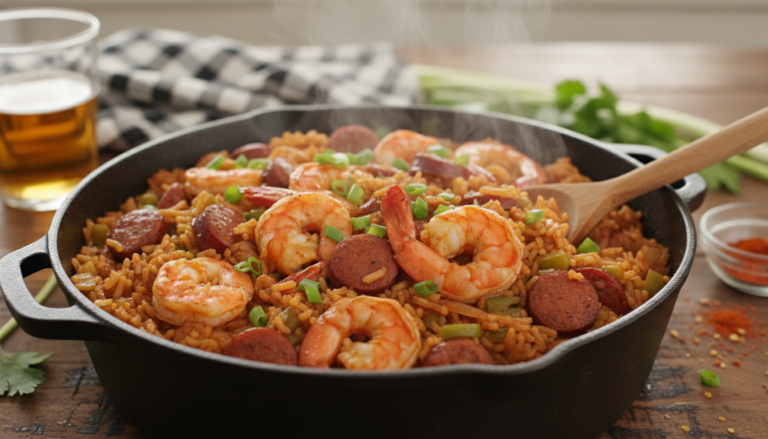
One Pot Shrimp & Sausage Jambalaya
One Pot Shrimp & Sausage Jambalaya simmers andouille, shrimp, and long-grain rice in a bold Cajun-spiced tomato broth until every grain is deeply flavored—a classic Louisiana one-pot that delivers big on every single level.
6
servings15
minutes40
minutes450
kcal55
minutesIngredients
2 tbsp olive oil
1 lb shrimp, peeled and deveined
0.5 lb andouille sausage, sliced
1 cup long-grain rice
1 cup chicken broth
1 cup diced tomatoes
1 cup chopped bell pepper
0.5 cup chopped onion
2 cloves garlic, minced
1 tsp Cajun seasoning
0.5 tsp salt
0.25 tsp black pepper
2 tbsp parsley, chopped
Directions
- Heat olive oil in a large pot over medium heat.
- Add shrimp and cook until pink; remove and set aside.
- In the same pot, sauté sausage until browned.
- Add bell pepper, onion, and garlic; cook until vegetables are soft.
- Stir in rice, chicken broth, diced tomatoes, Cajun seasoning, salt, and pepper.
- Bring mixture to a boil, then reduce heat to low.
- Cover and simmer for 20 minutes, or until rice is cooked.
- Return shrimp to the pot; cook for 5 additional minutes.
- Garnish with parsley before serving.
Nutrition Facts
- Total number of serves: 4
- Calories: 450kcal
- Cholesterol: 0mg
- Sodium: 620mg
- Potassium: 400mg
- Sugar: 8g
- Protein: 6g
- Calcium: 60mg
- Iron: 2mg
About This Author

Benjamin Brown
Recipe Developer
Benjamin is our flavor engineer. A classically trained chef turned recipe developer, he’s obsessed with balancing taste, texture, and creativity. He ensures that every recipe we publish is not only delicious but also reliable, approachable, and repeatable — even for beginners.
Favorite dish: Slow-braised short ribs with red wine reduction.
Kitchen motto: “Cooking is part science, part soul.”















