
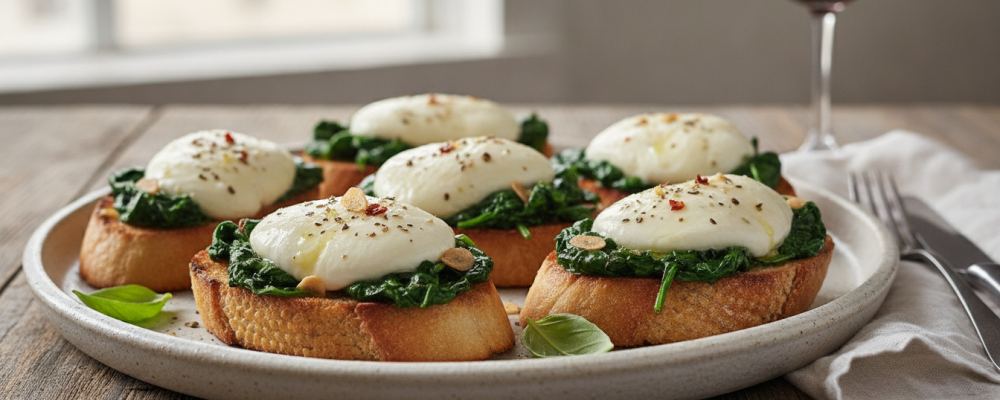

Mozzarella and Spinach Crostini represent a category of recipe I find particularly interesting from a development perspective: dishes where the simplicity is the sophistication. There are six functional ingredients here—baguette, spinach, mozzarella, garlic, olive oil, salt and pepper—and every single one is doing precisely defined work. Nothing is decorative. Nothing is redundant. When a recipe achieves that kind of economy of ingredients while still delivering complex, satisfying flavor, it demonstrates a level of culinary clarity that’s genuinely difficult to achieve and easy to overlook.
The garlic oil application is where this recipe’s intelligence begins. Rather than simply drizzling olive oil and adding raw garlic as a separate topping, this recipe combines them first—allowing the garlic’s fat-soluble aromatic compounds to infuse into the oil before it’s applied. This matters because fat is an extraordinarily efficient carrier of flavor. When that garlic-infused oil soaks into the baguette’s porous interior during baking, it distributes garlic flavor throughout the bread rather than concentrating it in raw pieces on the surface. The result is garlic character that’s present in every bite but never aggressive or raw-tasting.
The sequence of toppings—spinach first, then mozzarella—is also deliberate and structurally important. Spinach placed directly on the garlic oil creates direct contact between the vegetable and the bread, allowing moisture released during baking to be partially absorbed rather than pooling on the surface. The mozzarella layer on top then acts as a lid, trapping steam that wilts the spinach gently and thoroughly while the cheese itself melts and browns on the exposed upper surface. This two-layer approach creates distinct textural zones: crispy bread on the bottom, tender wilted spinach in the middle, bubbly browned mozzarella on top.
The 375°F baking temperature sits below the threshold where mozzarella’s proteins would seize and turn rubbery, while remaining high enough to generate the browning and bubbling that signals proper melting. It’s a temperature calibrated specifically for this application—high enough for visual and textural results, moderate enough to protect the cheese’s structure and the bread from burning before the cheese finishes melting.
─────────
The Inspiration Behind This Recipe
Mozzarella and Spinach Crostini emerged from the Italian culinary principle of taking exceptional ingredients and treating them with the restraint they deserve. Italian cooking at its best is an exercise in confidence—the confidence to believe that fewer, better ingredients will always outperform more numerous, mediocre ones. This recipe embodies that philosophy completely.
The inspiration also reflects a practical understanding of what makes appetizers genuinely successful at gatherings. The most effective party food shares three characteristics: it’s visually appealing enough to generate interest, straightforward enough to eat without utensils, and flavorful enough to stand on its own without accompaniment. These crostini check every box while remaining accessible enough that any cook—regardless of experience level—can execute them successfully on any given Monday.
The spinach and mozzarella combination specifically draws from the tradition of Italian pizza and flatbread preparations where these two ingredients appear together regularly. Their compatibility is well-established through centuries of Italian cooking: spinach’s earthy, slightly mineral character complements mozzarella’s clean dairy mildness, and both benefit from the aromatic depth that garlic and olive oil provide.
─────────
A Brief History of Crostini and Italian Antipasto
Crostini—literally “little toasts” in Italian—have deep roots in Tuscan culinary tradition, where resourceful cooks found ways to extend the life of day-old bread by toasting it and applying various toppings. The practice of rubbing toasted bread with garlic and olive oil, known as fettunta in Tuscany, dates back centuries and represents one of Italian cuisine’s most enduring preparations: simple, honest, and deeply satisfying.
Antipasto—the Italian tradition of small dishes served before the main meal—provided the cultural context in which crostini thrived. Alongside olives, cured meats, marinated vegetables, and cheeses, crostini offered a bread-based vehicle for showcasing seasonal ingredients and regional flavors. Different regions developed distinct crostini traditions: Tuscany favored chicken liver preparations, Rome preferred tomato and basil, Naples developed bruschetta with its characteristic rough bread and ripe tomatoes.
Mozzarella’s history stretches back to 12th-century southern Italy, where Campanian monks first produced the fresh cheese from water buffalo milk. As mozzarella production expanded and cow’s milk versions became more widely available, the cheese spread throughout Italian cooking and eventually became one of the most consumed cheeses globally. The spinach-mozzarella combination gained particular prominence in Italian-American cooking, where it appeared in lasagna, stuffed shells, and eventually on toasted bread preparations like these crostini.
─────────
Why This Cooking Method Works
Garlic oil infusion before application allows fat-soluble aromatic compounds to extract from the garlic into the oil. These compounds distribute through the bread during baking, creating pervasive garlic flavor rather than concentrated raw pockets.
Porous baguette interior absorbs the garlic oil efficiently, carrying it throughout the bread rather than allowing it to pool on the surface. This absorption is what distinguishes properly made crostini from bread that merely has oil on top.
Spinach as the first layer creates direct contact between the vegetable and the oil-saturated bread. During baking, spinach releases moisture that’s partially absorbed by the bread rather than causing the topping to become waterlogged.
Mozzarella on top functions as a protective lid for the spinach beneath. The cheese melts and creates a seal that traps steam, wilting the spinach gently while itself browning on the exposed upper surface—two distinct cooking processes happening simultaneously in the same oven.
375°F temperature achieves crispy bread and bubbly cheese without burning either. Lower temperatures produce pale, underdeveloped results; higher temperatures risk burning the bread before the cheese properly melts.
10-12 minute baking window provides adequate time for bread crisping, garlic oil absorption, spinach wilting, and mozzarella melting to occur sequentially and completely.
Uniform slice thickness (½-inch) ensures consistent cooking across all pieces. Thinner slices burn before the cheese melts; thicker slices remain doughy in the center.
Seam-side arrangement on the baking sheet creates a stable base that prevents tipping during topping application and maintains structural integrity throughout baking.
─────────
Flavor Profile: What to Expect
Mozzarella and Spinach Crostini deliver clean, well-defined Italian flavors with satisfying textural contrast throughout. The baguette base provides the structural foundation—initially crunchy on its flat bottom surface, with a tender interior that has absorbed the garlic oil completely. The bread flavor is subtle but present, providing wheaty character that grounds the toppings.
Garlic oil permeates the bread with warm, aromatic depth. Having been heat-applied during baking rather than served raw, the garlic delivers mellow, rounded flavor rather than the sharp pungency of fresh raw garlic—present throughout but never aggressive.
Wilted spinach offers earthy, slightly mineral flavor with gentle bitterness that provides essential contrast to the richness of cheese and oil. Its texture is tender without being mushy, having been gently steamed beneath the mozzarella rather than subjected to direct dry heat.
Mozzarella delivers clean, mild dairy sweetness with that characteristic slight tang and the elastic, stretchy texture that defines properly melted fresh-style cheese. The surface develops light golden-brown spots where caramelization has occurred, adding subtle roasted notes to the cheese’s natural mildness.
Salt and pepper sharpen and define everything—bringing out the garlic’s warmth, enhancing the spinach’s earthiness, and making the mozzarella taste more fully of itself.
The overall experience is harmonious and balanced: nothing competes, everything contributes, and each component is enhanced by its relationship with the others.
─────────
Tips for Making the Best Mozzarella and Spinach Crostini
- Day-old baguette performs better: Slightly stale bread has lower moisture content and toasts more evenly. Fresh bread can become too soft in the center during baking.
- Low-moisture mozzarella is essential: Fresh mozzarella contains too much water and will make crostini soggy. Pre-shredded low-moisture mozzarella or a block you shred yourself performs significantly better.
- Shred your own when possible: Pre-shredded mozzarella contains anti-caking starches that affect melting behavior. A freshly shredded block melts more smoothly and evenly.
- Let garlic steep in oil: Combine minced garlic and olive oil 10-15 minutes before brushing. This steeping time extracts more aromatic compounds for deeper garlic character.
- Don’t drown the bread: A generous but not excessive brush of garlic oil is correct. Too much oil creates soggy crostini; too little produces dry, flavorless bread.
- Pat spinach dry: If spinach has been washed, dry it thoroughly before topping. Excess surface water creates steam that softens the bread.
- Uniform cheese distribution: Spread shredded mozzarella in an even layer that covers the spinach completely, creating a consistent melt across the entire surface.
- Watch carefully in the final two minutes: Mozzarella moves quickly from properly bubbly to over-browned. The ideal moment is when the cheese shows golden spots but hasn’t fully browned.
- Serve immediately: Crostini lose their textural contrast quickly as the bread absorbs steam from the topping. The window for optimal texture is narrow—plan serving accordingly.
- Cut baguette on a slight bias: Angled slices create more surface area and a more elegant presentation.
─────────
Serving Suggestions and Side Pairings
Mozzarella and Spinach Crostini work beautifully across a range of occasions and serving contexts:
As a standalone appetizer: Arrange on a long wooden board or slate with a drizzle of finishing olive oil and fresh cracked pepper. The visual simplicity is itself elegant.
Italian antipasto spread: Include alongside marinated olives, prosciutto, roasted peppers, and burrata for a complete Italian-inspired appetizer table that honors the crostini’s culinary heritage.
Dinner party first course: Plate two or three crostini per person with a small arugula salad dressed with lemon and Parmesan shavings for a refined, restaurant-quality first course.
Soup accompaniment: Serve alongside tomato soup, minestrone, or ribollita—the Italian bread soup tradition that already embraces this exact combination of ingredients in different form.
Pairing suggestions:
- Simple arugula salad with lemon and shaved Parmesan
- Marinated olives and pickled vegetables
- Prosciutto and melon for sweet-savory contrast
- Burrata with cherry tomatoes and basil
- Roasted red peppers with capers and anchovy
- Minestrone or ribollita for a complete Italian-themed meal
- Cherry tomatoes and fresh basil for color and freshness
─────────
Storage, Reheating, and Make-Ahead Tips
Storage: These crostini are best consumed immediately after baking. If you have leftovers, store in an airtight container in the refrigerator for up to 1 day, though texture degrades significantly as the bread absorbs moisture from the topping.
Reheating: Reheat in a 375°F oven for 5-7 minutes to restore some crispness. An air fryer at 350°F for 3-4 minutes produces the best reheated result. Avoid microwaving entirely—it makes the bread rubbery and the cheese tough.
Make-ahead components: Prepare the garlic oil up to 3 days ahead and refrigerate in a sealed container. Slice the baguette and store at room temperature in a paper bag for up to 2 days.
Make-ahead assembly: Brush slices with garlic oil and top with spinach and mozzarella up to 2 hours before baking. Cover loosely with plastic wrap and refrigerate. Bake directly from the refrigerator, adding 2 minutes to baking time.
Garlic oil quantity: Make extra garlic oil deliberately—it keeps refrigerated for up to 1 week and elevates pasta, roasted vegetables, grilled proteins, and countless other preparations.
Entertaining strategy: For gatherings, bake in sequential batches rather than all at once, ensuring guests always have access to freshly baked crostini throughout the event.
Bread selection: Slightly stale baguette that would otherwise be discarded makes excellent crostini. This recipe is a smart use of bread that’s past its fresh-eating prime.
─────────
Why This Recipe Deserves a Spot in Your Rotation
Mozzarella and Spinach Crostini deserve rotation status for a reason that transcends their deliciousness: they teach you something genuinely useful every time you make them. Understanding how garlic infuses into oil, how layering toppings creates distinct cooking zones, how temperature affects mozzarella’s behavior—these are principles that transfer directly to pizza, flatbreads, bruschetta, and countless other preparations. This recipe is a compact masterclass in Italian-inspired cooking fundamentals.
From an efficiency standpoint, these crostini deliver exceptional return on investment. The ingredients are inexpensive and widely available. The preparation requires no special equipment and perhaps 15 minutes of active time. Yet the result is polished enough for dinner party service and satisfying enough for casual Monday snacking. That range of appropriateness—from formal to casual—is relatively rare and enormously practical.
The recipe also scales with complete reliability. Doubling or tripling quantities requires no adjustment to technique or timing—simply use more baking sheets and rotate them through the oven sequentially. For larger gatherings, this predictability is invaluable.
Most importantly, these crostini demonstrate the foundational truth that Italian cooking has always understood: restraint is not limitation—it’s intelligence. Knowing which six ingredients to choose, understanding how each one functions, and trusting the simplicity to be sufficient without decoration or elaboration—that’s cooking at its most honest and most effective. Master this recipe and you’ll have internalized principles that will make everything else you cook better.
─────────
Recommended Drink Pairing
Wine: A crisp Pinot Grigio from the Veneto or Alto Adige provides mineral, citrus-forward refreshment that complements mozzarella’s clean dairy character without overwhelming the delicate spinach. A Vermentino from Sardinia offers similar brightness with added aromatic complexity.
Beer: A light Italian lager like Peroni or Nastro Azzurro provides clean, effervescent refreshment that doesn’t compete with the subtle, balanced flavors. A wheat beer with lemon offers complementary citrus brightness.
Non-alcoholic: San Pellegrino sparkling water with lemon remains the most authentically Italian pairing—its mineral effervescence cleanses the palate between bites while honoring the recipe’s culinary origins.
Cocktail: A classic Aperol Spritz provides bitter-orange sweetness and Prosecco effervescence that contrasts with the savory richness of garlic and mozzarella beautifully. A Campari soda offers similar bittersweet refreshment in a simpler format.
Coffee: A properly pulled espresso served alongside these crostini at an Italian-style aperitivo hour represents an underappreciated pairing—the roasted bitterness of the coffee provides a counterpoint to the gentle, milky mozzarella that’s entirely harmonious and deeply Italian in spirit.
Mozzarella and Spinach Crostini
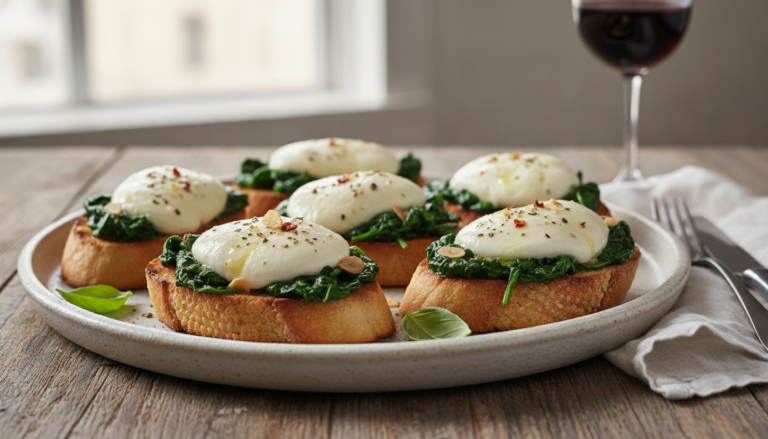
Mozzarella and Spinach Crostini layer garlic-brushed toasted baguette with fresh spinach and bubbling mozzarella for an elegant, effortless appetizer that delivers Italian-inspired flavors in every warm, crispy bite.
4
servings10
minutes15
minutes180
kcal25
minutesIngredients
1 loaf baguette
2 cups fresh spinach
1 cup mozzarella cheese, shredded
2 cloves garlic, minced
2 tablespoons olive oil
1 pinch salt
1 pinch black pepper
Directions
- Preheat the oven to 375°F (190°C).
- Slice the baguette into 1/2-inch rounds.
- Arrange the baguette slices on a baking sheet.
- In a small bowl, mix olive oil and minced garlic.
- Brush the garlic oil over each slice of baguette.
- Top each slice with fresh spinach and shredded mozzarella cheese.
- Sprinkle with a pinch of salt and black pepper.
- Bake in the oven for 10-12 minutes or until cheese is melted and bubbly.
- Serve warm.
Nutrition Facts
- Total number of serves: 4
- Calories: 180kcal
- Cholesterol: 0mg
- Potassium: 400mg
- Sugar: 8g
- Protein: 6g
- Calcium: 60mg
- Iron: 2mg
About This Author

Benjamin Brown
Recipe Developer
Benjamin is our flavor engineer. A classically trained chef turned recipe developer, he’s obsessed with balancing taste, texture, and creativity. He ensures that every recipe we publish is not only delicious but also reliable, approachable, and repeatable — even for beginners.
Favorite dish: Slow-braised short ribs with red wine reduction.
Kitchen motto: “Cooking is part science, part soul.”















