
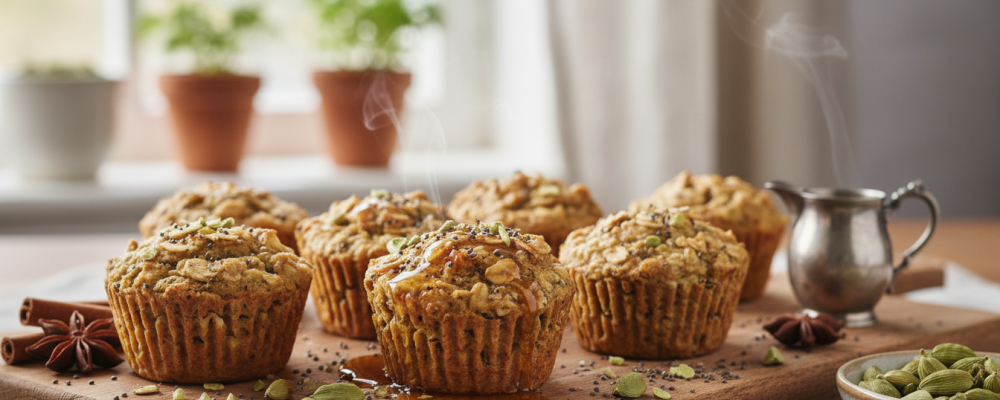

Most breakfasts fail the same way: they deliver their energy too fast. A bowl of plain oats, a slice of toast, a banana—these are carbohydrate-forward preparations that spike blood glucose quickly and return you to hunger within two hours, well before the morning is anywhere close to finished. A breakfast that does its job correctly is one that slows its own digestion—that combines the right macronutrient ratio to produce sustained, stable energy rather than a peak followed by a drop. This recipe was designed with that outcome specifically in mind.
The protein powder addition is the central strategic decision. Protein slows gastric emptying—the rate at which the stomach moves food into the small intestine—which means a protein-containing breakfast produces a more gradual glucose release than a carbohydrate-only one. Combined with the beta-glucan fiber in rolled oats, which forms a viscous gel in the digestive tract and physically slows absorption, the result is a breakfast that keeps blood glucose levels stable for considerably longer than its ingredients might suggest. The macronutrient math behind this cup is not incidental; it is the reason the cup exists.
What makes this recipe more interesting than a straightforward protein oat preparation is the cardamom. Ground cardamom is one of the most complex spices available to a baker—simultaneously floral, warm, citrusy, and slightly herbal, with an aromatic profile that shares compounds with both cinnamon and citrus without being fully either. It is, in a baked oat context, the ingredient that transforms a functional breakfast into one that is genuinely worth looking forward to. A breakfast that tastes like something you chose is one that will stay in the rotation. A breakfast that tastes like medicine will not. Cardamom is what makes this one the former.
─────────────────────────────────────────
The Inspiration Behind This Recipe
The challenge that prompted this recipe was one of the most persistent problems in high-protein meal prep: protein powder, in its most common applications, tastes exactly like what it is. Added to smoothies, it works—the liquid base dilutes its characteristic chalky, artificially sweetened flavor into something acceptable. Added to baked preparations incorrectly, it produces dense, rubbery results that announce the protein’s presence in every bite rather than integrating it gracefully.
The muffin tin format solves the density problem structurally. Unlike protein pancakes or protein bars—where the protein-to-carbohydrate ratio is often high enough to compromise texture entirely—baked oat cups use rolled oats as the primary structural ingredient, with protein powder as a secondary addition that supplements rather than dominates the batter’s architecture. The oats provide the bulk, the baking powder provides the lift, the eggs provide the binding, and the protein powder adds its nutritional contribution without being asked to do structural work it isn’t equipped to do cleanly.
The specific flavor logic of this recipe emerged from working backward from the problem. Protein powder’s residual flavor—often faintly sweet, sometimes vanilla-adjacent, occasionally slightly chemical—is most effectively masked not by more sweetness but by aromatic complexity. Cardamom’s layered, multidimensional fragrance effectively occupies the palate’s aromatic attention in a way that simple vanilla or cinnamon cannot, creating a flavor experience so complete and distinctive that the protein powder’s presence is genuinely imperceptible in the finished cup. That outcome—nutritionally complete, texturally sound, and tasting of nothing except something warmly, specifically delicious—is what this recipe was built to achieve.
─────────────────────────────────────────
A Brief History of Cardamom in Baking
Cardamom is among the oldest and most widely traveled spices in human culinary history, with origins in the rainforests of southern India and records of its use in Ayurvedic medicine and cooking dating back more than four thousand years. Its journey from the Western Ghats of India to the kitchens of Scandinavia, the Middle East, and East Africa is one of the great spice trade narratives—facilitated by Arab merchants who brought it westward along overland routes to Egypt and Persia, then north into Europe through Venice and the markets of the medieval spice trade.
Cardamom’s particular dominance in Scandinavian baking—where it appears in cardamom buns, coffee bread, and holiday pastries across Norway, Sweden, Denmark, and Finland—traces directly to the Viking Age trade routes that connected northern Europe to the spice markets of the Byzantine Empire. Cardamom arrived in Scandinavia earlier and in greater quantity than it reached most of western Europe, and it became so deeply embedded in the region’s baking traditions that Scandinavia remains one of the largest per-capita consumers of cardamom in the world today.
In contemporary baking, cardamom has experienced a broader revival as the global pantry has expanded and adventurous home bakers have discovered its extraordinary versatility—at home in both sweet and savory applications, compatible with coffee, chocolate, citrus, stone fruit, and dairy, and capable of making almost any baked preparation more interesting than it would be without it. Applied to a protein oat cup, it transforms a utilitarian breakfast preparation into something that belongs to a genuine and distinguished spice tradition—a small connection to thousands of years of culinary history, baked into a muffin tin on a Sunday afternoon.
─────────────────────────────────────────
Why This Cooking Method Works for Meal Prep
The two-bowl wet-dry separation method is not simply convention—it serves a specific functional purpose in this batter. Dry ingredients mixed together first ensures even distribution of the leavening agent (baking powder), the spice, and the salt throughout the oat base before any moisture is introduced. Baking powder that is unevenly distributed produces cups that rise inconsistently—some puffed and golden, others flat and dense. Uniform dry mixing eliminates that variable entirely and produces a consistent result across every cup in the tin.
The instruction to mix wet into dry “until just combined” is the most important technique note in the recipe, and it applies with particular force to a batter containing protein powder. Overmixing develops the protein structure in the batter—both from the flour-equivalent components of the oats and from the protein powder itself—into a tight, dense matrix that produces chewy, rubbery cups rather than tender ones. A batter that is mixed until just combined, with a few unmixed streaks still visible at the fold-in stage, will finish combining in the oven and produce a significantly more tender result than one that was mixed to uniformity.
Allowing the cups to cool in the tin before removing them is the structural rest that the baked protein-oat matrix requires. The protein and oat structure is still slightly fragile immediately out of the oven—hot baked goods of any kind are softer and more pliable than they will be once cooled. A cup removed too early will compress at the base and lose its shape; one removed after ten minutes of cooling will release cleanly and hold its form through storage, stacking, and reheating. The cooling time is not patience for its own sake—it is the final step in the baking process.
─────────────────────────────────────────
Flavor Profile: What to Expect
These cups operate in a warmly spiced, subtly sweet register that is unlike any other breakfast in the collection:
- Complex, floral cardamom – The defining aromatic note of this recipe: simultaneously warm, citrusy, slightly herbal, and distinctly exotic—a spice that demands attention and rewards it
- Caramel-toned maple sweetness – Maple syrup adds a rounded, complex sweetness with its characteristic slight caramel depth—more interesting than plain sugar, a natural complement to cardamom’s aromatic complexity
- Warm vanilla foundation – Vanilla extract provides the quiet, familiar base note that makes the cardamom’s exoticism feel comforting rather than challenging
- Mild, grassy oat body – Rolled oats contribute an earthy, slightly nutty wholesomeness that grounds all the aromatic elements and gives the cup its satisfying, substantial structure
- Subtle coconut richness – Coconut oil adds a faint tropical richness that is most perceptible at the edges of the cups, where it has contributed to the slight crispness of the exterior crust
- Nutty crunch – Optional chopped nuts add a toasty textural contrast that breaks the cup’s uniform tenderness and adds a welcome irregularity to each bite
- Clean protein neutrality – The protein powder, correctly integrated, is essentially imperceptible as a distinct flavor—it contributes body and a slight creaminess to the crumb without announcing itself
The cardamom deepens and blooms more fully after an overnight rest, as its volatile aromatic compounds continue to distribute through the baked crumb in the sealed container. Day-two cups are noticeably more aromatic and cohesive than day-one cups eaten fresh from the oven—a consistent characteristic of cardamom in baked applications.
─────────────────────────────────────────
Tips for Making the Best Maple Cardamom Baked Protein Oat Cups
Precise execution at the mixing and baking stages determines both the texture and the protein integration of the finished cup:
- Choose the right protein powder – Vanilla-flavored whey or plant-based protein powder integrates most cleanly into this flavor profile. Unflavored protein powder works equally well and allows the cardamom and maple to dominate without competition. Avoid strongly flavored varieties—chocolate, peanut butter, strawberry—which will clash with the cardamom and maple rather than integrating with them.
- Measure protein powder by weight if possible – Protein powder compresses and scoops inconsistently by volume. A scale measurement produces a more reliable protein-to-oat ratio and more consistent results across batches.
- Don’t substitute quick oats for rolled – Quick oats absorb liquid more rapidly than rolled oats and produce a denser, more uniform crumb with less textural interest. Rolled oats retain their structure through the bake and produce the tender-but-substantial texture that makes these cups satisfying.
- Use freshly ground cardamom if available – Pre-ground cardamom from a jar is acceptable; freshly ground cardamom from whole pods is transformative. The volatile aromatic compounds in cardamom begin degrading immediately after grinding—a freshly ground portion has two to three times the aromatic intensity of a pre-ground one that has been sitting in a spice jar.
- Mix just until combined — no further – This instruction is worth repeating because it is the single most important technique decision in the recipe. The moment the wet and dry ingredients are no longer visibly separate, stop mixing. The residual stirring that happens as you fold in the nuts will finish the job.
- Fill cups to three-quarters capacity – The batter rises during baking. Overfilled cups will overflow; underfilled cups will be too shallow to develop their characteristic slightly domed top. Three-quarters full produces a properly proportioned, generously sized cup.
Optional: A light drizzle of additional maple syrup over the tops of the cups in the final five minutes of baking creates a glossy, caramelized surface that adds both visual appeal and a concentrated maple finish at the first bite.
─────────────────────────────────────────
Portioning and Container Suggestions
A standard 12-cup muffin tin produces twelve individual protein oat cups—two to three cups per serving depending on activity level and appetite, yielding four to six complete breakfast portions from a single batch. Two cups with a piece of fresh fruit constitutes a nutritionally complete morning meal calibrated for a moderate energy requirement; three cups is appropriate for higher-output mornings or post-training recovery.
Once fully cooled, the cups stack efficiently in a wide, flat airtight container with a piece of parchment paper between layers to prevent sticking. Individual daily portions—two or three cups per container—allow for grab-and-reheat efficiency each morning with no measuring or decision-making. The compact, self-contained format of each cup makes them particularly well-suited to desktop eating: no bowl required, no utensils beyond optional fingers, and no container to return to the kitchen.
For the most reliable storage outcome, allow the cups to cool completely—ideally for thirty minutes at room temperature—before sealing in airtight containers. Sealing warm cups traps steam, which condenses on the container walls and drips back onto the cups’ surfaces, softening the exterior crust that is one of the cup’s most satisfying textural qualities. Patience at the cooling stage is a technique decision with a perceptible payoff.
─────────────────────────────────────────
Storage, Reheating, and Shelf Life Tips
- Refrigerator storage: Cups keep in an airtight container for up to 5 days. The cardamom aroma deepens and the crumb becomes more cohesive over the first two days—peak flavor window is days two through four.
- Freezer storage: These cups freeze exceptionally well for up to 3 months. Cool completely, wrap each cup individually in plastic wrap, and transfer to a labeled freezer bag. The protein and oat structure is highly freeze-stable, with no significant texture change after thawing.
- Reheating from refrigerated: Microwave at full power for 30–45 seconds per cup. The compact size heats through quickly—overheating dries out the crumb and toughens the egg proteins. Check at 30 seconds and add time in 10-second increments if needed.
- Reheating from frozen: Thaw overnight in the refrigerator and microwave as above, or microwave directly from frozen at 50% power for 90 seconds to 2 minutes, checking halfway through.
- Oven reheating: Place cups on a baking sheet at 325°F for 8–10 minutes from refrigerated. This method restores the slight exterior crispness that microwave reheating cannot achieve—worth the extra time on the mornings when texture is the priority.
- Room temperature serving: These cups are genuinely good at room temperature—the cardamom fragrance is actually more pronounced without refrigerator suppression, and the texture is at its most tender. For desk eating or on-the-go mornings, no reheating is required.
─────────────────────────────────────────
Why This Recipe Deserves a Spot in Your Meal Prep Rotation
From a performance standpoint, this cup justifies itself with unusual efficiency. It combines the meal prep advantages of a baked oat preparation—portable, self-contained, reheat-friendly, twelve portions from one batch—with a macronutrient profile that most baked oat recipes cannot match: meaningful protein content alongside the oat’s established fiber advantages, producing a breakfast that supports sustained energy and satiety rather than simply delivering calories. For anyone with a morning that demands sustained focus—extended meetings, physical training, a long commute before a demanding day—the functional difference between this breakfast and a carbohydrate-only alternative is measurable, not theoretical.
The cardamom is what keeps this cup in the rotation beyond its first week. A breakfast that performs well nutritionally but tastes unmemorable will be made once and replaced; a breakfast that performs well and also has a genuinely distinctive, enjoyable flavor profile will be made indefinitely. Cardamom provides that distinctiveness—a spice with enough character to make these cups recognizable, anticipated, and missed when absent. That combination of function and flavor is, in the end, the standard against which any meal prep recipe should be measured. This one meets it decisively.
─────────────────────────────────────────
Meal Prep Pairing Suggestions
Maple Cardamom Baked Protein Oat Cups pair most effectively with breakfast options that offer contrast in temperature, texture, and preparation method—ensuring the week’s mornings don’t converge on a single baked-oat register. Our Peach Ginger Overnight Oat Jars provide the ideal cold counterpart: both are oat-based and naturally sweetened with warm spicing, but the overnight jars are cool, creamy, and entirely no-bake where these cups are warm, structured, and oven-finished. The two recipes share a culinary logic—oats as the base, spice as the flavor signature, fruit or nuts as the textural variable—while producing completely different eating experiences. Together they give the oat category of the breakfast rotation genuine range.
For a complete three-breakfast week, our Ham & Cheddar Egg Muffin Sandwiches round out the spread with the savory, high-protein option that covers the mornings when sweet-and-spiced isn’t the right call. Both the protein oat cups and the egg muffin sandwiches share the same muffin-tin format and the same grab-and-reheat convenience, which means a Sunday session that produces both requires only two baking rounds and yields a full two weeks of varied, protein-forward breakfasts from a single afternoon’s work. That kind of compounding efficiency—two formats, one prep session, genuinely different eating experiences—is the highest expression of what a well-designed breakfast rotation can deliver.
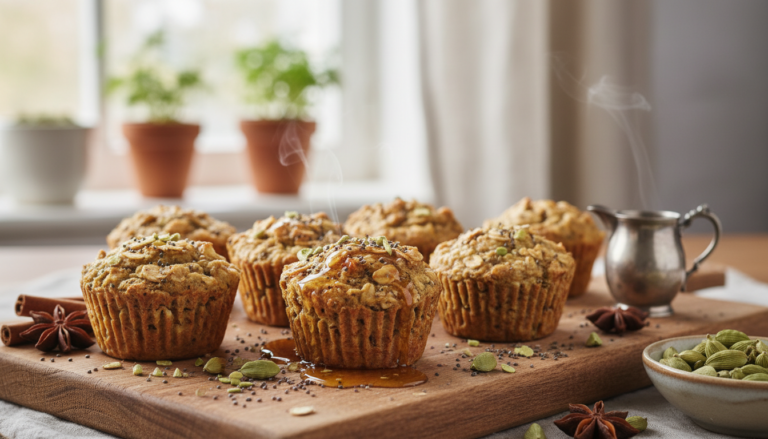
Maple Cardamom Baked Protein Oat Cups
These Maple Cardamom Baked Protein Oat Cups are a warmly spiced, protein-fortified baked oat breakfast that preps in one batch, holds up all week, and delivers sustained morning energy in a portable, golden cup that tastes considerably better than it sounds.
12
servings15
minutes25
minutes180
kcal40
minutesIngredients
2 cups rolled oats
1 cup protein powder
1 teaspoon ground cardamom
1 teaspoon baking powder
0.5 teaspoon salt
1 cup unsweetened almond milk
0.5 cup maple syrup
0.25 cup coconut oil, melted
1 teaspoon vanilla extract
2 large eggs
0.5 cup chopped nuts (optional)
Directions
- Preheat the oven to 350°F (175°C) and grease a muffin tin.
- In a large bowl, mix rolled oats, protein powder, cardamom, baking powder, and salt.
- In another bowl, whisk almond milk, maple syrup, melted coconut oil, vanilla extract, and eggs until well combined.
- Pour wet ingredients into the dry ingredients, mixing until just combined.
- Fold in the chopped nuts if using.
- Scoop the mixture evenly into the muffin tin.
- Bake for 20-25 minutes until golden brown and set.
- Allow to cool before serving.
Nutrition Facts
- Total number of serves: 4
- Calories: 180kcal
- Cholesterol: 0mg
- Sodium: 620mg
- Potassium: 400mg
- Sugar: 8g
- Protein: 6g
- Calcium: 60mg
- Iron: 2mg
About This Author

Benjamin Brown
Recipe Developer
Benjamin is our flavor engineer. A classically trained chef turned recipe developer, he’s obsessed with balancing taste, texture, and creativity. He ensures that every recipe we publish is not only delicious but also reliable, approachable, and repeatable — even for beginners.
Favorite dish: Slow-braised short ribs with red wine reduction.
Kitchen motto: “Cooking is part science, part soul.”















