
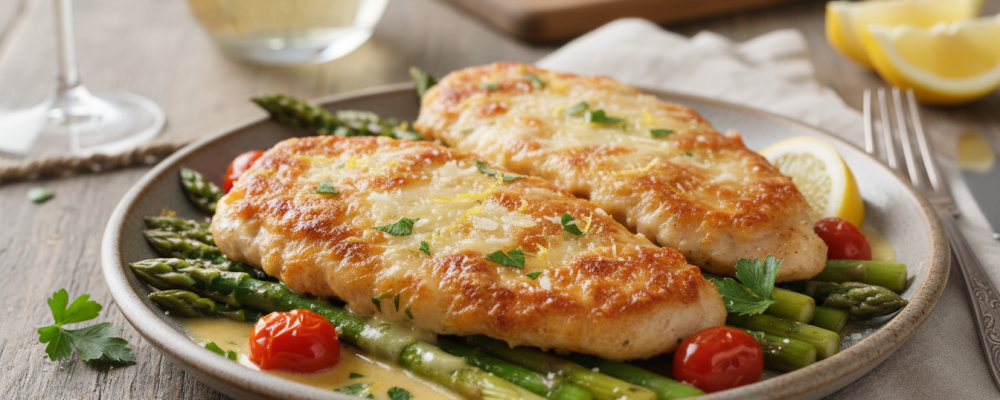

There is a particular category of pan-fried chicken that represents, in my view, some of the finest cooking in the Italian-American tradition—thin, golden cutlets with a crust that shatters at the touch of a fork, yielding to juicy, perfectly cooked chicken beneath. Lemon Chicken Romano belongs to that category, and it earns its place among the best of them. The panko and Romano cheese crust delivers a crunch that is audible, a flavor that is sharp and nutty and deeply savory, and a structure that holds together through the entire cook and onto the plate. The lemon zest and parsley at the finish are the detail that elevates everything—bright, fragrant, and precisely the contrast the richness of the fried crust needs.
The Romano cheese in the breading is the ingredient that sets this recipe apart from a standard chicken cutlet. Pecorino Romano is one of the most intensely flavored hard cheeses in Italian cooking—saltier, sharper, and more aggressively savory than Parmesan—and when pressed into panko breadcrumbs and fried in a butter-olive oil blend, it caramelizes at the edges of the crust into something that is simultaneously salty, nutty, and deeply complex. Every bite of the crust tastes like it was seasoned twice, because in a sense it was: the flour and egg base carries the garlic powder and lemon juice, and the panko-Romano exterior carries the cheese’s concentrated flavor directly into the golden crust.
The butter and olive oil combination is a technique choice I return to consistently for pan-fried cutlets. Olive oil raises the smoke point enough to achieve a proper fry temperature; butter adds the rich, nutty flavor that a pure olive oil crust lacks; and together they produce a crust color and flavor that neither achieves alone.
The Inspiration Behind This Recipe
This recipe draws directly from the Italian-American tradition of breaded and pan-fried chicken cutlets—a preparation that appears across the Italian-American table in various forms, from chicken Milanese to chicken Parmigiana to the simpler, stripped-back cutlet served with just lemon. The Romano cheese variation honors the Southern Italian and Roman tradition of using Pecorino Romano as a primary cheese in cooking rather than an accent—its aggressive, salty flavor is built for exactly this kind of high-heat application.
The lemon element draws from the classic preparation of chicken piccata and the broader Italian tradition of finishing pan-fried proteins with citrus, which brightens the richness of the fried crust and provides the acidity that makes a dish like this feel complete rather than heavy.
A Brief History of Breaded Chicken Cutlets and Romano Cheese
Breaded and pan-fried chicken cutlets have been a staple of Italian-American cooking since the early 20th century, when Italian immigrants adapted their home tradition of cotoletta—the breaded, pan-fried veal cutlet of Northern Italy—to the more affordable and widely available chicken breast of the American market. The preparation became one of the most beloved dishes of the Italian-American table, prized for its simplicity, its versatility, and the deeply satisfying textural contrast of its golden, crackling crust.
Pecorino Romano, one of the oldest cheeses in the world with documented production dating back to ancient Rome, has been produced in Lazio and Sardinia for over two thousand years. Its name references its sheep’s milk origin—pecora means sheep in Italian—and its sharp, piquant character has made it a cornerstone of Roman cooking in particular. In a breaded cutlet, Romano does something Parmesan cannot quite replicate: it caramelizes more aggressively under heat, producing a deeper, more complex crust flavor with a saltiness that seasons the entire dish from the outside in.
Why the Three-Stage Breading and Butter-Oil Pan Are Essential
The three-stage breading process—flour, egg wash, breadcrumb—is the foundational technique of the breaded cutlet, and each stage serves a specific and non-negotiable purpose. The flour stage dries the surface of the chicken and creates a slightly rough texture that the egg wash can grip. Without this stage, the egg slides off the smooth chicken surface and the breadcrumbs have nothing to adhere to. The egg stage, enriched with lemon juice, acts as a binding agent that adheres the breadcrumb exterior to the flour-coated chicken. The breadcrumb stage—panko specifically, which is coarser and airier than standard breadcrumbs—creates the maximally crispy, maximally golden crust that defines a great cutlet.
The butter-olive oil cooking medium is a technique borrowed from French and Italian professional kitchens where it has been used for pan-fried proteins for centuries. Olive oil alone smokes at lower temperatures and lacks the flavor complexity of butter; butter alone burns too quickly at the temperatures needed for a proper fry. Together at medium heat, they produce the ideal cooking environment: a stable fat temperature that develops deep golden color on the crust without burning, and a combined flavor that is both richly savory and subtly fruity.
Flavor Profile: What to Expect
Every element of this dish contributes to a layered, restaurant-quality flavor experience:
- Shatteringly crispy panko-Romano crust that caramelizes at the edges into something deeply salty, nutty, and complex
- Sharp, aggressive Romano cheese distributed through the crust that seasons every bite from the outside in
- Juicy, tender chicken pounded to even thickness that cooks through perfectly before the crust overcooks
- Rich butter-olive oil base that creates the golden, flavorful fat that the crust develops in
- Bright lemon zest scattered over the finished cutlet that provides immediate citrus fragrance and a clean, sharp contrast to the richness
- Fresh parsley that adds herbal brightness and a visual freshness that lifts the finished plate
The overall effect is rich, crispy, savory, sharp, and bright—a chicken cutlet that tastes like genuine craft.
Tips for Making the Best Lemon Chicken Romano
These technique details will produce consistently excellent results:
- Pound the chicken to even thickness: An even cutlet—about half an inch thick—cooks uniformly from edge to center. Uneven thickness means overcooked thin edges before the thick center is done.
- Season every stage: The flour gets garlic powder, salt, and pepper; the egg gets lemon juice. Each stage should be actively seasoning the chicken, not just providing structure.
- Press the panko-Romano mixture firmly: After dipping in the egg wash, press the chicken firmly into the breadcrumb mixture on both sides rather than simply laying it down. A firmly pressed crust adheres better and produces more uniform coverage.
- Don’t crowd the pan: Cook in batches if necessary. Crowded cutlets steam rather than fry, producing a pale, soft crust rather than a golden, crispy one.
- Resist moving the cutlets: Let them sit undisturbed for the full cook time per side. Moving too early tears the crust before it has set and bonded to the chicken.
- Add lemon zest after cooking, not before: Lemon zest burns quickly in a hot pan. Scattered over the finished cutlet, it provides maximum fragrance and bright citrus flavor without any bitterness.
Serving Suggestions and Side Pairings
Lemon Chicken Romano works beautifully across a range of serving contexts:
- Over a simple arugula salad with shaved Parmesan and lemon vinaigrette—the classic Milanese presentation
- Alongside creamy risotto or buttered pasta for an indulgent, Italian-inspired dinner plate
- With roasted asparagus or broccolini and lemon for a clean, complementary vegetable side
- Sliced and served over a simple green salad for a lighter, lunch-oriented presentation
- With a side of pasta aglio e olio for a complete Italian dinner that lets the cutlet be the centerpiece
Storage, Reheating, and Make-Ahead Tips
Breaded cutlets are best eaten fresh, but hold up reasonably well:
- Refrigerate cooked cutlets for up to 3 days. Store uncovered or loosely covered to prevent the crust from softening in trapped moisture.
- Reheat on a wire rack in a 400°F oven for 8–10 minutes to restore crispness. The oven is dramatically superior to the microwave, which turns the crust soft and the chicken rubbery.
- Bread cutlets ahead: The breaded, uncooked cutlets can be refrigerated on a parchment-lined sheet for up to 24 hours before frying—the crust actually sets slightly and adheres better after a rest.
- Freeze breaded uncooked cutlets for up to 2 months. Fry directly from frozen over medium heat, adding two to three extra minutes per side.
Why This Recipe Deserves a Spot in Your Rotation
Lemon Chicken Romano earns its place as the Italian-American chicken cutlet recipe worth learning properly and returning to endlessly. It’s fast, impressive, and produces a finished dish that rivals any restaurant cutlet—golden, shatteringly crispy, deeply flavored by the Romano cheese, and perfectly brightened by the lemon and parsley finish. Once this technique is in your hands, it becomes the answer to any occasion where you want dinner to feel genuinely special with minimal compromise.
Recommended Drink Pairing
The bright lemon and sharp Romano character of this dish call for a white wine with enough acidity and structure to complement both. A Vermentino or a Pinot Grigio is the natural Italian companion—crisp, slightly mineral, and clean enough to let the crust’s complexity come forward. A dry Verdicchio or a Soave Classico are equally excellent choices that honor the dish’s Italian heritage.
For cocktails, The Perfect French 75 brings sparkling citrus elegance that echoes the lemon zest finish and matches the dish’s refined, Italian-inspired character beautifully. For non-alcoholic options, sparkling water with lemon and fresh basil or a cold Italian-style lemon soda keeps the palate refreshed between bites of something this rich and satisfying.
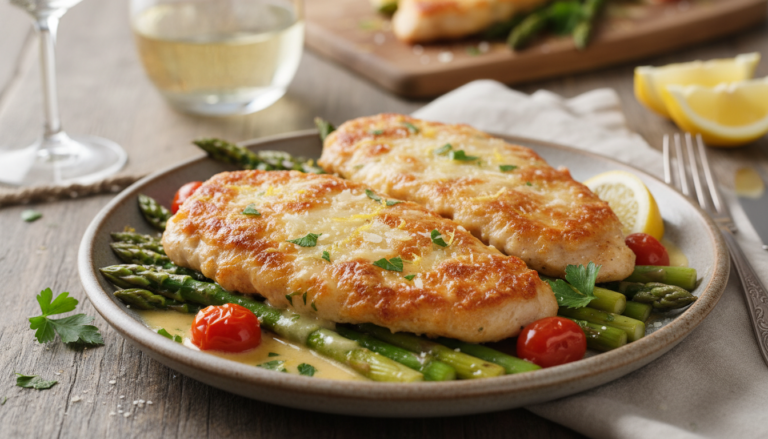
Lemon Chicken Romano
Lemon Chicken Romano coats pounded chicken breasts in a shatteringly crispy panko and Romano cheese crust, pan-fries them in butter and olive oil until deeply golden, and finishes with bright lemon zest and fresh parsley for a restaurant-quality Italian-American cutlet ready in under 30 minutes.
4
servings20
minutes30
minutes450
kcal50
minutesIngredients
4 pieces Chicken breast
1 cup All-purpose flour
2 cup Panko breadcrumbs
1 cup Romano cheese, grated
2 units Egg
1 tbsp Garlic powder
1 tsp Salt
1 tsp Black pepper
1 tbsp Lemon zest
0.25 cup Lemon juice
3 tbsp Olive oil
2 tbsp Butter
2 tbsp Fresh parsley, chopped
Directions
- Pound chicken breasts to an even thickness.
- Mix flour, garlic powder, salt, and pepper in a shallow dish.
- In another dish, beat eggs with lemon juice.
- In a third dish, combine panko and Romano cheese.
- Coat chicken with flour, dip in egg mixture, then press into breadcrumb mixture.
- Heat olive oil and butter in a skillet over medium heat.
- Cook chicken until golden brown on each side and cooked through.
- Sprinkle with lemon zest and parsley before serving.
Nutrition Facts
- Total number of serves: 4
- Calories: 450kcal
- Cholesterol: 0mg
- Sodium: 620mg
- Potassium: 400mg
- Sugar: 8g
- Protein: 6g
- Calcium: 60mg
- Iron: 2mg
About This Author

Benjamin Brown
Recipe Developer
Benjamin is our flavor engineer. A classically trained chef turned recipe developer, he’s obsessed with balancing taste, texture, and creativity. He ensures that every recipe we publish is not only delicious but also reliable, approachable, and repeatable — even for beginners.
Favorite dish: Slow-braised short ribs with red wine reduction.
Kitchen motto: “Cooking is part science, part soul.”















