
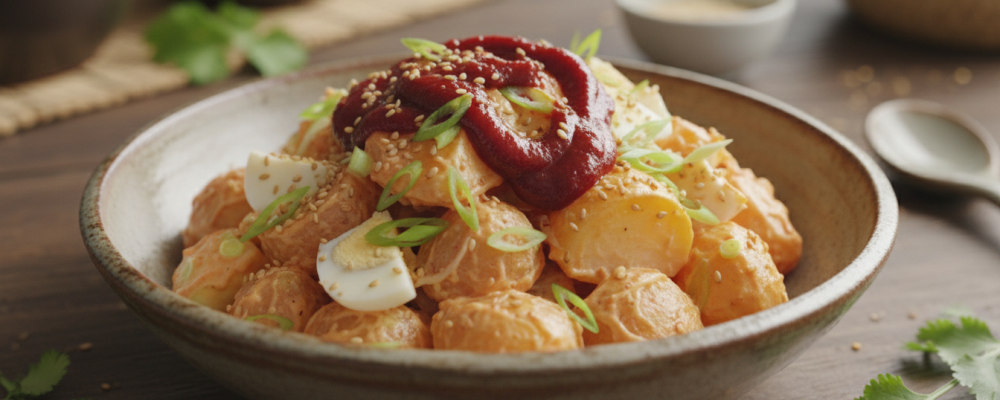

There are recipes that take a format everyone knows and trusts—and then fill it with something no one expected. This Gochujang Potato Salad is exactly that: a creamy potato salad built on the same foundational principle as the classic, but dressed in a gochujang, sesame oil, rice vinegar, and honey mixture that transforms it into something bold, slightly spicy, deeply savory, and entirely its own. It’s the potato salad that makes people stop mid-bite and ask what’s in the dressing—and the answer, once revealed, invariably produces the same reaction: “I need to make this.”
Gochujang is the ingredient that makes this recipe what it is, and if you haven’t cooked with it extensively, this potato salad is one of the best possible introductions. The fermented Korean chile paste brings a complexity that no other hot sauce or chile condiment can replicate—its heat is deep and slightly sweet rather than sharp and forward, its fermented quality adds umami that no raw chile can produce, and its characteristic earthy, slightly smoky depth gives everything it touches a richness that pulls you back for more. In a mayonnaise-based potato salad dressing, it blooms into something genuinely extraordinary—creamy, spicy, tangy from the rice vinegar, and rounded by the honey into a dressing with a balance that most potato salads never come close to achieving.
The sesame oil finish is the detail I’m most deliberate about in this recipe. Added to the dressing rather than used as a cooking fat, it contributes a toasted, nutty richness that carries through every bite of potato and makes the finished salad smell as good as it tastes. Together with the sesame seeds scattered on top, it gives this potato salad a distinctly Korean character that is confident, cohesive, and deeply satisfying.
The Inspiration Behind This Recipe
This recipe was inspired by the broader Korean-American fusion food movement that has introduced gochujang to mainstream American cooking over the past decade—the recognition that this fermented chile paste is one of the most versatile and genuinely exceptional condiments in any world cuisine, and that its combination of heat, sweetness, and fermented depth makes it an ideal building block for American comfort food formats that benefit from more complexity than they typically receive.
Potato salad was the ideal vehicle for this flavor experiment because its creamy, starchy, mild character creates the perfect backdrop for gochujang’s bold, complex flavor. The mayonnaise base carries the gochujang’s fat-soluble flavor compounds evenly through the salad; the potatoes absorb the dressing as they cool; and the result is a salad where the gochujang flavor is present in every bite rather than pooling in the dressing at the bottom.
A Brief History of Gochujang and Korean-American Cooking
Gochujang has been a cornerstone of Korean cuisine for centuries, with documented use stretching back to the 18th century when it was formalized as a fermented condiment made from Korean red pepper flakes, fermented soybean paste, glutinous rice, and salt. It serves as the foundational flavoring in dozens of Korea’s most celebrated dishes—bibimbap, tteokbokki, dakgalbi—and its combination of sweet, spicy, salty, and umami flavors has made it one of the most complex single-ingredient condiments in any world cuisine.
Korean-American cooking, shaped by the large Korean-American communities of Los Angeles, New York, and the Pacific Coast, began introducing gochujang to mainstream American awareness through Korean BBQ culture in the 1990s and 2000s. The condiment achieved broader mainstream recognition in the 2010s and 2020s as food media embraced Korean cuisine and American home cooks discovered that gochujang’s unique flavor profile worked beautifully in applications far beyond traditional Korean dishes—including, as this recipe demonstrates, a creamy American potato salad.
Why Gochujang Works So Well in a Creamy Dressing
The chemistry of gochujang in a mayonnaise-based dressing is one of those happy culinary accidents that reveals deeper principles the more you examine it. Mayonnaise is an oil-in-water emulsion—a fat-rich base that is particularly effective at carrying fat-soluble flavor compounds. Gochujang’s heat and fermented depth come primarily from capsaicin and fermentation byproducts, both of which are fat-soluble and distribute more effectively and evenly through a mayo base than through a water-based vinaigrette.
The rice vinegar in the dressing performs two functions: it adds the bright acidity that every creamy potato salad needs to taste fresh rather than heavy, and it thins the mayo slightly so the dressing coats the potatoes evenly without clumping. The honey balances the gochujang’s heat without masking it—adding sweetness that allows the fermented complexity to come forward rather than getting lost in the spice. Sesame oil, added at the end, contributes fat-soluble toasted sesame flavor that rounds the dressing and makes it taste unified and deliberate.
Flavor Profile: What to Expect
Every element of this salad pulls together into a bold, cohesive, genuinely surprising flavor experience:
- Deep, fermented gochujang heat that builds slowly and lingers—spicy but complex, with a slightly sweet, smoky quality no other chile condiment replicates
- Creamy, cohesive mayonnaise dressing that carries the gochujang flavor evenly through every piece of potato
- Bright rice vinegar acidity that keeps the dressing feeling fresh and prevents the richness from becoming heavy
- Honey sweetness that rounds the heat and allows the fermented complexity of the gochujang to come forward
- Toasted sesame oil richness that adds a nutty, aromatic depth that makes the whole salad smell extraordinary
- Fresh green onion crunch that provides a clean, pungent brightness throughout
- Sesame seeds that add subtle crunch and reinforce the sesame character of the dressing
The overall effect is creamy, spicy, tangy, nutty, and deeply satisfying—a potato salad with genuine complexity and a flavor identity that is entirely its own.
Tips for Making the Best Gochujang Potato Salad
These details will produce a consistently exceptional result:
- Salt the potato cooking water generously: Potatoes absorb seasoning during cooking. Water that tastes pleasantly salty produces potatoes with flavor that no amount of dressing can replicate after the fact.
- Don’t overcook: Potatoes should be tender but holding their shape—if they’re falling apart before you fold in the dressing, they’ll disintegrate in the salad. Test with a fork at the fifteen-minute mark and pull when just tender.
- Let potatoes cool fully before dressing: Hot potatoes absorb dressing too aggressively and can break down. Fully cooled potatoes hold their shape and absorb the dressing more evenly.
- Taste the gochujang before measuring: Gochujang brands vary significantly in heat and salt. Start with slightly less than the recipe calls for, taste the dressing, and adjust from there.
- Fold gently, don’t toss: Potatoes break down easily once cooked. A gentle fold ensures every piece is coated without turning the salad into a mash.
- Add sesame seeds just before serving: They soften and lose their crunch if they sit in the dressing for too long.
Serving Suggestions and Side Pairings
This potato salad works across a surprisingly wide range of occasions and mains:
- As a bold, unexpected side at cookouts alongside grilled Korean BBQ pork or marinated chicken
- As part of an Asian-inspired spread alongside rice bowls, dumplings, or crispy tofu
- As a standalone lunch with a simple green salad and pickled vegetables
- Alongside grilled salmon or shrimp for a complete, globally inspired dinner
- As a potluck contribution that guarantees conversations and recipe requests
Storage, Reheating, and Make-Ahead Tips
This is an excellent make-ahead salad:
- Refrigerate in an airtight container for up to 4 days. The gochujang flavor deepens and matures beautifully as it sits.
- Refresh before serving: Stir in a small extra drizzle of sesame oil and rice vinegar after refrigeration to restore the dressing’s brightness and consistency.
- Add green onions and sesame seeds fresh: Both lose their texture and visual appeal after more than a few hours in the dressing. Add at serving time for the best result.
- This salad does not freeze well due to the mayonnaise base and potato texture changes after freezing.
Why This Recipe Deserves a Spot in Your Rotation
Gochujang Potato Salad earns its rotation spot as the side dish that proves familiar formats are never exhausted—just waiting for the right ingredient. It’s bold, distinctive, and genuinely memorable in a way that standard potato salad simply isn’t. Once this one appears at a gathering, it generates the kind of specific, enthusiastic requests—”the spicy Korean potato salad”—that signal a recipe has made a lasting impression. That’s the mark of something worth keeping.
Recommended Drink Pairing
The bold, fermented gochujang heat and creamy sesame dressing call for something cold and refreshing that can meet the spice without amplifying it. A Ginger Grapefruit Paloma is a beautiful match—the grapefruit’s bright acidity cuts through the creamy dressing while the ginger adds a complementary spiced warmth that plays naturally alongside the gochujang heat. A cold, crisp Korean lager or a sparkling yuzu soda is the thematically perfect, crowd-friendly companion.
For non-alcoholic options, a sparkling citrus agua fresca or a cold, lightly sweetened barley tea provides the kind of clean, refreshing contrast that makes a bold, creamy spiced potato salad even more enjoyable.
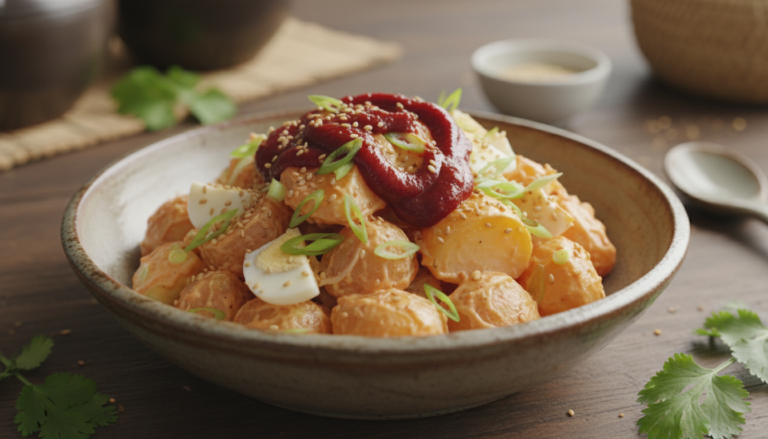
Gochujang Potato Salad
Gochujang Potato Salad tosses tender boiled potatoes in a bold gochujang, sesame oil, rice vinegar, and honey dressing for a creamy, spicy, deeply satisfying side dish that makes everyone ask for the recipe.
4
servings15
minutes20
minutes250
kcal35
minutesIngredients
500 grams potatoes
2 tablespoons gochujang
3 tablespoons mayonnaise
1 tablespoon rice vinegar
1 teaspoon sesame oil
1 teaspoon honey
1 clove garlic, minced
2 units green onions, chopped
1 teaspoon sesame seeds
to taste salt
to taste pepper
Directions
- Boil potatoes until tender, about 15 minutes. Drain and let cool.
- In a bowl, mix gochujang, mayonnaise, rice vinegar, sesame oil, honey, and minced garlic to make dressing.
- Cut cooled potatoes into bite-sized pieces.
- Gently fold potatoes into dressing until well coated.
- Add chopped green onions and sprinkle with sesame seeds.
- Season with salt and pepper to taste before serving.
Nutrition Facts
- Total number of serves: 4
- Calories: 250kcal
- Cholesterol: 0mg
- Sodium: 620mg
- Potassium: 400mg
- Sugar: 8g
- Protein: 6g
- Calcium: 60mg
- Iron: 2mg
About This Author

Benjamin Brown
Recipe Developer
Benjamin is our flavor engineer. A classically trained chef turned recipe developer, he’s obsessed with balancing taste, texture, and creativity. He ensures that every recipe we publish is not only delicious but also reliable, approachable, and repeatable — even for beginners.
Favorite dish: Slow-braised short ribs with red wine reduction.
Kitchen motto: “Cooking is part science, part soul.”















