
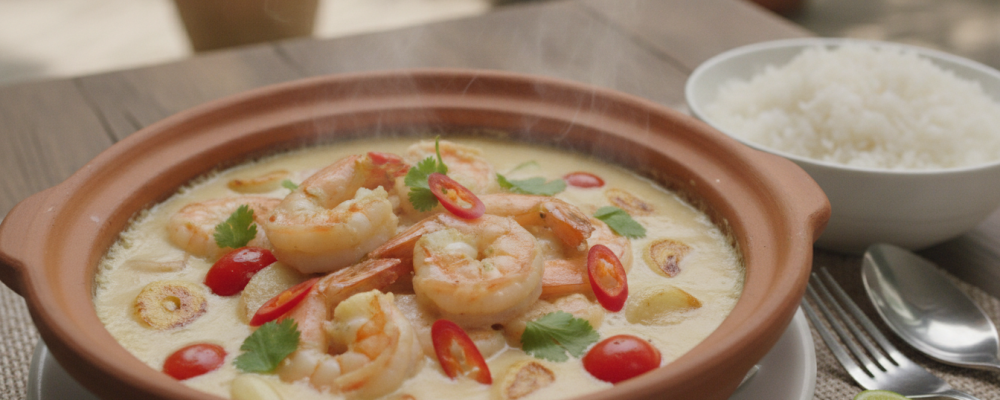

There are recipes that feel like an immediate introduction to an entire culinary tradition—dishes that, in a single bowl, communicate something essential and beautiful about a whole region’s approach to cooking. Garlic Shrimp in Coconut Milk is that kind of recipe. The combination of coconut milk, fish sauce, lime, ginger, and garlic is one of the foundational flavor frameworks of Southeast Asian cooking, and in this preparation it produces something that is simultaneously rich and bright, deeply savory and subtly sweet, warming and refreshing all at once. Over jasmine rice with fresh cilantro, it is one of the most complete and satisfying dinner bowls I’ve developed.
What I find most compelling about this recipe from a development standpoint is how efficiently it builds flavor. The garlic and ginger, bloomed in olive oil for a single minute before the shrimp go in, create an aromatic foundation that carries through the entire sauce. The coconut milk, poured in after the shrimp are pink, absorbs those aromatics as it comes to a simmer and develops body and richness in five minutes of gentle cooking. The fish sauce, lime juice, and sugar are the seasoning triad that appears throughout Thai and Southeast Asian cooking—the fish sauce provides salt and umami depth, the lime provides acidity and brightness, and the sugar rounds everything into balance. Together, in a coconut milk base, they produce a sauce with genuine complexity in under fifteen minutes of total cooking time.
The jasmine rice is not optional—it is an essential component of this dish, not merely a serving vehicle. Its floral, slightly sticky character absorbs the coconut sauce in a way that plain long-grain rice cannot replicate, and the combined fragrance of the rice and sauce together is one of the most inviting aromas in this entire collection.
The Inspiration Behind This Recipe
This recipe draws directly from the Thai and Southeast Asian tradition of coconut-based shrimp preparations—the curries, laksa soups, and coconut shrimp dishes that appear throughout the cuisines of Thailand, Malaysia, the Philippines, and Vietnam in various forms. These dishes share a fundamental flavor logic: creamy coconut milk as the sauce base, fish sauce and sugar as the primary seasoning agents, fresh aromatics bloomed in fat at the beginning of cooking, and citrus and fresh herbs added at the finish for brightness and contrast.
The simplified approach here—no curry paste, no dried spices beyond the aromatics—is a deliberate choice to create an accessible, weeknight-friendly gateway to this flavor tradition. The result captures the essential character of a Thai coconut shrimp without requiring specialty ingredients or elaborate preparation.
A Brief History of Coconut Milk in Southeast Asian Cooking
Coconut milk has been a cornerstone of Southeast Asian cooking for thousands of years, extracted from the grated flesh of mature coconuts and used as the primary fat and liquid base for curries, soups, and sauces throughout the region. Unlike dairy-based creams, coconut milk contributes a mild, slightly sweet tropical flavor alongside its richness—a quality that makes it uniquely suited to the bold, aromatic spice profiles of Southeast Asian cooking, where it tempers heat and rounds acidity without masking the complexity of the surrounding flavors.
The fish sauce and sugar combination that seasons this dish appears throughout Thai cooking as a fundamental seasoning framework—the equivalent of salt and pepper in Western cooking but with far more complexity. Fish sauce, made from fermented anchovies and salt, provides concentrated umami and saltiness; palm or white sugar provides sweetness that balances both the fish sauce’s intensity and the lime’s acidity. This three-part balance—fish sauce, sugar, lime—is the flavor logic behind pad Thai, tom yum, som tum, and dozens of other beloved Thai preparations.
Why This Method Builds Exceptional Flavor
The sequence of this recipe is built around the same principle that makes all great one-pan cooking work: cumulative flavor development. Each step builds on the last, and the final sauce carries the character of every ingredient that touched the pan before it. Blooming the garlic and ginger in olive oil creates fat-soluble aromatic compounds that distribute through the oil and then through the coconut milk when it’s added. Cooking the shrimp in that aromatic oil before the coconut milk goes in means the shrimp render some of their own juices into the pan, enriching the sauce’s base. The coconut milk then picks up all of that—the aromatic oil, the shrimp juices, the fond from the pan—and carries it through the five-minute simmer into a cohesive, deeply flavored sauce.
The fish sauce, lime, and sugar go in after the coconut milk has had time to warm and begin integrating the aromatics—this allows each seasoning element to be tasted and adjusted independently, producing a more precisely balanced finished sauce than adding everything at once would allow.
Flavor Profile: What to Expect
This dish delivers a beautifully layered, Southeast Asian-inspired flavor experience in every bite:
- Rich, slightly sweet coconut milk that forms the silky, fragrant base of the entire sauce and carries every other flavor through it
- Deep, mellow garlic and ginger bloomed in oil at the start that provide a warm, aromatic foundation throughout
- Savory, concentrated fish sauce umami that provides salt and depth without any fishiness in the finished sauce
- Bright lime juice acidity that lifts the richness of the coconut and makes every element taste more vivid
- Subtle sugar balance that rounds the seasoning and prevents the sauce from tasting sharp
- Tender, sweet shrimp that absorb the coconut sauce and carry its flavor in every bite
- Floral jasmine rice that soaks up the sauce and adds its own subtle fragrance to the bowl
- Fresh cilantro that adds herbal brightness and the clean, citrusy finish that completes the dish
The overall effect is rich, bright, savory, subtly sweet, and deeply satisfying—a bowl that tastes like a destination.
Tips for Making the Best Garlic Shrimp in Coconut Milk
These details will produce a consistently excellent result:
- Use full-fat coconut milk: Light coconut milk produces a thinner, less satisfying sauce. Full-fat provides the richness and body that makes this dish so appealing.
- Don’t overcook the shrimp in the first stage: Two to three minutes per side until just pink—they’ll continue to cook gently in the coconut milk simmer. Overcooked shrimp at the first stage become rubbery by serving.
- Taste the sauce before serving: Fish sauce and lime juice vary significantly between brands. Taste after the five-minute simmer and adjust the balance as needed—more lime for brightness, more fish sauce for depth, more sugar for sweetness.
- Use fresh ginger, not ground: Fresh ginger has a floral, slightly peppery quality that ground ginger cannot replicate in a sauce like this. Grate it on a microplane for the finest possible texture.
- Cook jasmine rice in coconut water or broth: For an extra layer of flavor, substitute coconut water for half the cooking water when making the jasmine rice. The subtle tropical note it adds to the rice complements the sauce beautifully.
- Add cilantro at the very last moment: Heat destroys cilantro’s volatile aromatics quickly. Scatter it fresh over the finished bowls for maximum fragrance and visual appeal.
Serving Suggestions and Side Pairings
This dish is best served in its most natural, complete format:
- Over jasmine rice as the primary serving vehicle—this is the essential pairing
- With a side of steamed bok choy or broccoli for a complete, balanced meal
- Alongside a simple cucumber salad with rice vinegar and sesame for a cool, acidic contrast
- With warm naan or roti for an alternative to rice that soaks up the sauce equally well
- As a component of a larger Asian-inspired spread with dumplings, edamame, and miso soup
Storage, Reheating, and Make-Ahead Tips
This dish stores and reheats well with the right approach:
- Refrigerate in an airtight container for up to 3 days. The sauce develops and deepens overnight.
- Reheat gently in a covered skillet over low heat. Coconut milk can separate if reheated aggressively—low and slow preserves its creamy consistency.
- Add a splash of fresh coconut milk when reheating if the sauce has thickened too much during refrigeration.
- Cook the rice fresh: Leftover jasmine rice becomes hard in the refrigerator. Cook a fresh batch at reheating time for the best result.
Why This Recipe Deserves a Spot in Your Rotation
Garlic Shrimp in Coconut Milk earns its place as the weeknight dinner that genuinely transports you—that makes a regular Tuesday feel like somewhere worth being. It’s fast, deeply flavorful, and built on a seasoning framework—coconut milk, fish sauce, lime—that rewards every cook who learns to use it. Once this dish is in your regular rotation, it becomes the answer whenever you want dinner to feel genuinely special without requiring a special occasion.
Recommended Drink Pairing
The rich coconut milk and bright lime and cilantro call for something equally tropical and refreshing. A Key Lime Colada is a beautiful thematic match—its citrus and coconut character directly mirrors the dish’s flavor profile while providing a cool, tropical refreshment that feels perfectly suited to a bowl this fragrant and vibrant. A crisp, slightly off-dry Riesling is the ideal wine pairing—its fruit-forward acidity and subtle sweetness complement the coconut and lime balance without competing.
For non-alcoholic options, a cold sparkling coconut water with lime or a lightly sweetened lemongrass iced tea provides the kind of tropical, refreshing contrast that makes a rich coconut dish even more enjoyable.
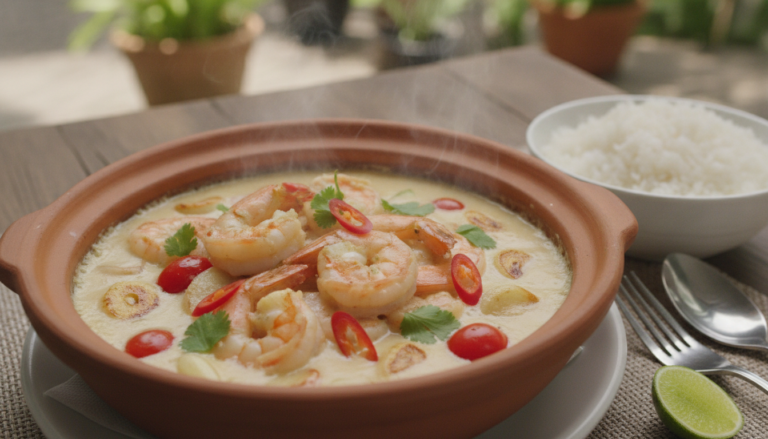
Garlic Shrimp in Coconut Milk
Garlic Shrimp in Coconut Milk simmers tender shrimp in a silky, fragrant coconut milk sauce seasoned with garlic, ginger, fish sauce, and lime—served over jasmine rice and finished with fresh cilantro for a Thai-inspired weeknight bowl that tastes like a destination.
4
servings15
minutes20
minutes320
kcal35
minutesIngredients
1 pound shrimp, peeled and deveined
2 tablespoons olive oil
4 cloves garlic, minced
1 teaspoon ginger, minced
1 can coconut milk
1 tablespoon lime juice
1 tablespoon fish sauce
1 teaspoon sugar
0.5 teaspoon salt
0.25 teaspoon black pepper
2 tablespoons fresh cilantro, chopped
1 cup jasmine rice, cooked
Directions
- Heat olive oil in a large skillet over medium heat.
- Add garlic and ginger, sauté until fragrant, about 1 minute.
- Add shrimp to the skillet, cook until pink, 2-3 minutes per side.
- Pour in coconut milk, bring to a simmer.
- Stir in lime juice, fish sauce, sugar, salt, and pepper.
- Simmer for 5 minutes to allow flavors to meld.
- Serve shrimp over cooked jasmine rice.
- Garnish with chopped cilantro before serving.
Nutrition Facts
- Total number of serves: 4
- Calories: 320kcal
- Cholesterol: 0mg
- Sodium: 620mg
- Potassium: 400mg
- Sugar: 8g
- Protein: 6g
- Calcium: 60mg
- Iron: 2mg
About This Author

Benjamin Brown
Recipe Developer
Benjamin is our flavor engineer. A classically trained chef turned recipe developer, he’s obsessed with balancing taste, texture, and creativity. He ensures that every recipe we publish is not only delicious but also reliable, approachable, and repeatable — even for beginners.
Favorite dish: Slow-braised short ribs with red wine reduction.
Kitchen motto: “Cooking is part science, part soul.”















